A colleague of Anna Pagava’s was once asked whether Ukraine had supermarkets. Pagava, pitching Ukrainian beauty brands abroad, had encountered a related assumption: apparently the country mostly did agriculture. There are diplomatic ways to answer such questions. There is also the option of assembling a New York fair full of things the questioner has failed to imagine.
Pagava chose the latter. In March 2023, I Am U Are brought Ukrainian creative businesses to Manhattan’s Lower East Side. The range was the argument: clothes, ceramics, furniture, photography, books and technology, gathered together under a name that invited a little curiosity before supplying an explanation. A visitor could arrive interested in a chair and leave with a different picture of a country.
For Pagava, co-founder and CEO of communications agency Gogola, this was a large assignment with a familiar problem inside it. Someone makes something worth seeing. Someone else has never considered looking. Her career has involved finding ways to get those two people into the same conversation, first through television and later through brands, exhibitions and the practical business of introductions.
“I want to change the narrative.”
Anna Pagava · March 2023
The producer before the publicist
Before the fair, before the agency, there was television. By 2018, Pagava was an executive producer at Lucky Cat Production. Her work included the show Olya, and she had spent more than five years working with presenter Olga Freimut. The relationship had become a friendship. Long hours together tend to make the distinction between colleague and friend a rather ambitious piece of paperwork.
Her account of production was unusually interested in the whole crew. Asked what made television succeed, she talked about motivation, payment and the people doing the work, from catering to senior management. A project needed commitment at every level. She also acknowledged the limits of a producer’s control: the broadcaster’s time slot, a smaller budget, another round of approvals. Her responsibility was to make something worthwhile within those conditions.
She was already looking beyond the television schedule. In September 2018, she argued that production companies should develop work for the internet. She also described reality production as following actual events, with a plan rather than a fabricated cast of characters. The audience, in her view, could detect deception. That conviction gives her later communications work an interesting tension: how much can a producer arrange while leaving room for a real encounter?
Los Angeles, with the workday attached
Pagava’s attraction to Los Angeles had a pleasantly uncomplicated starting point: ocean and sunshine. She described returning to the city for inspiration, and by her 2018 interviews she was living there. What held her attention went beyond the weather. She liked the combination of effort and ease she found in the people around her, and she wanted to understand the American audience before trying to build a production business for it.
She admired professional boundaries, too: people who worked hard, respected a schedule and expected to get home on time. That last detail deserves its place in a producer’s biography. The glamorous version of the industry tends to leave out the clock. Pagava noticed it. She associated good working conditions with respect for the people making the product.
Her own management style came with a wink. Challenged by an interviewer’s image of the stern male producer, she described herself as stern-looking and said she enjoyed managing people. Yet her explanation of success returned to relationships and emotional investment in a team. Authority and consideration sat together in her account. She wanted people to follow her; she also understood that they needed a reason.
“The main formula for success is relationships with people.”
Anna Pagava · 2018 interview, translated from Russian
A communications business meets a bigger question
Gogola began in 2019. The agency’s public portfolio moves across fashion, design, culture and technology, with work ranging from media relations to production, events and partnerships. Its published examples include DressX, Gunia Project, Nomis and Ienki Ienki. These are agency credits, the output of teams and clients working together. Pagava’s job places her among the people organizing how that work reaches an audience.
The business has a deceptively small unit of progress: an introduction. An editor encounters a designer. A stylist considers a piece. A customer sees an unfamiliar name beside something they already want. Each encounter asks for enough context to make the work legible without explaining away everything that makes it particular.
After Russia’s full-scale invasion in 2022, that question acquired a different urgency. Pagava saw a wave of support for Ukraine, yet felt the events around her did not fully represent the contemporary country she knew. She wanted a format that could carry more of it. A modern creative economy needed room for its products, its makers and its commercial ambitions.
Her proposed answer required partners. Kristina Skripka brought hospitality experience and creative connections. Gogola supplied an operating team. Pagava has described herself as the originator of the idea while giving the development and execution to the wider group. That distinction is useful. An idea can belong to one person for a moment; an exhibition soon belongs to everyone whose work has to arrive on time.
A room large enough for several Ukraines
The first public fair ran from March 24 to 26, 2023, at Skylight at Essex Crossing. Fashion could bring visitors through one door; craft or design could bring them through another. Contemporary work sat alongside traditions that had their own histories and technical demands. The exhibition made space for several ways of being interested.
The creative responsibilities were distributed accordingly. Masha Reva, Ivan Grabko, Nadiia Shapoval and the architecture practice FORMA contributed different disciplines. Shapoval’s ethnological work placed craft in context. FORMA worked on the exhibition space. Grabko devised the name and visual language. A founder could set the purpose, but the experience depended on these other forms of authorship.
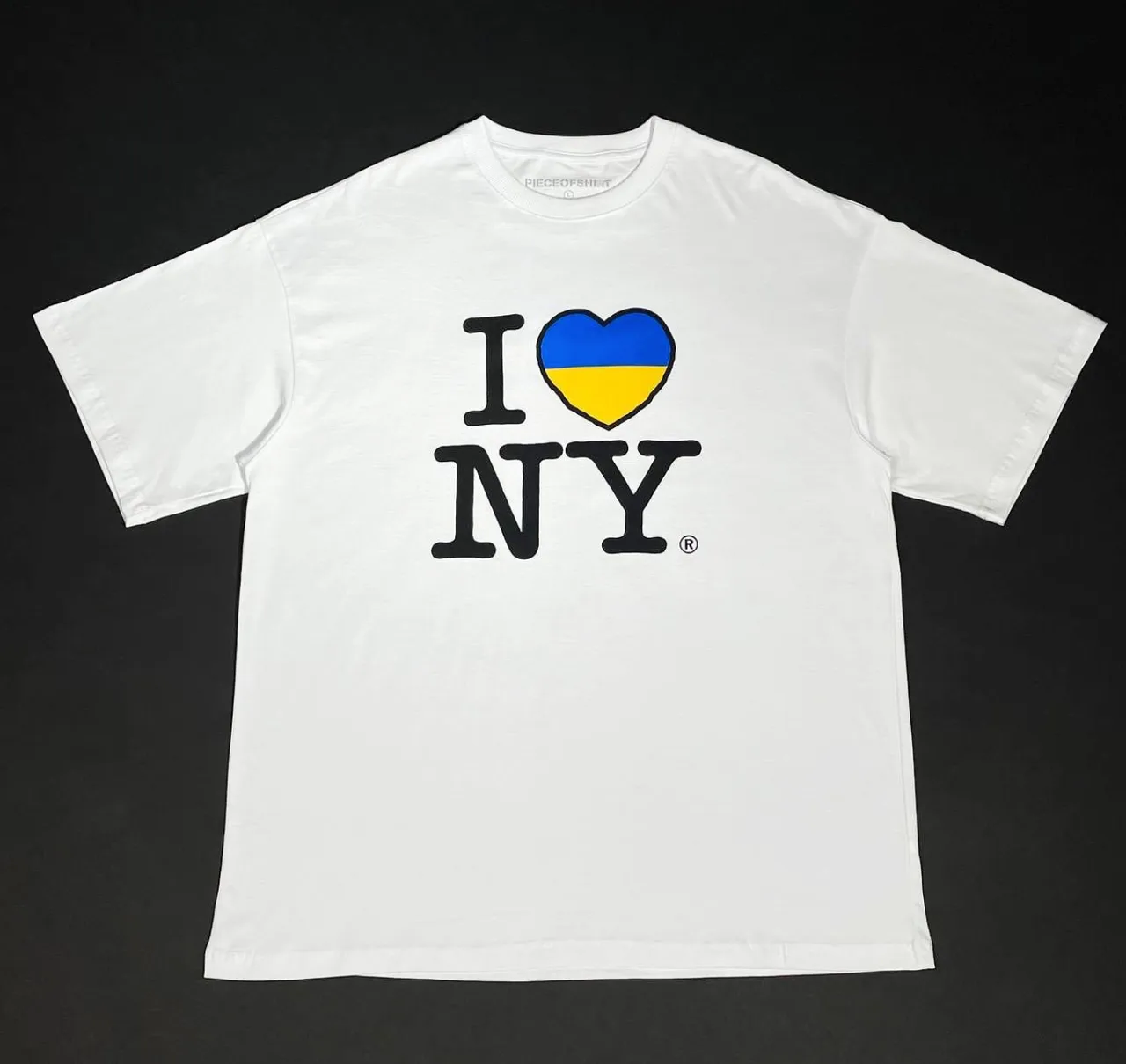
The title itself repaid attention. Read aloud, I Am U Are suggested both an exchange between people and an echo of Ukrainian identity. Grabko’s inspiration included the logo of the Sorochyntsi Fair, with its windmill and central letter. Even the branding had a route back to an earlier way of gathering makers and audiences.
Pagava and her collaborators also included less familiar businesses alongside established names. Their selection was curated rather than the result of an open competition. For a visitor, that gave recognition and discovery a chance to work together. A familiar label might earn the first look. Its neighbour could earn the next one.
The objects had to get there
Producing the fair meant coordinating people across the United States and Ukraine while electricity outages interrupted work. Makers faced manufacturing problems. Shipping posed another series of decisions and delays. Some participants carried goods themselves. Before a visitor could admire an object’s finish, someone had to solve the considerably less photogenic question of its journey.
The team arranged a US warehouse for purchases and worked on distribution relationships. That detail brings Pagava’s project into focus. An exhibition that encourages desire must think about what happens when desire becomes an order. The shopping bag and the freight arrangements are part of the same promise.
There is a producer’s logic here, familiar from the earlier television interviews. The visible result depends on a network of work the audience may never notice. Catering, approvals, transport, installation: the nouns change with the assignment, but the obligation to coordinate them remains. Good publicity cannot rescue an empty plinth.
- Bring people togetherPartners, curators and the Gogola team.
- Put the work in reachA physical showcase for Ukrainian makers.
- Keep the connection openDistribution and a route to purchase.
An editorial reading of the project, rather than a measure of sales.
The exhibition format also leaves useful freedom with the visitor. Nobody needs to agree with an entire account of a country to become interested in a particular piece of work. They can admire a material, question a shape or ask about a maker’s process. Those smaller exchanges make room for knowledge without requiring a speech first. For a communications professional, there is some discipline in allowing that space. The message can be carefully prepared while the conversation still takes a direction of its own. Pagava’s project gave those conversations a physical setting.
After the doors opened
By May 2023, Pagava said the New York exhibition had received 2,000 guests across four days, including its opening period. The next planned step was an online marketplace. Later that year, the project’s team discussed preparations for a Los Angeles edition and a pop-up connected to the ICKPA festival. These were ways of extending the introduction beyond a single room and a single weekend.
Her aspiration was international from the beginning. She wanted Ukrainian participants to meet journalists, buyers and investors in the United States and Europe, with a broader global audience beyond them. Visibility, in this account, had a practical destination: another professional relationship, another opportunity for a maker to continue working.
In November 2025, Pagava appeared in a feature about ten women preserving and shaping Ukrainian art and culture. It placed her agency work and I Am U Are within the same account of cultural representation. The connection is persuasive because the project was built from ordinary commercial activities - selecting, displaying, introducing, buying - and asked those activities to carry a larger meaning.
Return to the supermarket question and its peculiar lack of imagination. Pagava’s response gave an audience many more things to ask about. Who made this? Where does that technique come from? Can I order one? A producer knows the value of a good opening. She helped create one that other people could walk through, and furnished it with work worth discussing.