Patricia Pérez’s retirement announcement had a familiar villain: the calendar. After decades in communications, she wrote on LinkedIn about meetings that could have been emails, emails that could have been texts, and the prospect of owning her time again. Anyone who has accepted an invitation called “quick catch-up” may understand the appeal.
The joke arrived at the end of a working life built around other people’s attention. Pérez helped institutions reach Latino audiences, brought community organizations into conversations, and served on boards concerned with jobs, education and public space. Much of that work required appointments. Retirement offered the pleasant possibility of declining one.
In July 2026, VPE Communications announced that its president, Maricela Cueva, and senior strategist, Lorena Alamillo, would assume ownership as Pérez retired. The firm now lists her as CEO Emeritus. Her surname remains in its initials. Her daily schedule, at last, has other possibilities.
Before the agency, a downtown opening
Pérez graduated from UCLA in 1987 with a bachelor’s degree in English. That same year, she began a public relations role at the Ketchum Downtown YMCA. Her résumé places her there through 1989, working on the opening and operation of the downtown Los Angeles facility.
The assignment involved volunteers, marketing, community organizations and elected officials. It is a useful early scene in this career because the job had a physical destination. People needed to know about a place, understand its purpose and take part in it. Outreach had to produce something beyond an agreeable sentence.
VPE was established in 1988. Its original name, Valencia, Pérez & Echeveste, carried the surnames of founding partners Manuel Valencia, Patricia Pérez and John Echeveste. Three names eventually became three letters, a small convenience for anyone answering the telephone.
Pérez’s own résumé dates her VPE employment from 1990. Across the ensuing decades, the firm’s work connected corporations, foundations, nonprofit organizations and public agencies with Latino and multicultural audiences. The organization changed its tools as communications changed around it. The relationships required tending throughout.
The people inside the market
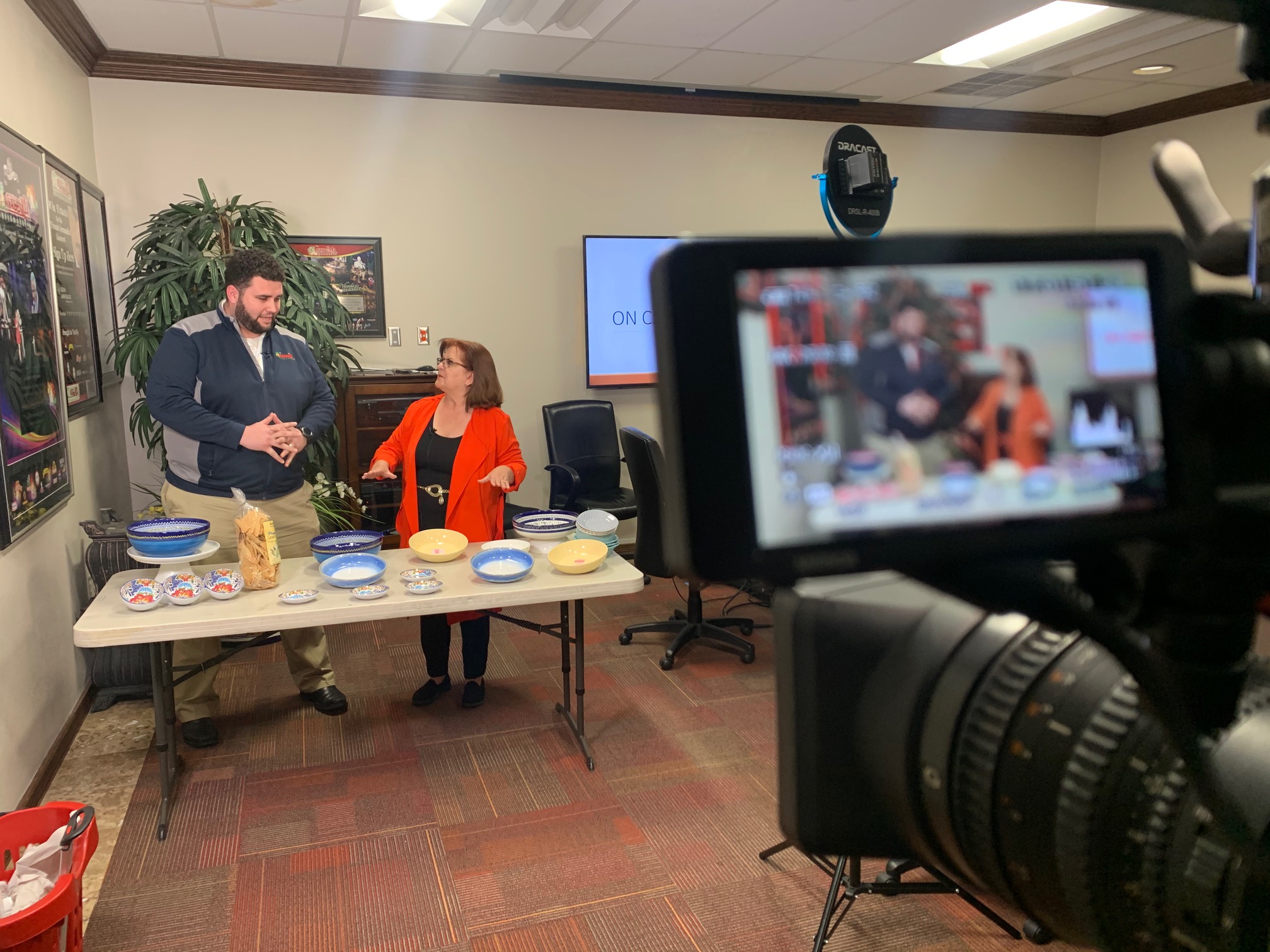
A phrase such as “the Latino market” can be useful in a business presentation and rather unhelpful if it ends the conversation. VPE’s description of its work makes distinctions within that audience: younger and older people, bilingual speakers and people who use one language. Those differences affect how an invitation lands.
The agency’s services came to include media relations, digital engagement, strategic communications and community outreach. Its client history includes Disneyland and McDonald’s alongside civic institutions. A brand seeking customers and a public agency trying to reach residents can both need cultural knowledge, although they are asking people to do very different things.
Pérez’s résumé supplies examples of the practical work. For the Housing Authority of the City of Los Angeles, she helped communicate the availability of Section 8 applications. For Verizon, her digital work included identifying online influencers, contests, video and social content aimed at younger audiences.
There is a considerable distance between a housing application and a consumer promotion. Each requires decisions about where information belongs, how to make it understandable and which relationships can carry it. Her career developed across that distance, with public awareness and commercial assignments sharing space on the same desk.
Recognition followed. In 2013, the Los Angeles chapter of the National Latina Business Women Association presented Pérez with a Women of Excellence award. The honor recognized business leadership together with service to the Latino community. VPE was marking its twenty-fifth anniversary that year, a reminder that institutional familiarity accumulates slowly.
UCLA graduation
PRGN presidency
Alumna of the Year
Retirement announced
A Los Angeles address, a six-continent brief
In 2010, Pérez became president of Public Relations Global Network. The organization connected independent, owner-led agencies around the world. Its election announcement described a network of forty firms on six continents. A Los Angeles executive working in multicultural communications was now helping lead an international association of peers.
The role offered a different scale for a familiar problem: how to share knowledge across places without pretending those places are interchangeable. Independent agencies brought their own local experience. Membership connected that experience with colleagues elsewhere, giving clients access to people who understood another market from inside it.
Her presidency also fell in the aftermath of the financial crisis. In a trade interview, she discussed how economic difficulties traveled between regions at different speeds. It was an observation about the uneven conditions agencies and clients faced, rather than a promise that a global network could make those conditions disappear.
Francine Robbens succeeded her in 2011. Pérez’s international leadership fits alongside her local civic commitments: the same professional record stretches from Los Angeles community organizations to agencies working across continents. Scale changed the number of introductions. It did not remove the need for someone who knew the territory.
Who gets to keep working?
Pérez’s civic record includes a sustained interest in work itself. She served as AARP California state president beginning in 2015, with Joe Garbanzos succeeding her in 2021. She later held the emeritus title. Her advocacy included bringing Latino communities into the organization’s work and supporting investment in those communities.
Her 2024 résumé describes a commitment to challenging age discrimination and advancing intergenerational workplace policies. It records service on the executive committee of the City of Los Angeles Workforce Development Board and leadership of the AdvantAGE LA committee for older workers.
That focus adds a revealing dimension to her retirement. She has chosen to leave an executive role while advocating for people whose opportunity to continue working can be restricted by assumptions about age. A person’s control over the decision matters in both circumstances. A voluntary exit and an exclusion from opportunity have very different consequences.
“When everyone is responsible, no one is accountable.”
Patricia Pérez · AdvantAGE LA
The observation appears in the AdvantAGE LA report’s discussion of implementation. Recommendations included dedicated staff and resources, data about older workers, and cooperation across agencies. The sentence brings the administrative problem into focus: a plan can attract agreement and still need identifiable people responsible for making it happen.
Her wider board service has included the California State Parks Foundation, the Center for Nonprofit Management and Los Angeles River State Park Partners. Public space, nonprofit capacity and employment all appear in the record. These commitments give specificity to the otherwise expansive word “community.”
UCLA Latino Alumni Association leadership
Workforce development and older-worker inclusion
State parks and Los Angeles River organizations
Advice without a spotlight
In 2019, the UCLA Latino Alumni Association named Pérez its Alumna of the Year. She had previously led the association. The recognition placed her alongside fellow honoree Earl Watson, the former UCLA basketball player and NBA coach, at the Fiesta de Inspiración scholarship and alumni awards gala.
UCLA recognized her support for communities of color in Los Angeles. The setting connected a graduate’s professional life with the institution and students coming after her. Alumni recognition often looks backward; a scholarship event also puts the next group of people in the room.
Hispanic Lifestyle had recognized her as a Latina of Influence in 2017. In a later retrospective, its publisher Richard Sandoval recalled the less ceremonial encounters: quiet conversations in which Pérez offered an insight, a suggestion or a perspective he had not considered. He remembered the usefulness of the advice and the absence of fanfare.
Communications executive Roxana Lissa has also named Pérez among the women she learned from while building her career. Such recollections describe another way knowledge moves through a profession. Alongside campaigns and formal leadership posts, there are colleagues remembering what someone made time to share.
The initials stay. The calendar changes.
When John Echeveste left VPE in 2014 to lead LA Plaza de Cultura y Artes, Pérez assumed sole leadership of the agency. Her own departure would close another chapter: for the first time, none of the three namesake founders would remain in a leadership role.
The preparation had begun well before the announcement. Succession planning was underway when Cueva became president in 2019. By July 2026, the incoming owners were colleagues already familiar with the business, its clients and its culture. The transition put accumulated experience in the hands of people who had helped create it.
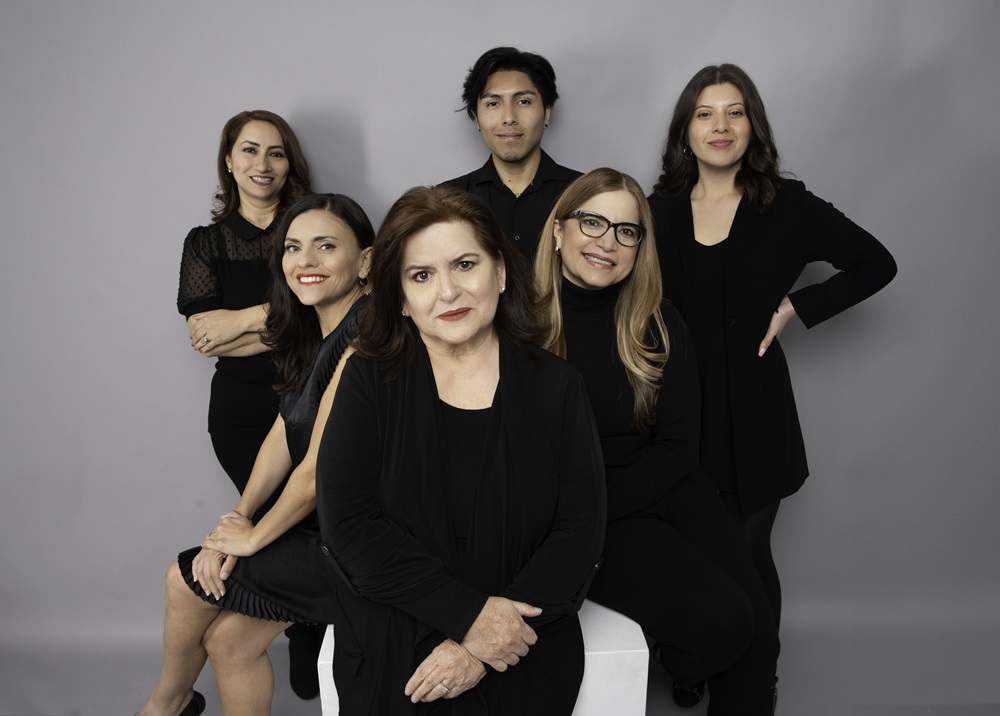
“Leading VPE Communications has been one of the greatest privileges of my career,” Pérez said in the retirement announcement. She expressed gratitude to clients and colleagues and confidence in Cueva and Alamillo. The agency’s continuity was part of the farewell, rather than a problem postponed until after it.
Her personal retirement post allowed for a less institutional pleasure. After years of calendars setting the terms, she looked toward new adventures and the freedom of deciding what came next. She described the prospect as a time “when the calendar finally belongs to you.”
The agency keeps three letters and a history of introductions. Pérez gets something harder to put on a business card: an unclaimed afternoon. After a career spent helping other people find their audience, choosing where to direct her own attention seems a reasonable appointment to keep.
Keep the conversation going
Her public profile, the agency’s next chapter and conversations from the archive.