A straight razor is an awkward thing to turn into a letter. It must still look sharp enough to belong to a barber, yet behave well enough to sit on a business card. For Casey the Barber, LightHouse Graphics chose to work the blade into a C. The trick was keeping both meanings visible. Lose the letter and you have an illustration. Lose the razor and you have a monogram with an unusually complicated backstory.
It is a small assignment that opens a useful window onto Josh Wilhelm’s business. The founder and CEO of LightHouse Graphics works in an industry whose finished products arrive looking inevitable. Of course the logo looks like that. Of course the website puts that information there. The decisions disappear into the result, which is rather the point. Good design is often rewarded by people forgetting that someone had to make it.
Wilhelm’s public advice keeps returning to the work before that result: learning what a customer needs, finding out why the customer came to you, understanding the job before appointing someone to do it. Across his agency and business radio work, the conversation gets considerable attention. A pencil is useful. So is a question asked early enough to change the drawing.
A business old enough to have changed its tools
LightHouse Graphics began in 1998 and marked its twenty-fifth anniversary in 2023. The name places graphics prominently on the door; the work now stretches across websites, development, branding and marketing. There is something pleasingly stubborn about a business name surviving while its job description expands. A client seeking an identity and a client seeking software may arrive through the same door with quite different expectations.
From founding year to LightHouse Graphics’ 25th anniversary.
Wilhelm’s working history includes founding SameDayPrinter.com and an art direction role at USC Annenberg involving online and print communications. Those settings put design in contact with production: material has to be approved, prepared and delivered. A beautiful idea acquires deadlines and formats. The practical details are part of the assignment, even when they have considerably less glamour than choosing the typeface.
His education includes attendance at Academy of Art University from 1999 to 2002. His career also took him into creative direction at Student Advocates. Together, these roles show a working range across institutional communications, commercial design and business ownership. The recurring task is making an organization understandable to somebody outside it, using whatever surface the message needs.
That range helps explain why a conversation about a website can grow beyond its appearance. A business owner may want a refreshed page while also needing clearer language, a more useful inquiry process or a recognizable identity. Deciding which problem comes first requires attention. Otherwise, a team can spend an impressive amount of time making confusion look expensive.
The question worth putting to a customer
In 2019, Wilhelm appeared on Critical Mass, the Orange County business radio show. The episode carries a June 26 date; LightHouse Graphics published its account the following month. The advice centered on client relationships and hiring. For a designer appearing on business radio, it was a revealing choice of emphasis. The discussion looked beyond the finished image to the people involved in getting it made.
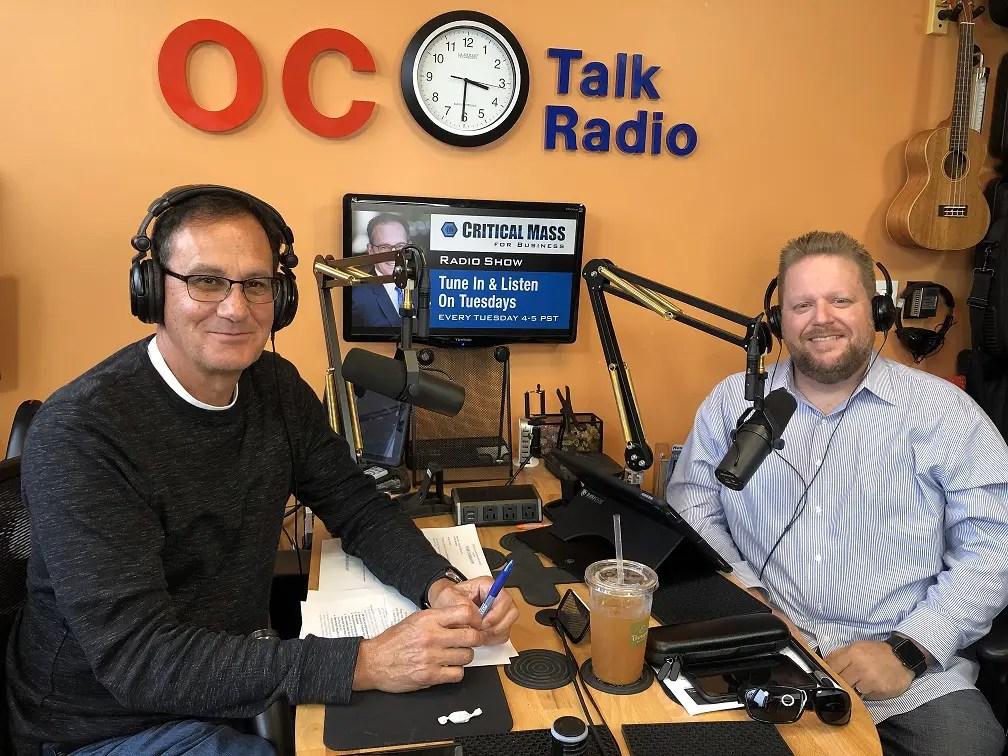
One recommendation was to ask customers why they had selected your company. It is a direct question with several possible uses. The answer can expose an assumption inside the business: perhaps the owner thinks price clinched the decision, while the customer remembers a reassuring explanation. Perhaps a service buried halfway down a page was the very thing that mattered.
For an agency, the implications reach into the brief. A customer’s account of choosing a business can supply language more specific than the adjectives companies tend to award themselves. It can identify what needs explaining and what already makes sense. It also gives the client a chance to describe an experience in ordinary words, rather than learning a designer’s vocabulary before being allowed an opinion.
Wilhelm’s hiring advice follows the same order of operations. Take time over the appointment. Understand the role. Find somebody suited to the work, rather than allowing convenience or familiarity to settle the choice. In both cases, the sequence matters: investigate first, decide second. Neither question requires a new piece of software. Both can become surprisingly expensive when left unanswered.
the client
they chose you
the role
When the customer remembers the repair
A customer account makes the human stakes easier to see. Nicole N., identified with OC Divorce Attorney, described a malicious link that kept preventing approval of her Google advertising. She said she had paid other developers without getting the problem resolved. In her telling, Wilhelm offered help without charge and worked through the issue until a subsequent Google check confirmed the link was gone.
The incident belongs to one customer’s experience. Its interest is the kind of work she remembered: a frustrating obstruction removed, with somebody taking responsibility for helping. The website’s appearance scarcely enters the account. A business relationship can turn on a problem that would never make a handsome portfolio image.
That is a useful companion to the more visible work. An identity project invites attention to form. A broken advertising journey invites attention to consequences. Both sit within the orbit of an agency selling design and digital services. For the person running the business, the distinction between a technical problem and a marketing problem may be less urgent than getting the thing working.
The barber’s C, up close
Return to Casey’s logo and the reasoning becomes tangible. The agency started with the tools of the trade and chose the straight razor. Making it readable as a C took exploration. The accompanying script leaned forward, combining a reference to mid-century style with a suggestion of speed. The mark had to carry the character of a barber’s business without requiring the customer to read a paragraph about it.
The finished identity was supplied as a vector, allowing it to work across applications such as a storefront, business card and website. That delivery detail matters. A logo has a busy life after approval: it gets enlarged, reduced and placed beside other information. The drawing has to survive the errands the business sends it on.
This is agency work under Wilhelm’s leadership, with the creative decisions described collectively by the team. Its value in his story is how clearly it shows the link between understanding a business and choosing a form. The object belongs to the trade; the letter belongs to the name. Two pieces of meaning share the same small space.
Giving the questions a microphone
Wilhelm also founded Ignite Your Business Radio Show, where he is listed as host. Its archive has a practical cast: ideal customer profiles, the timing of a rebrand and graphic design advice for non-designers. These are subjects a business owner can bring back to a working week. They concern choices people must make, often without a specialist sitting beside them.
Guests have included Yelp’s Jessica Carlin and marketing expert Andy Ryan. The format makes room for knowledge from other people, while the subject matter remains close to the decisions facing small businesses. How should a message change for a particular audience? When does an identity need revisiting? What should someone understand before asking a designer to begin?
Radio gives that explanatory work a different pace. A logo must often make its point quickly. A conversation can follow the question underneath the question. Someone asking about a redesign may also be asking how to describe a business that has changed. Explaining the decision is useful work in its own right, particularly for the owner expected to sign off on it.
The archive’s rebranding discussion brings that relationship into focus. A business can change its logo more easily than it can decide what its audience should understand differently. The radio topics put those decisions into language an owner can use: the customer profile, the message, the competition and the moment to make a change. For a designer who also runs a company, this is familiar territory from two directions. He has services to explain while helping other businesses explain theirs. The microphone makes that overlap audible.
The next conversation may be automated
At the agency’s 2023 anniversary, Wilhelm looked toward further innovation. He spoke of “even greater opportunities for innovation,” while the company discussed exploring AI in marketing. It was an ambition expressed at a milestone, placing the next set of tools alongside a business that had already spent twenty-five years adapting its offer.
“Even greater opportunities for innovation”
Josh Wilhelm’s outlook at the 2023 anniversary
His later public professional activity includes an association with sulus.ai, whose business concerns AI phone assistants and workflow automation. The company describes connecting calls with tasks such as lead qualification, appointments and follow-up. Wilhelm has shared its material publicly. The subject extends the communication problem into another setting: the moment somebody calls a business and expects something useful to happen.
A call has its own version of a design brief. A person arrives with a need; the business needs enough information to respond. Automation changes how that exchange can be handled. The earlier questions remain relevant: who is this for, what are they trying to do, and what should happen next? Wilhelm’s career keeps arriving at that conversation, whether the result is a printed card, a website, a radio discussion or a system answering the phone.