An insurance company can buy insurance software, hire insurance specialists, and still discover that part of its working day belongs to the PDF. Josh Lewis encountered that arrangement at Newfront. The documents arrived from carrier partners. Account managers moved their contents into a system of record. The people were trained professionals; the task was transcription. It had the unmistakable character of work that ought to have been somebody else’s problem.
Lewis went looking for a developer tool. He wanted something he could integrate, something that would deliver useful data rather than another pile of text to sort through. His shorthand was a “Twilio for PDFs”: an accessible service for a troublesome capability. Sensible, which he co-founded with Ming Lu, grew from that search. The company’s subject may be paperwork, but its founder’s story turns on a more personal question: what deserves an engineer’s attention?
An insurance company acquires a PDF problem
At Newfront, the difficulty was visible in the time account managers spent entering information from quotes, applications, and other documents. Each file carried facts that mattered to the next step in the business. Reading the page was only the beginning. The information needed to move into software before the workflow could continue.
Lewis’s November 2022 account of Sensible’s origins describes an unsuccessful search for an off-the-shelf developer tool. Newfront consequently tackled the problem internally. There is a small absurdity in that outcome: a company trying to improve insurance had acquired another job, deciphering the files through which insurance communicated.
It helps explain the shape of the company Lewis eventually built. Sensible would be a tool developers could use inside their own products. The work would happen where the document met the application. Businesses could keep receiving the material their partners already sent, while giving their software a way to use it.
A researcher returns to the keyboard
Lewis had already travelled through several versions of technical work. He studied cognitive science and philosophy at Pomona College, then completed a doctorate and postdoctoral research at UC San Diego. His research concerned making machine learning techniques more useful to people without formal computer science training. Usability was part of the intellectual problem long before it became a product requirement.
That background gives his move into developer tools a certain continuity. A sophisticated method can exist while remaining awkward for the person who needs it. Research and product development meet at that point. The practical question is how much specialist knowledge a user must acquire before the tool starts helping.
His career before Sensible included directing engineering at Ayasdi from 2013 to 2015 and leading product at Alpine Data from 2015 to 2017. Earlier, he co-founded State Design while his academic career was still under way. At Newfront, he encountered a business whose documents supplied a stubbornly concrete test for all that technical experience.
There was also a less formal apprenticeship. As a child, Lewis helped neighbours with their computers. Programming followed; philosophy later took him away from technology for a time. Research with a computer science component brought him back. His 2022 conversation on Code Story also introduces a father who plays tennis and competitive Magic: The Gathering drafts. The interests sit comfortably beside the career without needing to explain it. A card game is allowed to remain a card game.
A partner, a team, and a seed round
Lewis and Lu met through On Deck. Before committing to a company together, they worked through a co-founder questionnaire and spent time walking outdoors around Noe Valley. It was a practical way to put difficult subjects into conversation before difficult circumstances supplied them. Their partnership would need attention as well as technical agreement.
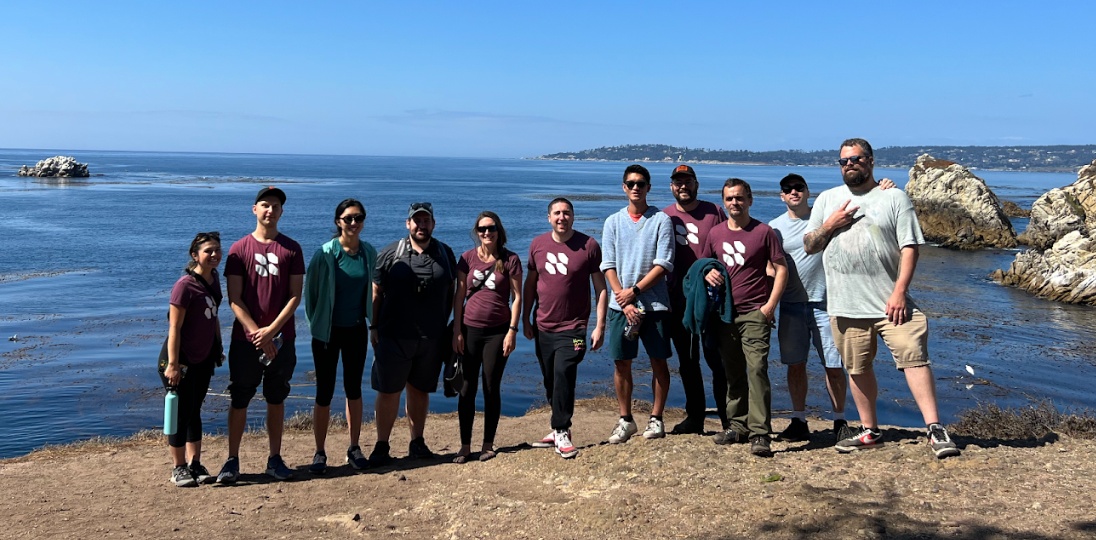
The business gathered a network of people with experience building software companies. In November 2022, Lewis announced a $6.5 million seed round led by Craft Ventures, with participation from Engineering Capital and Clocktower Technology Ventures. He named Lainy Painter, Ashmeet Sidana, and Ned Daoro among those supporting the journey.
Sensible’s investor list also connects the company to familiar parts of Lewis’s working world. It includes Newfront co-founders Spike Lipkin and Gordon Wintrob, Lattice co-founders Jack Altman and Eric Koslow, and Ayasdi co-founder Gurjeet Singh. Those names make the network tangible: people connected to the kinds of businesses from which the product and its founders had emerged.
“We believe software should work the way people work.”
Josh Lewis, November 2022
The page looks innocent
To understand Lewis’s work, it is useful to spend a moment with the object itself. A PDF is reassuringly finished. Its lines sit where they were put. Its tables look like tables. Yet a page that behaves well in front of a reader can be troublesome when an application tries to extract its contents.
In his writing on direct text extraction, Lewis gets into that mismatch. Text can be split into unexpected lines. Characters can be joined in ligatures. Hidden text, embedded images, and missing spaces can interfere with the result. A perfectly respectable-looking document has several ways to misbehave backstage.
He also explains the choice between reading embedded text directly and using optical character recognition. For suitable files, direct extraction avoids classes of recognition error and can reduce processing time and cost. Scanned document images present a different starting point. The method has to fit what is actually inside the file.
This is where the researcher and product leader become visible together. The writing deals in tradeoffs a developer must make, rather than treating the document as a solved problem. A customer waiting for an answer experiences those tradeoffs as speed, accuracy, or an extra step in a working day.
The answer has to survive the upgrade
By December 2023, another kind of change required attention: the retirement of language models on which existing software depended. In work credited to Lewis and applied data scientist Tash Patel, Sensible described evaluating replacement models against hundreds of example PDFs and their expected outputs. An upgrade had to earn its place through the results.
The team tested model-and-prompt combinations. It also separated answering a question from assessing the answer’s uncertainty when the combined approach performed worse. Some of the gains in speed and cost could then pay for a better check. The details reveal how much work can hide behind a seemingly modest promise: the tool should keep returning useful information.
In June 2024, Lewis and Patel explored a different failure: finding the wrong pages in a long document. A credit agreement might repeatedly discuss an administrative agent’s responsibilities without naming the agent in those passages. A search method could therefore reward the pages that sounded relevant and overlook the page containing the answer.
Their experiment with page summaries located the needed content in all ten examples of that particular test. It was a bounded result, attached to a specific problem. Its interest lies in the willingness to examine where a familiar method failed.
Credit-agreement samples in which the completions-only approach found chunks containing the administrative agent’s name.
One attachment, several documents
The paperwork keeps supplying new variations. One PDF can contain a collection of documents: bank statements, tax forms, paystubs, and other material assembled for a mortgage application. Before extracting a field, software must determine which document it is looking at. The attachment is a container as well as a page.
Lewis’s writing on mortgage portfolios describes the sequence: handle text extraction across differing pages, identify the constituent documents, then apply the appropriate extraction logic. Irrelevant material, including fax cover pages, can be ignored. There is something pleasingly realistic about the fax surviving inside a discussion of modern machine learning.
A 2025 article credited to Lewis describes using language models to separate and classify these mixed files. Developers supply descriptions of document types so the system can identify their boundaries and extract the information in one workflow. The product’s work expands, while the original question remains recognisable: how much handling should be necessary before the useful data reaches its destination?
Who owns the next failure?
Lewis returned to build-versus-buy decisions in a July 2024 podcast conversation. The episode ranged from his Newfront experience to engineering constraints and the distinction between revenue-generating projects and work that improves margins. These choices place document tooling inside a broader question about how a company spends its attention.
In February 2026, Sensible quoted his reflection on an internal automation project: “Why are we building PDF automation when we’re not going to sell it?” That question cuts through the temptation to build because building is possible. An internal tool brings continuing obligations. Someone owns the next format change, the next model change, and the next unexpected answer.
The decision becomes clearer when the internal tool is treated as a product with customers of its own. Colleagues need it to work during an ordinary day, with ordinary interruptions and unfamiliar files. They need a way to check an answer and someone to ask when it is wrong. Those requirements do not disappear because the tool lives inside the company. They help explain why the choice between building and buying reaches beyond the first implementation.
Read across his career, Lewis’s recurring subject is the effort required to turn technical capability into something another person can use. At UC San Diego, that meant accessible machine learning. At Newfront, it meant getting information out of insurance documents. At Sensible, it means making that work available as a component of someone else’s software.
The ambition returns to the account manager and the document. The information still matters. The customer still needs an answer. Lewis has built a company around shortening the journey between those two facts, with enough care that the journey can be made again tomorrow.