A virus-like particle is a biological impersonator. It borrows the architecture of a virus but carries none of the genetic instructions required to reproduce. To an immune system, the silhouette is persuasive. Under the hood, the engine is missing. Jose M. Galarza has spent a remarkable portion of his career exploring how much can be built from that useful contradiction.
His path runs from the University of La Plata in Argentina, where he earned doctorates in veterinary medicine and microbiology, through postdoctoral work in virology and molecular biology at the University of Utah Medical Center. Research at the University of California, Irvine followed. Then came Wyeth Pharmaceuticals in Pearl River, New York, where Galarza became a principal scientist and led the influenza subunit vaccine development program.
At Wyeth, Galarza and his team developed influenza virus-like particle technology. A 2001 paper in the Journal of Virology captured the elegant mechanics: express just four influenza structural proteins at once, and particles resembling the wild virus assemble and emerge from the cell. The finding offered more than a single candidate. It pointed to a repeatable way of making convincing viral stand-ins.
The useful imitation
The idea leaves the building
Plenty of corporate research disappears into archives, reorganizations, or someone else's roadmap. Galarza took a different route. In 2004, he founded TechnoVax around technology licensed from Wyeth. The company remained close to the place of invention, first in Tarrytown and later at an Elmsford address only a short drive from Wyeth's Pearl River campus.
The geography was modest. The scientific ambition was modular. If a VLP platform could accommodate different surface proteins, then the company did not have to be defined by a single pathogen. Its public pipeline and publications would eventually span influenza, respiratory syncytial virus, dengue, Zika, coronavirus, and adenovirus. The list is less interesting as a catalog than as evidence of the founding thesis: build the chassis carefully, then find out where it can travel.
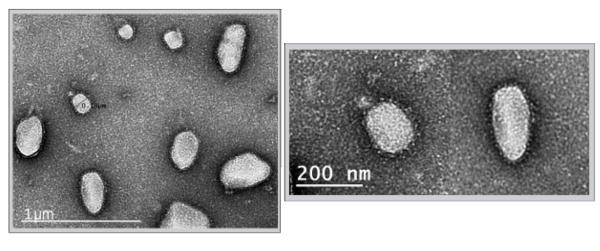
Those projects also reveal how platform work advances: one stubborn production detail at a time. A 2016 RSV study combined two conformations of a viral surface protein on the same VLP approach. A 2017 Zika paper described particles produced in mammalian cells. In a 2018 dengue study, Galarza and his co-authors found that lowering the production temperature produced particles that prompted the highest neutralizing antibody levels in their experiments. The headline idea was reusable, but each target still demanded its own craft.
The patent trail followed a similar rhythm. Galarza is named with TechnoVax co-founder George R. Martin on a family covering universal influenza VLP vaccines, with a priority date in 2010. Other filings cover flavivirus-like particles and adenovirus capsid assembly. Patents cannot substitute for data, but they show where a company believes its repeatable advantage resides. Here, it was not merely the identity of a target. It was the construction and production of the particle itself.
TechnoVax's small size made another part of the model visible: collaboration as infrastructure. Its studies connect the company with the CUNY School of Medicine, City College chemists and microscopists, Walter Reed Army Institute of Research, Colorado State University, New York Medical College, and researchers in Australia. Earlier government proposals named Baylor College of Medicine as a collaborator. A manufacturing initiative with Innovative Biotech and MilliporeSigma aimed to adapt a VLP process for scalable production in Nigeria.
A company can rent equipment, license technology, or outsource a study. Trust is harder to rent. The repeated names across TechnoVax papers suggest relationships accumulating around the work. Paul Gottlieb and Reza Khayat of City College, for example, appear in research on coronavirus and adenovirus particles. In a field built around specialized facilities and techniques, a durable collaboration graph can matter as much as the boxes on an organization chart.
This innovation is most likely to accelerate the development of a COVID-19 vaccine in that it utilizes a proven technology that is distinct from current COVID-19 vaccine candidates.Jose M. Galarza, 2020
A grant is an argument with a budget
For a small biotech, scientific range is expensive. TechnoVax used targeted government programs to turn its platform thesis into a sequence of testable projects. A 2009 NIH showcase said more than $5 million had already been invested in the underlying technology since 1996. That year, the company announced a $2.9 million grant for influenza programs. NIH later backed work on a broadly protective influenza candidate and an RSV VLP program.
The Defense Department funded a different application. A $100,000 Phase I award in 2015 supported early work on a multivalent adenovirus platform. In 2016, a Phase II award of just under $2 million continued development. The problem was specific to military readiness, where close-contact settings make adenovirus outbreaks especially disruptive. The platform logic remained recognizable: assemble nonreplicating particles that resemble the target and design them to accommodate more than one viral type.
Capital followed the experiments
Each award also forced the company to explain what the next milestone meant. Grants are frequently described as money won. In technical ventures, they are also compressed operating plans: a defined question, a team, a method, a time window, and reviewers unconvinced by adjectives alone. Galarza repeatedly appears in those records as principal investigator, responsible for both the argument and its execution.
The sequence created a kind of institutional memory. Influenza proposals refined the case for displaying chosen antigens on a particle. The RSV work tested different conformations of a key surface protein. The adenovirus program shifted attention to a more elaborate capsid and to formulations that could combine viral types. Even when an award was tied to one application, the methods and working relationships could feed the next one. For a platform company, the hidden return on a funded project is often the capability left behind.
The CEO who stayed in the methods section
Galarza's author credits offer an unusually granular picture of his role. A 2022 study of monovalent and bivalent SARS-CoV-2 VLP formulations lists him across conceptualization, data curation, funding acquisition, investigation, methodology, project administration, resources, supervision, validation, visualization, and both drafting and editing. It reads like the job description of a founder who never accepted the customary divorce between the boardroom and the bench.
The work continued to move. In January 2023, a TechnoVax team published a method for reconstructing adenoviruses with a one-step isothermal assembly. The process took less than four days for assembly, with recovery of recombinant adenovirus within ten days. Later that year, an npj Vaccines paper reported preclinical results for an adenovirus-7 VLP candidate. The research grew from Defense Department support and involved collaborators at CUNY and Walter Reed.
There was a public checkpoint between grant and journal article. At the 2022 Military Health System Research Symposium, work on monovalent and polyvalent adenovirus-like particle compositions received an honorable mention. Galarza shared the author line with TechnoVax colleagues and collaborators. Awards at a research meeting are modest signals, appropriately so. This one mattered because it showed the program being examined by the community it was designed to serve before the fuller paper arrived.
Then, in June 2026, Galarza appeared on a Proceedings of the National Academy of Sciences paper examining the structure of human adenovirus 7 virus-like particles. The affiliation line placed TechnoVax in Kinnelon, New Jersey, alongside researchers from City College, Queens College, Walter Reed, and other institutions. Twenty-five years separated that paper from his 2001 influenza study. Scientific careers often look jagged from the inside. From a distance, this one draws a remarkably clean line.
The patience of a platform
Biotech storytelling tends to favor a single clock: the race. First to discover, first to trial, first to market. Galarza's public record suggests another clock, slower and less cinematic. A platform accumulates manufacturing knowledge, assays, collaborators, grant history, patent claims, and a sharper understanding of its own limits. Its value may emerge through reuse rather than one triumphant reveal.
That does not make the route automatic. TechnoVax has spoken publicly about seeking strategic partners and advancing candidates toward human testing. The distance between preclinical evidence and a product remains substantial, requiring capital, manufacturing, regulatory work, and trials. The record here is not a finished commercial arc. It is a sustained technical one, and the distinction matters.
What can another founder steal from it? Begin with a mechanism broad enough to matter but specific enough to master. Keep scientific authorship close to executive responsibility. Treat grants as milestones, not trophies. Build a network whose combined capabilities exceed the payroll. Most of all, choose an idea that can survive the news cycle.
Galarza's useful fake has endured because it keeps generating real questions. What should the particle display? How should it assemble? Can one formulation present multiple targets? Can the process scale in a different manufacturing environment? What does the structure reveal about maturation? A good platform does not provide one answer. It earns the right to ask the next question with better tools.