Jordan Noone arrived at the University of Southern California expecting to work on airplanes. During his first week, the Rocket Propulsion Lab came to his introductory aerospace class with a different proposition: students could design and build a rocket and try to send it into space. He went to the group’s meeting that day. The airplane career had acquired a fairly serious scheduling conflict.
The attraction was the freedom to choose a difficult goal and take responsibility for it. In a student lab, an idea eventually has to become hardware. Someone must organize the work, find support, understand the regulations and check the design. The countdown is an unusually effective way of discovering whether a meeting achieved anything.
Noone would lead the lab for two years. Looking back, he described it as training in management, technical design, fundraising and FAA rules. His aerospace degree, completed in 2014, came with an extracurricular education in making an organization function. The lab also introduced him to Tim Ellis, a fellow student whose future would become closely tied to his.
A rocket is also a factory problem
Noone interned at Blue Origin and went on to work in propulsion at SpaceX. These were places where ambitious machines had to survive actual operating conditions. By 2015, he and Ellis were starting Relativity Space. Noone was 22. Their proposition joined two demanding undertakings: developing rockets and developing the metal printing technology to manufacture them.
The distinction matters. Buying a printer and feeding it an ambitious drawing would have been a much shorter business plan. Relativity had to develop the process, the equipment and the vehicle together. As founding chief technology officer, Noone’s work extended across printing, propulsion, software, infrastructure and launch vehicle design. The factory belonged inside the engineering problem from the beginning.
That breadth helps explain why a later move into design software fits his career. A rocket is the visible object, but its construction depends on a chain of less photogenic decisions: how a part is specified, how its geometry is represented, how the manufacturing process is controlled. Noone kept finding work in those connections. The launch pad was only one end of the system.
The permission slip and the flight
At USC, Noone received FAA clearance for a student rocket to fly into space. Permission and arrival are separate achievements. The lab’s spaceflight came in 2019, after his graduation. Keeping those events apart preserves the more interesting story: students carried a project forward across successive classes, with earlier attempts becoming part of the next team’s education.
Relativity’s Terran 1 took flight on March 22, 2023. About 85 percent of the rocket was 3D printed. It passed through the period of greatest aerodynamic stress, known as Max-Q, and achieved stage separation. It did not reach orbit. The flight supplied evidence about printed structures under launch conditions while leaving substantial work ahead.
Noone had stepped down as CTO in 2020, years before that launch. His five years in the role had concentrated on establishing the technology. The chronology makes his contribution specific: he helped create the manufacturing foundation, rather than personally presiding over every later milestone. A company can carry a founder’s early engineering decisions well beyond the founder’s daily job.
3D printed
A taste for the blank sheet
Leaving an operating role can sound like the conclusion of a founder’s story. Noone described a different impulse. Once Relativity’s printing technology had matured, he wanted the problems that precede an established playbook. Building the organization still required considerable engineering, but the character of the work had changed.
In 2020, he co-founded Embedded Ventures with Jenna Bryant. The partnership brought together his experience of technical development and her experience of recruiting engineers and building teams. The firm’s portfolio includes space infrastructure, manufacturing and engineering software. Its approach favors companies with commercial opportunities that can also develop national security applications.
One attraction of investing, in that account, is the chance to work on several beginnings. A founder who has had to build a manufacturing process can ask a different set of questions about another founder’s plan. Who understands the difficult part? Which assumptions need testing? What team can turn the drawing into a working machine? Capital becomes one ingredient in a practical engineering conversation.
“I wanted to go back to zero-to-one style challenges.”Jordan Noone, 2023
Before the chatbot, there was a README
KittyCAD, the company that became Zoo, was announced in May 2021 by Bryant, Noone and Jessie Frazelle. Its starting complaint was refreshingly concrete. Software developers could automate testing and deployment; mechanical designers faced tools with much less scope for comparable automation. The founders had put a public README on GitHub to find people who shared that frustration.
The early proposal imagined a change to a CAD model automatically triggering simulations, rather as a software change can trigger tests. It also imagined people sharing scripts and extensions. The point was to give hardware teams access to the programmable habits that software teams already took for granted. This was an infrastructure argument before conversational AI became the fashionable front door.
Frazelle brought experience from software infrastructure, including Docker. Noone brought the experience of trying to make physical hardware with the available tools. Zoo’s present co-CEO arrangement puts those backgrounds beside each other. Their shared problem sits precisely at the border: the software must be flexible enough to automate, and the geometry must remain useful when an engineer sends it toward manufacture.
The hole has to remain a hole
By May 2025, Zoo had released Design Studio v1, with its own geometry engine, KCL programming language, modeling interface and machine learning tools. The ambition was to keep the same design accessible through pointing and clicking, code, and generated changes. A mechanical engineer could use the visual interface without having to become a programmer.
There is a small but consequential difference between a convincing picture of a component and a model an engineer can keep changing. Imagine a bracket whose mounting holes need to move. The dimensions and relationships behind those holes matter. So does the sequence of operations that made the bracket. An attractive surface alone does not explain how to revise it.
Zoo argues for boundary representation geometry and a parametric feature tree: precise surfaces coupled with an editable record of design decisions. In ordinary language, the object needs its recipe. That is why Noone’s software venture is concerned with what happens after the initial demonstration. The next engineer will have changes. Engineers are wonderfully dependable in that respect.
A conversation that leaves its workings intact
In February 2026, Zoo introduced Zookeeper, a conversational agent inside Design Studio. Users can describe a part, ask questions, explore alternatives and revise a model. The announced workflow includes research and planning before geometry is generated, with results remaining editable through familiar modeling tools. Conversation is another way into the work.
In a September interview, Noone emphasized direct access to underlying CAD data and the effort required to build a geometry engine. He also distinguished the publicly available model from custom enterprise implementations. That distinction is useful: engineering software serves very different situations, and a demonstration in one setting cannot automatically describe every customer’s experience.
His interest remains in giving engineers more time for design by reducing repetitive work. The aspiration has survived several changes of company and vocabulary. Relativity put automation into manufacturing; Zoo puts it into the design environment. Both ask where human attention is being spent, and whether machinery could take on more of the repetition without obscuring the decisions that matter.
What a seventeenth-century keyboard can teach a rocket founder
Zoo’s 2026 Makeathon offered a pleasantly unexpected test. Noone was among the judges, and the winning entry reconstructed a clavichord described by Marin Mersenne in 1636. Mason Malone’s model connected the instrument’s musical relationships to editable geometry. An aerospace founder’s design competition had made room for a very old keyboard.
The process was instructive. An initial attempt to generate the instrument from the historical material failed. Malone brought in further research, broke the problem into components, checked the output and corrected it. The finished project depended on human judgment as well as software. It gave Zoo a tangible example of why keeping the design open to revision matters.
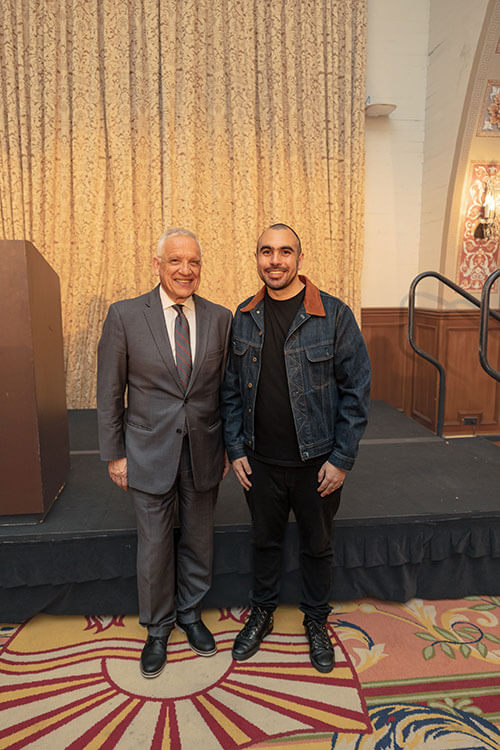
That educational thread also runs back to USC. Noone continues to advise Rocket Propulsion Lab students. He and Bryant supported the return of Project Payload, a summer program giving middle school girls practical experience in aerospace engineering and computing. A February 2025 campus photograph places him beside engineering dean Yannis Yortsos: a former student returning with a rather different set of project notes.
Leave room for the next edit
The most recent software milestone is modest enough to reveal the job clearly. In October 2026, Zoo announced KCL 3, improving core modeling operations while keeping older files on their existing language version unless users choose to upgrade. Progress has to coexist with the expectation that yesterday’s design will still open correctly tomorrow.
Noone’s public GitHub profile offers a lighter expression of the same preoccupation: “I CAD to say hello.” There are more solemn ways to introduce a career spanning propulsion, investment and computational geometry. Few would make the work sound as approachable.
His story keeps returning to the space between an intention and an object. At USC, that space contained a student team and a launch permit. At Relativity, it contained a printer and a factory. At Zoo, it contains the geometry, parameters and editable decisions behind the thing on the screen. The drawing board still has work to do. Noone has gone back to it.