Twenty-three point cards came out of Jonathan Yaffe’s wallet when he was finishing his time living in Japan. There was one for a café, another for a sushi restaurant, another for the neighborhood supermarket. A small archive of returning to places. To the businesses involved, the cards represented loyalty. To Yaffe, they raised a question: how much did repeat consumption reveal about what a customer actually felt?
That memory fits his approach to experiential marketing. It is an appropriately untidy object for someone who now runs a software company: a wallet full of evidence, with the meaning still up for argument. AnyRoad, the business he co-founded with his brother Daniel, helps brands operate events and understand the people who attend them. Yaffe’s interest is in the relationship that survives the occasion.
His own biography has accumulated experiences with unusual enthusiasm. There is cognitive science at Berkeley, marketing at Red Bull, a school in Tokyo, creative workspaces, and a travel business that became something else. The route makes more sense when you follow his attention rather than his job titles. He keeps circling the distance between being present and being changed.
A school before the software
At 21, Yaffe says, he sold his car and bus, quit his job, and bought a one-way ticket to the Brazilian Amazon. He spent the next two and a half years traveling in South America. Japan followed. The story has the administrative simplicity of a young person’s decision: sell the transport you own, buy transport somewhere else, and leave the rest for later.
What happened in Tokyo required considerably more staying power. In 2006, he and Charles Knudsen co-founded KAIS International School. It began in a small house. The ambition was an education attentive to the individual student, with room for creative work and practical learning. Before Yaffe was asking companies what their customers experienced, he was helping decide what a school day should feel like.
By 2008, he was describing a school where students made news broadcasts, researched current events, composed music, and published their work online. Each student had a MacBook. Older children could mentor younger ones in classes spanning different ages. He proudly pointed out that the high-school students could identify every country on a blank map. Geography, in this household of ideas, was unlikely to be optional.
The classroom offers a useful way to read the later career, without pretending that teaching and marketing are the same occupation. Both chapters involve designing encounters and paying attention to what people take from them. The educational chapter also prevents the software founder’s story from starting conveniently at the first financing round. He had already built something that asked people to turn up each morning.
The guide with a business to run
AnyRoad’s first public incarnation belonged to travel. In spring 2013, Jonathan and Daniel were working on bringing independent tour guides online. The offering favored local knowledge and specialized outings over the large group following the inevitable umbrella. A guide might know a landscape, a neighborhood, or a food tradition intimately while still running bookings through conversations and recommendations.
The brothers had done substantial listening. Early coverage described conversations with 3,000 guides, including 600 individual meetings. The software handled such tasks as scheduling, payments, marketing, and bookings. The romantic part was finding an experience a visitor might otherwise miss. The unromantic part was getting the credit-card payment to work. A business needed both.
Their own travels supplied the premise. They described experiences such as hiking a Nicaraguan volcano with a local guide and finding a less obvious route to the Great Wall with a taxi driver named Mr. Chu. These encounters did not fit their old picture of a tour. Once they reconsidered the word, a market came into view.
That early service is worth holding in mind when looking at the later enterprise company. Its work began close to people who made their living by showing others something. Over time, AnyRoad’s customers and ambitions changed. The continuity was the encounter itself: someone arrives, something happens, and the organizer needs a way to manage the exchange. The brand analytics business grew around questions that a booking alone could not settle.
- 2006Co-founds KAIS
Tokyo - 2013Co-founds AnyRoad
Independent tours - 2019Series A
$9.2 million - 2022Series B
$47 million
The six-month gap
Yaffe had encountered a different version of the measurement problem at Red Bull, where he worked in experiential marketing after college. The brand made an impression through events and participation. His frustration was the difficulty of understanding how those encounters affected behavior. A crowd having a good afternoon made for encouraging footage. He wanted the evidence to travel further than the camera.
Years later, an investor could supply a particularly clear example. David Ulevitch attended an Audi driving experience on a frozen lake in 2012. Instructors taught him to drive at speed; he learned about the cars and enjoyed himself. Six months later, when he needed a car, he leased an Audi. The lake had done some selling. The transaction arrived on its own schedule.
When Andreessen Horowitz announced its investment in AnyRoad in June 2019, Ulevitch used that story to explain the attraction. How could Audi know that an afternoon months earlier had helped produce the purchase? How should a company communicate with someone before and after such an encounter? The question had a human scale even when the answer required enterprise software.
The financing gave that answer more room to develop. AnyRoad announced a $9.2 million Series A, with Ulevitch joining its board. A $10 million extension followed in 2021. In February 2022, the company announced a $47 million Series B led by funds and accounts managed by BlackRock. Those are company milestones, and they mark how far the brothers had traveled from arranging independent tours.
An afternoon needs an afterlife
The work connects ordinary event operations with longer questions about customers. Yaffe describes bringing experience data into systems that businesses already use, then examining changes in perception and behavior over time. Booking and attendance establish that an interaction took place. Feedback and later activity help the brand understand what it might do next.
He has discussed Michaels’ art classes and Anheuser-Busch’s brewery experiences as examples of companies putting this approach to work. One setting involves making things with your hands; another involves learning how a familiar drink is produced. The shared opportunity is time spent with a brand in a context richer than a checkout. The organizer can ask what participants valued and test a different approach.
For Yaffe, this also calls for a different conversation inside a business. Creative teams care about how an experience feels. Analytical teams need information they can act on. He has described the difficulty of helping established companies bring those habits together. A successful event still needs the imagination that made someone want to attend. The numbers earn their place when they help improve the next one.
There is a practical restraint in his advice to smaller businesses: begin with an experience you can do well, define what you hope to learn, and measure it. That is less glamorous than announcing a grand transformation. It also gives a person responsible for a modest budget something to do on Monday.
“We measure anything that changes behavior.”
Jonathan Yaffe, On Brand conversation, 2021
The audience beyond the spreadsheet
Yaffe’s interests extend beyond the standard equipment of a marketing executive. His biographies describe involvement in the Mirai Institute and Midori.so, the Tokyo creative workspace network. He has lived in Brazil, Colombia, Switzerland, the United States, and Japan. His travels have taken him to 97 countries by his own published count. The passport has had work to do.
He has also spoken warmly about Lego’s attention to adult fans. It is a telling example for someone interested in how a product becomes part of a person’s identity. A box of pieces can lead to a hobby, an afternoon, or a community. The buyer brings a life to the transaction, including interests that a receipt has very little room to describe.
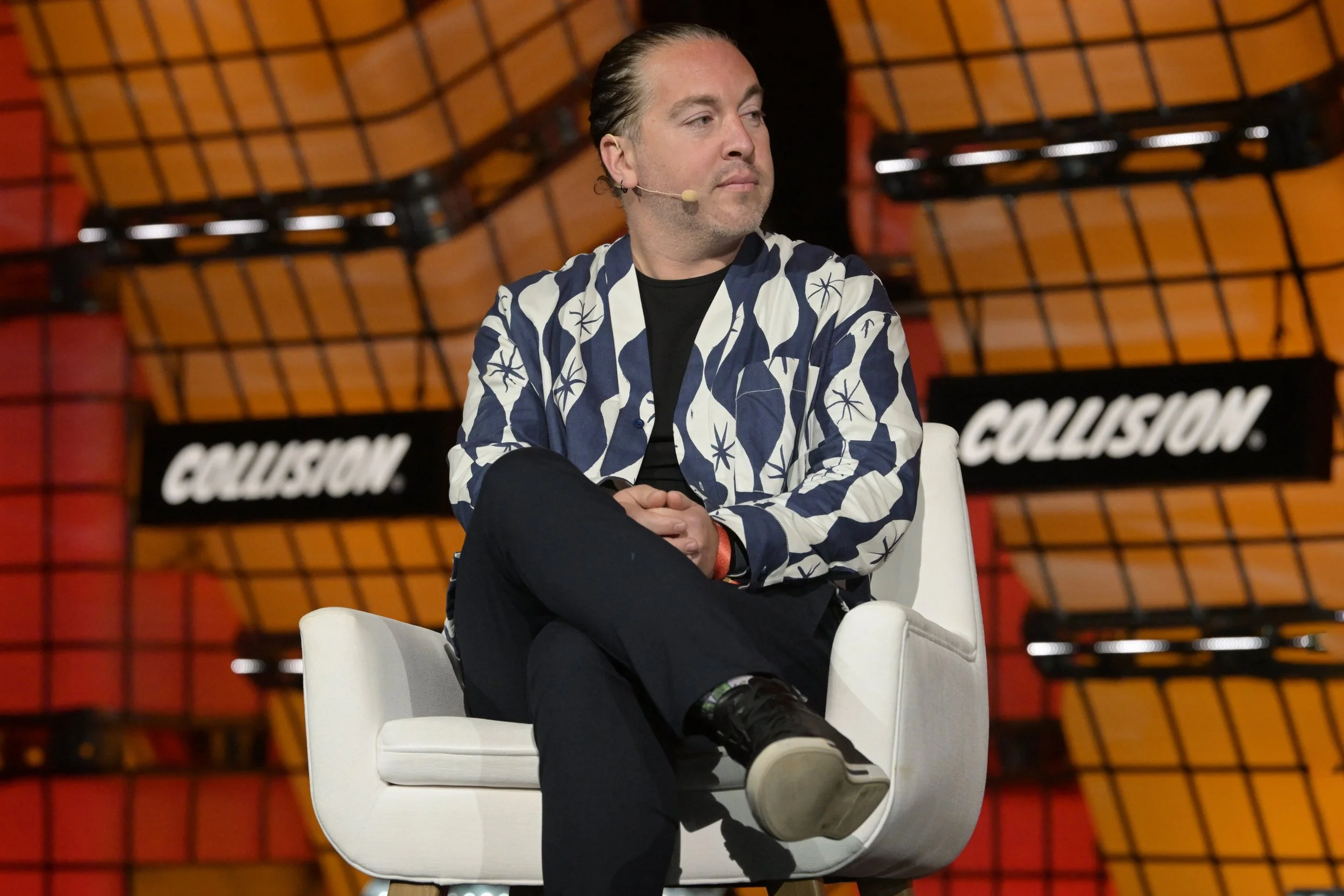
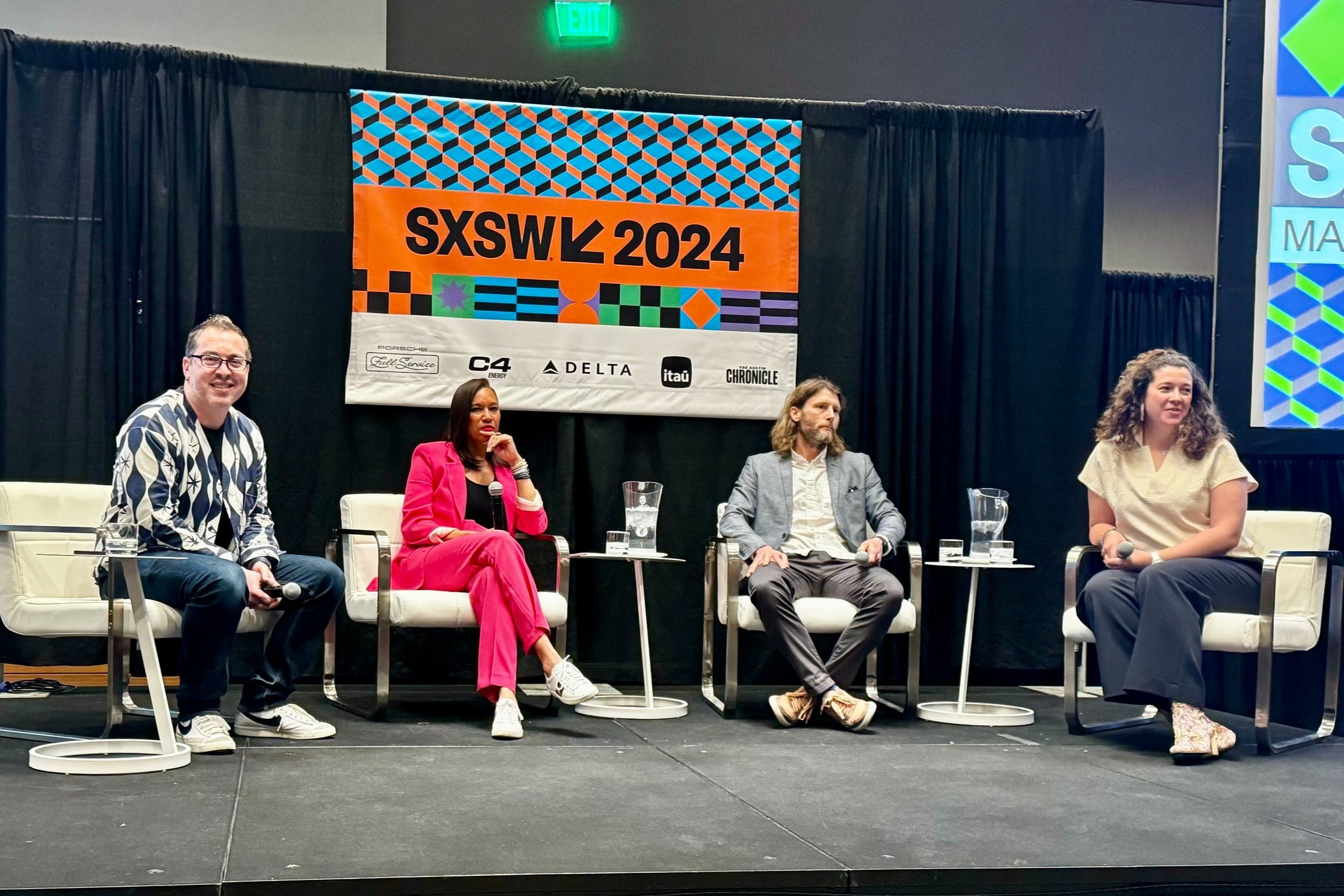
The public speaking has become part of his job. Photographs place him at Collision in 2023 and SXSW in 2024; his subjects include experiential marketing, customer value, and data. Onstage, the task is to explain why these questions matter to people whose calendars are already full of events. He has chosen a field with an unusually direct way to test whether an audience will show up.
Radiohead, receipts, and the next room
Yaffe can be dryly funny about the business surrounding his business. Asked to give the venture-capital ecosystem of 2023 a film title, he chose Apocalypse Now. Asked what had inspired him that year, he answered Radiohead. His proposed translation of liquidation preferences was a restaurant bill’s compulsory gratuity. The answers suggest someone comfortable letting the joke remain short.
His more recent writing has kept extending the argument about what businesses retain from their encounters with customers. In August 2026, The Roadie listed essays on AnyRoad’s development of a CRM and on the work that follows a marquee event. September brought a piece about Chipotle and customer data. His subjects increasingly reach beyond producing an occasion to sustaining a relationship.
The loyalty cards make a useful return here. They are physical records of repetition, collected by someone who cares about the difference between a habit and an attachment. Yaffe has built organizations where people learn, gather, visit, and buy. He keeps asking what remains after they leave. It is a reasonable question to carry from a Tokyo classroom into a marketing meeting. It is also a reason to keep looking up from the spreadsheet.