Jonathan Milner had an internet business to sell and an ice bucket to help sell it. When Abcam was struggling in its early days, he carried antibodies around laboratories and persuaded colleagues to try them. There is something cheering about this small collision of eras: the sales channel was the web, while the salesman still had to turn up with the goods. A bucket is a modest piece of equipment on which to rest a company’s prospects. It does, however, get your attention.
He knew the customers because he had been one. As a postdoctoral researcher at Cambridge, Milner had struggled to find reliable antibodies for his experiments. These were working tools, and buying them could involve incomplete information and uncertain results. He wanted a supplier that would tell researchers what a product could do, deliver it promptly and offer useful technical support. The frustration was specific enough to become a business.
That business was Abcam, founded in 1998 with David Cleevely and Tony Kouzarides. Milner led it for sixteen years, through its 2005 stock-market listing and its expansion overseas. In December 2023, Danaher completed the acquisition of the company for approximately $5.7 billion. By then Milner had become an investor, mentor and philanthropic funder. His interests now stretch from laboratory tools to evolution lessons and farmland. The common question is practical: how does someone with knowledge make it useful to someone else?
A catalogue with room to tell the truth
Milner’s education followed a recognisable scientific route. He graduated from Bath in 1988, took a doctorate in molecular genetics at Leicester, and worked as a research fellow at Bath before joining Kouzarides’ laboratory in Cambridge. Business training had not been part of the preparation. Laboratory experience had supplied something else: an unusually clear view of what a buyer needed to know before making a purchase.
Paper catalogues imposed a limit on that knowledge. They had finite space and could become dated. A website could hold more information and be updated as circumstances changed. For a researcher choosing a tool for an experiment, those differences mattered. A sale depended on the usefulness of the accompanying information as well as the object arriving in the post. Milner’s proposed shop therefore had to be good at explaining its stock.
Cleevely brought business experience and capital. Kouzarides brought the academic connection; he had been Milner’s supervisor. The company’s name was similarly economical: “Ab” from antibody, “cam” from Cambridge. Nobody needed a branding workshop to locate the two ingredients. Its early proposition combined current, candid product information with delivery and support. These are ordinary commercial promises, but they addressed the exact difficulties that had bothered Milner at the bench.
The online model made room for customers to contribute reviews and ratings. That is a consequential decision for a scientific supplier: the people doing experiments have information that a seller cannot manufacture in a marketing department. Inviting their experiences onto the website made the catalogue more useful. It also meant accepting that a customer might have something inconvenient to say. A product page could become a place to learn rather than merely a place to order.
Sixteen years, then another chair
Abcam floated on London’s AIM market in 2005. Milner had moved from being a researcher who needed better supplies to running a publicly traded company supplying other researchers. The transformation involved the unglamorous demands of a growing business: capital, organisation, distribution and the ability to keep promises to customers far beyond Cambridge. The ice bucket had done its bit. It was hardly an international fulfilment strategy.
The figures show how quickly the scale changed. Sales were £12 million in 2005 and exceeded £70 million in the year to June 2010. Those are company revenues, not Milner’s personal fortune, and they belong to a particular period of his tenure. They describe the distance between a local selling effort and an established operation. Recognition followed: he received a CEO of the Year award at the European Mediscience Awards in 2010 and a CiteAb lifetime achievement award in 2016.
In September 2014, Alan Hirzel succeeded him as chief executive. Milner became deputy chairman. He explained that he felt he had taken the company as far as he could in the CEO role. A founder making that judgement is acknowledging that building an organisation and continuing to run it are separate decisions. After sixteen years, he was willing to hand the daily job to someone else.
His attachment to Abcam did not disappear with the change of chair. In 2023 he publicly opposed Danaher’s proposed $24-a-share acquisition, arguing that the price undervalued the business. The sale went ahead and became effective on 6 December. That disagreement belongs in the story alongside the growth. A company can be a financial asset to its shareholders and a deeply personal undertaking to its founder; a transaction has to contend with both.
Annual sales. The 2010 figure covers the year to June. Bars use £70m as the comparison baseline.
What a mentor passes on
Milner used some of the money released through Abcam’s listing to invest in other companies. He also offered founders advice and mentorship. His explanation was a debt acknowledged: he wanted to return the help his own mentors had given him. In a career shaped by a supervisor and an experienced entrepreneur, that is a concrete account of where the impulse came from.
The work accumulated. He has provided investment, mentoring and support to more than eighty companies, including help with three technology-company listings on AIM. He is CEO and executive director of Meltwind Advisory, the team handling due diligence and portfolio management for his investments. Support is the operative word in that total; it does not imply that he founded eighty businesses or ran all of them. It describes a network of involvement built after, and alongside, his own company.
Nuclera appointed him non-executive chairman in January 2024, following his participation in its earlier funding. Its focus on protein prototyping brings him back to tools used by researchers. In December of that year he also became non-executive chairman of Healx. Different companies, different management teams, and a familiar role for Milner: experience at the board table after years spent making decisions in the chief executive’s seat.
Mentoring has an appealingly inefficient quality. Money can move in a transaction; judgement takes a conversation. Someone has to hear the problem, recognise the part that resembles an earlier difficulty and decide whether that resemblance is useful. Milner’s career gives him material for those conversations. The difficult early sales, the successful listing, the decision to step aside and the original task of finding customers are all part of the same education.
“Give back what I received from my mentors.”Jonathan Milner, 2017
Evolution deserves a bigger audience
Bath remained part of his life after graduation. In 2015 he pledged £5 million towards establishing its evolution centre. He had already supported projects including the Darwin Correspondence Project and work on teaching genetics and evolution. His interest extended beyond underwriting research papers. He wanted the subject to reach people who would never be employed in a university laboratory.
“Evolution is the foundation of modern biology,” he said. The centre’s plan joined research with public engagement, including school education and open online learning. Milner’s gift helped support facilities, projects and appointments. A public engagement officer belonged in that plan alongside academic researchers. Explaining the work was a job with resources attached, rather than an activity to squeeze into an academic’s spare afternoon.
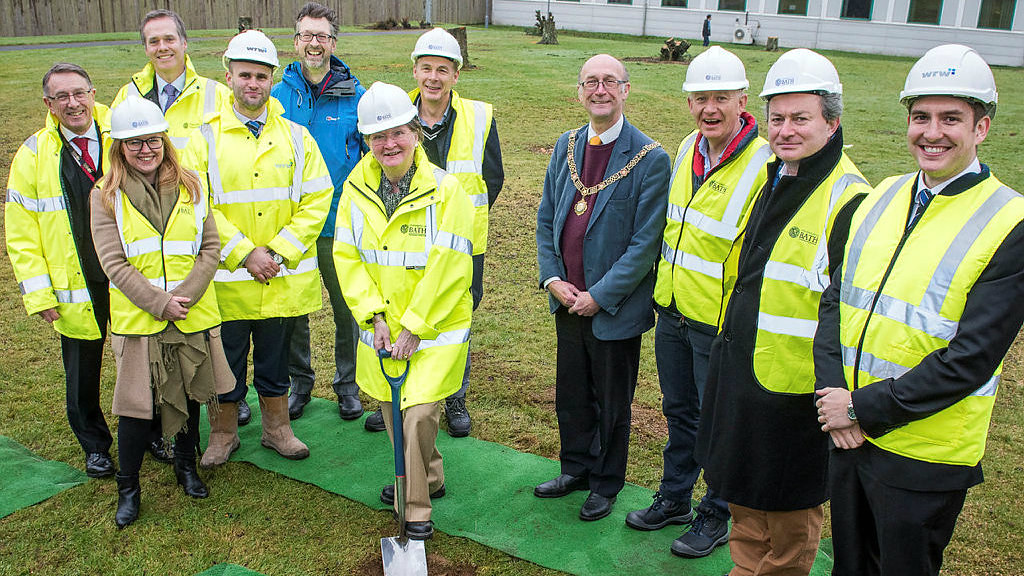
In January 2017, he joined the turf-cutting ceremony for the new building. It opened in September 2018, with offices, laboratories, a seminar room and an area for outreach. The architecture gave the ambition somewhere to happen. Children and teachers could encounter evolutionary science in a place designed to receive them, while researchers had space to work together.
Through the Evolution Education Trust, which he founded in 2010 and chairs, that educational interest continues. The trust has supported doctoral students as well as classroom resources and public communication. One of its accounts of Bath’s work describes a straightforward finding: teaching genetics before evolution improved secondary students’ understanding. The order in which knowledge is offered can matter as much as the enthusiasm with which it is announced.
There was a further change in May 2026. In line with Milner’s wishes, the Milner Centre for Evolution became the Centre for Evolution. Bath said the centre was fully established; its mission continued, and support for the existing EET Scholars remained. A donor’s surname came off the title while the work stayed. It is a pleasingly practical way to treat a legacy: let the institution get on with its subject.
Back home, with measurements
Milner was born and raised in Minchinhampton, Gloucestershire. Conservation has brought him back towards that landscape. After working with Sir David Attenborough on A Life on Our Planet, he founded Sapperton Wilder, a project exploring how land restoration, biodiversity and food production can fit together. The Evolution Education Trust was a founding funder of the documentary. The connection between learning about nature and doing something with land became literal.
Sapperton Wilder’s approach asks for evidence. Baseline surveys establish what is present so later changes can be measured. Its earthworm work includes surveys repeated across different years to account for annual variation. The project plans to monitor ecological indicators and socioeconomic returns over thirty years. That timescale makes a quarterly results calendar look positively impatient. It also leaves room for an experiment to produce something more instructive than a tidy publicity photograph.
Consultation helped broaden an initial rewilding idea towards questions about food production and community benefit. The result is a set of problems to investigate together: what happens to wildlife, what can the land produce, and what does the work mean for people nearby? In September 2026 the team reported spreading locally harvested wildflower seed over nearly ten hectares, then using longhorn cattle to help press it into the soil.
There is no need to dress a field as a startup to see why this work would interest Milner. It rewards observation, patient investment and the willingness to adjust a method. His earlier company put more useful information beside the things researchers bought. His education funding made scientific ideas easier to encounter. Now the question is what a piece of Gloucestershire can teach, provided someone measures carefully enough and shares what they learn.