Jonathan Adams was twelve when a three-week woodworking job began expanding beyond its advertised dimensions. Another summer. Another holiday. Another Saturday. He delivered cabinets, installed them, laminated, built and ran machines. The arrangement had the peculiar durability of a temporary solution that everyone keeps using. A career was accumulating, although the boy doing the work had yet to become its admirer.
“At the time, I didn't enjoy the work, but looking back, it was an invaluable learning experience.” There is something reassuring about that admission. Childhood employment need not arrive wrapped in destiny. Sometimes the useful education is the one you would rather have skipped.
After high school, Adams worked full time at Adams Group while carrying a full university schedule in Information Systems Management. His responsibilities moved from project engineering to systems administration and eventually chief operating officer. Woodworking supplied the problems; technology supplied another way to approach them. That combination would take him into software as co-founder and CEO of INNERGY, then through further leadership roles in cabinet manufacturing.
The cabinet and the conversation
In 2013, Adams was talking to architectural woodworkers about a deceptively ordinary problem: how to communicate with the people buying their work. Younger clients were using text, social media and chat. He recommended tools such as Salesforce's Chatter for conversations around projects and within a business. A trade account recorded that he turned thirty on the day of his presentation. One way to spend a birthday: explain to a room of manufacturers why the conversation has moved.
The setting matters. At the Architectural Woodwork Institute convention, manufacturers and construction managers were discussing bids, project details and the difficulty of coordinating work. Adams brought the discussion down to the communication tools younger architectural clients actually used. A carefully prepared message accomplishes little if the intended reader has gone elsewhere. A cabinet can arrive at the right building while the instruction about it remains in the wrong conversation.
That is the recurring practical interest in his public work: the space between tasks. Manufacturing has plenty of visible objects to command attention. Information is less accommodating. You cannot stack a misunderstanding on a pallet, though someone may eventually have to pay to move its consequences.
Islands in the factory
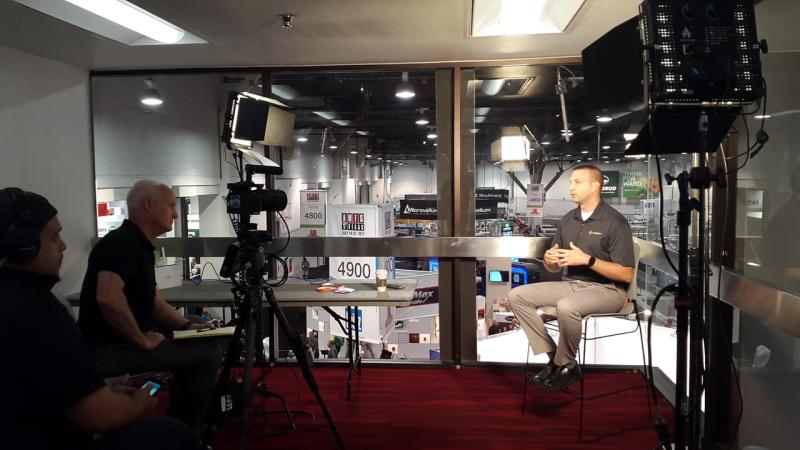
By 2017, Adams was CEO of INNERGY and a member of that year's Wood Industry 40 Under 40 class. The awards recognized emerging leaders across North American wood manufacturing. His work concerned an ERP system for woodworking businesses, bringing an operator's experience to the software used to organize the trade.
At the Executive Briefing Conference, his scheduled topic was how manufacturers should use the growing quantity of shop-floor data. The agenda included deciding what to measure, what to leave alone, how to use the information collected and how supplier integrations might enrich it. Even the event's cheeky session title, “The Big D,” had a practical burden beneath it: numbers have to help someone make a decision.
In a 2018 interview, Adams described a related problem. Information was accumulating in sales, estimating, project management, engineering, purchasing, receiving and inventory. Different applications held different pieces. Their disconnection made it difficult for information to move across the business. His phrase was “islands of data.” It was an economical description of an expensive inconvenience.
“And those applications are creating islands of data”
Jonathan Adams, 2018
A useful way to picture that problem is to follow an instruction through a shop. An estimate contains assumptions. Engineering makes them specific. Purchasing orders material. Production needs the current instruction. The question Adams raised was how those separate activities could share information without losing the thread. That remains an operating question even when the screen looks tidy.
- Estimate
- Engineer
- Purchase
- Produce
- Install
Every stage needs information from the one before it.
Back where the finish dries
Adams's career also took him to Barbosa Cabinets, where the 2021-2022 Kitchen Cabinet Manufacturers Association directory listed him as president. The directory is an unglamorous place to find a career marker, which rather suits the subject. Cabinets still have to be manufactured while the software industry is busy describing its future. His work moved between the business systems and the businesses using them.
At Bell Cabinetry & Design, Adams became vice president of operations. In 2023, he described investments in automated panel storage and retrieval, CNC routing, automated flatline finishing and drying technology. The equipment list reads like a route through production: find and move the material, machine it, apply the finish, dry the coating. Each improvement belongs to a larger sequence.
Bell reported 35 percent sales growth for 2022 in that trade coverage. The number describes the company's sales, rather than a personal score for Adams or proof that a single machine caused growth. It gives the investment discussion a concrete business setting. Greater volume makes the coordination of machinery, materials and people an immediate management concern.
Company performance, reported in 2023
Finishing is an especially revealing part of this story. It sits close to what a customer sees, yet depends on work the customer rarely watches. A smooth surface has a manufacturing history. Decisions about handling, application and drying all lead toward that final appearance. For an operations executive, the attractive finished cabinet is also evidence that a succession of tasks has held together.
In a later recruiting post, Adams described expanding Bell's finishing room to roughly 20,000 square feet and adding automation. He wanted a manager comfortable with hand spraying, stains, paints, glazing and automated finishing. Color knowledge and leadership appeared alongside machinery expertise. It was a job description with room for both a trained eye and an understanding of a production system.
That combination is more interesting than the familiar prediction that a machine will do everything. The actual vacancy asked for someone who could work across techniques and lead others. Machinery changes the questions a manager must answer. It also makes the remaining judgments easier to notice.
The next person at the machine
In May 2023, Adams joined Jacob Edmond on Verify In Field to discuss the millwork skills gap. Recruitment, retention and developing entry-level team members were among the subjects. His advice included understanding what employees enjoy and considering whether their interests could connect with a different role. The conversation treated a workforce as something a business develops over time.
That approach gives an employee's first assignment a provisional quality. Someone may enter through one task and discover an aptitude elsewhere. A manager has to notice the possibility, make room for learning and still get the day's work done. Adams's own route through physical work, engineering and information systems gives this subject a particular resonance, without making every employee's path a copy of his.
His education adds another detail. At Hodges University, he graduated magna cum laude and was recognized as Information Systems Management Student of the Year. His account of studying while working includes paying his own tuition. His later technical training ranges across CNC programming, edgebanding, automated storage and troubleshooting. The subjects are specific enough to resist the vague comfort of saying someone is simply interested in technology.
One recent recruiting message for engineering talent offered training to candidates who had used other cabinetry CAD/CAM systems. That is a concrete distinction: an applicant's existing knowledge can be useful even when the software package differs. The employer still needs competence. It can also decide which part of that competence is transferable.
In another appeal for cabinet builders, Adams described custom hoods, detailed islands and inset framed cabinetry. He placed Bell at “the intersection of technology and artisanship.” The phrase earns its place beside those examples. There are recognizable objects at the intersection, with details somebody must understand how to make.
A larger company, familiar questions
On December 20, 2024, Construction Resources announced its acquisition of Bell Cabinetry. Michael Bell and his leadership team would remain. Construction Resources had itself been acquired by The Home Depot in December 2023. For Bell, the transaction connected a cabinetry business with a wider distributor of surfaces, appliances and specialty building products.
Adams publicly welcomed the deal and the opportunities for growth. The acquisition announcement described ambitions to simplify design and building, shorten build time and coordinate product selection and installation. These are familiar concerns in a career spent around handoffs. A larger organization brings a wider set of products and relationships; it also gives information farther to travel.
The enduring interest in Adams's career lies in the repeated movement between scales. A person learns a task. A manager organizes a department. Software connects activities across a business. An acquisition joins that business to a larger group. At each scale, someone has to understand the work well enough to arrange what happens next.
The three-week job supplied a beginning rather than a tidy explanation for everything that followed. Adams had to study, change roles and learn new systems. Yet the early assignments gave him direct experience of work that later appeared in schedules, software and hiring plans. Delivering a cabinet is a useful introduction to the fact that a plan eventually has to arrive somewhere. Years later, he was still concerned with helping the next part of the work get there.