In 2018, Jon Lee was running a customer relationship management company, talking about artificial intelligence, and reading Charlotte’s Web to his three children. The reading assignment was a useful interruption to the vocabulary of software. Here was a founder occupied with making businesses more successful, returning at home to a story about friendship, promises, and the trouble of being overlooked.
Lee had already built and sold two companies. He had worked in investment banking and at Yahoo. Yet he described the impulse behind ProsperWorks, the business that became Copper, in unusually personal terms. Making money had mattered most when he was younger. Between companies, he began asking what he wanted his work to accomplish. Helping other entrepreneurs succeed gave him a reason to start again.
His chosen problem lacked the glamour of a new gadget. Companies bought software to manage customer relationships, then struggled to persuade employees to use it. Information went missing. Forecasts became unreliable. A tool intended to organize selling demanded another round of clerical work. Lee had used those systems himself. He decided the burden belonged with the software.
There is something agreeably awkward about a technology founder whose product argument begins with doing less. Software tends to arrive bearing gifts: another screen, another setting, another place to remember a password. Lee’s argument made the user’s ordinary working day the starting point. Email was already open. Why ask the person to leave?
An apartment, a search market, a first exit
At the University of California, Berkeley, Lee studied industrial engineering and operations research. His first jobs took him away from the usual manufacturing route: investment banking at Merrill Lynch, then operations work at Yahoo. At Yahoo Search International, he worked on the business machinery behind a growing search business. Advertising offered a practical introduction to measuring whether an action produced a return.
Bazaar Advertising Solutions was his first company. Its business was generating customer leads by optimizing paid-search campaigns. On his founder profile, Lee describes starting with $10,000 and no venture financing, then growing the business to more than $47 million in less than two years. The figure belongs to the business, rather than to his personal fortune. It is still a revealing contrast with the venture-funded companies that came later.
The early operation was self-funded from a Palo Alto apartment. In 2006, Bazaar was sold to the advertising group identified in Lee’s biographies as Epic Media Group. He subsequently served as a division president, overseeing search, conversion optimization, and advertising sales. Before he was selling an inbox-based CRM, he had learned to connect a measurable customer action to a business result.
An apartment is a modest address for a company with eight-figure ambitions. It also makes the arithmetic less abstract. Money earned from the business could pay for more business. Lee’s first venture gave him experience with a short feedback loop: spend on search, observe the response, improve the process. The attraction of that loop would survive several changes of industry.
Finding the fun, then finding the friction
In 2009, Lee co-founded DNA Games. It applied an optimization platform to social games, including Casino City. His public career account says that title reached more than 20 million players. Zynga acquired DNA Games in May 2011. Lee then became a general manager at Zynga, working on ChefVille and building a studio around a virtual restaurant game.
Advertising and games make an odd-looking pair on a résumé until the question underneath them becomes visible. What makes a person respond? In advertising, the response might be a lead. In a game, it might be the decision to keep playing. The outcome differs; the habit of observing behavior and adjusting the product travels comfortably between the two.
Office software presents a less cheerful version of the same question. People can be instructed to use a tool and still avoid it whenever possible. A business application may satisfy a buyer while irritating the employee who must operate it. Lee’s move into CRM brought his interest in actual usage into a category where purchase and participation could drift apart.
The playful chapter of his career therefore matters to Copper’s story. A game designer cannot assume that people will enjoy a feature because it took months to build. A CRM founder cannot assume that employees will enter information because a manager bought the subscription. The button has to earn its click.
The inbox was already occupied
Lee’s 2016 account of starting ProsperWorks began with conversations. He asked business leaders he had known across his career what mattered most to their companies. Their answers converged on customer relationships. Their complaints converged, too: the systems intended to support those relationships were complicated, required data entry, and went unused.
Investor Anshu Sharma captured the idea that persuaded him to back the company: make CRM disappear. Begin with email, the tool salespeople already use, and put the functionality there. ProsperWorks built around Gmail and the wider Google productivity suite. The ambition was to capture useful information without requiring a separate ritual of entering it again.
The launch announcement made the promise concrete. ProsperWorks could remind a user when communication with a customer had gone stale, or help discover potential contacts from inbox and calendar activity with permission. It advertised a setup time as short as ten minutes and introduced a $19-per-user monthly plan. Those were launch-era claims and prices, but they show the kind of barrier Lee wanted to remove.
A relationship can deteriorate while everyone is diligently maintaining the machinery meant to preserve it. A forgotten follow-up has little respect for a beautifully arranged database. Lee’s product choices addressed that everyday mismatch. The useful intervention was a timely reminder, a captured interaction, or information presented where a person could act on it.
Growth brought its own administrative work
By September 2016, Lee announced a $24 million Series B round led by Next World Capital. The company reported more than 90 employees and 500 percent year-on-year revenue growth from a base of single-digit millions. These were snapshots of a particular stage, rather than numbers to carry forward indefinitely. They marked the point at which a small founding team had become an organization.
The next task was hiring people who knew how to run larger parts of that organization. In February 2018, ProsperWorks announced three executives: Jon Aniano as chief product officer, Morgan Norman as chief marketing officer, and Niraj Shah as vice president of growth. Their backgrounds included Salesforce, Dialpad, and Zendesk. The company said it then had 150 employees and $87 million in venture financing.
Lee also spoke publicly about the difficulty of moving from small customers toward larger ones. Free users and midmarket buyers could request different things. Feedback had to be considered alongside the intended market. An early customer’s enthusiasm was valuable, but it could send a product team toward a destination the company had never meant to reach.
When asked what occupied his thoughts at night, Lee’s answer was brief: “Are we moving fast enough?” The line fits a founder who had crossed several markets already. Speed, though, now depended on other people’s judgment, experience, and coordination. A company selling relief from organizational friction had acquired some organizational friction of its own.
“Are we moving fast enough?”Jon Lee · 2018 SaaStr interview
A shorter name, a different chair
ProsperWorks became Copper in 2018. The company connected the name to clarity, simplicity, energy, and currency. It was a shorter word for a product concerned with making connections easier. Whatever one thinks of naming exercises, Copper required less effort to say. A business promising to save its customers time had at least shortened the introduction.
In May 2019, Copper announced Dennis Fois as its new chief executive. Lee became its former CEO and remained on the board of advisors. Fois had led NewVoiceMedia through its acquisition by Vonage, and Copper emphasized his experience in international markets. At the announcement, Copper said it served more than 12,000 paid businesses in over 100 countries.
The handoff is part of Lee’s career, rather than a footnote to it. Founding a company and running every subsequent stage are separate commitments. Copper was preparing for further international expansion. Lee publicly supported Fois’s appointment and the next phase of growth. The business he had started would continue with someone else responsible for the chief executive’s desk.
- DNA Games → ZyngaA social-games business changes hands.
- Copper’s CEO handoffDennis Fois succeeds Lee.
- Datajoy → DatabricksThe next chapter in business data.
The next question was hidden between departments
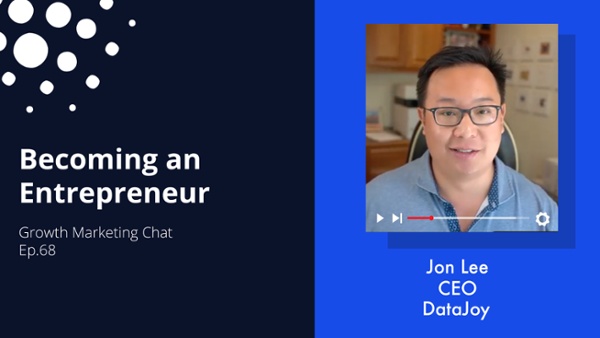
Lee’s next company, Datajoy, returned to business data from another direction. With co-founder Ken Wong, whose background included Tableau, he worked on revenue intelligence: bringing customer information together and helping companies use it to guide acquisition and retention. Investor Partech described a product that combined an organization’s customer data with machine-learning-supported insights.
The premise carried a familiar concern. Access to information means little if the people making decisions cannot use it. Sales, marketing, and other teams may each possess a portion of the customer story. A company needs to understand how those portions fit together. The attraction of Datajoy was that business teams could obtain useful analysis without constructing every piece of the data machinery themselves.
In October 2022, Databricks announced that Datajoy would join it. The announcement described revenue metrics, dashboards, and machine-learning-powered performance insights designed to be simple to deploy. Datajoy’s product and engineering team would join Databricks’ presence in the Pacific Northwest. Lee was identified as Datajoy’s co-founder and executive chairman; Wong was its co-founder and CEO.
Lee supplied a compact explanation of the ambition: “We built Datajoy to close that gap.” The gap was between the possibilities of modern data technology and the ability of organizations to use them. After leads, games, and customer relationships, he was still working on the distance between what a system could offer and what a person could actually obtain from it.
The work that earns another visit
Away from product descriptions, Lee’s public biography includes a fondness for aquariums and a reputation for memorable all-hands speeches. Those details sit nicely beside a career in measurement. A founder can care about numbers and still enjoy looking at fish. An employee meeting can involve more than the distribution of another spreadsheet.
Asked to describe how he worked in one word, Lee chose “Ambitiously.” His stated aspiration for ProsperWorks was to help businesses become more successful by driving sales. His reading list, meanwhile, included a children’s novel. Together, these details give the career some scale: companies, customers, colleagues, and a household whose evening reading had its own demands.
Copper’s central proposition remains an unusually personal one for enterprise software. Respect the time of the person sitting in front of the screen. Start with the work that person already does. Earn another visit. Across Lee’s changes of industry, that attention to behavior provides a thread sturdier than any single company name. The software can recede; the work can carry on.