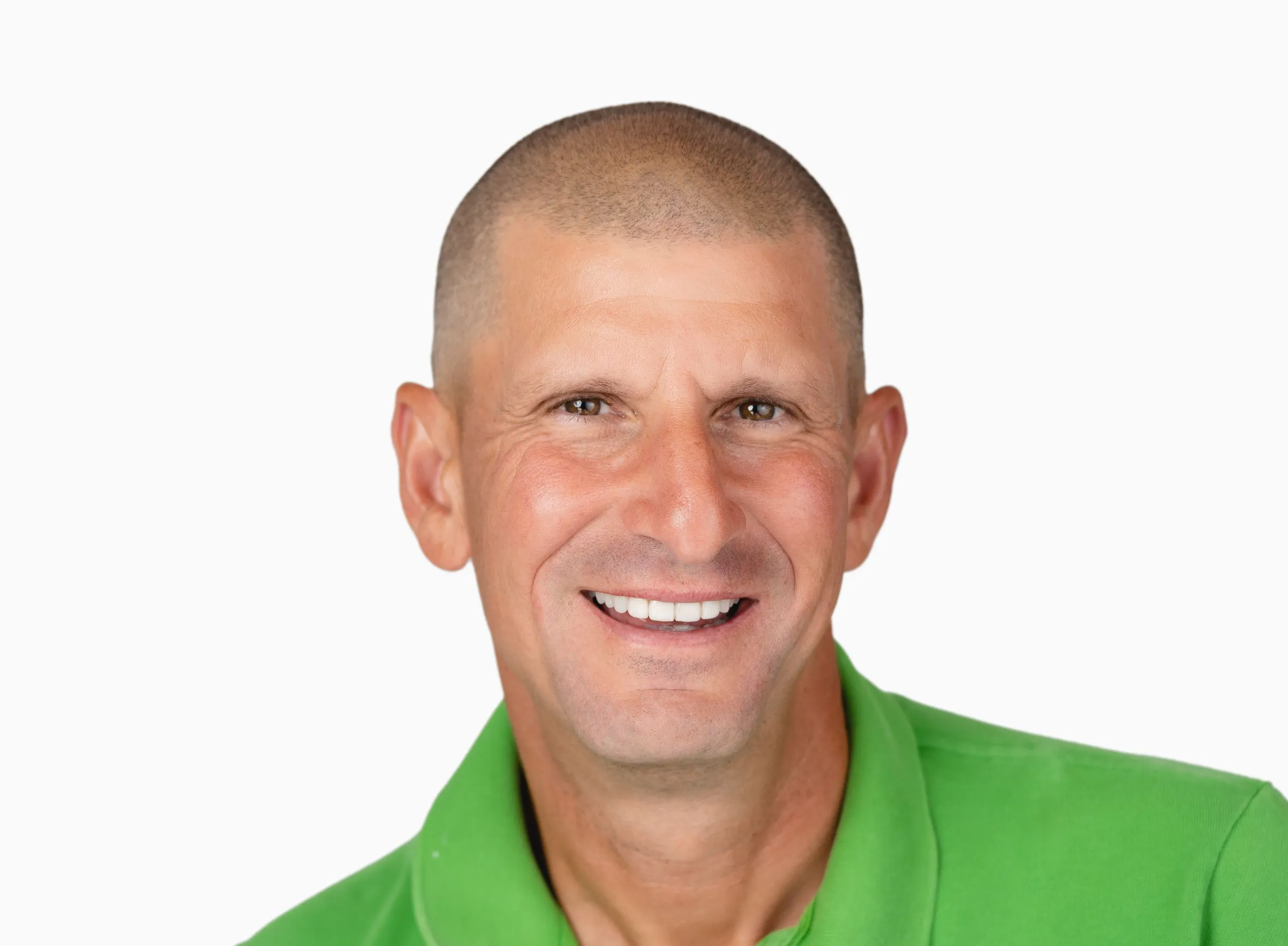
Breaking
Jon Auerbach - General Partner at CRV Forbes Midas List #16 (2020) Early backer of DoorDash, Zendesk, Affirmed Networks Affirmed Networks acquired by Microsoft for $1.35B Co-founded M-Qube, sold to VeriSign for $275M Former Pulitzer-nominated journalist at Boston Globe & WSJ 20+ years at CRV - one of the oldest VC firms in America CRV closes $750M latest fund (2025) Jon Auerbach - General Partner at CRV Forbes Midas List #16 (2020) Early backer of DoorDash, Zendesk, Affirmed Networks Affirmed Networks acquired by Microsoft for $1.35B Co-founded M-Qube, sold to VeriSign for $275M Former Pulitzer-nominated journalist at Boston Globe & WSJ 20+ years at CRV - one of the oldest VC firms in America CRV closes $750M latest fund (2025)
Jon Auerbach, General Partner at CRV

Jon Auerbach - CRV, San Francisco

Venture Capital • Early Stage • CRV

Jon
Auerbach

General Partner — CRV (Charles River Ventures)

He covered wars before he funded startups. The eye for chaos turned out to be the job.

20+ Years at CRV
#16 Forbes Midas 2020
$1.35B Affirmed Networks exit
73+ CRV portfolio IPOs
$750M Latest CRV Fund Size
$275M M-Qube exit to VeriSign
2x Top 10 US Tech Journalist
1993 Reported from Azerbaijan conflict

The Reporter Who Learned to Read Founders the Way He Read War Zones

In 1993, Jon Auerbach was filing dispatches from Azerbaijan. The Soviet Union had just collapsed, the region was in open conflict, and Auerbach - a foreign correspondent for The Boston Globe - was there to make sense of the mess. Most people would call that a rough beat. Auerbach calls it background. The ability to walk into a high-stakes, high-uncertainty situation, figure out who the real players are, and tell a coherent story from the rubble? That turns out to be a decent set of skills for a venture capitalist.

Decades later, Auerbach sits as a General Partner at CRV - Charles River Ventures - one of the oldest venture capital firms in the United States, with roots stretching back to 1970. He has been there since 2004, making him one of the longer-tenured GPs in the industry. In a world where fund managers come and go with each market cycle, two decades at the same firm is a statement in itself. CRV has backed over 400 companies. More than 73 have reached IPO - a hit rate that places it in a different category from most.

The best entrepreneurs aren't afraid of recessions; they're afraid of stagnation. - Jon Auerbach

Before venture, there was journalism. Auerbach spent over a decade as a technology reporter and editor - the kind who actually understood the technology. He wrote for The Wall Street Journal and The Boston Globe, covering the wireless industry during the period when mobile was still a strange, slightly futuristic bet. His work was nominated for the Pulitzer Prize. He was twice selected as one of the top ten newspaper technology writers in the country. These are not the credentials you expect on a VC's biography page, and that's precisely why they matter.

He Didn't Just Fund a Company. He Built One.

Around 2000, Auerbach made the pivot that most journalists only dream about. He joined Highland Capital Partners as a General Partner - but he didn't stop at writing checks. He co-founded M-Qube, a mobile messaging platform, during his Highland years. The company was early to the idea that mobile phones would become the primary communications medium for a generation of consumers. In 2006, VeriSign acquired M-Qube for $275 million. That's the kind of outcome that changes how founders look at you in a pitch meeting. He had been on their side of the table. He knew what it felt like to build something from scratch and carry it to an exit.

That founding experience - rare among VCs - shapes how Auerbach engages with the companies he backs. He's not theorizing about product-market fit; he's been through it. He's not guessing about the pressure of a difficult fundraise; he's navigated one. At CRV, he now leads the firm's founder support operations, overseeing legal, finance, marketing, talent, and the firm's CXO network. He has turned the operational side of venture capital into something systematic.

A VC should never conceive a company. - Jon Auerbach

That line - "a VC should never conceive a company" - says something about how he thinks about his role. The idea, the vision, the obsession: those have to come from the founder. The investor's job is to recognize when that conviction is real and to provide, as he puts it, "a steady platform from which founders can take the biggest leaps." It is a deliberately supporting role, and Auerbach seems comfortable with it in a way that many investors are not.

The Calls That Defined a Career

The portfolio reads like a tour through twenty years of enterprise and consumer tech. CRV was an early investor in Zendesk, the Danish-founded customer support platform that listed on the New York Stock Exchange in 2014 and was eventually taken private by a private equity consortium for $10 billion in 2022. Auerbach was involved in the early-stage investment and served on the board. The Zendesk bet is instructive - the company was building something that felt obvious in retrospect but required seeing past the crowded help-desk category to the underlying shift in how businesses interact with customers.

Then there's DoorDash. CRV's early investment in the food delivery company is one of the more celebrated early-stage calls in recent venture history. DoorDash went public in December 2020, one of the largest tech IPOs of that year, with a market cap exceeding $30 billion on its first day of trading. The bet on DoorDash required believing that local commerce logistics could be rebuilt from scratch - that the restaurant down the street could become a node in a national delivery network. Auerbach was part of the team that made that call.

Perhaps the most technically precise bet was Affirmed Networks. Founded by Hassan Ahmed, Affirmed was building software to replace hardware at the core of mobile operator infrastructure - taking equipment that had cost carriers hundreds of millions of dollars and reimagining it as code running on commodity servers. CRV invested in 2009, Auerbach joined the board, and the company spent a decade proving the thesis. In March 2020, Microsoft acquired Affirmed Networks for $1.35 billion - a signal that the telecom software transformation was no longer theoretical.

We provide a steady platform from which founders can take the biggest leaps.
Jon Auerbach - General Partner, CRV

Notable Investments

DoorDash
Consumer / Logistics

Early-stage bet on local commerce logistics when most dismissed food delivery as a niche. CRV backed DoorDash before the category became a battleground.

IPO 2020 • $30B+ market cap day one
Zendesk
Enterprise SaaS / CRM

Board member through early growth of the Danish-founded customer support platform. Backed the shift from clunky help-desk software to cloud-native customer engagement.

NYSE IPO 2014 • $10B take-private 2022
Affirmed Networks
Telecom Infrastructure

Invested in 2009 when the company was reimagining carrier infrastructure as software. Sat on the board for over a decade while the thesis played out.

Acquired by Microsoft 2020 • $1.35 billion
Yammer
Enterprise Social

Early-stage investment in enterprise social networking - the bet that corporate communication would move away from email toward persistent group messaging.

Acquired by Microsoft 2012
Twitter
Consumer / Social

CRV was among the early investors in Twitter when it was still a side project from the Odeo team, before the platform reshaped global public discourse.

NYSE IPO 2013
M-Qube
Mobile Messaging

Co-founded by Auerbach himself while at Highland Capital. Built one of the early mobile messaging infrastructure platforms for carriers and content providers.

Acquired by VeriSign 2006 • $275 million

What a Journalist Sees in a Startup Pitch

The journalism background is not incidental. Auerbach spent years learning to distinguish signal from noise under deadline pressure - in newsrooms, in press briefings, in war zones. That skill translates to venture in ways that aren't always obvious. A good journalist knows when a source is telling you what they think you want to hear versus what's actually true. A good investor needs to do the same thing in a pitch meeting. Both jobs require comfort with ambiguity, speed at identifying the core of a complex situation, and the ability to construct a narrative from incomplete information.

His investment philosophy centers on founders who reject incremental progress - not because disruption is a buzzword, but because those are the companies worth the risk profile of early-stage venture. He is explicit about this: "A VC should never conceive a company." The idea has to come from someone who can't stop thinking about the problem. The investor's role is validation and support, not origination. This is a cleaner, more honest articulation of the founder-investor relationship than most partners offer.

Auerbach led CRV's strategic shift from its Boston roots to a West Coast-focused operation - a move that reflected where the tech ecosystem had migrated. The firm opened its Menlo Park office and eventually made San Francisco its primary hub. These decisions require reading the geography of innovation, not just the companies within it. He has been on the right side of that call for two decades.

CRV: History as a Competitive Advantage

CRV was founded in 1970. That makes it older than the personal computer. The firm has backed more than 400 companies across its history - including Akamai, Check Point Software, and Course Hero alongside its more recent investments. Over 73 of those have gone public, representing an 18%+ IPO rate that is well above industry averages. The firm typically invests $500K to $20 million per deal, with a sweet spot around $13 million, keeping it anchored to true early-stage work rather than the growth equity territory that many firms have drifted toward.

At CRV, Auerbach runs more than just the investment function. He oversees the firm's founder support infrastructure - legal, finance, marketing, talent, and a CXO network that gives portfolio company executives access to each other and to outside expertise. This operational layer is what separates firms that write checks from firms that actually help. For a founder navigating their first significant scaling challenge, having a GP who has run a company and sits at the end of a phone is worth more than the check.

In 2019, Auerbach announced CRV's 16th venture fund at $393 million - and wrote publicly about what the new chapter meant for the firm. By 2025, CRV had closed its latest fund at $750 million, a substantial increase that reflects both the firm's track record and the continued appetite among LPs for early-stage exposure in technology. Two decades in, Auerbach is still finding companies at the seed and Series A stage that he believes can reshape their categories.

On Recessions, Stagnation, and What Actually Scares Founders

When market conditions tighten and founders start worrying about raising in a downturn, Auerbach's line cuts through the noise: "The best entrepreneurs aren't afraid of recessions; they're afraid of stagnation." This is not optimism for its own sake. It's an observation about selection. The founders who are deterred by macroeconomic conditions weren't the right founders for early-stage venture anyway. The ones who keep building through the difficult quarters - who use the compression to hire the talent they couldn't previously afford, to lock in partnerships with incumbents who suddenly need to move faster - those are the companies that emerge from the cycle as category leaders.

It is, in a way, the same read he was trained to make in a newsroom. When the situation looks worst, that's when the real story is happening. You just have to know where to look.

Five Things Worth Knowing