John Zillmer waits for his lunch. At Aramark’s headquarters, the chief executive joins the cafeteria queue alongside everyone else. Tamsin Fast, the company’s chief compliance officer, has described seeing him there, waiting for the salads, pizzas and local restaurant offerings. In a discussion about corporate trust, she chose a scene involving a food line.
It is a pleasingly unceremonious image for the head of a food service company. A chief executive could find more theatrical ways to demonstrate accessibility. Lunch has the advantage of occurring every day. The person ahead of you gets served first; the title on your business card is of limited nutritional value.
Zillmer’s second tenure at Aramark has revolved around a related proposition: hospitality deserves to govern the business that sells it. That idea has traveled through sales budgets, executive incentives and a corporate separation. By 2026, it had reached the workforce communities supporting the construction of AI data centers. The journey begins with a return.
The return came with a boardroom reset
On October 7, 2019, Aramark appointed Zillmer chief executive and brought him onto its board. He had already led the company’s global food and support services business during an earlier career there. This time he arrived with experience running other businesses and with an investor pressing for change.
Paul Hilal, founder of Mantle Ridge, became vice chairman. Stephen Sadove remained chairman. The board changes also brought in executives whose experience included McDonald’s, Heinz and Reynolds American, with Yum! Brands chief Greg Creed nominated to join at the following annual meeting. The reset extended beyond the corner office.
Zillmer’s opening emphasis was hospitality. In his first shareholder letter after returning, he connected employee support, quality, innovation and integrity with the company’s growth ambitions. A familiar organization was getting a renewed statement of purpose. The next question was what would change in its daily decisions.
“My immediate priority is to nurture a hospitality culture that solidifies the foundation for our accelerated growth strategies.”John Zillmer · 2019 shareholder letter
A career among the moving parts
Before the second Aramark chapter came waste collection and chemical distribution. Zillmer chaired and led Allied Waste Industries from 2005 until its merger with Republic Services in December 2008. He then served as president and CEO of Univar from 2009 to 2012, becoming executive chairman before retiring from that company later in 2012.
These are businesses whose work must happen outside the executive suite. A collection route, a delivery and a meal all involve promises that somebody has to keep in the physical world. Their economics differ considerably. Their executives nevertheless face a common practical question: how does a plan survive contact with the working day?
His earlier Aramark responsibilities had included operating systems, regional management, business dining and international operations. An MBA from Northwestern’s Kellogg School of Management supplied another part of his preparation. The career combines formal business education with years spent managing organizations whose customers can usually tell quite quickly whether the service arrived.
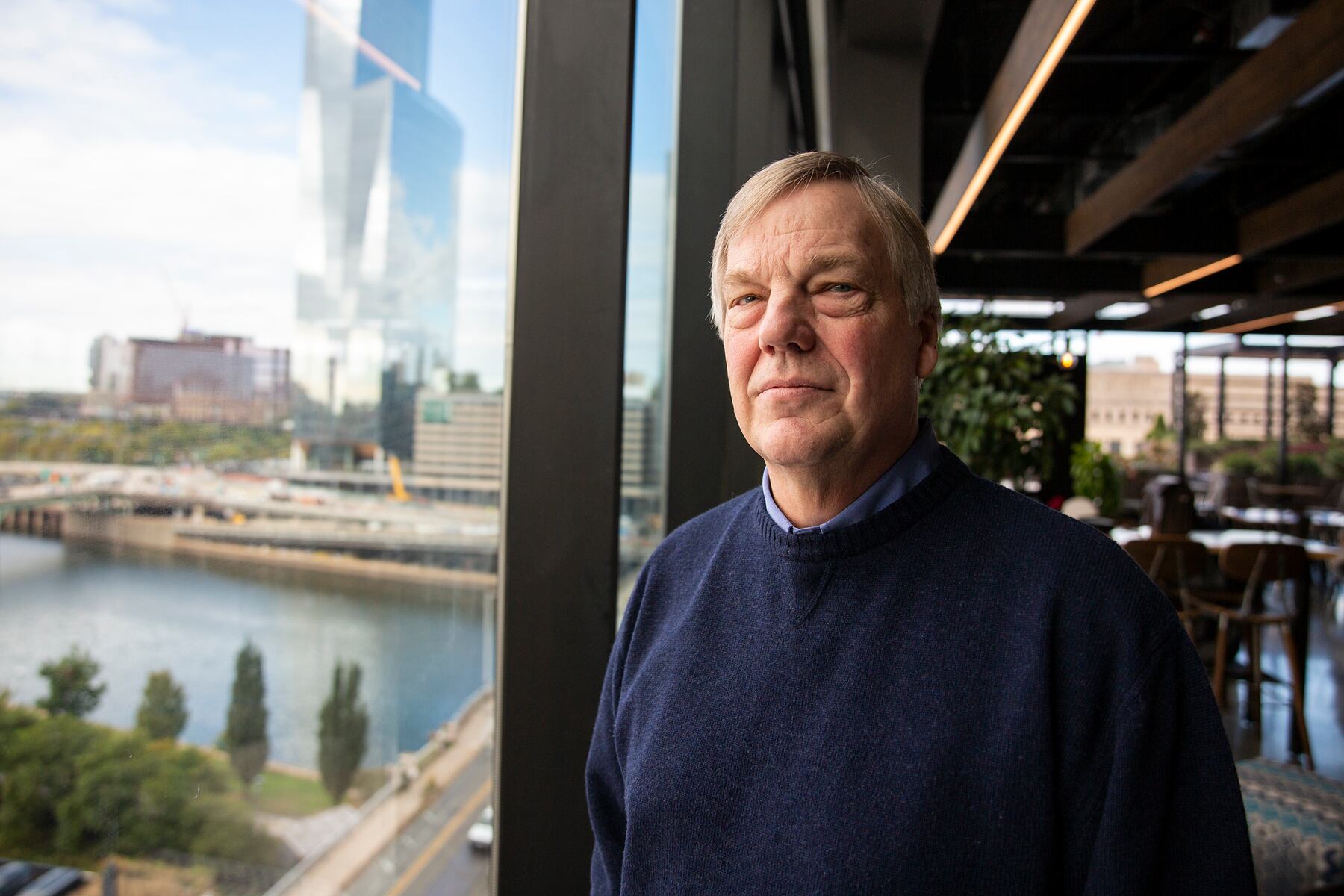
There are less corporate coordinates, too. A Milwaukee native who began washing dishes in a restaurant, Zillmer remained a Packers supporter after settling in the Philadelphia area. Hockey-playing grandsons helped give him a Flyers allegiance. In 2019, he described keeping his home in Chester County while commuting to his previous chief executive jobs elsewhere. The executive itinerary moved more readily than the family address.
Put the promise in the bonus plan
On his first year-end earnings call back at Aramark, Zillmer offered a fairly specific diagnosis. He argued that the company’s pursuit of lower costs and higher margins had reduced resources in sales and field operations. He also said employees in the operating businesses already understood hospitality. His criticism concerned the conditions around their work.
That distinction matters. Asking a team to care more is inexpensive. Giving it the resources to win and serve customers requires decisions about spending, responsibility and patience. His argument put those decisions inside the discussion of culture. It made hospitality a question for the people controlling budgets as well as the people serving meals.
By the November 2021 earnings call, the conversation included compensation. Zillmer confirmed that 40 percent of the senior leadership bonus was tied to new business, an element he said had previously been absent. Earlier measures had concentrated on earnings and margins. The company was giving its growth ambition a place in the reward system.
of the senior leadership bonus tied to new business
A historical incentive measure, not a statement of the current compensation plan.A bonus formula cannot produce a satisfied customer by itself. It can make the allocation of attention easier to understand. When leaders ask for growth and reward growth, a field manager has fewer competing instructions to untangle. The details of the formula belong in any serious examination of the wider philosophy.
A company with fewer wardrobes
The argument for focus eventually reached the company’s boundaries. In September 2023, Aramark separated its uniforms and workplace supplies business into Vestis. The new company began regular trading on the New York Stock Exchange on October 2. Aramark shareholders received one Vestis share for every two Aramark shares they held.
It was a spin-off, with two independently traded companies emerging from the arrangement. Zillmer presented the separation as an opportunity for each business to pursue its customers and priorities. Aramark continued with food and facilities services. Uniforms and workplace supplies acquired a separate corporate home.
For a returning executive talking about hospitality, this was a substantial expression of focus. Company structure determines which operations share management time and compete for investment. The separation gave the discussion a boundary on an organization chart. Even an industry concerned with looking after people sometimes has to decide which wardrobe belongs in which house.
The colleagues who carry the plan
Zillmer’s strategy also depended on colleagues willing to take responsibility for its financial machinery. Tom Ondrof joined as chief financial officer shortly after Zillmer’s return. When Ondrof’s retirement was announced in December 2023, Zillmer described having persuaded him to leave retirement to help build the growth strategy.
The work he credited included new business, supply chain economics and control of costs above the operating units. Jim Tarangelo, then senior vice president of finance and treasurer, succeeded Ondrof in January 2024. An internal succession carried the plan into its next phase.
There was an environmental dimension to executive accountability as well. In Aramark’s 2023 progress report, Zillmer said his annual incentive plan and those of the executive leadership team included greenhouse-gas metrics. The report also discussed food waste and keeping materials in circulation. Those commitments added another set of operating measures to the leadership agenda.
A relationship, counted
Contract services provide an unusually direct test of a hospitality argument: does the client stay? In August 2025, Aramark reported retention exceeding 97 percent in both its United States and international food and support services segments. The same announcement described supply chain initiatives, including additional AI-driven technology.
A year later, the August 11, 2026 earnings release reported approximately 98 percent client retention and more than $1.6 billion in new client wins for the fiscal year to date. Third-quarter revenue was $5.1 billion, up 9 percent year over year. The company again raised its organic revenue growth expectations for the fiscal year.
These are company-level results, produced by many teams. They offer a firmer way to examine the direction Zillmer set than the frequency with which hospitality appears in a presentation. Winning a contract and retaining a client are related achievements, but they place different demands on an organization. One opens a relationship; the other asks it to keep working.
Even the AI boom stops for dinner
The latest extension of that relationship business has an unexpectedly technical backdrop. In spring 2026, Aramark established Nexus after being selected by a global hyperscaler to provide hospitality and facilities services across multiple AI data-center locations. In June, it named Pat Liebler president and CEO of the division.
The offering gathers housing, dining, transportation, supply chain, security, recreation and daily services around workforce communities. Liebler had previously led Aramark Refreshments and brought more than three decades of hospitality and food service experience. The new division draws on work Aramark already performs in remote environments, including mining operations, offshore installations and national parks.
The connection is wonderfully practical. People building computing infrastructure still need somewhere to sleep and something to eat. The technology changes the customer and the setting. The work of organizing everyday life remains recognizable to a hospitality operator. Dinner has declined to become virtual.
For Zillmer, Nexus supplies a new setting for the operating question that has followed his career: how can a large organization make its accumulated capabilities useful to the people in front of it? The answer requires coordinating several businesses, with the service experienced by the worker as a single ordinary day.
Back to the queue
There are boardrooms elsewhere in his working life. Zillmer serves as non-executive chairman of CSX and as an Ecolab director; his governance work earned recognition in the NACD Directorship 100 in 2016. Those appointments sit alongside the immediate responsibilities of running Aramark.
Yet the lunch queue remains a useful closing image because it puts the executive inside the service. He occupies the same sequence as the other diners. Someone prepares the food. Someone serves it. He waits. A company that sells hospitality can examine itself there without commissioning a particularly elaborate study.
The consequential choices happen elsewhere too: in the bonus plan, the sales budget, the selection of a colleague, the decision to separate a business. Zillmer’s story lies in the connection between those choices and the daily encounter they are supposed to support. Eventually, every plan reaches somebody’s turn at the counter.