The A-Bomb Kid Who Became Democracy's Data Dealer
"The fact that a twenty-year-old kid could collect such information so quickly and with so little effort gave me the shivers." — Freeman Dyson
In 1976, a junior at Princeton sat down to write a term paper. He chose, as one does, to design an atomic bomb from scratch using only publicly available sources. His supervisor, the physicist Freeman Dyson — one of the most brilliant minds of the 20th century — read the finished paper and quietly removed it from circulation. He gave it an A anyway.
That student was John Aristotle Phillips. Born August 23, 1955 in North Haven, Connecticut, to Greek immigrant parents — his father an engineering professor at Yale, his mother a schoolteacher — Phillips grew up at the intersection of academic rigor and practical ambition. At Princeton, he transferred from UC Berkeley, served as the university's tiger mascot at sporting events, and managed to produce a 33-page term paper titled "The Fundamentals of Atomic Bomb Design" that would briefly make him the most unsettling undergraduate in American history.
The media called him "The A-Bomb Kid." The Pakistani embassy called him with an offer to buy the design. He called the FBI. Two U.S. senators — William Proxmire and Charles Percy — raised the matter on the Senate floor. Phillips ended up on the game show To Tell the Truth. Director Marshall Brickman later confirmed his 1986 film The Manhattan Project was directly inspired by Phillips's story.
In 1979, he co-authored Mushroom: The True Story of the A-Bomb Kid with David Michaelis, sold film rights to CBS under the condition he'd play himself, and watched the project go nowhere. He was 23. His next move: run for Congress.
Phillips ran twice for Connecticut's 4th congressional district as a Democratic anti-nuclear candidate — in 1980 and again in 1982 — losing both times to Republican Stewart McKinney. He had the backing of Senator Proxmire, President Carter, and Senator Ted Kennedy. He still lost. What he gained, however, was something far more useful: a voter registration list and a brother with an Apple II.
Dean Phillips wrote the software to manage the voter data. John ran the politics. In 1983, they turned the experiment into a company: Aristotle Inc., headquartered on Capitol Hill in Washington, DC. By 1984, both Ronald Reagan and Walter Mondale had hired them — simultaneously. From day one, Aristotle was non-partisan, not out of ideology, but because the data business works better that way.
The company grew quietly, serving every presidential cycle, expanding into PAC compliance, campaign management, voter microtargeting, and identity verification. By 2000, Aristotle's client list included 45 senators, more than 200 House members, and 46 state parties. By 2007, the company's database contained detailed profiles on approximately 175 million U.S. voters — income, church attendance, car ownership, gun registration — and employed around 100 people.
Not everyone was happy. Al Gore's 2000 campaign publicly refused Aristotle's services, citing data privacy concerns. Privacy International flagged the company's practices. Justin Thomas in Vanity Fair noted it "could be seen as a breakthrough in electoral politics, or a new low in privacy invasion, depending on your perspective." Phillips didn't argue the point. He kept building.
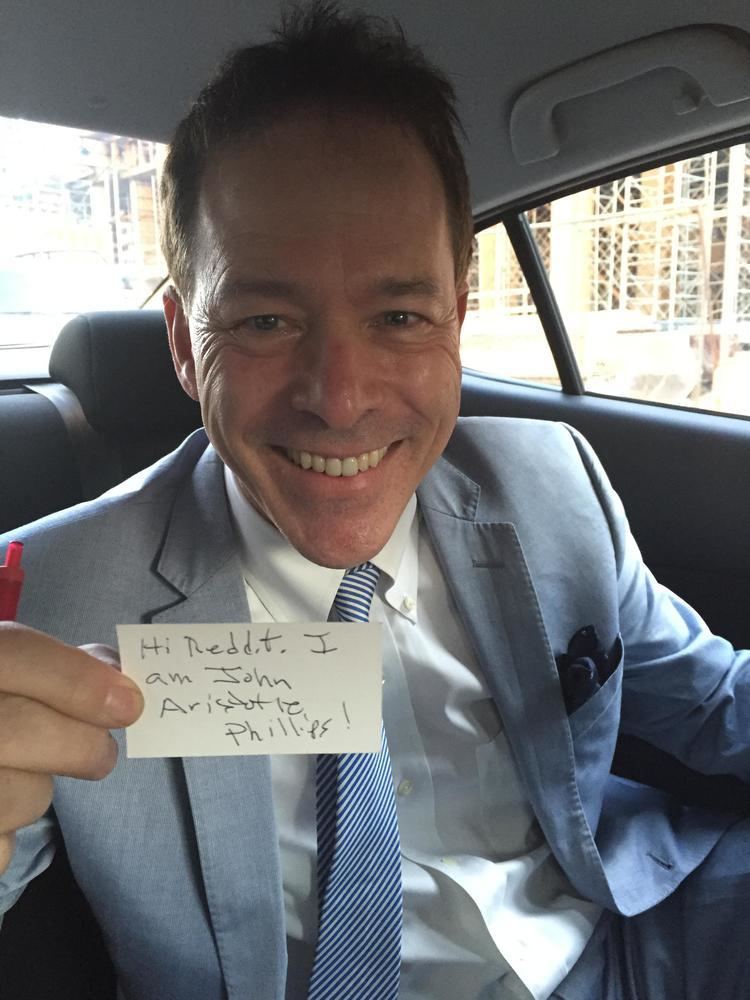
Phillips's 1976 Princeton paper "The Fundamentals of Atomic Bomb Design" was supervised by Freeman Dyson and drew on the Los Alamos Primer and declassified documents. The U.S. government never formally seized it. Whether his theoretical design would have functioned remains unknowable. He was 20 years old.
The Aristotle model was always about combining what governments already collect — voter registration data, publicly available by law in most states — with what commerce had already catalogued: income estimates, consumer preferences, geographic patterns. Before "microtargeting" entered the political vocabulary, Phillips was doing it. Before Cambridge Analytica made it toxic, Aristotle had been running the same playbook for two decades — with one crucial difference: they worked for everyone.
This non-partisanship wasn't moral neutrality. It was a business model. You can't build a data company on the losing side of elections. You need to survive every cycle. Aristotle survived all of them. By 1992, they were simultaneously serving Bill Clinton, George H.W. Bush, and Ross Perot. The company's pitch was essentially: whoever wins, your data infrastructure is ready.
Phillips fought hard to protect the value of that data. In 1992, when Metromail — a subsidiary of printing giant RR Donnelley — allegedly misused voter data Aristotle had licensed to them, Phillips filed a $5.3 million lawsuit. When the lawsuit moved slowly, he bought over $1 million in RR Donnelley stock in 1994 so he could demand external audits at shareholder meetings. Reporter Kira Phillips (no relation) independently verified the problem by purchasing a list of 5,000 Pasadena children, ages 1-12, using the name of convicted murderer Richard Allen Davis. Metromail settled for $2.7 million in early 1995.
The Aristotle product suite grew to include Campaign Manager — a cloud-based campaign management platform covering compliance, fundraising, and FEC reporting — alongside PAC management tools, voter data enrichment services, digital advocacy platforms, and an Integrity Division offering identity and age verification products for commercial and government clients. The company today uses Salesforce, Angular, React, Apache Kafka, and Azure infrastructure. It has offices across multiple cities.
The international work extended the same logic to less stable democracies. In 2004, Phillips and Aristotle helped Ukrainian presidential candidate Viktor Yushchenko expose vote fraud by Kremlin-backed Viktor Yanukovich during the period that became known as the Orange Revolution. He went on to advise campaigns in Algeria, Kosovo, Palestinian Fatah, Venezuela (against Hugo Chavez), and Kenya, where he worked with opposition candidate Raila Odinga in 2017. The pattern: find a democratic contest with data problems, apply the same toolkit.
In 2014, Phillips co-founded PredictIt with Victoria University of Wellington in New Zealand — a CFTC-authorized, real-money prediction market for political and financial events. The concept was academic from the start: could market prices forecast political outcomes better than polling? Over 350 million shares have now been traded. The platform operates with 65 affiliated universities and has grown into the world's largest political prediction market. Phillips delivered a TEDxMidAtlantic talk on the concept, arguing that even small financial stakes sharpen political thinking and reduce the gap between what people want to happen and what they actually believe will.
As of 2026, Aristotle operates with approximately 120 employees and around $25.5 million in annual revenue. The company's last raise was a $420,000 seed round in 2017 — a modest number for a company with this market position, suggesting it has largely been self-sustaining. Phillips lives in San Francisco with his wife Patty, a former Wilhelmina Models representative turned art school teacher. They have one daughter.
Wrote a Princeton term paper on atomic bomb design from public sources in 1976, igniting a national debate on nuclear proliferation and earning an A from Freeman Dyson.
Co-founded the firm that became the backbone of American political data infrastructure, serving every U.S. president from Reagan onward, from both parties.
Built a database of 175 million U.S. voter profiles combining registration data with consumer intelligence — one of the largest political datasets ever assembled.
Helped Viktor Yushchenko expose Kremlin-backed vote fraud in the 2004 Ukrainian presidential election, a landmark moment in post-Soviet democratic technology.
Co-founded the world's largest political prediction market with Victoria University of Wellington. CFTC-authorized. 350+ million shares traded. 65 university partners.
Sued Metromail for voter data misuse, bought $1M+ in parent company stock to demand audits, won a $2.7M settlement — before data privacy was a mainstream concern.
"Suppose an average — or below-average in my case — physics student at a university could design a workable atomic bomb on paper."
"When you have a little skin in the game, even as little as $1, it causes you to think a little bit more clearly about what you think is going to happen and try to separate that from what you want to have happen."
"This stock market for politics, authorized by the US Commodities Futures Trading Commission, allows individual investors to forecast, with real money, political outcomes."
Phillips designed his atomic bomb paper for a Princeton junior physics project in 1976. His advisor, the legendary physicist Freeman Dyson, read it, gave it an A, and quietly removed it from circulation. Dyson later reflected: "The fact that a twenty-year-old kid could collect such information so quickly and with so little effort gave me the shivers." Phillips's point had been about proliferation risk — that publicly available information was already enough. He was right, and the paper proved it.
In February 1977, someone from the Pakistani embassy called Phillips and offered to buy his bomb design. Phillips immediately called the FBI. Senators William Proxmire and Charles Percy raised the incident on the Senate floor. The timing was significant: France had been considering selling a nuclear reactor to Pakistan, and the episode amplified pressure to reconsider. Phillips had been trying to make a policy argument. Events made it impossible to ignore.
In 1994, after Metromail allegedly misused voter data that Aristotle had licensed to them, Phillips took an unusual approach to shareholder activism: he personally purchased over $1 million in RR Donnelley stock — Metromail's parent — so he could show up at board meetings and demand external audits. A year later, reporter Kira Phillips (no relation) independently verified the data breach by purchasing a list of 5,000 Pasadena children, ages 1-12, using the name of convicted murderer Richard Allen Davis. Metromail settled for $2.7 million.
During his two failed congressional campaigns in Connecticut, Phillips and his brother Dean realized that the voter registration lists they'd been using for organizing had commercial potential. Dean wrote software on an Apple II to handle the database. That software became Aristotle Inc., which has since served every U.S. president from Reagan onward. Losing two elections was, in retrospect, the best thing that happened to Phillips's career.
In 2004, when Viktor Yushchenko needed to prove vote fraud by Kremlin-backed Viktor Yanukovich in Ukraine's presidential election, he turned to an American political data company headquartered on Capitol Hill. Aristotle helped provide the technical infrastructure to expose the fraud during what became the Orange Revolution. Phillips had built a company to serve campaigns; it ended up serving democratic movements in post-Soviet states.
John Phillips on PredictIt, political forecasting, and why a dollar of skin in the game changes everything
John Aristotle Phillips and Moran Cerf on how prediction markets shape political thinking and public discourse