Christmas came and went without the first Sonos under the tree. John MacFarlane’s company had intended to ship its debut product for the 2004 holiday season. The deadline was quite clear. So was the problem: the product had not reached the quality the team wanted. For a business hoping to introduce itself through a piece of home electronics, there are more cheerful ways to begin.
MacFarlane let the season pass. He had put the priorities in order: quality, time to market, then cost. Once you rank them, an inconvenient consequence occasionally turns up to check whether you meant it. Sonos reached customers in 2005. The missed Christmas became an early demonstration of the bargain he was making with the people who would buy it.
They were being asked to trust a new name, pay for unfamiliar equipment, and believe that music could move around their homes with less fuss. An unreliable first evening would have been a poor introduction. A promising future is little consolation when the present refuses to play your song.
“We wanted a product that got better with time.”
John MacFarlane, 2015
That ambition joined two parts of MacFarlane’s career. He understood software, which can change after it reaches the customer. Now he was building physical objects, which people expected to keep. The relationship between those two things would occupy much of his working life.
An inbox, an airplane, a living room
MacFarlane’s training was in electrical and electronics engineering: a bachelor’s degree from Rensselaer Polytechnic Institute and a master’s from the University of California, Santa Barbara. He arrived in Santa Barbara in 1990 for graduate study. The doctorate he had intended to pursue gave way to a more immediate opportunity. The internet needed better ways to handle messages.
He launched Software.com in 1992 and served as its CEO. The company supplied messaging technology to telecommunications businesses, including AT&T. In 2000 it merged with Phone.com to become Openwave. MacFarlane had participated in the internet’s expansion from the infrastructure side, where the customer rarely sees the machinery that makes an everyday action possible.
Afterward, he and former colleagues Craig Shelburne, Tom Cullen, and Trung Mai wanted to keep working together. They also wanted to stay in Santa Barbara. A second company offered a chance to choose both their work and the place where they would do it. The familiar account of founders chasing opportunity sometimes leaves out the perfectly reasonable wish to remain somewhere you like.
His first pitch involved networking services for airplanes. It did not produce the desired enthusiasm. Shared frustration with home stereos proved more fruitful: CD collections, tangled cables, and the expense of carrying music from one room to another. Sonos began in 2002. The founders brought an understanding of networks to a domestic irritation.
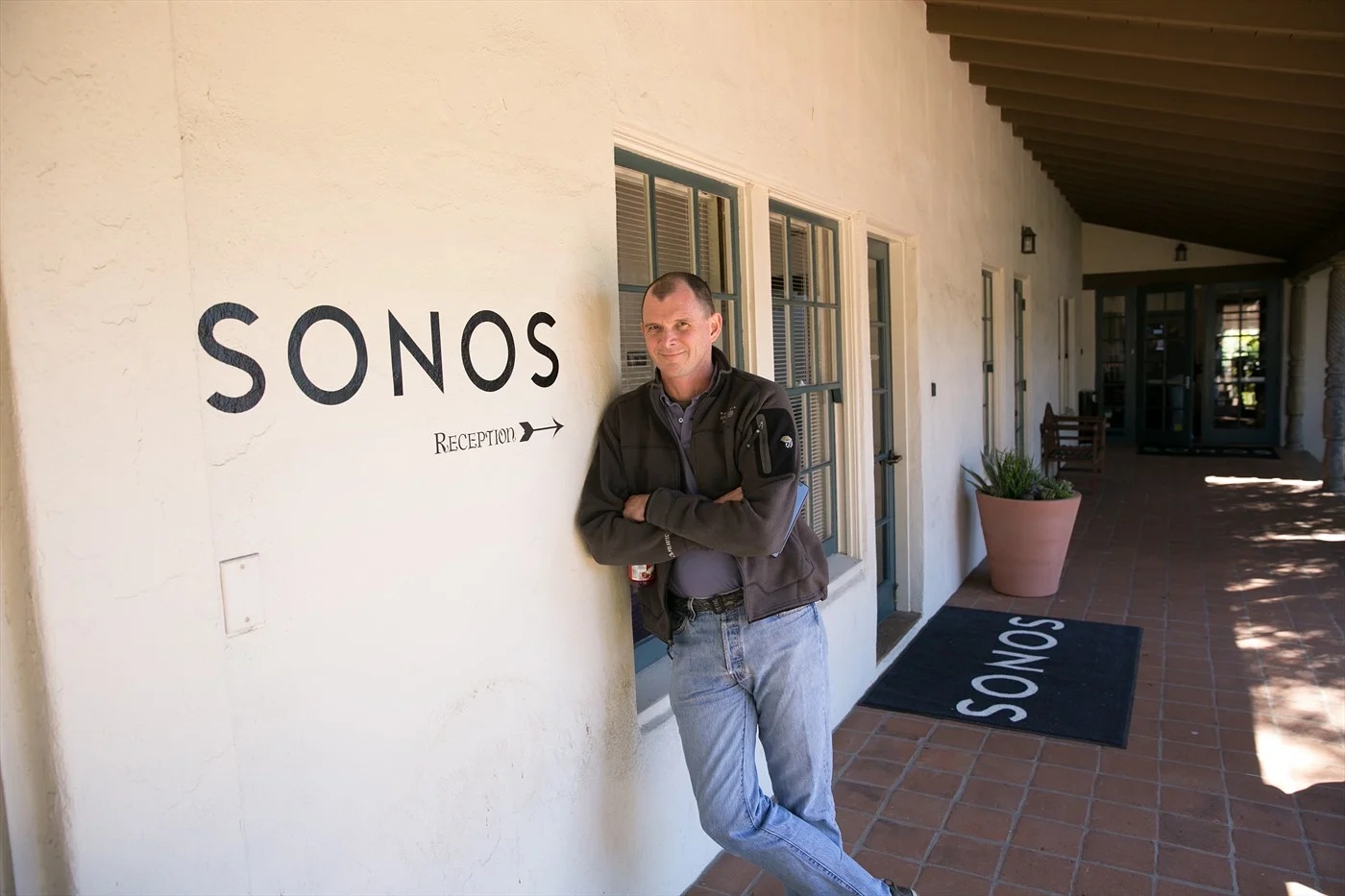
Shelburne later recalled that the founders’ earlier success allowed them to finance the beginning themselves. That gave the team room to tackle difficult problems before revenue became an external command. Patience had practical backing. It also had limits: a music system eventually has to make music in someone else’s house.
The remote was already in your pocket
A home audio system has an unusual test of competence. You can explain its architecture at length, but the listener is entitled to walk into another room and expect the song to follow without an argument. Every technical choice eventually meets that unceremonious examination. The user has dinner to make.
MacFarlane’s software instincts helped Sonos respond when another device began to change the arrangement. In 2008 the company released a free iPhone controller app. A dedicated remote had been part of its original proposition. Now a device customers already carried could take on that job. Sonos would have to benefit from the phone’s progress while accepting that some control of the experience sat elsewhere.
Engineer Nick Millington credited MacFarlane with pushing the company toward iOS early. His description was of a colleague who mentally inhabited a future several years ahead of everyone else. It helps explain the founder’s impatience with the available machinery. Expecting the future to arrive, however, still leaves a team responsible for helping the present along.
A house full of music.
reaches listeners.
a free controller.
in one speaker.
The commercial evidence was accumulating by the company’s tenth anniversary. In April 2012 Sonos reported nearly 1.5 million units sold to 550,000 customers, with revenue above $200 million in 2011. Those figures describe the business at that moment, when an unfamiliar approach to the stereo had acquired a substantial audience.
MacFarlane pointed to three developments: wider retail distribution, control through smartphones and tablets, and the growing use of online music services. The listening habit needed more than a well-made speaker. People also needed a convenient way to find music and somewhere familiar to encounter the product. The internet could deliver the catalogue; somebody still had to make the whole arrangement inviting.
The children needed a better soundtrack
For all his attention to the listening experience, MacFarlane needed help applying it at home. He was the morning parent: wake the children, make breakfast and lunch, get them to school. Mornings could turn into battles. A friend suggested putting a Sonos speaker in each child’s bedroom, asking what they wanted to hear, and starting a playlist before he arrived to wake them.
The suggestion improved the routine, he recalled. It also gave the family something to discuss at bedtime: tomorrow’s music. The founder of a company dedicated to filling homes with songs had received a small lesson in the practical uses of his own product. Even a stereo executive can overlook the morning shift.
He was making a related adjustment at work. Visits to other Sonos locations taught him that working from shared spaces, including an office kitchen, helped him meet colleagues. Back in Santa Barbara, a private office put distance between him and those encounters. He gave it up. The laptop could travel; the conversations were worth following.
His musical relationships reached beyond the company, too. Producer Rick Rubin advised Sonos, and Giles Martin led its sound experience team. MacFarlane described Universal Music Group’s Lucian Grainge as a mentor who helped him understand the artist’s side of the business. Their conversations brought the priorities of recording and the priorities of technology into the same room.
In 2011, explaining Sonos’s direction, MacFarlane spoke about making fewer products and making them flexible enough to work together. The ambition was domestic and specific: make it easier to enjoy music at home. The equipment had to earn its place among ordinary routines, furniture, and the other people who lived there.
“We want to focus on music”
John MacFarlane, 2011
Someone else takes the controls
Seeing one change early does not guarantee that you will recognize the next. Sonos had anticipated the movement of music onto networks. Voice assistants brought another shift in how people expected to choose what they heard. Amazon’s Echo made a spoken request part of the household interface, putting pressure on the assumptions behind the existing system.
MacFarlane and others at Sonos initially underestimated voice assistance. By late 2016, stalled sales growth and the changed competitive landscape made the need for a response difficult to ignore. The company was moving toward a stronger emphasis on streaming and voice. The founder who had helped people abandon one set of controls now faced another revision.
In January 2017 he handed the CEO role to Patrick Spence. His transition letter addressed a problem familiar to companies formed around a founder’s judgment: how to preserve a culture while allowing someone else to lead it. He argued that it needed to develop beyond him. He initially remained to advise and mentor, with stated interests in STEM education and a friendlier environment for music and technology startups.
After leaving the CEO job, he could also give a competing product a fair hearing. In 2018 he praised aspects of Apple’s HomePod, including its setup, sound, and ability to hear a voice command while playing loudly. He also objected to its lack of Spotify support. The assessment returned to an old concern: impressive hardware has to fit the way people actually listen.
Back in the room, with different arithmetic
On March 25, 2026, MacFarlane joined Bill Parrish and Dan Engel at Santa Barbara’s Cabrillo Pavilion for a founders’ panel. The discussion returned him to company building in the city he had chosen to stay in decades earlier. By then, his perspective included the distance between an internet software business and an object manufactured for the home.
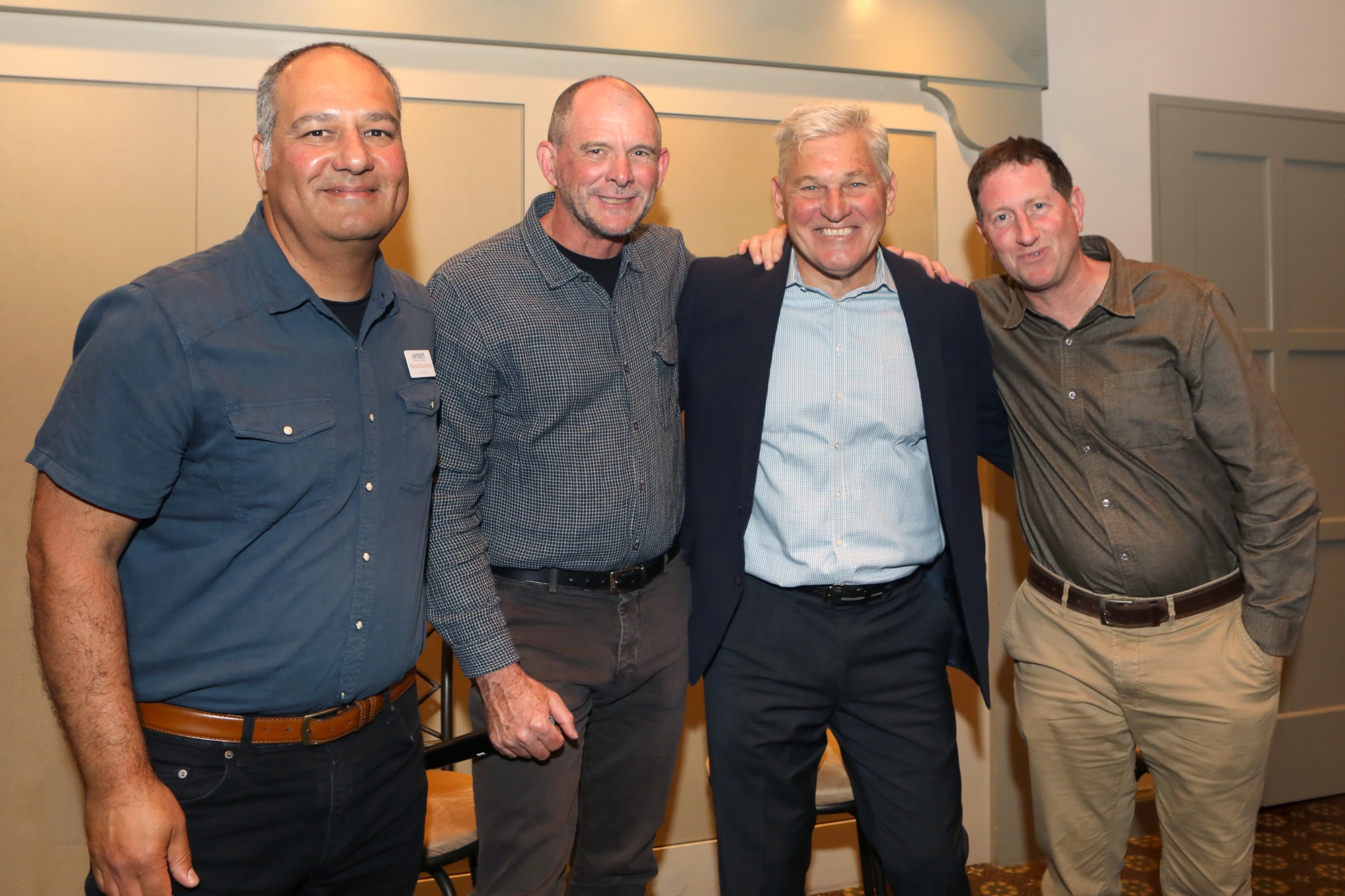
He put numbers to that distance. Software.com, he said, had 97 percent gross margins. At Sonos the figure was about 50 percent. These were his retrospective comparisons, rather than a set of current financial results. They supplied an economical reminder that expertise travels between industries more easily than the economics do.
A founder’s comparison
Gross margins recalled by MacFarlane at the March 2026 panel. Historical comparison; periods unspecified.
He had spent years working out what the internet could bring into a living room. The answer required engineers, artists, manufacturing, software, and customers willing to change a habit. It also required choices that looked uncomfortable when judged against the nearest deadline.
There is a peculiar discipline in building equipment for leisure. The work behind it can be demanding, but the person who brings it home expects relief from effort. Nobody puts on a favourite record hoping to acquire another task.
The missed Christmas remains a useful place to understand him. He could imagine a future in which music was available throughout the house. Then he had to decide what to send there first. For that first encounter, MacFarlane let the calendar wait.