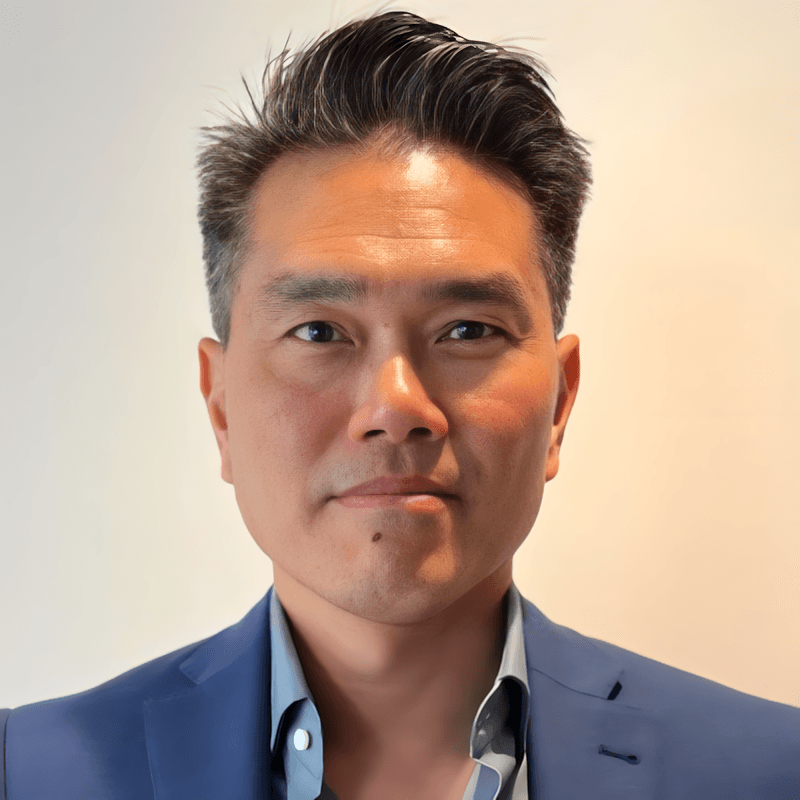
The Mechanical Engineer Who Became a Kingmaker
Most VCs arrive at the funding table by way of Stanford economics or Goldman Sachs. John Eng arrived by way of mechanical engineering at Stony Brook, nine years building product marketing at Microsoft, and a stint running LinkedIn's entire Asia-Pacific marketing operation from somewhere in the region's sprawling geography. The road was longer. It made him better at the job.
At Right Side Capital Management, Eng holds the title "Funding Ecosystem Partner" - a phrase that sounds like consultant-speak until you understand what RSCM actually does. The firm doesn't pick ten companies and pray. It deploys capital into 2,200+ startups across eight funds totaling more than $250M, using quantitative models to make fast, high-volume pre-seed bets. Every single one of those founders eventually needs more money. Eng is the person who helps them find it.
That is not a metaphor. His role is literally to connect the RSCM portfolio to the funding ecosystem - angels, follow-on VCs, syndicates, corporate strategics - and to run the operating platform that keeps founders from disappearing into the void after their first check clears. It is, by any measure, an enormous surface area. Eng covers it with the calm efficiency of someone who once had to market Microsoft Business Intelligence to enterprises who didn't know they needed it.
"Business model. Traction. Unit economics and growth path. Capital efficiency. Valuation."
- John Eng, on what actually matters in a pre-seed pitchThe Operator Credential
The journey from Stony Brook mechanical engineering to venture capital funding ecosystem partner has several notable detours. At Microsoft from 1999 to 2008, Eng ran director-level product marketing for the company's Business Intelligence and Application Platform division - the kind of role that teaches you how large enterprises actually make purchasing decisions, which turns out to be extremely useful when you're later evaluating whether a startup's B2B thesis holds water.
Then came LinkedIn, where he served as Regional CMO for Asia Pacific and Japan from 2011 to 2014. This was LinkedIn in its growth years - the platform was becoming a genuinely indispensable professional tool - and Eng was responsible for marketing it across one of the world's most complex, multilingual, culturally diverse regions. The experience gave him a rare fluency in how businesses scale across different markets, different buyer psychologies, different distribution challenges.
After LinkedIn came Parallels (VP Marketing), then Tradeshift (CMO), then Remix, then NewVoiceMedia - where he was appointed CMO in January 2018, just before the company was acquired by Vonage. His last startup CMO role was at Swiftly, where he delivered a fivefold increase in booking growth. Five times. That number is not a typo. When he left the startup CMO circuit and joined RSCM in 2021, he brought with him a catalog of pattern recognition that most investors simply don't have.
The Machine Behind the Checks
Right Side Capital Management was founded in 2012 with a thesis that most VCs found eccentric: write smaller checks into more companies, use data rather than gut instinct to make decisions, and build a portfolio so large that the winners cover the field. Twelve years later, with $250M+ deployed into 2,200+ companies, the thesis looks less eccentric and more prescient.
Eng joined this machine in 2021 to build out the operating platform - the services side that turns a portfolio company into something more than a line item on a cap table. RSCM portfolio founders get access to sales bootcamps, marketing resources, fundraising support, and a network of fellow founders in the same pre-seed trenches. Eng is the architect of much of that infrastructure, drawing on decades of knowing what founders actually get wrong when they try to grow.
His investment criteria reflects the same systematic clarity. He looks for business model, traction, unit economics, growth path, capital efficiency, and valuation - in roughly that order. He won't look at crypto or token models. He won't write checks larger than $1M. He won't back pre-revenue companies. He won't touch valuations above $6M or companies that already raised more than $500K from outside investors. These aren't arbitrary preferences. They're the parameters of a strategy built around finding capital-efficient B2B businesses at the moment before they need to prove themselves to everyone else.