The robot wants to leave town. His name is Vee, and in the town where he lives, robots do not fly. Friends doubt him. Shops turn him away. Even the rocket presents difficulties. It is a surprisingly useful place to begin a story about Joel Palathinkal, a New York investor whose career has passed through electrical engineering, Navy flight simulators, magazine platforms and the education of people who want to manage investment funds.
Vee belongs to Up Above, the children's book Palathinkal published in 2018. He wrote it for his son, with a message about staying positive while pursuing a goal. The predicament is pleasingly concrete: wanting to reach the galaxy is one thing; arranging transport is quite another. Anyone who has tried to change professions may recognize the distinction. Ambition is readily available. Instructions are sometimes harder to obtain.
Palathinkal's own professional route gives that small fictional problem some weight. He is the founder and chief executive of Sutton Capital, where investment activity sits alongside education and a community for investors. He also hosts The Investor With Joel Palathinkal. The subjects range from venture firms to the machinery of fund administration. Taken together, those projects suggest an interest in how people acquire the knowledge and relationships to attempt a different kind of work.
There is no need to turn every career change into an act of rebellion. Some begin with a useful opportunity, a class, or a conversation with someone who does a job you have barely considered. Palathinkal's story has those less theatrical ingredients. They make it more interesting than the familiar tale in which a future investor supposedly recognizes his calling before he has learned to multiply.
Electrical engineering, then an unexpected syllabus
Palathinkal studied electrical engineering at the University of South Florida and earned a doctorate in modeling and simulation at the University of Central Florida. His professional history includes engineering at Rockwell Collins and a program-management role at Naval Air Systems Command. During his work on flight simulators, he pursued the doctorate. The combination put training systems and technical work alongside formal study.
A simulator is an unusually vivid starting point for someone who later teaches investors. It makes practice possible before a real flight. The parallel with his later teaching is suggestive: a classroom also gives people somewhere to rehearse. In both settings, knowing the theory and performing the task are separate demands.
He has described considering an MBA as friends moved toward investment banking. The doctorate became his actual graduate route. Financial-modeling classes helped develop his interest in finance, and relationships with people in private equity and venture capital widened it further. The pivot accumulated over time. It did not require him to pretend that the years he had spent learning technology were an embarrassing detour.
That matters for the audience he now addresses. A professional arriving from another field brings experience, but also encounters a new vocabulary and unfamiliar expectations. A degree may establish technical competence without explaining how a particular investment firm reaches a decision. The gap between those two kinds of knowledge becomes a recurring subject in Palathinkal's later teaching and interviews.
- EngineeringElectrical systems & simulation
- ProductsMedia & financial platforms
- InvestingSutton Capital
- TeachingFunds, careers & conversations
The product years, between publishers and portfolios
Before his current work at Sutton, Palathinkal held product roles across CBS, Hearst and NBCUniversal. At Hearst, his work involved digital platforms associated with Cosmopolitan, Esquire and ELLE. He later held investment-product roles at FactSet and Northwestern Mutual. The sequence moved through recognizable consumer media businesses and into financial information and investment platforms.
Those names make a tidy line on a résumé. The actual subjects are less tidy: audiences, software, customer experience, investment information. Moving between those environments meant moving between the concerns of publishers and those of financial businesses. The product roles form a bridge in his biography, connecting his technical background with the investing work that followed.
Product School also identifies him as an instructor and describes his background in product leadership. Teaching therefore appears in his public career beyond the Sutton programs. The useful connection is the work itself: explaining how a product is built and explaining how an investment is evaluated both require someone to make assumptions legible to another person.
There is an appealing tension here. Media work concerns attention; financial products concern decisions. An investment classroom needs both. It has to hold someone's interest long enough to explain a difficult subject, then insist that interest alone is inadequate. A persuasive presentation still has to survive questions about the business underneath it.
A room for people learning to run the room
Sutton's public curriculum puts that distinction into practical form. It lists live sessions on investment deals, financial modeling and networking, alongside coaching and self-guided material. Topics include investment theses, sourcing, cap tables, diligence and investment memos. Other modules address portfolio construction, fund formation and reporting. These are the working parts of a fund, including the parts that rarely appear in a celebratory announcement.
A term sheet can attract attention. A reporting process is more likely to attract a spreadsheet. Yet the person hoping to launch an investment firm needs to understand both. The curriculum's range is revealing because it treats fund management as a collection of responsibilities, rather than merely the enjoyable business of having opinions about promising companies.
There are distinct audiences around Palathinkal's work: professionals seeking an investing career, managers developing a fund, and allocators considering funds. A general partner manages a fund; a limited partner supplies capital to it. Those labels describe different positions in the same relationship. Understanding the other side's questions is part of learning to do either job.
The distinctions also prevent a misleading portrait of Sutton as simply a matchmaking service. In an interview about the community, Palathinkal explicitly separated its educational role from brokerage and fundraising. Connections can be valuable without being a promise of capital. That boundary deserves to stay visible, especially in a field where an introduction can be mistaken for an endorsement.
“But I just built an educational community to connect people.”Joel Palathinkal, speaking on Invest Like a Billionaire
Builds the strategy and manages its investments.
Evaluates the manager and commits capital.
What happens after the introduction
The human side of this work appears in Sutton's published participant accounts. Rikki describes Palathinkal checking in with cohort members across time zones. Greg describes learning through real-time examples and participation in investment work. These are individual accounts featured by the program, rather than a measure of every participant's outcome. They offer a specific picture of the kind of contact people associate with his teaching.
Other participants describe the fund-manager community from a different seat. Nik of The Fintech Fund discusses meeting peers and hearing feedback from family offices and fund-of-funds. Mariano of MGV Capital points to contact with limited partners as well as training. Their observations concern access to conversations and feedback. They do not establish a return on investment or guarantee a career result.
Palathinkal's own networking advice favors questions that reveal experience. He encourages people to ask about surprises, daily work and what someone wishes they had understood earlier. It is a useful corrective to the coffee meeting in which both participants could have stayed home and read the same biography. A good question gives the other person a reason to contribute something that is not already on their profile.
The emphasis fits the role of an interviewer. It asks for texture: the decision behind the title, the difficulty behind the result. For someone changing careers, that texture can be more useful than a polished sequence of promotions. It reveals where judgment was required and where a plan had to accommodate the actual world.
An investment education with the microphone on
Palathinkal's podcast makes those conversations public. In January 2022, Aumni highlighted his interview with its president and co-founder, Kelsey Chase. Their discussion covered private-market data, differentiation in fundraising and readiness for institutional investors. The topics extend the classroom toward the people building tools and organizations around private capital.
Later conversations brought in David Teten of Versatile VC and Joe Medved of Lerer Hippeau. The advertised subjects included emerging managers, founder diligence and the evolution of New York venture capital. In May 2025, an episode with Akira Dunham explored her venture-career route and the Connecticut investment ecosystem. The guests' histories remain their own; Palathinkal's contribution is to bring them into a conversation his audience can hear.
The archive also shows how wide that audience's questions can become. An October 2026 episode with Scott Barnes of Leap District Advisors addresses back-office infrastructure for emerging fund managers. Accounting, administration and internal controls are less photogenic than a startup launch. They belong in the education nonetheless. A firm that wants institutional trust has to operate after the interesting meeting ends.
This is where the media part of Palathinkal's career reappears in another form. The interview creates an accessible entry point into specialized work. It lets an audience move from a name and a title toward a set of practical questions. The format offers a modest advantage over a résumé: someone has the opportunity to ask what happened next.
The rocket still needs assembling
Return to Vee, the robot. Up Above is a 72-page hardcover published by Dreamvest in 2018. Its author is credited as Joel John Palathinkal. The story gives its protagonist an ambition that the surrounding town does not share, then supplies obstacles that cannot be wished away. The rocket, inconveniently, has its own requirements.
It would be easy to make the book a secret explanation for everything its author does. A children's story need not carry the full weight of an investment business. What it offers is a personal detail with a recognizable family purpose: Palathinkal wrote something for his son about pursuing a goal. Alongside the professional titles, that detail gives the reader a different measure of the person.
His public work now returns repeatedly to people seeking a route into unfamiliar professional territory. The engineer who studied simulation, the product leader who moved through media and finance, and the host asking investors about their careers are successive parts of one biography. Each adds a different kind of experience to the teaching he does today.
There is a practical optimism in the combination. The book gives a robot permission to want a different destination. The curriculum offers adults a rather longer list: models, memos, diligence, reporting, conversations. Neither a rocket nor an investment firm assembles itself. Palathinkal has made the work of learning how to assemble things a substantial part of his career. The destination gets the story started. The interesting pages concern the preparations.
A robot, a rocket, and a story written for his son.
Keep the conversation going
- Sutton Capital and its educational resources
- Joel Palathinkal on LinkedIn
- Sutton Capital on YouTube, Instagram and Spotify
- Listen to The Investor With Joel Palathinkal
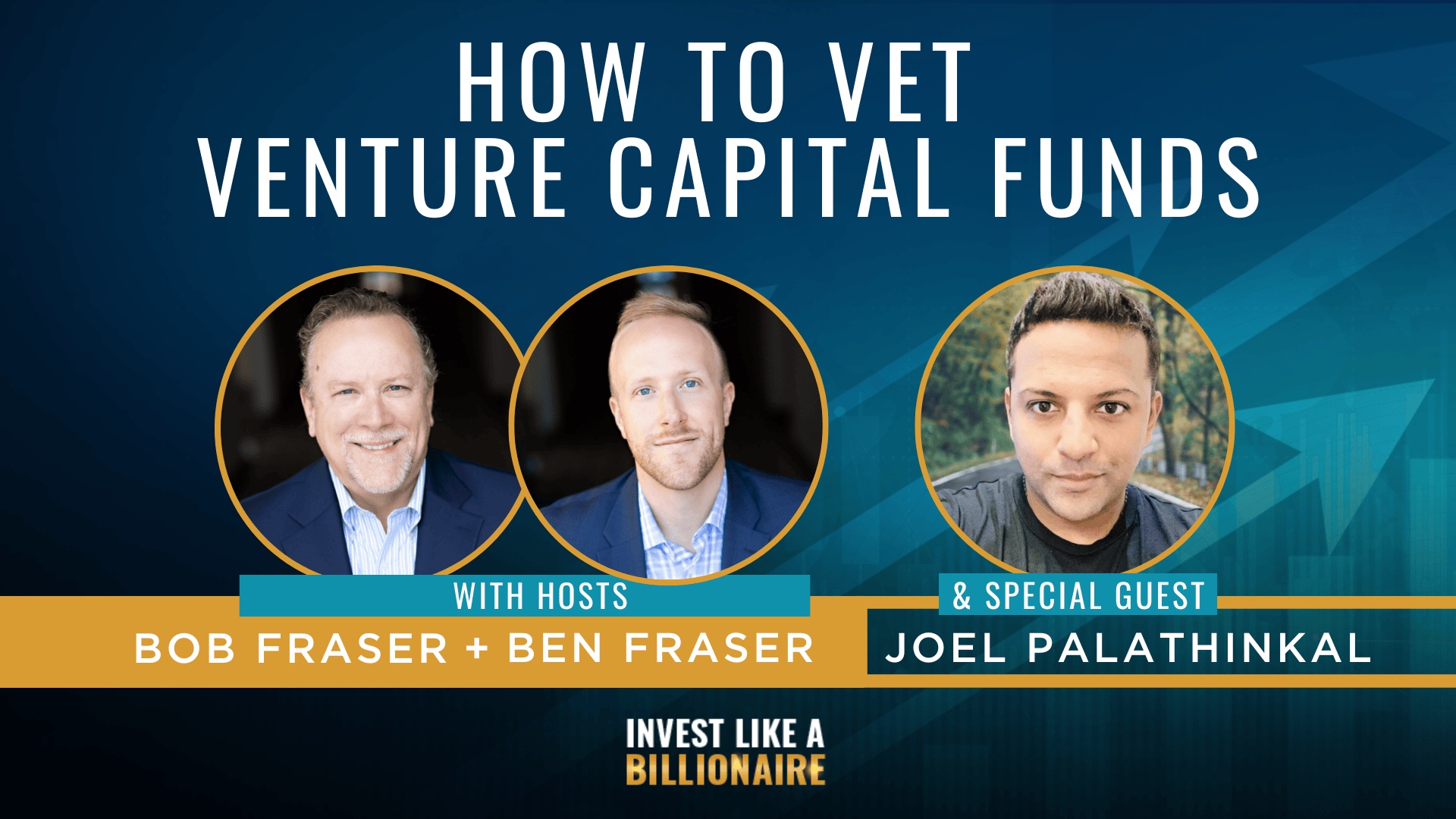
- Watch: How to Vet Venture Capital Funds
- Watch: Building a career in private equity and venture capital
- Product School instructor biography
- Aumni’s conversation with Kelsey Chase
- Explore Up Above