Joe Chng remembered the birthdays. In a message welcoming B2BE’s Malaysian team back to the office, the founder counted eight employees with birthdays to celebrate, alongside newcomers, interns and colleagues who had stayed for five, ten and fifteen years. The company sold automation. His message was full of people.
There were more than 120 of them in that Malaysian team at the time, which he described as B2BE’s largest globally. Their responsibilities ranged from finance and administration to infrastructure, software development and innovation. Chng also welcomed a mixture of office and home working. For an organisation devoted to moving information between businesses, it was a useful reminder of how much work happens between colleagues.
That small celebration offers a way into a career usually described through electronic data interchange, supply chains and invoices. Chng founded B2BE in Australia in 1998. He remains its executive chairman and CEO. Over the intervening years, the business has spread across Asia, Australia and New Zealand, Europe and the Americas. The birthday count gives that geography a human scale.
A computer scientist meets the paperwork
Chng studied computer science at Monash University, earning a Bachelor of Science with Honours. It is an appropriate qualification for the particular sort of disorder his company handles: information that makes perfect sense inside one business, then becomes troublesome when it crosses into another.
An order, for instance, might arrive through email while the recipient’s internal system expects structured data. An invoice might be issued correctly but travel through a channel the customer does not monitor. Each company has its own procedures, identifiers and preferences. Put enough companies together and even a simple transaction acquires a social life.
B2BE describes its territory as the processes outside a customer’s core systems. It connects businesses with trading partners and helps manage the formats, channels and exceptions that complicate those relationships. Customers can tackle a particular problem or digitise a broader process. This accommodates an awkward business reality: the organisation buying the software cannot necessarily dictate how everybody else works.
For Chng, that has become a business lasting more than a quarter of a century. Its subject matter invites neither dinner-party speeches nor breathless product demonstrations. Yet an order entered twice represents somebody’s afternoon. An invoice sitting unseen represents somebody else’s wait. The commercial opportunity lives in those accumulated inconveniences, with all their expensive little variations.
- 01 / ArriveOrders and invoices enter through different channels.
- 02 / UnderstandCapture, translate and check the information.
- 03 / DeliverConnect it to the next business and its systems.
The invoice that nobody opened
In September 2024, Chng spoke publicly about a remarkably ordinary failure. A business could send an invoice and still have no assurance that the customer had received or viewed it. The document had left the building. Its usefulness had yet to arrive.
B2BE’s response was Managed Customer Invoice Distribution. The launch described a service supporting the methods customers preferred, including email, electronic data interchange, e-invoicing, fax and print and post. That last pair gives the story some texture. A company selling digitisation was still making room for paper and the fax machine. Progress, apparently, has to accommodate the address book.
Chng explained the service through control and follow-up. It would provide notifications when customers had not viewed or received invoices, helping businesses improve the payment cycle. His description settled on the moment after dispatch, when an accounts team needs to know whether anything has actually happened.
“This is achieved with proactive notifications when the customer has not viewed or received the invoices.”
Joe Chng · September 2024
There is a practical distinction here between completing a task and obtaining the result that justified it. Pressing send satisfies the first requirement. Getting the invoice into the customer’s working process satisfies the second. Chng’s explanation concerns the second, which is where a considerable amount of administrative effort tends to collect.
It is also a revealing choice of emphasis from a technology founder. He could describe a distribution service as a list of capabilities. Instead, the explanation follows an unanswered question in an accounts office: has the customer seen this? A business can spend lavishly on software and still end up asking a very familiar question.
Somebody still has to make it work
On a visit to Manila, Chng praised his team’s commitment and noted employees with more than five years of service. He described their role in delivering B2BE services to customers around the world. In his telling, international reach rested on colleagues doing the daily work in a particular place.
B2BE’s Australian office has also welcomed him for a staff lunch. The company’s account emphasised conversation, insights and appreciation for the team. Taken alongside his own messages about Malaysia and Manila, these are modest, recognisable scenes: a visiting chief executive, a shared meal, acknowledgement of people who have stayed.
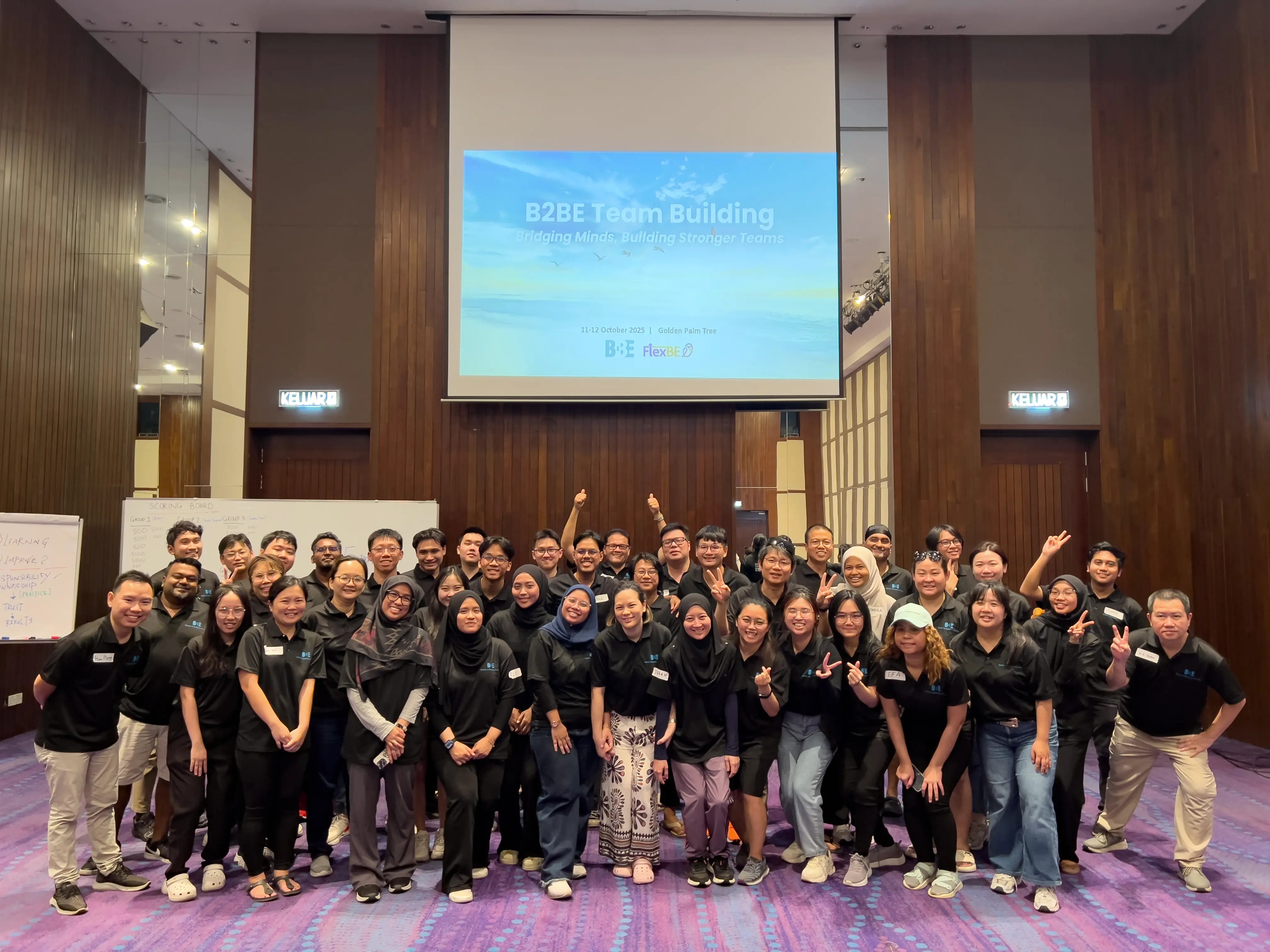
These encounters matter because the product can make the organisation behind it hard to see. Customers experience an order arriving or an invoice moving onward. A functioning connection is easy to take for granted. The colleagues supporting it become much more visible when something needs attention.
The work also requires people who understand both technical systems and business habits. In B2BE’s published employee accounts, integration analysts describe hands-on projects and exposure to business processes. A support analyst in the Philippines talks about developing communication alongside technical skills. Those two kinds of competence belong together: connecting systems involves understanding what people expect those systems to do.
Chng’s recognition of long service fits that setting. Experience accumulates in the people who have seen previous integrations, unusual customer requirements and familiar problems in unfamiliar forms. A fifth or fifteenth anniversary means more than a round number on a presentation slide. Someone has been around long enough to remember why a particular arrangement exists.
When business software gets a sense of humour
One episode from B2BE’s customer history supplies a welcome interruption to the invoices. Tool supplier Kincrome devised an April Tools Day sale, with discounted products, changing offers and a countdown timer. B2BE helped provide the website, electronic catalogue and EDI requirements. The project gave a routine ordering connection a little theatre.
The sale created enough interest that one customer booked a library computer to join in. Others used internet cafés. Sales on the day almost doubled the forecast, according to the customer account. Behind the bargains, orders travelled through B2BE’s existing electronic channels.
The episode belongs to the company’s team and customer, rather than to a claim that Chng personally ran the promotion. It does, however, explain the range of the business he founded. The infrastructure underneath an accounts process can also sit underneath a busy sale. Buyers see the offers. Somewhere behind the screen, their orders still need to make sense.
There is something pleasing about that library booking. Enterprise technology can sound remote from ordinary behaviour, until a customer arranges computer time to buy tools. The connection between systems has become a connection to a person with a plan for the afternoon. It is a more memorable demonstration than a diagram of software boxes.
A return to the question of timing
In July 2023, B2BE announced Dynamic Discounting, extending its work into the timing of payments. The offering allows buyers to access early-payment discounts while suppliers can receive money sooner. It brings a financial decision into the same territory as the documents that support it.
The logic follows the invoice through another stage. Once a business can handle the information, the next question is what it can do with the resulting choices. An agreed early payment can have value to both parties, though they approach it from different sides of the transaction.
For a founder whose company began in 1998, these additions show how the work has widened. The electronic exchange of documents leads into order processing, customer communication and payment timing. Each depends on a transaction being understood well enough for the next decision to happen.
Consider the progression from a practical perspective. A supplier wants an order it can act on, then an invoice a customer can process, then a payment arrangement the parties understand. The software categories change along that route. The need for the two businesses to agree on what happens next remains remarkably consistent.
Beyond the next transaction
Outside B2BE, Chng is an angel investor who supports young entrepreneurs with creative ideas. He also serves on the Australia chapter committee of Asia CEO Community. These activities extend his working world beyond the company he founded, into conversations with other people building businesses.
His interests away from work include travelling to historical sites and remote countryside, meeting people from different backgrounds and cultures, golf, scuba diving and swimming. They give the biography a welcome change of scenery. After a professional life involving documents finding their destinations, there is some appeal in a journey whose reward is simply being there.
The public episodes of his leadership remain small enough to recognise: a team visit, a lunch, an anniversary, eight birthdays. Set beside the company’s international operations, they offer a useful measure of distance travelled. Growth gives an organisation more places to be. Maintaining relationships gives its founder reasons to visit.
Chng’s career has been built around transactions that need to reach another person in a usable form. His own messages keep returning to the people responsible for making that happen. The invoices may travel electronically. Appreciation still benefits from somebody showing up.