In January 2024, the Belvedere Home-Made Film Festival was looking for submissions. Bring the home movies, the short documentary, the music video, the little piece of neighborhood life. A local film festival wanted submissions. For anyone uncertain how to begin, Jock Putney was scheduled to offer three free Saturday workshops at the Belvedere-Tiburon Library, covering filmmaking basics and editing tools.
It is a pleasantly practical introduction to the co-founder and CEO of Nuvolum. Before a film can delight an audience, somebody has to explain how to make one. Before a business can tell its story, somebody has to decide what the story is. The planned library workshops put Putney beside people at the beginning of that process, when enthusiasm is abundant and the edit button is still a small mystery.
His professional life operates on a larger canvas: marketing, business strategy, video production, and an expanding interest in artificial intelligence. Yet the Saturday invitation offers a useful way into it. Putney keeps turning up around the equipment and decisions that help people make themselves understood. Sometimes that means a company. Sometimes it means a person sitting across a microphone.
The name arrived at two in the morning
Nuvolum’s name came after a long night. Managing partners Jeff Thompson and Putney arrived at it at 2 a.m., as they later recalled together. They combined the ideas of newness and illumination. They also explained the mark in the logo: a light on a video set. Even the company’s smallest graphic had a production job.
The pair described using a root exercise, the same sort of process they applied to client brands. The naming story is an agreeable antidote to the impression that a business identity simply descends, fully typeset, upon its founders. Here were two people staying up late to find words that could carry the work they intended to do.
Illumination is a useful ambition for an agency. It makes an implicit promise of clarity. A client arrives with accumulated expertise, internal language, and a long list of things it considers essential. An audience arrives with much less time. The creative assignment lives between those two conditions. The name suggests how Putney and Thompson wanted to approach that gap: take another look, then help somebody else see.
Keeping the work within reach
By April 2014, Putney was a managing partner as Nuvolum added Amy Pellegrini to lead public relations and social media. Thompson was also a managing partner. The agency was extending its capabilities and pursuing regional and national accounts. The business was doing the unglamorous work of building capacity: finding someone who could take responsibility for another part of the work.
A decade later, Putney described a broader operation, with business strategy, data science, and AI becoming more central. The original agency services included websites, video, social media, and public relations. His account of the evolution emphasizes the people and processes behind the finished campaign. Research informs the strategy; production turns it into something an audience can encounter.
He also stressed that Nuvolum’s teams made the work in-house. For a founder, that choice brings the disciplines into the same organization and makes coordination part of the leadership assignment. A concept still needs a script. A film needs somewhere to live. A website needs something worth watching. The expensive camera cannot settle an argument about the brief.
His willingness to commit resources before a clear return appears is one of his more revealing business statements. It puts experimentation inside the company’s operating life. There is a cost to trying a new method while the old assignments still need finishing. Putney describes accepting that cost, rather than treating innovation as a word reserved for the presentation.
“We often invest heavily into innovation long before we can see a return on that investment.”Jock Putney · December 2024
A microphone changes the assignment
On The Pathway to Peak Performance, Putney becomes the questioner. The show brings together people whose careers resist a tidy job description: inventors, entrepreneurs, photographers, military veterans, and others who have had to learn their way through a demanding piece of work. The host’s recurring interest is the route they took, including the parts a polished biography tends to hurry past.
One conversation, with technology analyst Rod Hall, starts with a request to go back to childhood and move forward from there. Hall’s route runs from a Kansas farm through engineering and international work to financial research. The discussion follows decisions, uncertainty, and the cumulative effect of small improvements. Putney supplies room for a career to acquire its bends.
The interview format suits a business builder’s curiosity. A title describes where someone ended up. A conversation can recover the choices that got them there. Hall’s experience supplies a reminder that a career often looks more orderly in retrospect than it felt while it was happening. Listening to that distinction is useful work for anyone responsible for another person’s story.
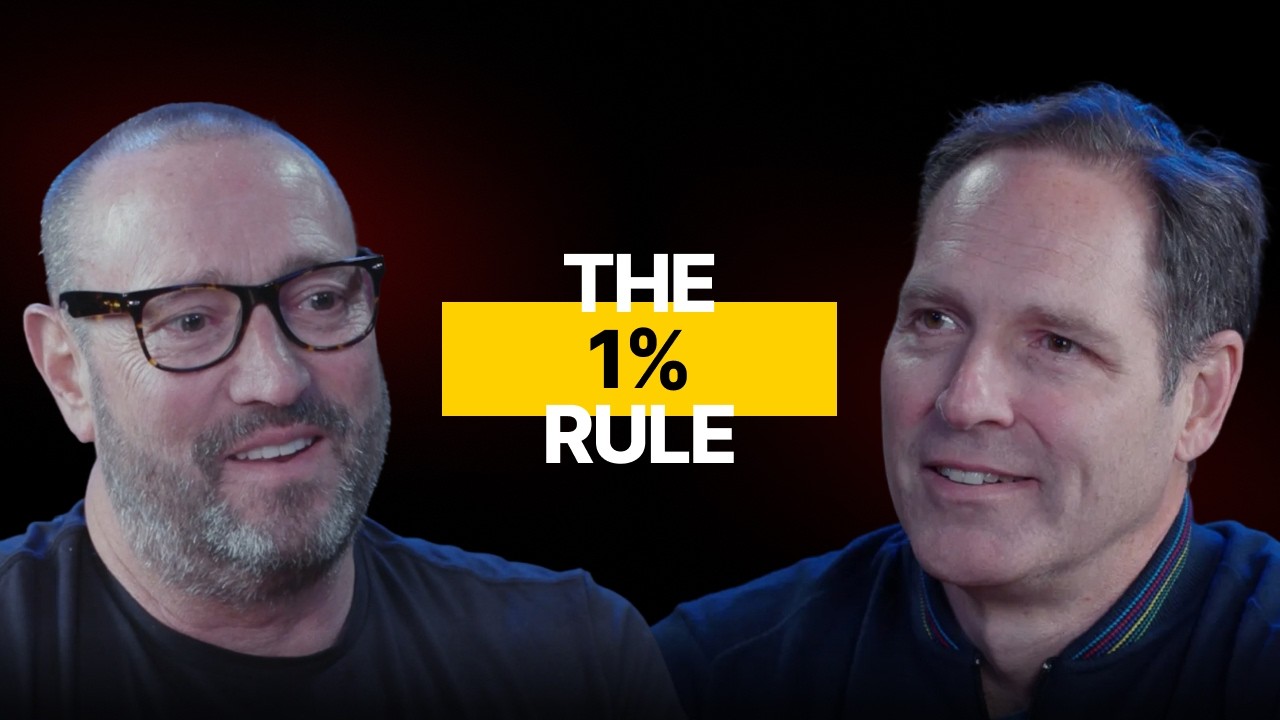
The episode’s artwork advertises a one-percent rule. The appeal is easy to understand: improvement can accumulate quietly. It also fits the scale of a conversation, where a useful detail may arrive several minutes after the neat answer. Putney’s show gives those details time to emerge. The microphone has fewer scheduling objections than a thirty-second advertisement.
Old friends, unfinished chapters
With inventor and designer Stephen de Zordo, the conversation has the texture of an existing friendship. Near the end, de Zordo remembers the two of them eating pizza at Ocean Beach in 1987. It is a small, specific memory that cuts through the executive vocabulary. Long before the present-day companies and recorded conversation, there was pizza and a San Francisco beach.
That moment matters because the show also contains direct encouragement. Putney speaks warmly to his guest about the work still ahead and invites him to return for another chapter. The result feels less like a completed monument to achievement than an ongoing conversation between people who remember earlier versions of one another.
There is a useful distinction between hosting someone and placing them on a pedestal. The former leaves room for unfinished work. A friend can remember the beach, acknowledge the present business, and still ask what comes next. In that exchange, Putney’s interest in progress becomes personal. He is listening to someone whose timeline intersects with his own.
The picture after the conversation
The photographer Tom Sennett gives Putney a different sort of material: a life spent making pictures and the experience of waiting to see what film had captured. At the end of their conversation, Putney proposes digitizing some of Sennett’s photographs and making a supplemental episode to show them. The interview has produced another production idea.
That suggestion is a telling piece of follow-through. A photographer’s account can be absorbing, but the pictures remain part of the argument. Putney wants to bring them into view. It is the agency instinct appearing in the host’s chair: what should the audience be able to see alongside what it hears?
There is also a link back to the library workshops. Teaching someone to edit a film and suggesting a way to display an archive both concern the distance between having material and presenting it. The tools change. The practical question stays recognizable. How do you arrange what you have so that another person can enter it?
An episode with somewhere to give
The podcast also asks guests to choose a charity. In his conversation with Safari West founder Peter Lang, Putney explains that the episode’s proceeds go to the guest’s selection, the Safari West Zoological Society. Lang’s account turns to the 2017 Tubbs Fire and the sustained work of protecting the park’s animals as flames approached.
Putney draws attention to preparedness, persistence, and the willingness to do difficult tasks personally. The interest is consistent with his other interviews: what did somebody actually do when the situation stopped being theoretical? A founder’s language can become vague when it travels too far from a real assignment. Lang provides a very concrete one.
The giving arrangement gives the conversation a destination beyond its audience. Another episode, with real estate developer David Irmer, directs proceeds and viewer support toward Menlo College. It runs almost three hours. Together, the length and the charitable connection show how broadly Putney has defined the format. A guest can bring a career, a set of lessons, and an organization they want listeners to help.
The David Irmer episode makes room for a long working life.
Another place to put the thinking
By September 2026, Putney was also publishing Priced In on Substack, describing it as a daily AI briefing. In his introduction, he presents himself as someone who has spent thirty years turning engineering into revenue and lived through successive technology booms and busts. Those are his terms for his experience, and they explain the commercial lens he brings to the subject.
The newsletter adds a written channel to a public life already involving company leadership and long conversations. A September essay examines AI infrastructure through policy, capital, and jurisdiction. Its subject is the business environment surrounding the technology. Putney is interested in who can build, what the rules permit, and where investment may go.
Writing a briefing, producing an interview, and building a campaign impose different demands. Each requires choosing what deserves the audience’s attention. Read together, these parts of Putney’s work suggest an enduring interest in making complicated activity legible. The company name promised illumination; the subsequent formats keep finding things to point a light at.
The library invitation remains a fitting place to leave him. Someone has a story on a phone, in a box of old footage, or in an idea they have yet to shape. Putney’s advertised assignment was to help them begin. Before the screening, before the applause, before anybody can share the finished link, there is work to do. He seems quite willing to talk about that part.
Keep the conversation going
Explore the work, read the briefing, or settle in for an episode.