The customers wanted dinner. They were less enthusiastic about the box. Week after week, a meal kit arrived at their homes inside polystyrene, doing precisely the job it had been chosen to do: keeping the contents cool. Then the meal was eaten, and the packaging remained. Joanne Howarth was helping run the operation that sent it out. The complaints were arriving from the other end of a supply chain she knew very well.
For an entrepreneur in food distribution, a growing delivery business ought to have been a pleasing development. Yet the more successful the operation became, the more packaging it produced. The box had acquired an awkward second career in the customer's home. Howarth began looking for an alternative. That search would take her from seafood to sheep, and eventually from insulated deliveries to insulation for buildings.
There is something unusually candid about the beginning of her story. She had used the material herself. She understood its appeal and had seen it work at volume. Her objection came with the inconvenience of responsibility: these were boxes passing through an operation she helped manage. Changing them meant learning a new material, persuading customers, and making the replacement perform.
A fish business, then a flock
Before Planet Protector, there was Fishermen's Wharf Seafoods in Nelson Bay, New South Wales. In 2014, Howarth began supplying fresh fish to a subscription meal kit company. The relationship expanded into packing and distributing its deliveries nationwide. She later described an operation employing 170 people. Her route into packaging was through the daily business of getting food from one place to another.
Her search turned up a wool packaging product developed in Britain. Bringing that idea to Australia required reformulation for local conditions. It also required an education in fibre. Wool suitable for a fine garment was not necessarily the wool she needed inside a delivery carton. The useful material was coarse wool with little value to the textile industry. A rejected fleece had found an interested customer.
That detail gives the enterprise its particular character. Howarth was looking for a replacement for one troublesome material and found an opportunity in another material people were discarding. The environmental aim and the purchasing decision could occupy the same sentence. Farmers and processors had something to sell; a packaging business had something to make. The sheep, already dressed for the weather, offered a rather convincing demonstration.
The deceptively ordinary liner
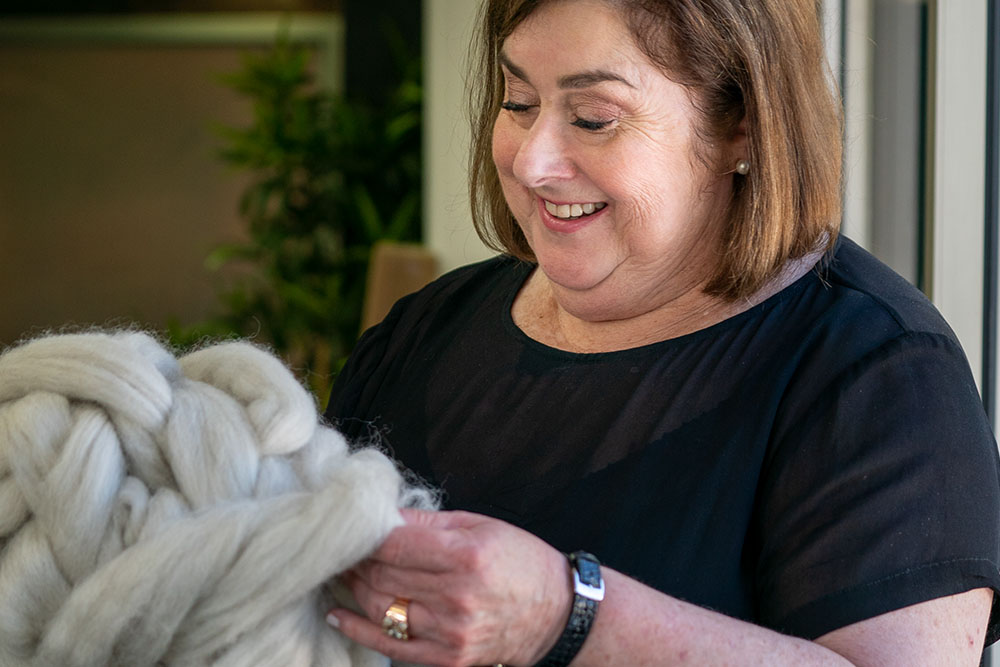
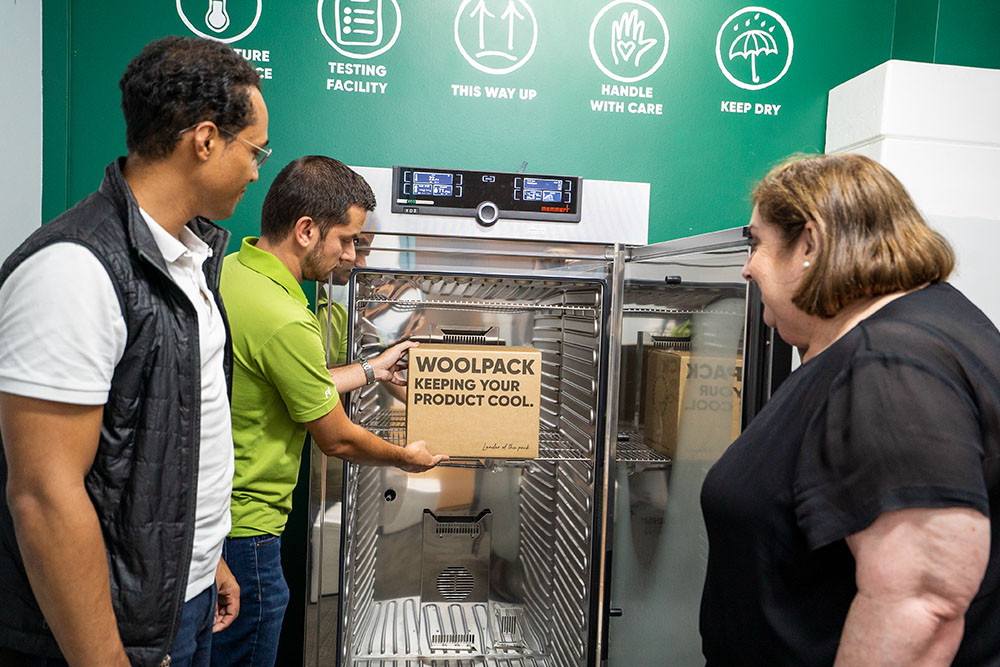
Planet Protector began trading in 2016. Its flagship product, WOOLPACK, puts a felted wool liner inside a cardboard carton. The wool is enclosed in an outer layer, with recyclable or compostable options depending on the application. Each part has its own purpose and its own disposal route. The wool component can return to the soil; the outer layer needs to be handled according to its material.
A box liner can look disarmingly simple. Howarth's work involved adapting the blend and the packaging to real journeys. A short delivery and a trip into far northern Australia ask different things of the same parcel. Planet Protector developed packaging around customers' supply chains, rather than assuming every shipment could use the same configuration. The carton had to earn its place among materials buyers already trusted.
Recognition helped. WOOLPACK won gold in the transport category of the 2017 Sustainable Packaging Design Special Award at the Australasian Packaging Innovation and Design Awards. WorldStar awards followed. For Howarth, those awards supplied credibility in a market accustomed to expanded polystyrene. A buyer evaluating an unfamiliar liner had something beyond the founder's enthusiasm to consider.
The early figures grew into a substantial record of substitution. A February 2021 interview put the number of polystyrene boxes replaced at 6.5 million. Planet Protector's current venture profile reports 20 million. Those are reported cumulative counts, not an inventory of boxes collected from beaches. They describe purchases displaced upstream, where packaging decisions are made before a delivery leaves the warehouse.
Polystyrene boxes replaced by WOOLPACK. Company-reported cumulative figure.
The economics inside the carton
Howarth's background includes an economics degree from the University of Sydney, an MBA, and social entrepreneurship study at INSEAD. She had founded and exited businesses before Planet Protector. Her environmental ambition therefore arrived with experience of the less photogenic side of enterprise: costs, freight, customers and the need to keep selling after the first burst of interest.
In 2022, she described packaging as a visible decision for a brand. The customer touches it before reaching the product. She also pointed to costs that could disappear inside a simple comparison of unit prices: bulky boxes take warehouse space, and storage and transport affect the total bill. Making a case for wool meant discussing the whole delivery operation. A purchasing spreadsheet could be as consequential as a campaign poster.
Training became part of that work. Howarth has described supporting new customers at different stages of their supply chains, showing how the packaging fits into their existing processes. The sale starts a practical relationship. Someone has to pack the liner correctly, someone has to send it, and someone receiving it needs to understand what to do with the parts afterward.
Her own measure of packaging extends from production through transport, use and disposal. That broad view helps explain why the business eventually outgrew its original name. Once the material had proved useful in a carton, there were other applications to investigate. Keeping goods cool was one use of insulation. Building materials, acoustic products and other fibre applications offered more places for the manufacturing knowledge to travel.
Bringing the machinery home
Australian wool did not initially mean Australian manufacture. In the early years, Howarth had to establish an offshore supply chain to get production underway. The prospect of bringing processing home became an ambition of its own. Her 2022 account described government support for a proposed Victorian facility, alongside the frustration of buying Australian wool back through an overseas supply chain.
The next major financing step came in December 2023: Planet Protector closed a $12 million Series A round led by the Mindaroo Foundation and the Victorian State Government, with Singapore-based impact investors also participating. The company became Planet Protector Group. The broader name accompanied plans to expand beyond packaging, with manufacturing at Altona North in Melbourne central to the change.
The site was chosen close to a wool scour, where raw wool is washed before manufacture. Its stated capacity is 150 tonnes of fibre a week. Howarth also saw an opportunity to manufacture for other businesses. Owning processing equipment would allow her team to make its own products and offer capacity to companies seeking Australian production. The factory made the question larger than which liner belonged in a box.
The jeans haven't been worn yet
The denim product, JEANIUS, brings a new question from people encountering it: where do the jeans come from? Howarth's answer in a 2026 post was specific. The feedstock she described was cutting-room offcuts, generated before the fabric ever reaches a wardrobe. The company intercepts that manufacturing waste and processes it into building insulation. At the time, equipment for processing post-consumer jeans at scale remained a next step.
That distinction matters because it makes the work tangible. A cutting room has surplus fabric. A processor can use it. A building needs insulation. Howarth is connecting those activities through manufacturing, with the hope of changing where the surplus ends up. It is an industrial proposition that becomes easier to understand once the material has a name and an identifiable starting point.
By September 2026, visitors were seeing the production process at Altona North. A factory walkthrough hosted with engineering and sustainability consultancy erbas brought guests through the facility, organised with Dr Jane Lai and Planet Protector's Lars Ljung. Building insulation had become something people could inspect where it was made. For a founder who started by searching for a packaging alternative, the audience now included the construction world.
A founder learns to stop holding everything up
Howarth has also written about the organisation behind the products. Early on, decisions and problems kept arriving at her desk. Product development absorbed her attention while the business depended too heavily on personal effort. Her subsequent lesson was to apply the same discipline to operations that she applied to materials: documented processes, feedback, testing and a team able to carry responsibility.
“For the first few years of Planet Protector, I was the structural beam.”
Joanne Howarth, reflecting on building the business
It is a useful confession from someone whose public work often concerns physical performance. A founder can become a bottleneck as readily as a production line. Howarth's reflection connects the two. Reliable products require reliable operations, and ambition makes those operations more consequential. A larger facility creates opportunities; it also asks more of the company running it.
Her networks have widened along the way. She became a Cartier Women's Initiative fellow in 2020 and received an Impact Award in 2022. The University of Sydney recognised her for innovation and entrepreneurship in 2021. She joined EY's Entrepreneurial Winning Women Asia-Pacific class of 2023 and the Unreasonable community. These connections sit alongside her advocacy for women in business and her plans for expansion into Asian markets.
The office sheep have names
There is a smaller flock in this story, too. Howarth collects sheep figures on her travels. Team members have their own named sheep at the office, and the collection includes one with dreadlocks. For a business dealing in tonnes of fibre, it is a pleasingly unserious tribute to the animal supplying the material. Industrial ambition can apparently accommodate a little ornamental livestock.
Howarth's stated aim remains eliminating polystyrene, with growth beyond Australia and New Zealand part of that ambition. Her recent work adds a wider interest in textile waste and the systems that turn it into saleable materials. The original carton still explains the direction: take an object people need, examine what it leaves behind, and find a material that can do the job with a different ending.
The customer who complained about a delivery box was pointing to a problem outside the warehouse door. Howarth followed it back through the supply chain. Years later, her business is making liners, processing fibres and producing denim insulation. The dinner was the easy part. Finding a better place for the box led to an altogether longer assignment.
Follow the wool, and the conversation
- Planet Protector Group
- Joanne on LinkedIn
- Company Instagram
- Company Facebook
- Company YouTube
- Ocean Impact interview · video
- The Mentor with Mark Bouris · audio
- Cartier fellowship & Impact Award
- University of Sydney · 2021 profile
- PKN · the $12 million round
- erbas · September 2026 factory visit
- Joanne’s writing on leadership