The fizz in your baking soda is locking carbon away for a thousand years
The hero of Joachim Katchinoff's company is a molecule most people meet in a cookie recipe. Bicarbonate. At CREW Carbon, it is the end state of a quiet trick: pour crushed alkaline rock into a wastewater tank, let it meet the CO₂ that microbes naturally exhale while they chew through sewage, and the gas converts into a stable, dissolved ion that drifts out to the ocean or subsurface and stays put for thousands of years. No smokestack scrubber. No new plant. Just chemistry that the planet already runs, sped up by a few orders of magnitude.
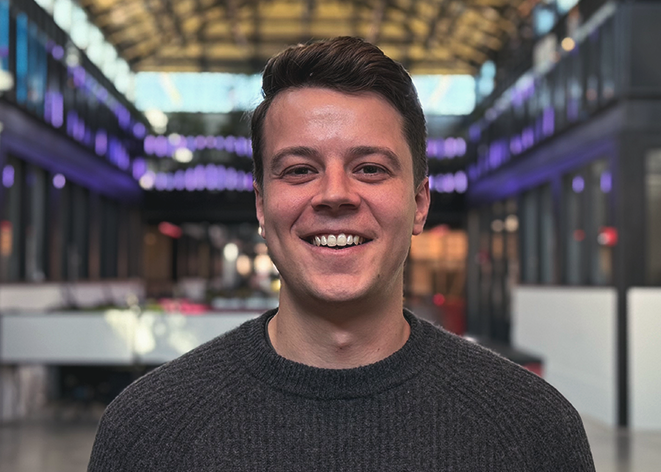
Katchinoff is the Co-Founder and CEO. He is a biogeochemist with a Yale PhD, a Hammer Prize for Outstanding Geologist, and a habit of pointing at the unglamorous and calling it the answer. His pitch to a sanitation district is not about saving the world first. It is about saving them money - cutting chemical bills, improving how solids settle, making treatment more reliable - and removing carbon as the by-product. The Wall Street Journal boiled the proposition down to one question CREW asked Hampton Roads: "What if it saves you $400 million?"
That framing is the whole strategy. Most carbon removal asks the world to build something expensive and new, then begs for subsidies to make the math work. Katchinoff went the other direction. He found infrastructure cities already operate, already fund, and already cannot live without, and he turned it into a carbon sink that pays for itself.
We don't need massive new infrastructure or subsidies. Because our process delivers real operational and cost benefits, it creates a win-win for utilities and for the planet.
Rocks in. Carbon out. Bills down.
The science is older than the company by a few billion years. Rocks like basalt and limestone naturally pull CO₂ from the air as they weather - a process so slow it operates on geological time. Katchinoff's research at Yale, alongside co-founder and Yale professor Noah Planavsky, asked a simple question: what if you grind those minerals into powder and drop them where CO₂ is abundant and concentrated? A wastewater treatment tank, it turns out, is exactly that.
Microbes work
Secondary treatment uses microbes to break down waste, releasing biogenic CO₂ into the tank.
Dose the minerals
CREW adds crushed alkaline minerals like calcium carbonate, optimizing the plant's alkalinity.
Carbon converts
The minerals react with CO₂, trapping it as stable, dissolved bicarbonate ions.
Stored for millennia
Bicarbonate discharges to ocean or subsurface and stays locked away for thousands of years.
Because it is a closed system, CREW can meter what goes in and what comes out, giving inlet-and-outlet measurement that is far more precise than open-field enhanced weathering. That precision is what let CREW become the first company on Earth to issue certified Wastewater Alkalinity Enhancement credits, verified by Isometric. Measurement, not marketing, is the moat.
From the Hammer Prize to a 22-person company
Before the term sheets, there was fieldwork. Katchinoff earned a BS in Geology from the College of William & Mary, then went deep: an environmental consultant at the Cadmus Group, a Marie Curie Fellow at the University of Oxford, and finally a PhD and postdoctoral run in Yale's Earth and Planetary Sciences department, where the faculty handed him the Hammer Prize for Outstanding Geologist.
Academia could have kept him. Instead, the weathering research that filled his dissertation became a business plan. In 2022 he and Planavsky spun CREW Carbon out of Yale. A $5.3M seed round followed, then commercial operations in 2024, then the world-first credits in 2025, then the Series A in 2026. Four years from lab bench to a company removing carbon for buyers like the ones inside Frontier's coalition.
"We are in the business of doing real CO₂ removal, grounded in rigorous science and data."
"Climate-tech is water-tech."
$25 million, and a buyer list that reads like the S&P
The 2026 Series A came in oversubscribed: $19 million in equity plus roughly $6 million in grants and other non-dilutive funding, led by Burnt Island Ventures, with AP Ventures, Sony Innovation Fund, Builders Vision, Idemitsu Ventures, New York Ventures and others joining alongside existing backers Counteract, ANIMO Ventures, Connecticut Innovations, Ponderosa Ventures and Echo River Capital.
Earlier, CREW signed a $32.1M offtake through Frontier - the advance-market commitment whose buyers include Google, Stripe, Shopify and H&M - to remove 71,878 tons of CO₂ between 2025 and 2030. On that deal Katchinoff was characteristically about speed, not spectacle: securing it "enables CREW to accelerate the integration of carbon removal into existing wastewater infrastructure at a significantly faster pace and scale."
What if it saves you $400 million?
Why a closed tank beats a sprawling field
Enhanced weathering is not a CREW invention. For years, climate startups have spread crushed basalt across farm fields and shorelines, betting that rain and time will pull CO₂ from the sky. The catch has always been the same: how do you prove it? Spread minerals across an open landscape and the carbon accounting turns into guesswork - soil chemistry, rainfall, runoff, and a thousand variables nobody can fully meter.
Katchinoff's answer was to stop spreading and start containing. A wastewater plant is a closed system with a measurable inlet and a measurable outlet. CREW doses the minerals inside that boundary and watches the chemistry happen in a controlled volume, which means the company can report not an estimate but a measurement. That difference is why Isometric, one of the stricter carbon registries, was willing to certify CREW's removals - and why CREW could claim a genuine world first rather than a marketing one. In a market plagued by credits that do not hold up to scrutiny, "we can measure it" is the entire sales pitch.
It also flips the usual order of operations. Traditional removal asks a utility to host an experiment for the good of the planet. CREW arrives offering a better treatment process - more reliable settling, less chemical spend, lower operating cost - and the carbon removal rides along for free. The utility's incentive and the planet's incentive point the same direction. Katchinoff calls that a win-win, and for once the phrase is doing real work.
A company that still talks like a lab
Look at CREW's roster and the academic DNA is hard to miss. Co-founder Noah Planavsky is a Yale geochemist who serves as the company's scientific advisor. The team carries an unusual density of PhDs for a 22-person startup - carbon removal scientists, biogeochemical modelers, analytical scientists - alongside the field technicians and project engineers who actually wire CREW into a working sanitation plant. It is part research group, part field crew, and the tension between those two cultures is the point. The science has to be rigorous enough to survive a registry audit; the engineering has to be plain enough to bolt onto infrastructure that was built decades before anyone said the words "carbon credit."
Since launching commercial operations in 2024, CREW has deployed at close to ten facilities across the United States and Europe, working with utilities including Hampton Roads Sanitation District. Each new site is both a revenue line and a data point, feeding the measurement engine that makes the credits credible. The strategy is not to build one heroic megaplant. It is to quietly tuck carbon removal into the thousands of treatment facilities that every city already runs, one settling tank at a time.
Things you would not find on the pitch deck
- The company's whole thesis rides on bicarbonate - the same fizz that lifts a cake - except here it locks carbon away for thousands of years.
- He won Yale's Hammer Prize for Outstanding Geologist before he ever wrote a business plan.
- His first degree came from the College of William & Mary, alma mater of three US presidents.
- CREW splits its life between two cities: a Brooklyn office and a New Haven lab, climate-startup hustle meets university bench.
- He was a Marie Curie Fellow at Oxford - a long way from a Connecticut wastewater plant, and somehow the through-line is the same rock chemistry.
- CREW didn't invent the reaction. The planet did. Katchinoff just made it run on a utility's schedule instead of a geological one.
Subsidy-free, by design
Ask most carbon-removal founders about scale and the conversation drifts toward policy - tax credits, government procurement, the next round of climate legislation. Katchinoff's framing is deliberately the opposite. He keeps insisting CREW does not need massive new infrastructure or subsidies, because the economics already close on the wastewater side of the ledger. If a method only works while the grants last, it does not really work. If it saves a utility money on day one, it survives any political weather.
That discipline is what makes the aspiration believable. The goal is not a single flagship removal site to put on a brochure. It is to make permanent carbon storage a standard feature of the water systems cities already operate and already fund, until pulling CO₂ out of the atmosphere is just something a sewage plant does on the side - cheap, measured, and dull in the best possible way. Katchinoff is betting that the future of climate technology will not look like a moonshot. It will look like a slightly better settling tank, repeated ten thousand times.