Five days after Jim Williamson became Everest’s permanent chief executive, the company announced $1.7 billion in reserve strengthening for its fourth-quarter and full-year 2024 results. The new title had barely settled before the old business came due. Insurance has a particular talent for this sort of entrance: yesterday’s decisions can arrive at tomorrow’s desk carrying a very large invoice.
Williamson had been appointed president and CEO on January 22, 2025. On January 27 came the reserve announcement. In his subsequent explanation, he acknowledged that the trouble extended beyond an unforgiving legal environment. Everest’s own underwriting decisions had helped produce the outcome. His response was unusually easy to understand for an industry fond of sentences that require a second cup of coffee.
Each casualty account would have one renewal to reach the company’s target profitability. Otherwise, Everest would leave it. There was little room in that instruction for the hope that a bad account might become more charming with age.
“My appetite to lose money is zero.”
Jim Williamson, January 2025
The episode offers a useful place to begin his story. Williamson’s career has moved from individual commercial risks to the management of a global insurance and reinsurance group. The scale has changed considerably. The question underneath the work remains recognizable: what should we agree to cover, at what price, and with whose money?
The education of a small-business underwriter
Williamson began his insurance career as a casualty underwriter at The Hartford. He later led underwriting and service operations for its small-business insurance franchise. That paired responsibility matters. Choosing a risk and delivering the service belong to the same commercial relationship, even when an organization chart puts them in separate boxes.
He spent more than eight years at The Hartford and seven at Chubb. From January 2016 until September 2020, he was Chubb’s division president for North America Small Business. His broader career also included ACE and Bain & Company. Along the way, he took on responsibilities in actuarial work, technology and claims, as well as commercial and consumer insurance in American and international markets.
His academic credentials span Bryant, where he earned a Bachelor of Science, and Wharton, where he earned an MBA. But the distinctive feature of his professional preparation is its breadth across the practical machinery of insurance. An underwriter makes a promise; actuaries estimate its cost; claims teams eventually discover what that promise requires. Williamson’s assignments have crossed those boundaries.
By the time Everest recruited him, small business had provided years of operating experience. The next job would ask him to apply that experience across a much wider portfolio.
Four years of a widening brief
Everest announced Williamson’s appointment as executive vice president and group chief operating officer in September 2020. He joined alongside incoming chief financial officer Mark Kociancic, with both reporting to then-CEO Juan Andrade. The company’s stated ambition was profitable growth across insurance and reinsurance, supported by the operating work needed to make it happen.
In May 2021, Williamson added leadership of the reinsurance division. Reinsurance introduces another layer of judgment: the customer is itself an insurer, seeking to transfer part of its exposure. Assessing that customer’s portfolio requires a view of its underwriting, its claims and the way losses might develop across many policies.
In March 2024, his remit expanded again, to include both Everest’s reinsurance and insurance businesses. Jill Beggs, then reinsurance chief operating officer, led the division’s global businesses within that arrangement. Williamson was moving toward the CEO role with direct experience of the company’s two principal underwriting operations.
- 2020Group COO
- 2021Adds reinsurance
- 2024Both underwriting divisions
- 2025President & CEO
He became acting CEO in January 2025 before receiving the permanent appointment later that month. Joseph Taranto, the board chairman at the time, pointed to Williamson’s judgment, performance and knowledge of Everest. The succession brought an operator already familiar with the business into the chair where the difficult choices ultimately landed.
One renewal, then a decision
The January reserve announcement made those choices immediate. The total included $1.5 billion of unfavorable development on prior-year reserves and $229 million of current-year strengthening. Reserves represent estimates of what claims will ultimately cost. Increasing them recognizes that earlier expectations need revising; it does not mean the entire amount is being paid out that afternoon.
Williamson’s explanation addressed both the environment and Everest’s participation in it. Rising liability costs were affecting the market, but concentrations in particular casualty classes had increased the company’s exposure. That acknowledgment matters because a management team can change its own underwriting decisions more directly than it can change the courts.
The one-renewal approach translated the response into an account-level instruction. It also made an uncomfortable trade explicit: losing premium could be preferable to retaining business at an inadequate price. For a company accustomed to discussing growth, walking away requires a different kind of resolve. The sales number gets smaller before anyone can celebrate the claims that never arrive.
By July 2025, Williamson was still defending the pace of that work. He said Everest would run off an account when appropriate rather than keep it merely to protect an expense ratio. A shrinking premium base can make expenses look heavier. His position was that the arithmetic should not become an excuse to postpone the underwriting decision.
The business he chose to keep
Later that year, the decisions reached beyond individual accounts. In October 2025, AIG agreed to acquire renewal rights for a majority of Everest’s retail insurance portfolios worldwide, representing approximately $2 billion of premium. Everest would retain the liabilities and continue administering claims on its existing policies. Future underwriting opportunities and past obligations were being handled separately.
That distinction is central to understanding Williamson’s task. An insurer can decide to stop writing a line while continuing to carry responsibilities from the years in which it wrote it. Exiting a market does not erase the contracts. There is no conveniently placed delete key on an insurance balance sheet.
In May 2026, Everest announced a further agreement to sell its Colombia insurance operation to AIG, with closing expected in early 2027 subject to approvals and customary conditions. The transaction continued the move toward global reinsurance and wholesale and specialty insurance. Williamson described concentrating on markets and capabilities where Everest had a stronger competitive position.
The resulting story is more interesting than a simple expansion narrative. An executive who had been promoted to lead both insurance and reinsurance was now changing the boundaries of that business. His first full year as CEO included choosing which parts should have a different future.
Risk is welcome. The price has to work.
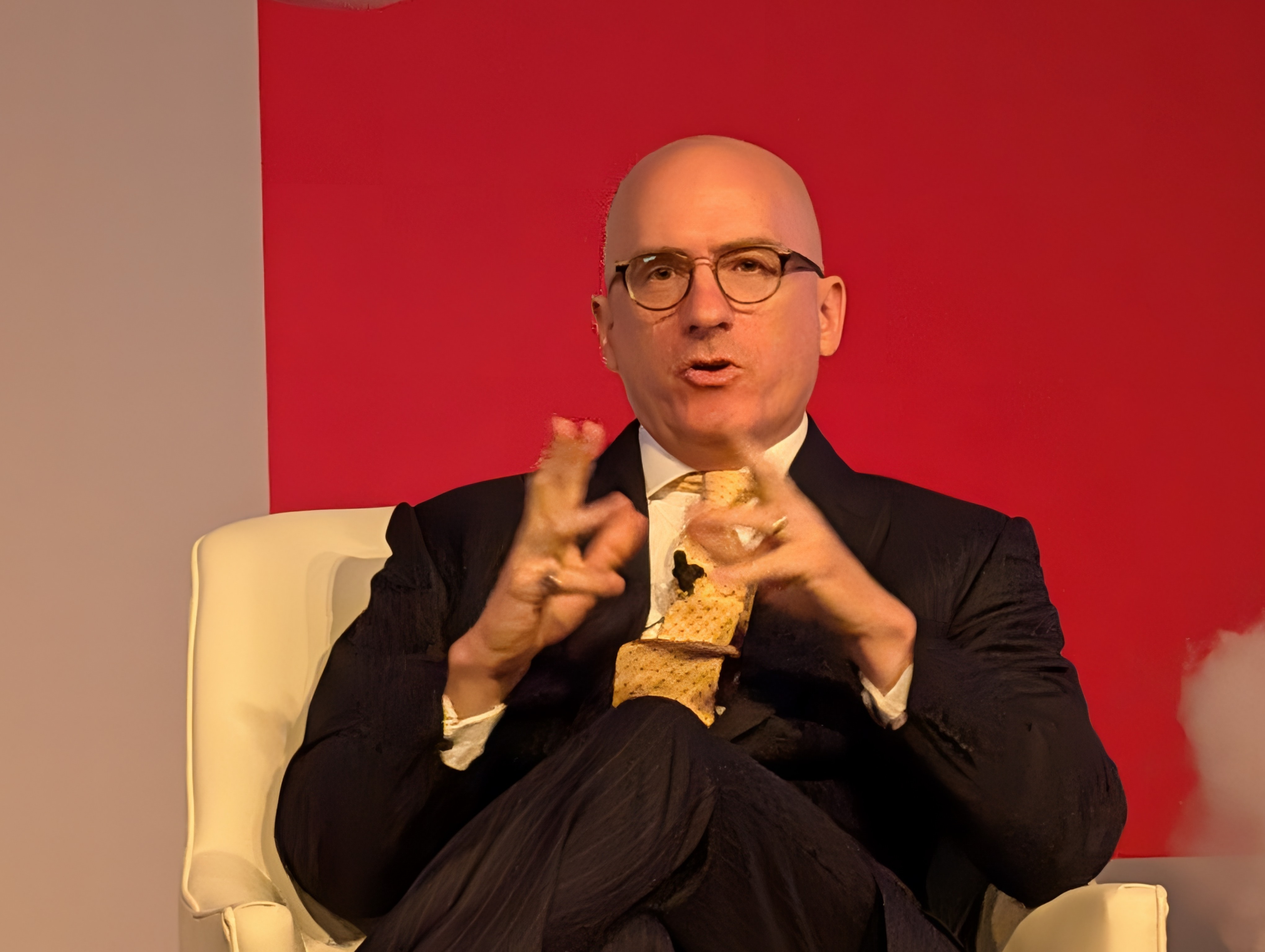
Williamson’s willingness to retreat from some business coexists with an appetite to write other risks. In May 2025, an analyst pressed him about reinsurance pricing. He declined to supply an answer that might encourage further reductions, with a small flash of conference-call humor: “I don’t want to give anybody any ideas.”
His broader point was about sustaining returns through volatile years. A reinsurer must be paid enough across the cycle to handle the losses that eventually come. A quiet period does not settle the question. The cost of the promise depends on what could happen while the contract remains in force.
By the S&P conference in June 2026, he was discussing a market in which property rates had been falling. His emphasis was on whether the remaining price adequately compensated the risk. A decline from a high starting point and an inadequate price are different propositions. Looking only at the percentage change can obscure the decision an underwriter actually has to make.
That same month, Everest and Stone Point announced Annapurna Re, a Bermuda casualty reinsurance sidecar expected to deploy about $600 million of third-party capital over a three-year underwriting period. The arrangement brought outside capital alongside Everest’s casualty and specialty portfolios. Retreat in one area and investment in another were proceeding together.
Expected third-party capital
A different clock for people
There is another pace in Williamson’s account of management. In a 2022 essay on developing talent, he argued for patient listening, broader recruitment and deliberate preparation for leadership. He described bringing colleagues through change even when it required moving more gently. That is a different timetable from the one-renewal deadline he would later apply to accounts.
He advocated recruiting beyond familiar qualifications and industry backgrounds, and described a leadership program that combined strategic and operational learning with time alongside Everest leaders. The aim was to prepare people for responsibility rather than hand them a larger job and hope the education followed.
His industry involvement extends beyond Everest. He was elected chair of the Reinsurance Association of America in April 2024, and his current biography lists membership in the Geneva Association and service on the board of overseers of St. John’s University’s risk management school. Those roles place him among the institutions concerned with the profession’s future as well as its current business.
The next renewal is the test
In the second quarter of 2026, Everest reported $559 million of net income and a 92.0% combined ratio. Its core businesses generated $317 million of underwriting income with a 90.0% combined ratio. Those are company results, reflecting teams, market conditions and investment performance alongside management decisions. They provide a dated checkpoint for the business Williamson is reshaping.
He has said the focus is on developing the core businesses profitably and deploying capital effectively, with share repurchases a priority. The ambition is consistent with the choices already visible: make the portfolio more selective, keep the obligations attached to past promises in view, and direct resources toward work Everest believes it can price and execute well.
Williamson’s career began with the judgment required to accept a casualty account. It now includes the judgment required to leave one, sell renewal rights to many, or bring new investors alongside a portfolio. The next renewal will offer another chance to decide. He has made clear that accepting the business is only one possible answer.
Keep reading. Keep asking.
More from Williamson and the business he leads.
- Everest’s executive biography
- Jim Williamson on LinkedIn
- His essay on developing future leaders
- Watch: the 2025 Cayman Captive Forum interview
- The S&P conference conversation on property pricing
- AIG’s retail renewal-rights announcement
- The Annapurna Re announcement
- Everest’s second-quarter 2026 results