In September 2026, Eric Andersen sat down for a half-hour conversation with Tom Brady. The audience was drawn from insurance, a profession that can make almost anything sound less exciting by giving it an acronym. The subject was support: the coaches, mentors, teammates and family members who help somebody succeed. More than 300 industry leaders and professionals had gathered for Covenant House New Jersey. The evening raised more than $450,000.
Andersen was there as AIG’s president and chief executive, a role he had assumed on June 1. He was also there as a longtime Covenant House board member. Put those two descriptions together and an interesting picture emerges. One job involves deciding how a global insurer should take risk. The other involves helping young people find enough stability to take their next step.
Seen together, the two roles suggest a recurring interest in the conditions that let people move forward. His move to AIG deserves a closer look for that reason. After years advising companies and connecting them with insurance capital, Andersen now runs a company that supplies it. He has crossed the negotiating table while carrying a considerable memory of the people on the other side.
An education in both sides of the table
Andersen graduated from Colgate University in 1987 with a degree in political science and later earned an MBA from Fordham University. Before the executive titles, there was football: he played at Colgate from 1983 through 1986. His career also took him to London, where he worked at Alexander Howden in Devonshire Square. Insurance gave him an international itinerary well before it gave him a global remit.
He joined Aon in 1997 through its acquisition of Minet. His subsequent assignments included running the firm’s Southern California operation, working in financial services and leading global accounts. These are different vantage points on the same commercial problem. A client wants a promise that will hold under pressure. A capital provider wants to understand exactly what it has promised.
From 2011 to 2013, he was CEO of Aon Risk Solutions Americas. He then ran Aon Benfield, the reinsurance intermediary, from September 2013 to May 2018. Reinsurance adds another layer: insurers buy protection for their own portfolios. Andersen’s progression put him close to the buyer of a policy, then the insurer behind it, then the capital supporting that insurer. It is a useful education for a future carrier chief.
He became Aon’s co-president in May 2018 and president in February 2020. The role encompassed the day-to-day operations of geographic regions and solution lines. By then, his work was as much about getting a large organization to act coherently as it was about any individual insurance placement.
Four appointments, one expanding view
- 2011Aon Risk Solutions Americas
Commercial risk - 2013Aon Benfield
Reinsurance - 2020Aon president
Firmwide operations - 2026AIG chief executive
The insurer’s decisions
Appointment years. Selected roles; not a complete employment history.
A warning delivered from a garden chair
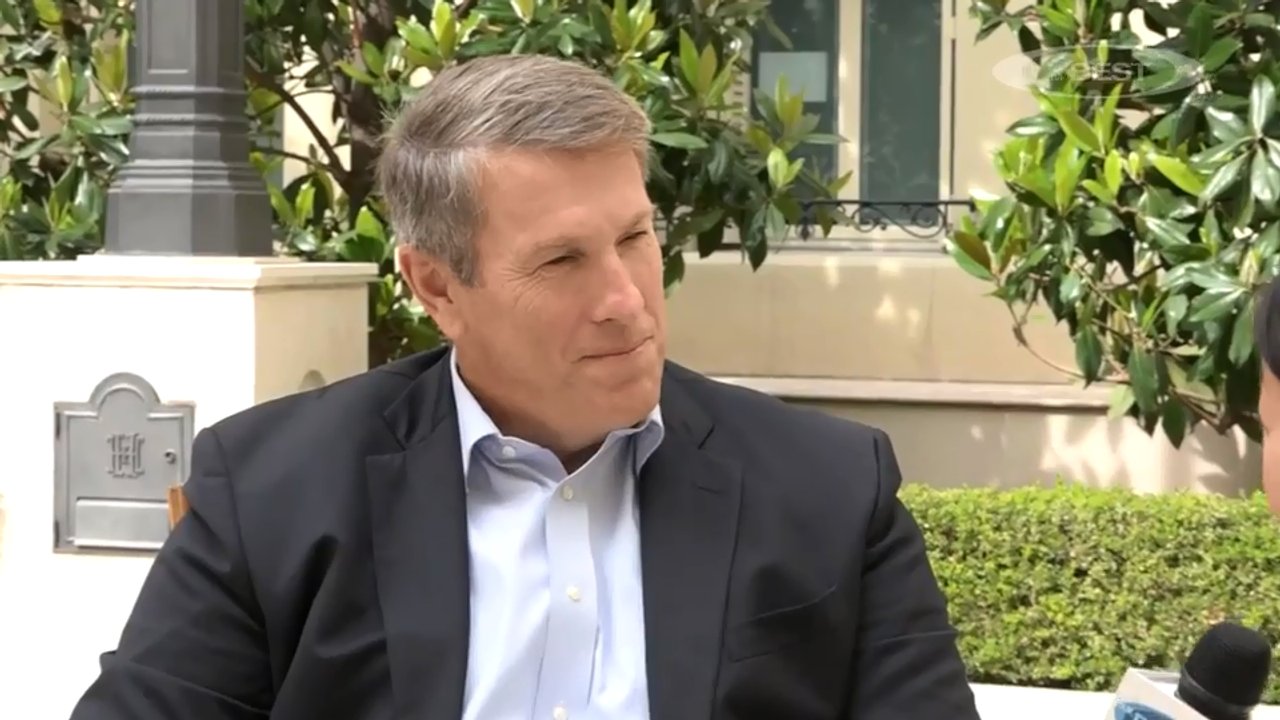
In a September 2018 interview, Andersen sat outdoors, jacket on and collar open, and described a mismatch. Traditional insurance concentrated heavily on property and catastrophe risks. Customers were asking for products that extended beyond property. The setting was relaxed; the argument had teeth. An industry can become very proficient at selling yesterday’s answer.
That concern continued through his public appearances. At the CFC Summit in Chicago in 2023, he called for investment in technology and capabilities so buyers and capital providers could better understand climate risk and develop products. Later that year, in Bermuda, he spoke about major risks and the need to put clients first. The recurring subject was whether insurance was keeping pace with the businesses buying it.
There is a mildly awkward question underneath those appearances: what happens when customers need something that your existing organizational chart does not readily provide? For an executive, acknowledging the gap is the beginning of the work. New products require people with different specialties to agree on a risk, a price and a way to deliver the promise. None of those steps becomes easier because the conference badge says innovation.
The practical business of connecting people
His explanation of Aon’s NFP acquisition in 2024 offers a concrete example. NFP’s purchase closed on April 25 in a transaction valuing the enterprise at $13 billion. Discussing the combination afterward, Andersen emphasized the capabilities Aon could make available to the acquired firm’s middle-market business. The opportunity depended on connecting expertise to people who already knew their clients.
He pointed to specialist help in areas such as cyber and energy. He also expressed respect for NFP’s established way of doing business and the management team led by Doug Hammond. In his telling, the point was to give that business access to additional resources while allowing the client-facing operation to keep working.
This is a less theatrical version of integration than the usual corporate vocabulary suggests. You buy a business because some of its habits are valuable. Then you have to decide which habits deserve protection. Andersen’s account placed considerable weight on that distinction. The proposition would be tested in the ordinary decisions of employees and customers, well after the transaction announcement had ceased to be news.
Before the investment comes the protection
At the Ukraine Recovery Conference in Berlin in June 2024, Andersen represented Aon as it announced a $350 million insurance program with the U.S. International Development Finance Corporation. The package included a $50 million reinsurance facility intended to support war-risk policies issued by qualified insurers in Ukraine. The machinery was technical. The purpose was direct: help make economic activity possible in a place where the risks were painfully evident.
“Capital will not go where it is not protected,” he said. The sentence carries much of his professional argument. Investors can have ambition, governments can want reconstruction, and businesses can identify demand. They still need to know what happens if the investment suffers a loss. Insurance enters the decision before the building, the financing and the ribbon cutting.
The program involved several institutions, including DFC, Ukrainian authorities and ARX, a Ukrainian insurer owned by Fairfax Financial. Andersen was one participant in that collaboration. Its significance for his story lies in the problem it addressed: helping a customer proceed when a conventional answer is difficult to obtain. The work requires an intermediary who understands the client’s need and the constraints of the institutions supplying protection.
“Capital will not go where it is not protected.”
Eric Andersen · Berlin, June 2024
A long commitment close to home
His relationship with Covenant House New Jersey predates the Aon chapter. Andersen and his wife, Pam, have supported its work since 1992. In 2024, he helped co-chair an insurance-industry fundraising dinner with Kean Driscoll and Paul McKeon. Nineteen companies contributed; the event raised roughly $250,000. Andersen interviewed former Mets pitcher Al Leiter about goals, hard work, teamwork and positive mentors.
Two years later came the Brady conversation. Different athlete, familiar themes. The charity recognized Andersen, Driscoll and McKeon for their leadership of the 2026 evening. Those results belong to a roomful of donors and organizers, rather than to one executive. His part was to bring his professional connections into a commitment that he and his wife had sustained for decades.
Colgate is another continuing relationship. Andersen serves as a trustee. The university has recorded a $2.5 million gift from him and Pamela Shelton Andersen for its football athletics capital plan. His college connection also runs through his family: his son Benjamin played football there, while his wife played field hockey. A university can be a line on a résumé. In this case, it remains a place to which time, family history and money return.
The industry comes to dinner
Collective fundraising at two insurance-industry events Andersen helped lead. Event totals, not personal donations. Bars show $250,000 and the $450,000 reported floor.
The apprenticeship ends; the questions continue
In March 2025, Aon announced that Andersen had moved from president to senior adviser to CEO Greg Case. The announcement credited him with helping connect the firm’s capabilities and put its operating plan into practice. Aon originally described the advisory arrangement as lasting through June 2026. His next appointment arrived sooner.
AIG announced his selection in January 2026, with a February 16 start as president and CEO-elect. The board had conducted a search as part of its succession process. Andersen spent the transition reporting to Peter Zaffino, then became chief executive and a director on June 1. The move was staged over months, giving him time inside the business before assuming responsibility for it.
The distinction between his old and new jobs matters. A broker advises clients and arranges protection; an insurer accepts risk under the policies it writes. The broker’s breadth of view offers a possible advantage in understanding what clients need. The insurer must then decide where that need fits its own appetite, expertise and capital. A useful opportunity for the customer still has to make sense on the insurer’s balance sheet.
The governance transition continued in September, when John Rice became AIG’s board chair and Zaffino moved to a senior advisory role. Andersen’s current responsibilities include leading AIG and serving on its board; he is also a member of the Business Roundtable. The range is broad, but the central decisions remain specific: which business to pursue, what resources it needs and how to deliver on the terms.
A different responsibility
The broker
Advises the client and arranges insurance protection.
The insurer
Accepts risk on the terms of the policies it writes.
A role comparison, not a description of every service either business provides.
A sense of proportion
Andersen’s public manner occasionally allows the years to show through as a joke. When Bridget Gainer introduced him before COP28 as having spent more than 25 years in insurance, he thanked her for rounding the number down. It was a small interruption to a technical discussion, and a welcome one. Careers accumulate quickly when counted in conferences.
His substantive point in that conversation was about getting institutions to work together. He distinguished the immediate effects of a changing climate from the problems businesses face as they invest in a transition. He discussed using analytical tools from reinsurance more widely, and making the resulting information useful to banks and construction companies. The destination of the analysis mattered: somebody had to be able to make a decision with it.
There is a quieter personal detail in another conversation. Asked what he did away from work, he talked about his five children, family time and reading. His advice to recruits centered on intellectual curiosity. That combination offers a human scale for a career spent among institutions: pay attention, keep learning, and remember that the people involved have lives outside the transaction.
At AIG, Andersen now has a different position from which to pursue the questions that occupied him at Aon. The next policy still requires a decision about an uncertain future. His experience gives him several ways to look at it: the client’s, the broker’s, the reinsurer’s and now the insurer’s. What follows will depend on how well those perspectives survive the daily work of running the company.
Keep the conversation going
Follow Andersen’s work, hear the interviews and explore the institutions in his story.