A company that sells reliability has an awkward marketing problem. The customer is buying the continuation of an ordinary day. The application stays available. Work proceeds. Nobody is obliged to applaud. Jim Fitzgerald helped build a business around that quiet transaction, then spent much of his career arranging the relationships that let enterprise software reach its buyers.
His name appears near the beginning of the SIOS Technology story, among the co-founders of its predecessor, SteelEye Technology. It also appears in the less theatrical parts of the technology business: strategic alliances, OEM agreements, channel development. These are jobs concerned with getting several organizations to agree on how a product will find a customer. The resulting paperwork rarely makes an attractive poster.
Yet this is a useful place to look at Fitzgerald. His career passes through Sun Microsystems, the early commercial Linux market, software-defined storage and cloud channels. Across those changes, a recurring question emerges: how does a piece of software become something a business can confidently put to work?
A company built around the hours nobody notices
Before SteelEye, Fitzgerald worked at Sun Microsystems in sales, marketing and business development. He eventually served as SunSoft’s senior director of business development. His responsibilities included strategic relationships, acquisitions and joint ventures. It was an education in the connections around a technology company: the agreements that determine how its work meets everybody else’s.
His academic route included economics at Boston College and an MBA at New York University’s Stern School of Business. Those degrees sit comfortably beside a career concerned with markets and organizations. They also help locate the story. Fitzgerald’s documented contribution is the founder’s and commercial executive’s work of building a business around technology.
SteelEye was founded in December 1999 by Fitzgerald, Sue Ellery and Jim Mason. That year, it acquired the LifeKeeper high-availability software from NCR. In January 2000, the company began targeting Linux servers. There was already a product with a history; the new company’s task was to give it a business and a market in an emerging enterprise setting.
LifeKeeper’s ancestry reached back to AT&T’s Bell Labs and telecommunications systems. Its subsequent journey through NCR to SteelEye connects two computing worlds: established infrastructure with demanding availability requirements, and the developing commercial market for Linux. A founder could build an argument around that connection. Businesses wanted the advantages of a different platform while continuing to expect their applications to be there when needed.
LifeKeeper acquired from NCR
Red Hat marketplace participation
OEM agreement announced
In May 2000, SteelEye announced its participation in the redhat.com Marketplace. Fitzgerald, then president and CEO, described the relationship in terms of reassurance for IT and development managers. The product’s purpose was to keep business applications available. The partnership gave that promise a place within a wider Linux offering.
The commercial logic is visible without dressing it up. An enterprise buyer needs to understand how a product belongs in an existing environment. A recognizable partner can help make that relationship legible. Fitzgerald was working on both sides of the problem: a reliability product and the connections through which customers might encounter it.
The launch also needed a face
One of Fitzgerald’s more revealing recollections concerns SteelEye’s marketing. He brought in Emily and the NOLA Marketing team during the launch. Their work included company collateral, tradeshow appearance, messaging and the website. A business devoted to making applications dependable still had to decide how it would look across an exhibition aisle.
It is an agreeable corrective to the idea that a software company arrives fully formed when the code works. Someone has to choose the words on the brochure. Someone has to make the booth recognizable. Someone has to think about what the visitor will remember after three more demonstrations and a disappointing sandwich.
Fitzgerald’s testimonial gives the marketing team credit for that work. It also records his wish that he could have recruited Emily into SteelEye full time. There is a founder’s practical appreciation in the recollection: an outside collaborator had become useful enough that he wanted her inside the company.
The organization was taking shape too. In June 2000, SteelEye announced Kevin Berry as finance vice president and CFO and Boris Geller as marketing vice president. Both reported to Fitzgerald, who was identified as chairman, president and CEO. The appointments added finance and marketing experience around the application reliability business.
By January 2001, SteelEye had announced an OEM agreement with Linux NetworX. LifeKeeper would become part of the clustered solutions offered to customers needing dependable Linux systems. The arrangement also included joint marketing and technical support. Here was the partnership idea in concrete form: a product, another company’s offering, and shared responsibilities around the sale.
SteelEye ultimately became part of the SIOS story. For Fitzgerald, the founding chapter also became a credential he carried into later roles. His subsequent appointments repeatedly brought him back to the commercial edges of technical products, where another company’s priorities have to fit alongside your own.
Four systems, billions of operations
At Nexenta, Fitzgerald became vice president of business development. The company sold storage software, and its ecosystem brought together hardware, software and channel partners. His work included partnership strategy and relationships with companies such as Cisco, VMware, Intel, Supermicro, SanDisk and Seagate.
A 2011 VMworld announcement supplies a more tangible view of the world around that job. Nexenta was preparing to help run the European event’s Hands on Lab. Fitzgerald described the earlier US deployment, where four NexentaStor systems had performed 7.9 billion storage operations. He discussed availability and performance together, the two qualities a busy demonstration environment would put under examination.
The number belongs to a particular deployment, rather than to Fitzgerald personally. Its relevance is the setting. A conference lab allowed potential users to work with technology while the infrastructure handled the demand behind them. An alliance relationship was being expressed as a functioning environment people could actually use.
The proposed European configuration combined Nexenta software with industry-standard hardware. In this kind of business, the product’s boundary is porous. The buyer experiences the combined system. Each participating company brings a component, a responsibility and an interest in the outcome. The business developer has to understand the combination.
In 2013, Interscape announced a relationship with Nexenta’s ecosystem alliance program, adding performance analysis and capacity planning services. It provides another small, specific example of the work: extending a software offering through a partner whose contribution addresses a different part of the customer’s problem.
In Beijing, begin with the berries
Maxta announced Fitzgerald’s appointment as vice president of business development and OEM sales in September 2014. The move brought him from Nexenta into another storage software business. Maxta’s founder and CEO, Yoram Novick, pointed to his experience growing technology companies and his relationships with prospective strategic partners.
In December 2015, Fitzgerald spoke at the China Storage Summit in Beijing. He opened with Driscoll’s, the berry business, before walking through Maxta’s approach to hyperconvergence. It was a customer example before it was an architecture lesson. Even a storage conference can begin somewhere outside the storage rack.
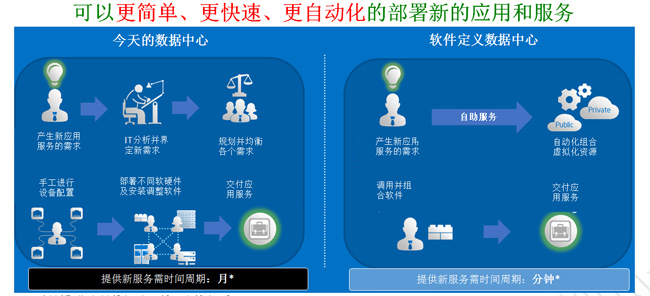
The presentation graphic above puts the argument on one page. On the left, a request passes through several stages of planning and implementation. On the right, a shorter route promises more automated delivery. The slide is a historical sales argument from that talk, rather than a measurement of how every data center behaves.
What makes the episode useful to this profile is Fitzgerald’s choice of explanation. The hardware and software details were present, but the opening gave the audience an organization with work to do. It is easier to discuss an infrastructure decision once someone can see the activity it is supposed to support.
Maxta’s August 2016 leadership announcement still placed Fitzgerald in charge of business development and OEM sales as the company added engineering, marketing and product management leaders. The role sat beside the other functions needed to turn a product into an operating business. A partnership had to make sense commercially while fitting what the rest of the organization could deliver.
The colleague on the other side of the deal
Later chapters included Aviatrix, worldwide cloud and Kubernetes channel business development at NetApp, and North American general management at Elastisys. These moves extended the career into cloud markets while retaining a familiar emphasis on partners and market entry. The terminology changed more quickly than the need to work across organizational boundaries.
There is a personal dimension to that work in colleagues’ descriptions. Robert Winter, recalling their time at Elastisys, describes Fitzgerald’s manner as calm and easy-going. Mathew Chacko, who worked alongside him in complementary cloud channel roles at NetApp, emphasizes creative strategy and cooperation across teams. These are their observations of a colleague, and they suit a career built through shared work.
“Take big risks and learn from the mistakes.”
Jim Fitzgerald · advice to his younger self
Fitzgerald offered that advice in a public career Q&A. It is brief enough to survive a meeting. The longer story lies in the jobs around it: founding a company, explaining a product, bringing in people, finding partners and moving into another market when the industry’s center of attention shifts.
The lasting interest of his career is in those transitions. SteelEye’s early Linux proposition needed a route to enterprise buyers. Storage software needed hardware and service relationships around it. Cloud businesses needed channels and local conversations. Fitzgerald’s work offers a view of the people who arrange those connections, so that a technical possibility can enter somebody else’s ordinary working day.