Jim Evans has spent much of his working life inside the sort of complexity that polite conversation avoids. Army missions. Institutional finance. Thousands of military homes. Retail programs scattered across borders. Then, in 2011, he and a group of partners founded Sevan Multi-Site Solutions, a business devoted to an unfashionable but consequential problem: how to make hundreds of physical locations change without letting hundreds of small failures multiply.
A new restaurant sign, a store remodel or a facility assessment looks local from the pavement. From the operator’s desk, it is a traveling circus of surveys, drawings, permits, contractors, budgets, schedules and data. Every location is similar enough to invite a template and different enough to punish lazy repetition. Sevan’s wager was that the seams could be managed as deliberately as the work itself.
That wager fits Evans’s biography rather neatly. His career is less a sequence of reinventions than a long education in coordination. Each stop changed the setting. The underlying assignment stayed familiar: assemble people, information and capital around a mission, then make the plan survive contact with geography.
An engineer learns to look for the system
Evans grew up in Grundy Center, Iowa, and entered the United States Military Academy in 1979. In 1981, while still a cadet, he landed a wonderfully odd supporting role in show business: audience member for the rehearsal and filming of Bob Hope’s USO 40th anniversary program. Marie Osmond, Glen Campbell, Sugar Ray Leonard, George C. Scott and Brooke Shields were among the guests. Evans later recalled that the cadets “applauded on queue” and had tremendous fun in the process.
It is a small story with a long echo. The USO was scenery then. Decades later, it became part of his civic work. Careers like tidy arrows when reduced to résumés; lives prefer circles.
Evans graduated from West Point in 1983 with a bachelor’s degree in engineering. His active service included the 82nd Airborne Division and the 10th Special Forces Group, with missions to nine countries. He completed Airborne, Ranger, Special Forces and HALO schools and qualified as a master parachutist. The list is impressive, but its relevance to his later work is practical. Military operations make dependencies visible. Timing matters. Preparation matters. A missing piece does not become less missing because everyone worked hard.
His education acquired a second dialect at Duke University’s Fuqua School of Business, where he earned an MBA in 1992. That same year he began work with J.P. Morgan Chase in institutional sales, trading and structured finance. Engineering asks how the pieces hold. Finance asks how risk, incentives and capital move among them. Evans stayed until 2000, gathering another set of instruments for large, complicated systems.
A career built in operating layers
Forty thousand homes, then a continent of stores
In 2000, Evans joined Lendlease to help form a public-private partnership business that privatized 40,000 military family homes on installations across the United States. The scale is difficult to picture, which is precisely why it matters. A single home is a building. Forty thousand homes are policy, capital, maintenance, families, schedules and thousands of local decisions pretending to be one program.
From 2005 to 2009, still at Lendlease, he led a joint venture alliance with BP. The work covered retail sites in the United States, Mexico and 13 European countries. A fuel station in one market may resemble its cousin in another, but land, regulation, language, contractors and local conditions ensure the resemblance has limits. Rollouts reward standards and punish rigidity. The operator has to know which parts should repeat and which must bend.
“The true strength and value come from integrating all our services into one comprehensive solution.”Jim Evans, on Sevan’s 7Xcellence system
By the time Sevan began, Evans had seen the multi-site problem from several elevations. He knew the site. He knew the portfolio. He knew the financing structure. He knew that every organizational boundary could become a delay disguised as somebody else’s responsibility. Sevan’s original vision joined design, program management, construction services and data analytics for organizations with many locations. The offering expanded to include surveying and facility assessments, civil work, zoning and permitting, architecture and engineering, construction, real estate development, and technology.
There is a useful entrepreneurial lesson here. Founder-market fit need not arrive as a lightning bolt. Sometimes it is sediment. A problem appears in one job, reappears at a greater scale in the next and finally becomes too legible to ignore. The eventual company looks new. The founder has been quietly drafting it for years.
Own the handoff, or the handoff owns you
The company’s work can be understood as a campaign against fragmented accountability. A survey informs a design. The design meets a permit. The permit governs a schedule. Construction produces fresh facts, and those facts must return to the data. Split those tasks among isolated vendors and each handoff becomes a tiny customs checkpoint. Context waits in line. Ambiguity collects a fee.
In January 2026, Sevan gave this integrated idea a name: 7Xcellence. The system coordinates seven core services in one workflow, with dashboards, key performance indicators and a shared data thread. Evans described its purpose as aligning the program lifecycle into a cohesive, data-driven system. The phrasing is corporate; the underlying promise is almost domestic. Put the important things in the same room and ask them to speak to one another.
Sevan says it has managed more than $15 billion in projects and employs more than 400 people across the United States, United Kingdom and Canada. Its client history spans retail, restaurants, fuel, grocery, government, housing and other sectors. In 2026, the firm appeared on Engineering News-Record’s Top 100 Construction Management/PM-for-Fee list. It also marked a 13th consecutive year of Great Place to Work certification, an unusually long stretch of employee feedback becoming a public credential.
Evans’s response to that workplace recognition is more revealing than the badge. He placed the emphasis on “our people, our values, our clients, and how we treat one another.” The five values Sevan displays are equally unornamented:
None sounds engineered by a branding committee after three artisanal coffees. That is probably helpful. Values are emergency instructions. They should be memorable when a deadline tightens, a client is unhappy or the easy shortcut presents itself wearing a tie.
Service comes back into the frame
Evans’s military connection did not end when his operating career broadened. Sevan is a certified veteran-owned business, and roughly a tenth of its workforce was made up of veterans when the company published his USO profile in 2020. He chairs the Sevan Charitable Foundation, created in 2017, which has supported military and civic charities including Fisher House Foundation and USO. He serves on the USO of Illinois advisory board, participates in Business Executives for National Security and joined the board of Illinois Joining Forces in 2024. He has also served as an assistant Scoutmaster and belongs to a local Rotary club.
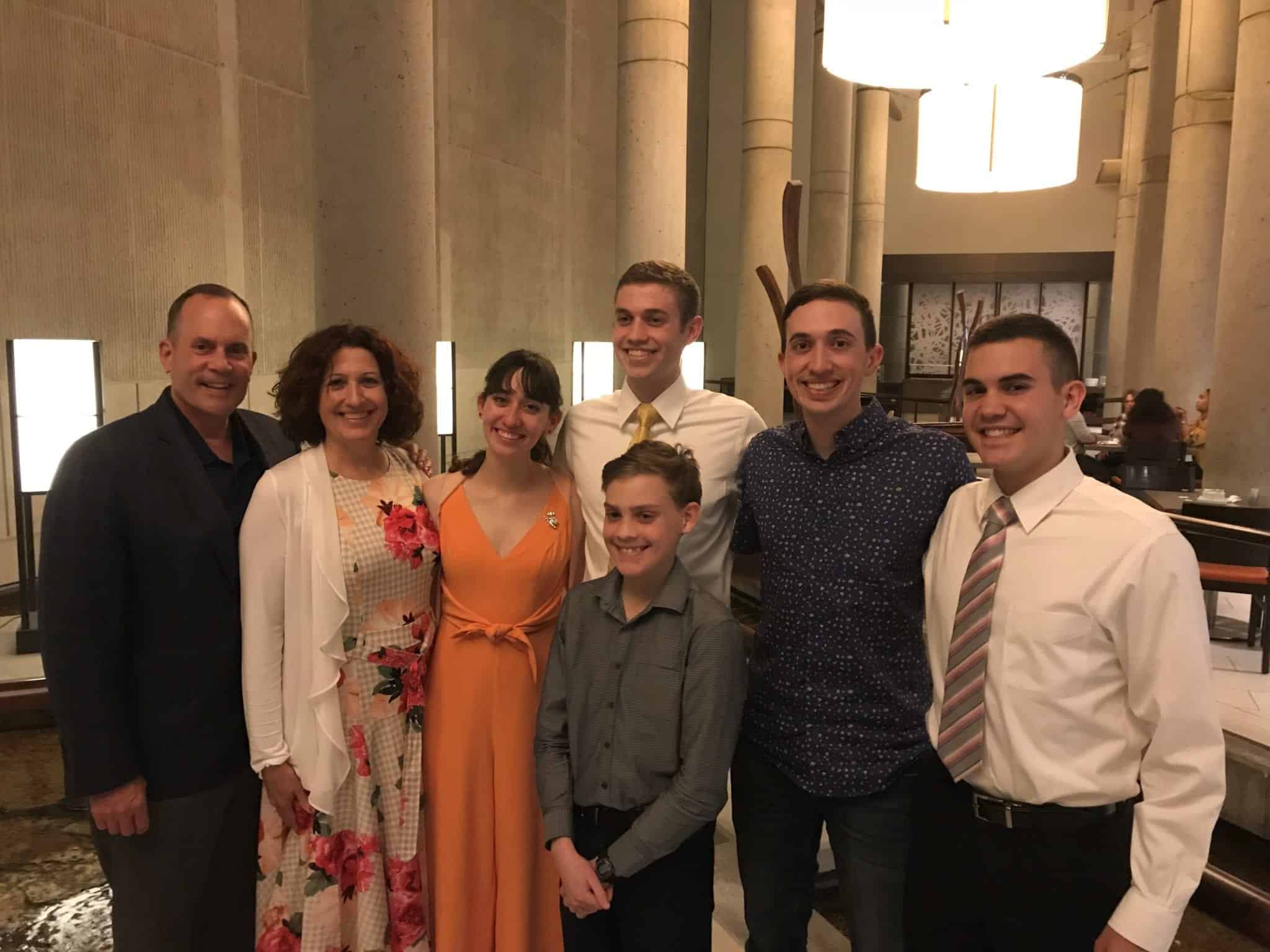
The family connection is close. Evans’s father served during World War II. His wife Rebecca’s father was a Vietnam veteran. Jim and Rebecca have five children, including two Army officers. When Evans joined the USO of Illinois board, he said he hoped to honor service members, military families and retirees. The cadet cued to applaud had returned with a different assignment.
This summer, he told that longer story on Veterans Radio in an episode called “West Point to Nationwide Project Management.” At nearly the same time, Sevan was collecting fresh proof that the operational machine keeps moving: the workplace certification, the ENR ranking and an August groundbreaking for a new indoor range facility at Camp Perry in Ohio.
Founders are often presented as creatures of appetite. Evans’s public record suggests a different engine: obligation. To the mission, to the next handoff, to the people doing the work and to institutions that shaped him. The result is not theatrical. Useful infrastructure rarely is. When a multi-site program runs well, the triumph may be a suspicious absence of drama.
That may be Sevan’s essential product. Not a building, exactly, and not a dashboard. It is the confidence that hundreds of distinct sites can behave like parts of one intelligible system. The value appears as momentum preserved across thousands of small decisions. Evans spent decades learning how to create that confidence. Then he gave it an address in Downers Grove.