A chief executive can have a surprisingly good reason to stop being a chief executive. Jesse Buckingham had been running software businesses, with teams and systems already in place. Then he left to build Vooma. In his telling, the change reduced an established operator to someone with a laptop, trying to persuade the next person that an idea deserved a chance. There is something bracing about voluntarily giving up the machinery. It makes every small piece of progress visible again.
The problem he chose had none of the glamour usually attached to artificial intelligence. Freight brokers were receiving shipment details and entering them into software. Someone had to read the message, interpret the attachment and put the right information in the right place. Buckingham had spent enough time around logistics businesses to recognize the work. Vooma would begin there, in the gap between a conversation and a usable record.
An early return to the Bay
Buckingham’s connection to California began before Stanford. Born in Australia, he spent part of his childhood overseas, including several years in the Bay Area. In a January 2025 conversation with Andrew Silver, he recalled living there from roughly eight to thirteen, around the original dot-com period. He described a continuing affinity for America and a desire to return after studying in Australia.
His university subjects were law and economics at the University of Sydney. An MBA at Stanford Graduate School of Business followed. Those are respectable qualifications for explaining why a business ought to work. Running one offers a less accommodating form of examination: the customer is free to disagree, and does not have to show their working.
Before becoming an operator, he worked at Bain & Company. His later career would put him much closer to the people responsible for selling software, supporting customers and making the organization function. The distance between an attractive recommendation and a useful change became part of his education.
The title arrived before the trust
In an October 2022 retrospective, Buckingham described taking charge of a software business with about $2 million in annual recurring revenue after business school. He had consulting experience, but little preparation in technology or the industry. Over the next three years, the operation reached four brands and more than $20 million in recurring revenue. His account of the intervening work included some decidedly unpolished moments.
He tried marketing changes before properly understanding how customers bought. The ideas failed. An existing co-founder was wary of the new arrival. Building a working relationship required time, meals and an effort to understand what that person had already built. The lesson he drew was blunt:
“You don’t need to ‘make your mark’ day one.”
Jesse Buckingham · 2022
A new CEO has a peculiar incentive to produce immediate evidence of being necessary. Buckingham’s experience suggests a quieter opening assignment: learn enough to avoid making everyone repeat a lesson the business has already paid for. A title can be delivered in an announcement. Confidence in the person holding it accumulates through smaller encounters.
Annual recurring revenue across a business that grew to four brands over three years.
ASG’s account of his tenure puts names to the operating experience: Record360 and e-Courier, where he served as CEO, and Trucker Tools, where he became chief revenue officer. He also led ASG LogisTech. These roles placed him among businesses selling tools to people managing vehicles, deliveries and freight. Each offered a view of how software met the working day.
That background matters to the next chapter. A founder entering logistics has to discover which inconveniences are incidental and which ones recur often enough to justify a business. Buckingham had already worked around the customers. He could bring a history of conversations to the problem, along with the memory of what happened when he moved before listening.
Two routes into the same inbox
A mutual friend introduced Buckingham to Mike Carter. Carter had been a founding engineer at Kodiak Robotics, working on self-driving trucks, after experience at Uber ATG and Otto. Buckingham came from running logistics software businesses. Their connection supplied two useful perspectives on the same industry: how its companies operated, and what automation could be made to do.
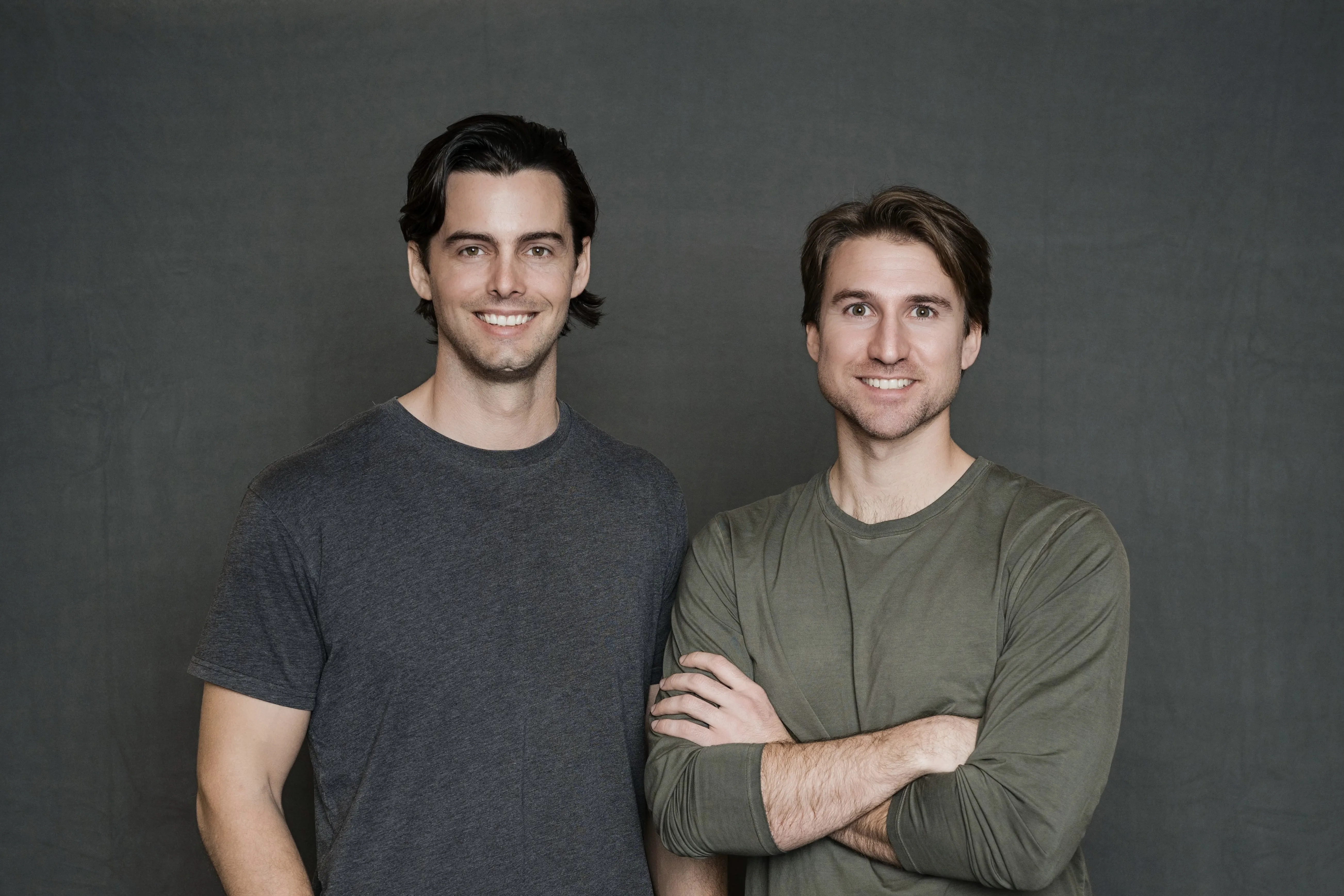
Vooma joined Y Combinator’s Winter 2023 batch. Its early pitch centered on order entry: extract load details from communications and move them into the broker’s or carrier’s system. The attraction was easy to explain. Freight information was arriving in forms that demanded human interpretation; the destination software needed structured data. An employee supplied the bridge.
There is a small absurdity here. The physical shipment may require coordination across a considerable distance, while part of its administrative journey consists of reading a document and typing its contents again. Repetition can become so familiar that it stops looking like a design decision. It becomes simply what the job involves.
For Buckingham and Carter, that familiarity was an opening. They began with a bounded task that customers could recognize. The early proposition did not require freight teams to develop an abstract enthusiasm for AI. It asked them to consider a piece of work already sitting in front of them.
- 01Read the shipmentEmail or document arrives
- 02Extract the detailsTurn the message into data
- 03Build the loadWrite into the freight system
A schematic of Vooma’s early order-entry proposition.
A paperclip, then a company
Buckingham has compared starting a company to the story of trading a paperclip through a sequence of increasingly valuable exchanges. His version begins with credibility: use what you know and the story you can tell to attract a co-founder. Together, win customers. Use those early commitments to make the next step possible. Customers, capital and engineering talent enter the sequence as the business takes shape.
It is an unusually practical way to describe ambition. The founder’s job becomes a series of exchanges, each dependent on delivering something another person values. Experience helps with the first conversation. It does not exempt anyone from the next one. Leaving an established company removes the comfort of a system that can keep moving while its leader considers what to do.
The financing eventually became substantial. In December 2024, Vooma announced a $3.6 million seed round led by Index Ventures and a $13 million Series A led by Craft Ventures. The company’s offering had expanded to quoting, load building and voice interactions. The underlying idea remained recognizable: put automation into the channels and systems that freight teams already used.
Those announcements mark a stage in Buckingham’s story, rather than a conclusion. Money provides the means to hire and build. The work still has to survive contact with customers. For someone whose early management lessons included a failed marketing intervention, the distinction between an appealing idea and a workable one is more than a theoretical concern.
The interviewer behind the automation
Buckingham also spends time asking other people how they built their companies. He launched The Freight Show to examine the experiences and operating practices of logistics leaders. The first episode featured Shawn McLeod, president of Axle Logistics. In announcing it, Buckingham emphasized the entrepreneurial energy of people turning a phone and determination into a freight business.
The questions he highlighted were concrete: maintaining culture during rapid hiring, understanding why recruits stay or leave, and balancing automation with relationships. They belong to a recognizable family of concerns. The former operator, the founder and the interviewer all want to know how an organization actually holds together when its volume increases.
A guest, Blackbox Logistics’ Will Hopkins, later described being asked questions that made him pause and realize he did not have an immediate answer. That is a useful quality in an interviewer. Preparedness can produce an orderly conversation; curiosity occasionally produces a more revealing one. Buckingham’s show gives that curiosity somewhere to go besides a product meeting.
His writing follows freight’s geography, too. In December 2025 he published a history of Chattanooga’s Freight Alley. Articles on Chicago’s brokerage community and the Texas triangle followed in April and May 2026. The subjects reveal an interest in the people and institutions behind the map. A logistics hub is also a collection of careers, decisions, competitors and former colleagues.
There is a related habit in his description of hiring. He has written about conducting lengthy chronological interviews, following a candidate’s decisions and experiences across their life. His stated interest is in evidence of persistence and self-awareness over time. Whether he is interviewing a prospective colleague or a freight executive, the sequence matters to him: how did this person get here?
Who gets the hours back?
In November 2025, Buckingham and Carter described a broader ambition for Vooma: AI co-workers helping logistics teams win and move freight. Their announcement began with a familiar operating problem. Skilled people were spending their days executing repetitive tasks across calls, messages and email. The founders wanted to give those people more room for judgment and relationships.
That is an aspiration with a useful test attached. A team has to experience a change in its working day. The appointment must be handled, the shipment record must make sense, and the human operator must know when their attention is needed. An assistant earns its place through the work it completes.
Buckingham’s own path makes the ambition personal without requiring a grand origin myth. He has been the new leader who needed to listen, the operator overseeing established businesses, and the founder trying to make the first exchange. Now he is building tools for people whose time is divided among dozens of necessary details.
The most telling part of that journey may be his willingness to describe where he misjudged things. A failed idea, an uneasy relationship, a return to beginning: these make the growth figures easier to understand. They also give the founder a practical question to keep asking. What would make the next person’s day work better?
Follow the conversation
Explore Buckingham’s work and hear him in conversation.
- Vooma · Jesse on LinkedIn · Jesse on X
- Read: 7 Lessons I Learned As A First Time CEO
- Listen: The Freight Pod with Andrew Silver
- Listen: Let’s Talk Logistics
- Watch: Buckingham and Carter on FreightCaviar
- Watch: The Freight Show with Evans CEO Ryan Keepman
- Read: Vooma’s December 2024 funding announcement
- Read: The Era of the AI Co-Worker