The Polish version of Skout’s Android app kept crashing when people opened it. Inside a business serving a much larger audience, the affected group looked small. The problem waited. Users left unhappy reviews. Eventually, the team fixed it. Christian Wiklund later calculated that the delay had cost $360,000 in revenue over six months. A supposedly minor bug had acquired a rather immodest price tag.
Wiklund has told that story as part of the explanation for unitQ, the company he co-founded after Skout. It contains an uncomfortable distinction: knowing that something is broken and understanding how much it matters are separate jobs. His team had heard the complaints. They had underestimated the consequences.
Revenue lost over six months, by Wiklund’s account of the Polish Android issue at Skout.
After selling Skout in 2016, he spent time with family and friends and went surfing. The sudden absence of meetings was both welcome and unsettling. About a year and a half later, he reconnected with former colleagues. An old operational headache had survived the exit.
The people on the other side of the screen
Wiklund’s route to that headache ran through engineering. He earned a master’s degree in computer engineering at Chalmers University of Technology, worked at VMware and then co-founded Skout with Niklas Lindstrom. His career crosses two kinds of software business: a consumer network built around meeting people and an enterprise platform built around understanding them. Lindstrom, his technical co-founder, connects the two chapters.
At Skout, the experience itself was the business. A user needed another person to appear, respond and make opening the app feel worthwhile. The engineering could support the encounter; it could also get in its way. For Wiklund, the eventual shift into analyzing customer feedback came with years of experience being responsible for the product people were complaining about.
The scale is visible in the June 2016 acquisition announcement. Skout had 3.5 million mobile monthly active users that May. It had generated $23.8 million in revenue during 2015. Its community stretched across more than 100 countries, with the app available in 23 languages. Across the first 22 days of June, it averaged 28 million chats a day. That is a great deal of conversation to keep flowing.
May 2016
June 2016 announcement
June 1-22, 2016
MeetMe agreed to buy Skout for $28.5 million in cash and approximately 5.37 million shares. The announcement put the implied enterprise value at $54.6 million. It also said the founders would help with the transition for a year. Behind the deal arithmetic sat a product with many simultaneous versions of daily life: different languages, devices and expectations, all arriving through the same app.
The second company began with the leftovers
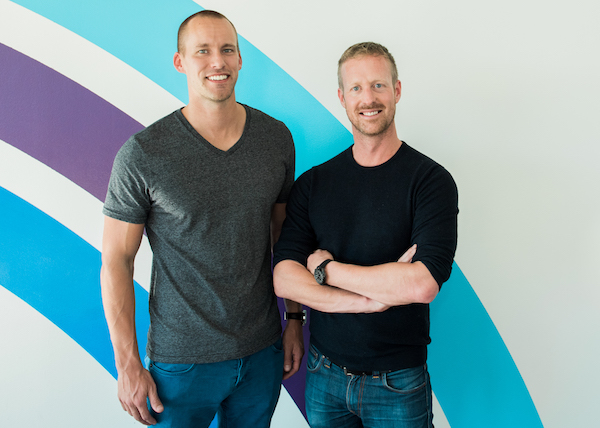
Wiklund and Lindstrom founded unitQ in 2018. By September 2021, they had announced a $30 million Series B led by Accel, with Creandum and Gradient Ventures participating. That brought the company’s announced funding to $41 million at the time. Wiklund said revenue had more than tripled since the Series A announcement in March 2020.
The proposed job was practical: take feedback from places such as app reviews, social posts, support conversations and surveys, then organize it so teams could identify and prioritize quality issues. A complaint could be sitting in a support queue while an engineer, elsewhere in the company, was trying to work out whether anything had gone wrong.
That gap gave the second venture its shape. At Skout, Wiklund and Lindstrom had built the app. At unitQ, they were building something they wished they had possessed while running it. The familiarity of the problem gave them a starting point, though an enterprise customer would still need a reason to buy.
In his CHURN FM conversation, Wiklund described how his thinking had changed. Earlier, he had concentrated on bringing people into a product: acquisition, virality, growth tactics. Experience had pushed his attention toward whether they stayed. Filling a bucket faster does limited good when its contents keep escaping.
He recalled a Skout observation: users who had a two-way conversation within their first three minutes showed substantially better subsequent retention. The useful detail was the exchange between two people. A registration alone could not provide it. That made the first minutes of the experience a place to investigate, rather than simply a funnel to count.
His larger argument was that teams needed access to information across departments without waiting for someone to assemble a report. The customer had already supplied clues. Making those clues available to the people deciding what to fix was work that could change the next decision.
A complaint needs somewhere to go
Ahead of the 2022 Game Developers Conference, Wiklund made the case to game makers. Feedback arrived through enough channels that collecting it could become a job in itself. He described using unitQ to examine the effects of releases across regions, operating systems and app versions, as well as to inform future product work.
The distinction matters to his story because it moves the founder closer to the routine of an operating team. Somebody has to notice the password-reset complaints. Somebody has to decide whether they form a pattern. Somebody has to bring enough context to an engineer that investigation can begin. Few of these tasks have the ceremonial appeal of launching something new.
- Hear itReviews, tickets and conversations
- Find the patternWhich users? Which version?
- Put it to workPrioritize, investigate, repair
A schematic of the feedback process Wiklund describes, rather than measured performance.
He also pointed to a PagerDuty integration that could turn a detected issue into an incident for the relevant team. The appeal was speed with context. A notification without useful detail would merely add another small demand to a crowded day. The ambition was to shorten the distance between someone struggling with a product and someone able to improve it.
The colleagues who came back
There is another way to follow the continuity between Skout and unitQ: look at who returned. Ryan Rillera, a senior quality assurance engineer, explained his decision to join the founders again in 2022. His recollections included releases, wine tasting, river rafting and scavenger hunts. Software still had to ship; apparently the occasional river also had to be navigated.
Rillera emphasized the diverse, inclusive environment he had experienced at Skout. He saw the same culture being built at unitQ, including activities for colleagues working remotely. New arrivals played two truths and a lie. It is a modest detail, but a useful one: a company can announce its values in large type; employees remember what it felt like to join.
Wiklund has written about surrounding himself with a strong team as his central lesson from being a CEO. A returning colleague gives that statement a human dimension. The second business inherited relationships as well as a problem to solve.
One commercial relationship also became closer. In June 2024, Wiklund and Lindstrom announced an investment from Zendesk Ventures. Zendesk was already a unitQ customer. The founders described opportunities for integrations, introductions and work with the wider Zendesk ecosystem. A customer-service company had become both a user and a financial backer of their feedback business.
That history gives the investment its particular interest. Zendesk had encountered the product in use before investing. For a founder making an argument about listening, there is something pleasingly concrete about a customer choosing to become more involved.
The synthesizers explain a little
Away from the company story, Wiklund makes music. He has described tinkering with analog circuitry from a young age and building his own analog synthesizers. As a child, he dismantled his father’s VHS recorder and failed to put it back together. Curiosity, in that household, occasionally left spare parts.
He once considered becoming a quantitative analyst on Wall Street. Music and entrepreneurship were other possibilities. Software offered a kind of creation he recognized from making tracks: begin with an empty file and build something. He liked the lack of physical inventory and the possibility of reaching people around the world.
“You can create stuff, and I just love that creative process.”
Christian Wiklund, Humans of DevOps
It is a connection he makes himself, without needing a grand theory about musicians and founders. There is pleasure in making the thing. His career has also supplied a lengthy education in what happens after other people begin using it.
His ELC biography adds surfing, tomato growing and three children. Those details give the portrait a different pace. The public role revolves around rapid feedback; the other interests suggest several reasons to step away from a screen.
The listening problem keeps changing
By 2026, Wiklund’s public conversations were reaching further into how organizations make product decisions. A discussion with Dan Olsen, author of The Lean Product Playbook, explored what behavioral analytics can reveal and what they leave unanswered. A drop in conversion identifies a place to investigate. Customers’ accounts can help explain what happened there.
They also discussed the habit of moving straight from a launch to the next feature. For Wiklund, that brings the subject back to familiar territory: the experience continues after the release meeting ends. The people using it keep discovering things, whether or not the team has scheduled time to listen.
In an April 2026 platform announcement, he placed quality across the customer relationship, including the moments when friction begins to erode trust. His September summit program went a step further. The scheduled talk proposed giving coding agents access to customer signals so they could investigate problems, help rank work and check the effects of a fix.
The machinery has changed considerably since Skout’s Polish Android bug. The question beneath it is recognizable. When a customer tells you something has gone wrong, how quickly can the organization understand what that means? Wiklund has made a second company out of trying to improve the answer.
Keep the conversation going
Explore unitQ ↗ · Wiklund on LinkedIn ↗ · Wiklund on X ↗
Listen: CHURN FM on retention ↗
Listen: Humans of DevOps ↗
Watch: Wiklund and PayPal’s Wook Chung ↗
Read: The conversation with Dan Olsen ↗
More writing from unitQ ↗