Eighteen months is a long time to wait for a customer. Especially when your previous software business has already been bought by Alibaba. Jerry Wang had that credential, a team and a new company called Tuya. He still had to get somebody to say yes. Looking back at the early days, he recalled introducing Tuya to a hundred prospective customers before the first one chose it. The next hundred customers took three months. Somewhere between those two experiences lies the difference between having a useful technology and having a business.
It is a fitting opening for Xueji Wang, who also goes by Jerry. His career can look like a procession of technologies: internet forums, cloud computing, mobile payments, connected appliances, artificial intelligence. Look closer and a quieter pattern emerges. Again and again, he has worked on the machinery that lets other people do something. A community operator needs a forum. A manufacturer needs a connection to the cloud. A hardware developer wants to put an idea into a working device. Wang keeps finding work in the distance between wanting and doing.
A campus, some code, a company
Wang studied information and computing science at Zhejiang Sci-Tech University, graduating with a bachelor’s degree in June 2005. He had already started PHPWind in 2003. Most student projects end with a mark; this one eventually ended with an acquisition. The timing matters. His first experience of building a software business overlapped with learning the subject formally, with classmates becoming collaborators before any of them could offer a lengthy résumé.
Wang began PHPWind with fellow students. Its work supplied community-building software, giving website operators a way to host discussions without constructing the entire system themselves. The forum was a recognizable unit of the earlier internet: a place with regulars, arguments, inside jokes and somebody attempting to keep the place tidy. The software underneath made those little societies possible.
Wang’s early interests were equally practical. He liked games and tinkering with hardware, and taught himself programming technologies including C and Java. There is a useful modesty to that origin. The future connected-device entrepreneur began with the ordinary attractions of a computer: things to play, things to alter, things to make. A grand theory of the household could wait. There was code to get working.
In 2006, he established Hangzhou Detian Information Technology to commercialize PHPWind. That step brought the less romantic part of software into view: turning something people could use into an organization that could support it. A program might begin with one person at a keyboard. A business acquires a queue.
- 2003PHPWindSoftware for online communities
- 2008AlibabaCloud infrastructure and payments
- 2014TuyaTools for connected products
The Alibaba years
In May 2008, PHPWind was acquired by an Alibaba Group company. Wang joined Alibaba and stayed until February 2014, serving as a senior director. His responsibilities included major technology and product initiatives for Alibaba Cloud and Alipay, among them Alibaba’s QR code payment system. These were systems whose purpose was to be used by other people at scale.
The progression is worth lingering over. Forum software helps a website operator gather a community. Cloud infrastructure gives a business computing resources. A payment interface helps a transaction happen. Each has a different customer and a different engineering problem. Each also becomes useful when the person using it can stop thinking about some of the underlying complexity.
That is a reading of Wang’s career rather than a claim that he planned every stage in advance. What the sequence supplies is experience across several layers of digital life: software, infrastructure and transactions. When he returned to entrepreneurship in 2014, he brought more than the satisfaction of having sold a company. He had worked inside the systems that businesses increasingly depended on.
Recognition arrived along the way. In February 2012, Forbes included him among China’s thirty entrepreneurs under thirty. Fortune China later included him in its 2021 group of forty business elites under forty. The dates bracket two different versions of the same working life: the young software founder inside Alibaba, and the founder running a publicly listed device platform.
The lamp has a software problem
Wang founded Tuya in 2014. Its proposition addressed a rather unglamorous obstacle in the smart-device business. A company that knows how to make an appliance may still need help building its software, managing cloud connections and putting controls into an app. The product’s physical competence does not automatically include those capabilities. A good lamp can illuminate a room and remain entirely baffled by a Wi-Fi network.
Tuya offered manufacturers and developers a combination of modules, cloud services and software tools. The division of labor was explicit: manufacturers could concentrate on product ideas and design while using an outside platform for parts of the connected experience. That arrangement carried Wang back toward the territory of PHPWind, albeit with considerably more objects involved. Somebody else had a thing to build. Shared software could shorten the journey.
By 2018, Tuya had opened a United States sales and research office in Silicon Valley. Its connected-device business already reached more than two hundred countries, with data centers in locations including Portland and Frankfurt. Lighting was a concrete example of the proposition. Existing manufacturers could add connected capabilities through Tuya’s platform rather than undertake the whole IoT research effort themselves.
The international aspect came early. Speaking in 2021, Wang said Tuya had first established its IoT business overseas and had begun its China IoT business in the first half of 2019. That reverses the comfortable assumption that a Chinese technology company necessarily builds a domestic business first and exports it later. Wang’s customers were distributed across borders before the company’s public-market debut.
“Helping manufacturers reap the benefits without having to make their own investments in IoT R&D.”
Jerry Wang · 2018
A bell, then the work continues
Tuya’s American depositary shares began trading on the New York Stock Exchange on March 18, 2021, under the symbol TUYA. The initial offering was priced at $21 per ADS, with an announced offering size of $915.4 million before the underwriters’ additional-purchase option. In July 2022, its Class A ordinary shares were also listed in Hong Kong under stock code 2391.
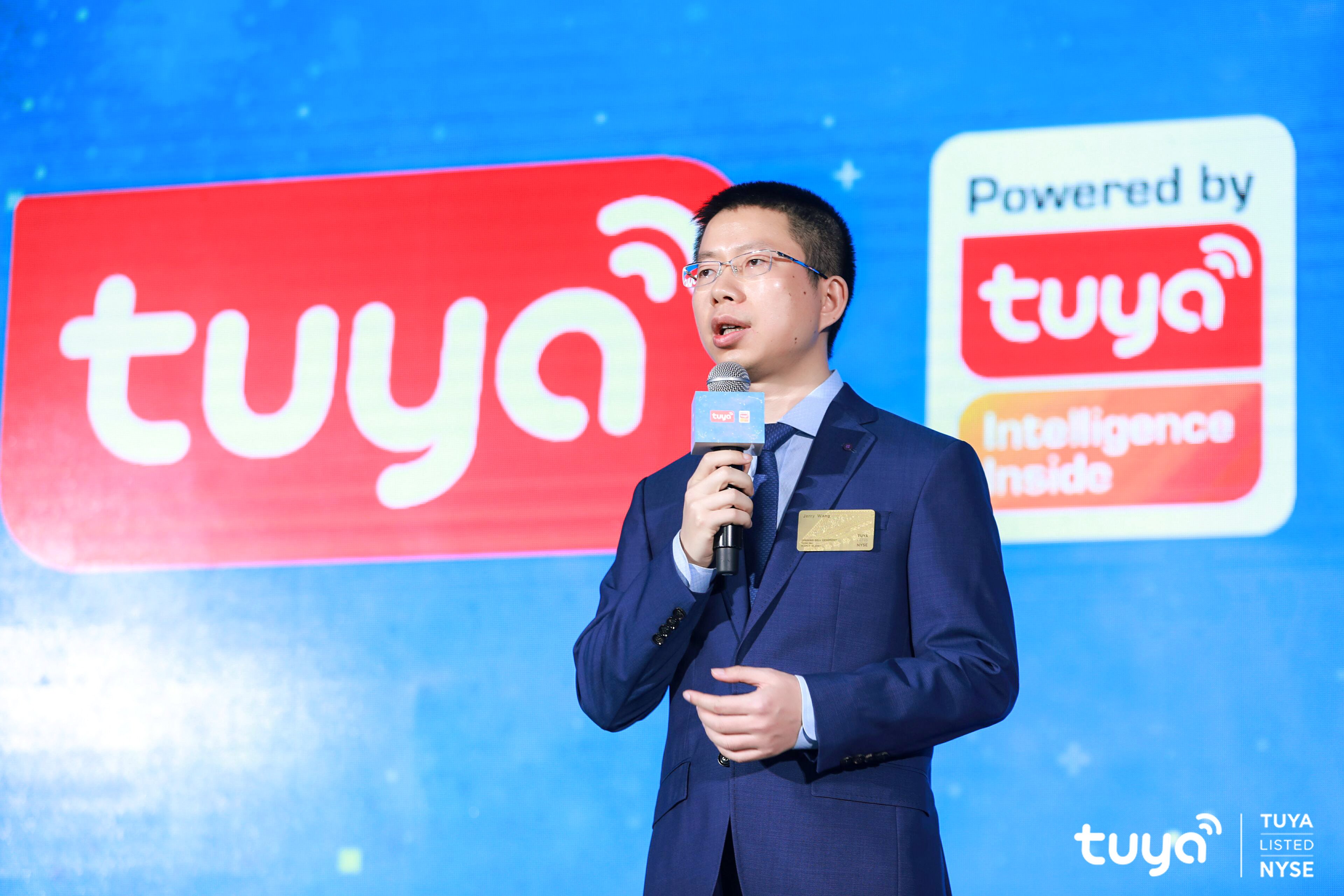
The IPO photograph offers the conventional punctuation: suit, microphone, company name in enormous letters. The less photogenic work continues after the celebration. A platform connecting manufacturers, developers and consumers must keep making itself useful to all three. More participants bring more possibilities, along with more kinds of product to understand.
Wang also sought connections beyond the founding team. In 2019, Tuya brought former General Electric chief executive Jeff Immelt into its US leadership and global strategy work. The appointment paired an internet-era platform business with an executive associated with industrial operations and international expansion. It was a specific expression of the bridge Tuya was trying to build between software and manufacturing.
Open the code. Invite more builders.
By 2025, Wang was discussing open source as part of Tuya’s next decade in AI hardware. In an interview that May, he described it as “the crown on the technology tree” - translated from Chinese. His ambition was concrete: make Tuya difficult for developers of AI hardware to overlook. He also credited developers with expanding the company into categories it had not originally pursued, including energy equipment and robots.
Tuya’s April 2025 developer summit in Shenzhen presented an AI Agent Development Platform alongside Tuya.AI, TuyaOpen and HEDV. Behind the product names was a familiar practical question: how much work could the platform remove from a developer’s path? This time the work included connecting language-model capabilities with physical products.
TuyaOpen gives that idea an inspectable form. Its public repository describes a framework supporting different chips and operating systems, with functions for device pairing, activation, control and updates. The code is distributed under the Apache 2.0 license. A developer can examine the implementation and contribute changes. Openness becomes an activity carried out in files, issues and revisions.
For Wang, the return to open source also connects two ends of his career. PHPWind gave community operators reusable software. TuyaOpen offers reusable foundations for connected hardware. The objects have changed from websites to devices; the attraction of letting more people build on common work has survived.
An editorial schematic of Tuya’s role in development.
Two million registrations, one continuing question
On August 24, 2026, Tuya reported second-quarter revenue of $92.9 million, up 16 percent from a year earlier. Platform-as-a-service accounted for $67.9 million. The company counted more than 2.092 million registered AI developers as of June 30. Those are platform registrations, a measure of reach rather than a count of paying customers.
Wang’s accompanying remarks emphasized moving AI into products and deployment. He highlighted Tuya Cobuilder as a way to help developers move from a concept to a physical device. There is a satisfying continuity here with the early appliance proposition. An idea becomes more valuable when somebody can make it work outside a presentation.
The numbers also bring the story back to its beginning. The first customer and the two-millionth registration are different kinds of event, and cannot usefully be treated as equivalent. One marks an initial commercial commitment. The other describes the size of a developer population. Both direct attention toward the people on the receiving end of Wang’s software.
Company figures. Registrations do not equal paying customers.
Still connected to the classroom
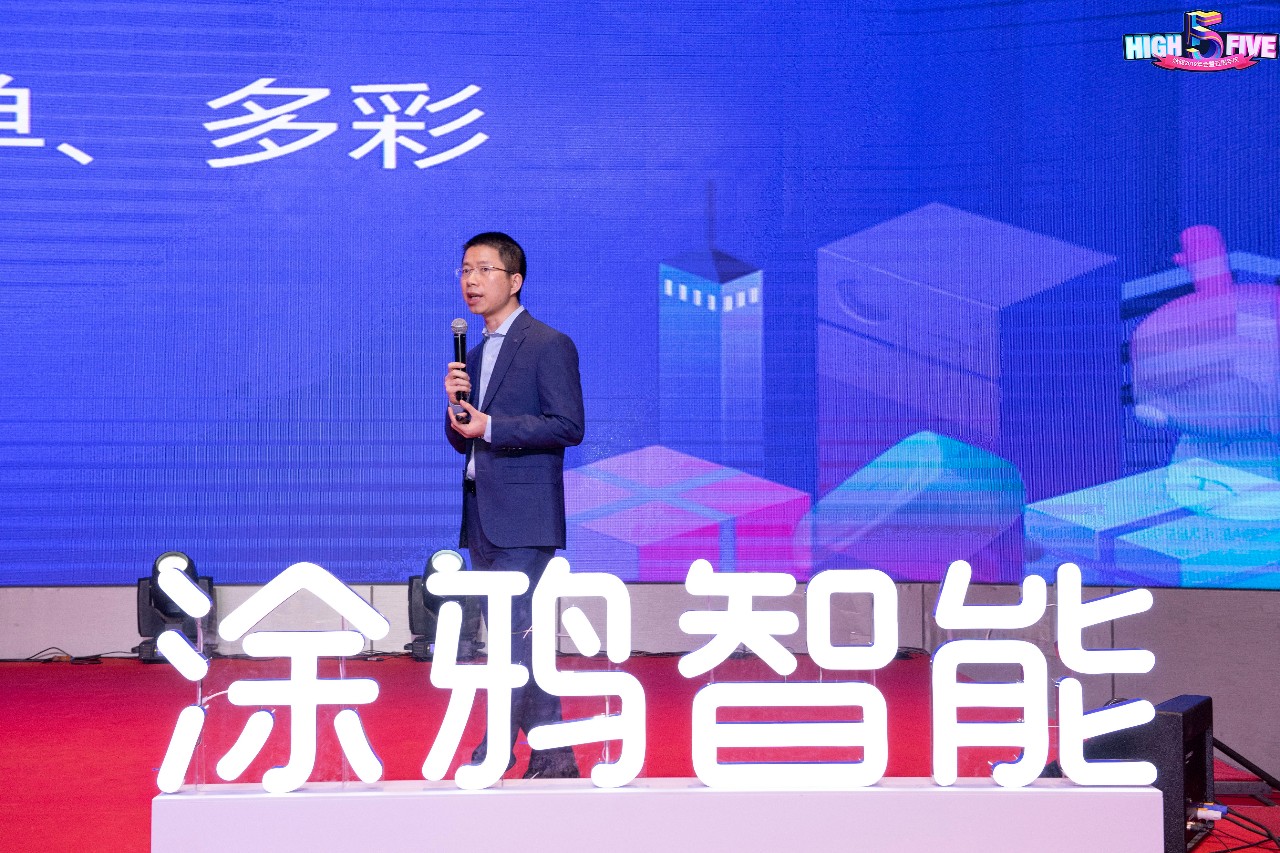
In April 2026, Wang and fellow founder Leo Chen welcomed a delegation from Zhejiang Sci-Tech University to Tuya. Wang discussed closer cooperation in education and industry, and more opportunities for students. The campus connection had lasted well beyond graduation. Four of Tuya’s five founders came from the same 2001 information and computing science cohort.
That persistence gives this technology story a human scale. Before the international offices and exchange listings, there were classmates with an overlapping set of interests. They have continued working together across a student venture, an acquisition and a second company. Collaboration here has names and a history.
The question facing Wang now is how many other people can make something on the foundations his company provides. An appliance, a robot, a piece of software somebody has not yet thought to write. Customer No. 1 took patience. The next idea still needs a builder.