A customer’s name on a yellow sticky note can look like evidence that somebody is on the case. For Jerry Jacobson, it was a reason to worry. In a 2015 post about follow-up, the PatientNow founder called attention to prospective customers whose details were sitting on a coordinator’s desk. A name had been captured. The next step was another matter. Paper, for all its charms, has never been especially good at reminding its owner to do something.
That small office problem makes a useful entrance into Jacobson’s career. He founded PatientNow in 2004, building a software business around connecting work that otherwise lived in separate places. Calendars, inquiries and customer communication belonged to the same working day. The product was meant to treat them that way.
His business story has room for investment firms and board appointments. It also has room for the person explaining a new system to a customer, and for a recruiting pitch that remembered Colorado has mountains. The office is where these parts meet.
Before the calendar, the document
Before PatientNow came aiText and Prosero Technologies. Jacobson founded both. aiText worked on intelligent document identification for county government clerks and recorders. Prosero focused on document-management systems integration. His earlier work put him among organizations whose daily business depended on keeping information usable.
A document may be present and still be difficult to find. Two programs may work perfectly well on their own and make an awkward pair. Systems integration concerns itself with such unglamorous difficulties. It is the part of software that has to care where information goes after someone presses a button.
These earlier ventures give PatientNow’s emphasis on connected operations a concrete professional background. Jacobson arrived with experience in software development and integration. The later product brought that experience into an office setting where schedules, communications and business administration had to coexist.
The original design involved an extended collaboration with a specialist customer. Jacobson spent two years working in an office on the software’s design. That is a substantial commitment to the place where a product must eventually earn its keep. It puts the calendar, the desk and the people using them close to the beginning of the story.
PatientNow begins. The earlier ventures were aiText and Prosero Technologies.
The handoff becomes the product
In July 2011, PatientNow announced a partnership with Digital Assent, the company behind PatientPad. The practical proposition was straightforward: information entered on a touch-screen check-in device would pass automatically into PatientNow. Staff would have less information to enter again.
The first office using the integration was in Newnan, Georgia. Its director described the benefit in terms of front-office time and effort. Jacobson, then identified as PatientNow’s president and co-founder, likewise emphasized the value of moving electronically captured information straight into the system.
There is something pleasingly modest about this sort of product announcement. The accomplishment is a handoff that happens without another person typing the same details. For an employee facing a queue, modest improvements can be quite welcome. Nobody has ever requested an additional form for the pleasure of completing it.
By 2013, Jacobson was discussing integration at a Las Vegas industry meeting alongside William Beeson. He described software functions working together across scheduling, reminders and marketing. He also pointed to other products that could connect with the main system. His account made space for partnerships as well as features built inside PatientNow.
PatientNow’s follow-up tools extended that logic to customer communication. Its PAR system automated messages after an inquiry. The premise was that an office should be able to maintain contact without relying on somebody remembering every individual task. The sticky note had acquired a rather well-organized competitor.
Someone has to teach the software
A software biography can become crowded with products and strangely empty of the people who make them usable. Jacobson’s public recommendation for Haley Wierima brings one of those people into view. She joined PatientNow as a software trainer in 2010.
He described an employee who handled training while also contributing to an internal certification project. When her manager left to pursue a doctorate, she took over department management. Jacobson praised her work ethic, her staff training and the experience customers had with the department.
The details are specific enough to resist the usual fog of a professional endorsement. There is an initial job, additional work, a vacancy and a promotion. There are customers at the other end of the training. The recommendation gives a small account of how responsibility moved inside the company.
Training is a revealing place to look at any software business. Someone has to translate a product into the customer’s working day. The screen may be ready; the people still need to know what to do with it. Jacobson’s praise put that work within his account of what a colleague had contributed.
Denver enters the job description
In October 2017, Jacobson published a sales recruiting article on LinkedIn that paired working in Denver with skiing in Colorado. The company needed motivated salespeople. His headline also supplied a reason to enjoy the location once work was over.
A recruiting headline is a small item to preserve in a founder’s story, but this one adds some air. Denver appears as a place to live and work, with the surrounding state included in the invitation. A software sales role was being offered with a view beyond the office.
“We value our employees and our customers.”
Jerry Jacobson, July 2018
The following year, he answered a public question about company culture. He described valuing employees and customers, aiming for a casual atmosphere and having fun at work. He also described the business in explicitly Christian terms, expressing gratitude to the Lord.
These were Jacobson’s own statements of what he wanted the workplace to be. They add a personal vocabulary to the product story: customers, colleagues, enjoyment and faith. The founder discussing office efficiency also cared to describe the atmosphere in which the work took place.
A seat at a different table
On July 7, 2020, the Aesthetic Business Institute announced Jacobson’s appointment to its board. Francis X. Acunzo, the board’s chairman, welcomed the experience Jacobson would bring. The institute’s work included online education, operational materials, business tools and research.
The appointment placed him among people concerned with the business of running an organization. His company had been addressing that work through software; the institute approached it through education and practical resources. There was a clear overlap in subject matter.
The announcement described PatientNow as bringing work together that could otherwise require four or five programs. By then, the company offered access through mobile, tablet and Windows applications. Sixteen years after its founding, the consolidation idea remained central to the way the business was presented.
It was also the year PatientNow received growth investment from PSG and Blue Star Innovation Partners. The company’s ownership and growth story was entering another chapter. The original office problem now sat inside a business with outside investment behind it.
- 2004PatientNow founded
- 2011PatientPad integration announced
- 2020ABI board appointment and growth investment
In a public recommendation for Richard Phillips, Jacobson credited the former chief operating officer with helping prepare PatientNow for an acquisition. His account included year-over-year growth above 40 percent, a doubled customer base, a 19 percent reduction in churn and an improvement of more than 70 points in the net promoter score. These were Jacobson’s reported figures. He also credited Phillips with work on a new iOS platform and participation in meetings with private equity firms.
That account belongs alongside the earlier recommendation for Wierima. In one, a trainer takes on a department. In the other, an operating executive helps prepare a company for a transaction. Jacobson’s public career includes these acknowledgments of colleagues doing particular jobs at consequential moments.
The company keeps its calendar
PatientNow continued changing after its founding era. In June 2023, it appointed Bethany Little as CEO, succeeding Charles Layne. In April 2025, it announced Keri Gohman for the role. The company’s current account identifies Gohman as its chief executive.
Jacobson appeared in the public response to the 2025 announcement with a brief congratulatory comment. It is a small, human detail in a sequence of formal leadership changes: the founder adding his good wishes as someone else took the job.
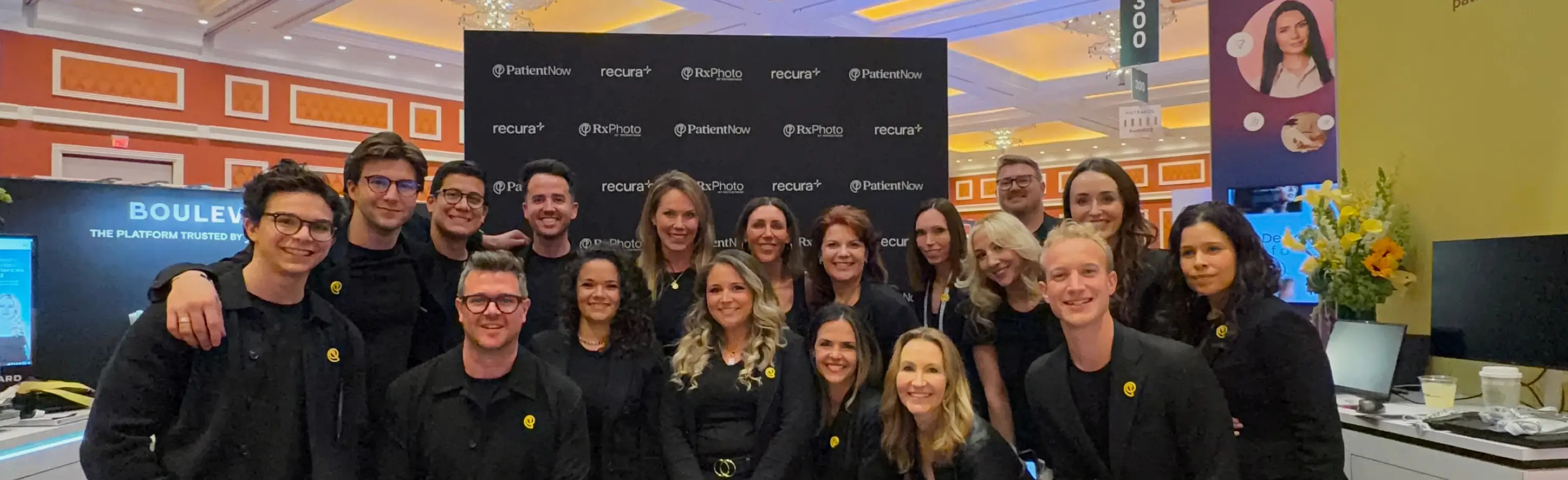
In October 2025, PatientNow acquired Recura, adding automated responses and booking capabilities to its business. That transaction belongs to the company’s later leadership. It also makes an interesting companion to the earlier concern with follow-up: inquiries still need an answer, even as the available tools change.
For Jacobson, the path runs from identifying documents and joining systems to building PatientNow, supporting colleagues and taking a seat on a business institute’s board. It is a career with a practical center. Much of the work concerns what an office can remember, pass along and act upon.
Return to the yellow sticky note. It contains a name, perhaps a number, and an implicit promise that somebody will do something next. Jacobson built a company around making more of that next step happen inside the software. For the person at the desk, that is a promise worth keeping track of.