A plug the size of a matchbox, and a very old idea about people.
Today Jeremy Gelbart runs Autobrain, a Boca Raton company with a deceptively small product and a large ambition. The product is a plug-and-play device that slides into a car's diagnostic port. The ambition is to make any vehicle on the road - including the fifteen-year-old sedan in the driveway - behave like a modern connected car. Location tracking. Trip and diagnostic reports. Driving-behavior scores. Curfew and boundary alerts for the teenager. Automatic crash response. Even a backseat baby reminder for the parent whose worst day would start with forgetting.
The pitch is that safety used to be something you bought with the car, once, at the dealership. Autobrain unbundles it. For roughly the price of a nice dinner, an ordinary driver upgrades an ordinary car. That is the whole company in a sentence, and it is very much a Gelbart sentence: find the moment where a small intervention changes the outcome, then sell exactly that.
The bet that became a business
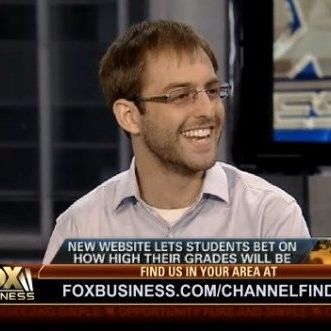
Before cars, there were report cards. As a student connected to the University of Pennsylvania, Gelbart made a wager with a friend: an A on an upcoming exam would earn him $100, and anything less would cost him $20. He studied harder than he ever had. He won. And in winning, he noticed something that would follow him through every venture since - the bet had done what no syllabus could. The stakes made him care in the moment.
He and his co-founder turned that feeling into Ultrinsic, a platform that let college students legally wager cash on their own grades. Students uploaded their schedules, granted access to official transcripts, and the company calculated personalized odds on each grade - effectively pricing a student's semester like a market. Meet the grade, get your deposit back plus a reward. It was audacious, a little controversial, and impossible to ignore. NPR, Fast Company and Inside Higher Ed all covered it. Academics argued, publicly, over whether it was motivation or just gambling with a graduation cap on.
From a two-campus soft launch, Ultrinsic spread to more than thirty universities, Harvard and Princeton and USC among them. In 2012, Gelbart's name landed on a U.S. patent with a title that reads like a mission statement: a system and method for motivating students to improve their grade point average.
Three industries, one mechanic
What is striking about Gelbart is not that he keeps starting companies - plenty of people do that - but that he keeps starting the same company in different clothes. Between Ultrinsic and Autobrain came BeeperMD, a patient-notification software built to make medical centers run on time, nudging people toward appointments and reminders. Students, patients, drivers: the audience changes, the machine underneath does not. Each product locates a moment where a person is about to do the wrong thing, or nothing at all, and applies a small, well-timed push.
He has worn the investor hat too, serving as an Entrepreneur-in-Residence at Old City Partners, advising on ventures and lending operational muscle to existing bets. But the center of gravity has stayed with the building. Autobrain is a family affair as much as a startup - his brother Brandon leads product - which gives the venture the texture of a workshop rather than a boardroom.
Designing for the worst day
There is a quiet seriousness underneath the plug-and-play cheer. Autobrain's marquee features are not about convenience. Automatic crash response calls for help when a driver may be unable to. The backseat baby reminder exists because hot-car tragedies are real and preventable. Stolen-vehicle recovery, teen-driver curfews, breakdown alerts before the breakdown - these are products built for the rare, catastrophic moment rather than the everyday one. It is the same instinct that priced a student's exam: figure out where the stakes are highest, and be there when they hit.
Autobrain reported a seed raise in 2020 and continues to operate out of Boca Raton, a small team in a crowded telematics market, betting that the winning wedge is not fleets or luxury dashboards but the ordinary driver who never thought a smart car was for them.
A résumé that keeps changing subject.
Ultrinsic
Let college students legally bet cash on their own grades. Reached 30+ campuses and a firestorm of press about whether motivation and gambling are the same thing.
BeeperMD
Patient-notification software to keep medical centers on schedule through automated reminders and scheduling. The nudge, applied to healthcare.
Autobrain
A plug-and-play device that turns any car into a smart car: GPS, diagnostics, crash response, and family-safety alerts for the price of a dinner.
Notes, quirks and things worth pinning up.
He is a named inventor on a patent whose literal subject is paying students to raise their GPA - issued Valentine's Day, 2012.
Autobrain is built with his brother Brandon at the head of product. Part startup, part family workshop.
Ultrinsic forced academics to argue, in print, whether betting on grades was clever incentive design or a loophole.
Autobrain ships a baby-reminder feature - a product built for the rarest, most devastating mistake a parent can make.
He studied economics at Penn and Queens College. Every company since has been an economics experiment in disguise.
Students, patients, drivers - the audience keeps changing, the mechanic never does: nudge behavior in the moment.