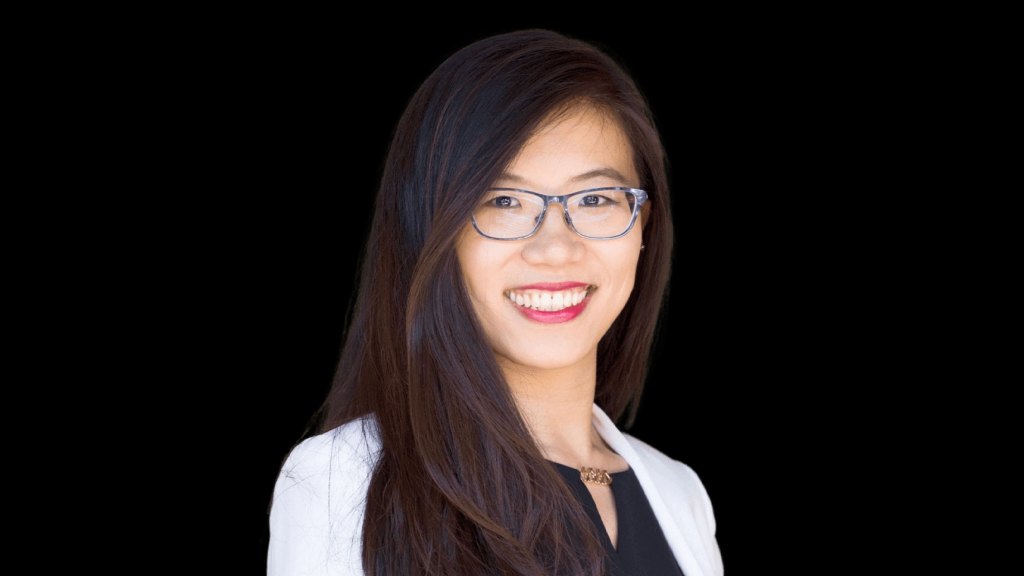
She grew up in northwest China, daughter of two engineers, and watched her parents solve problems with code and math the way other families talked about the weather. That upbringing didn't point her toward venture capital - it pointed her toward product, toward building, toward the kind of close-reading of a system that lets you see where it's about to break before it does. The VC part came later. The instinct came first.
Jennifer Li studied international business at the Shanghai University of Finance and Economics. Then she pivoted - hard. Two graduate degrees followed: one in technology management at Rensselaer Polytechnic Institute, one in software engineering at Carnegie Mellon. Not because she had a plan, but because she kept following the thing that fascinated her. The gap between business and engineering was something she didn't want to stand on one side of. She crossed it.
In 2016, Kleiner Perkins named her a Product Fellow - one of a small cohort picked each year for their potential to reshape what product means in tech. She spent time at AppDynamics running self-service and analytics products before that company went to Cisco for $3.7 billion. Then Solvvy, building conversational AI for customer experience before Zoom acquired it. Two exits. Two close-up views of what happens when the right product finds the right moment.
"My everyday life is living and breathing through infrastructure changes. And I feel like my whole career has been waiting for this moment where every single piece of the stack is shifting."- Jennifer Li, General Partner, a16z
The Infrastructure Thesis
Jennifer joined Andreessen Horowitz in 2018. Not as a deal-chaser. As a builder who happened to land on the investing side. She brought with her something that most infrastructure investors don't have: she'd shipped product. She knew what it felt like when the tooling was wrong, when the pipeline was fragile, when the developer experience was three layers of duct tape from functional. She didn't need founders to explain the pain - she'd felt it.
Over six years, she helped build the infrastructure team's culture, philosophy, and operating model alongside Martin Casado. In April 2024, the firm made it official: Jennifer Li, General Partner #27. The announcement came alongside a16z's first dedicated infrastructure fund - $1.25 billion - which she co-leads. The timing wasn't coincidence. The fund is essentially the institutionalization of the thesis she'd been running for six years.
Her thesis is specific: the infrastructure layer is not ready for AI workloads. The storage systems, compute architectures, and developer tooling that exist were built for a different era. "Everything that we are running all these AI workloads on are actually not built for the specific workload," she's said. That gap - between what exists and what AI actually needs - is where she hunts.
"Your API spec is more important than your homepage these days. Your homepage is being visited by human beings, but your API, your MCP servers, your documentation are being read by agents."
The ElevenLabs Bet
The single investment that most captures Jennifer Li's investment instinct is ElevenLabs. She backed the voice AI company at Series A, when voice generation was still widely dismissed as a novelty - too uncanny, too robotic, too limited for real commercial use. She saw something different. Voice, she reasoned, was the one modality where accuracy mattered less than fidelity. Get the intonation right, the pacing right, the humanity right - and the uncanny valley collapses.
She stayed in through Series B, Series C, Series D. ElevenLabs is now worth $11 billion. She still sits on the board. It's not a one-hit story - it's a conviction story. The kind of conviction that requires understanding not just the technology but the human experience of encountering it for the first time and thinking, that's real.
The portfolio around ElevenLabs tells the same story: Fivetran ($5.6B), dbt Labs ($4.2B), Mux (unicorn), MotherDuck ($400M), Mintlify, fal, Pylon, Rasa, Reducto, Stainless, Stacker. Data connectivity. Video infrastructure. Documentation tooling. AI inference. The common thread isn't a sector - it's a temperament. She likes things that take a gnarly technical problem and make it feel inevitable.
Key Portfolio Companies
What She Looks For
When Jennifer Li evaluates founders, she's not running a checklist. She's reading for a quality she calls the 60/40 problem: technology is only 60% of the equation. The other 40% is passion, product instinct, and the ability to make hard technical things feel simple to the people who use them. Founders who optimize only for technical depth often build things that are impressive and unusable. The ones who make it are obsessive about both.
She has a documented soft spot for open source. The infrastructure companies that win, in her view, tend to have community as a distribution channel - developers who adopt a tool because it's genuinely good, not because a sales team found them. Open source is the trust signal. Enterprise contracts are the monetization layer that follows.
On markets: she thinks the winner-take-most dynamic in AI infrastructure is steeper than it was in traditional SaaS. "The gap between number one and number two is genuinely hard to close." Getting to the default position in a category creates network effects - more usage, more training data, better models, better product - that compounds in a way that wasn't true when software was just about features.
Everything that we are running all these AI workloads on are actually not built for the specific workload.
Tech alone is only 60% of the equation.
Creativity is inherently human. These are just great tools.
The gap between number one and number two is genuinely hard to close.
Your API spec is more important than your homepage these days.
My whole career has been waiting for this moment where every single piece of the stack is shifting.
The Operator Advantage
What separates Jennifer Li from many infrastructure investors is that she's been on the other side of the table. She's shipped product. She's managed engineering teams. She's lived through an acquisition - twice. That means when a founder walks into a board meeting with a scaling problem, she's not guessing at what it feels like. She has scar tissue.
Martin Casado, who worked alongside her for six years before her GP promotion, said she has "a deep product sense that not only guides her investments, but has proven invaluable to the companies." Ben Horowitz said she "embodies the a16z culture." The culture he's referring to isn't hype - it's the belief that the best VC firms operate like an extension of a company's team, not like external observers with a checkbook.
She's described as low-ego and meticulous. Not buzzword-meticulous - the kind where she shows up to a portfolio company board meeting having read everything, having stress-tested the model, having thought through the second-order effects. Founders who've worked with her describe it as the rare kind of attention that feels like a resource, not a performance review.
◦ = Board Observer