The software came after the club. That order matters. Jeff VanDixhorn began running College Park Athletic Club in Deerfield, Illinois, in 1995. Before there was a platform to sell, there was a place to run: members arriving, employees doing their jobs, and all the ordinary transactions that allow a sports business to open again tomorrow. His later career would carry him into software, payments and the leadership of Daxko. The original vantage point was wonderfully concrete. He was a customer who also had the keys.
Club Automation began with a wish familiar to anyone who has managed a busy place: could the front desk and the back office please behave as though they belonged to the same business? In 2007, VanDixhorn partnered with developer Max Longin on a web-based system for his clubs. The product grew out of operating needs. Once it worked inside his own facilities, the pair saw a market beyond them.
There is a modest comedy to this kind of entrepreneurship. Software promises to make work disappear, while its founders acquire an entirely new business to manage. VanDixhorn went from running clubs to serving other people who ran clubs. The inconvenience had become the opportunity.
Before the software, a scorecard
His connection to racquet sports reaches back to Wheaton College, where he studied business administration and management. He was the conference tennis player of the year in 1993. A future software executive already had a career measured in points.
He played number one at Wheaton and qualified twice for the NCAA Division III national tournament. His later work included teaching players of different ages and serving as a managing partner of College Park Athletic Club and Four Lakes Athletic Club. The competitive and instructional experience sat alongside the business responsibilities.
Those details give his operator credentials some texture. Courts were places where he had competed and taught, as well as assets he helped manage. His clubs eventually extended across Illinois, Indiana and Wisconsin. The work moved from the individual player to a group of facilities, with the coordination problems that come with more employees, more locations and more members.
A tennis record cannot explain a business career by itself. Still, it supplies a useful opening scene without requiring an invented origin myth. Long before the chief executive title, VanDixhorn knew the world on the other side of the booking system. A court reservation had an actual court attached. That connection gives the later software story its particular setting: racquet clubs, the people who use them and the staff responsible for making a visit work from arrival to departure.
Wheaton College
Four hundred facilities, then a larger stage
By January 2018, Club Automation supplied software to more than 400 facilities. Daxko announced its acquisition on January 30. The transaction carried an unusual continuity: VanDixhorn would keep leading Club Automation under its new owner, the team would stay, and the business would continue operating from its Chicago office.
For an operator who had built a product around his own needs, the sale changed the number of people involved in the problem. Daxko already served nonprofit organizations and smaller businesses through its existing brands. Club Automation brought a club-management platform and a customer base of its own. The practical promise was further development and wider distribution.
VanDixhorn’s responsibilities expanded too. He became Daxko’s chief revenue officer and served in that role until 2022, then moved to its board. He had occupied several seats around the same commercial relationship: facility operator, software founder, executive at the buyer and director. Each came with a different view of what a club expected its technology to do.
He still owned two clubs during his revenue leadership period. Spending time in those facilities, he later explained, helped him see the business from both sides. That is a useful complication for a technology executive. A feature can look tidy in a demonstration and considerably less tidy when a team must use it throughout the day.
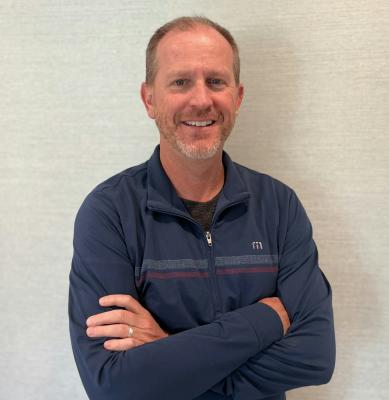
A furniture store finds a second game
His next venture gave him another physical place to think about. Pickle Haüs opened in Algonquin, Illinois, in November 2023. It combined indoor pickleball with a restaurant, bar and golf simulators. The building had previously housed a Dana Furniture store. A room once devoted to sitting down had found several reasons for people to get up.
VanDixhorn and fellow club operator Benj Ecker brought experience in tennis and club operations. Hubbard Street Group brought property development expertise. The opportunity joined two observations: pickleball was drawing interest, and a former furniture store could accommodate a new use. Partners with different capabilities had found a project that needed both.
There had been an earlier hesitation. Ecker has described exploring pickleball at their tennis clubs years before, when the economics did not yet work. The later venture followed renewed interest as the sport grew. That interval is worth keeping in the story. Seeing demand and finding a workable business around it are separate jobs.
The Algonquin venue opened with 12 indoor courts. Five were cabana courts with larger seating areas; two golf simulators offered another activity. Courtside seating let groups alternate between playing and eating. The design made room for the person who wanted a game and the person who wanted a conversation, sometimes within the same party.
For VanDixhorn, pickleball also has a personal dimension. Pickle Haüs introduced its co-founder by describing the sport as a way he spends time with his wife and children. That small detail fits a venture built around shared visits. The invitation can include a family, a group of friends or someone happy to let the next match wait until after lunch. That mix asks something of the operator too. Court time, seating and dining belong to one visit, even when the people in a group want different things from it. The appeal of a shared destination depends on managing those different expectations together.
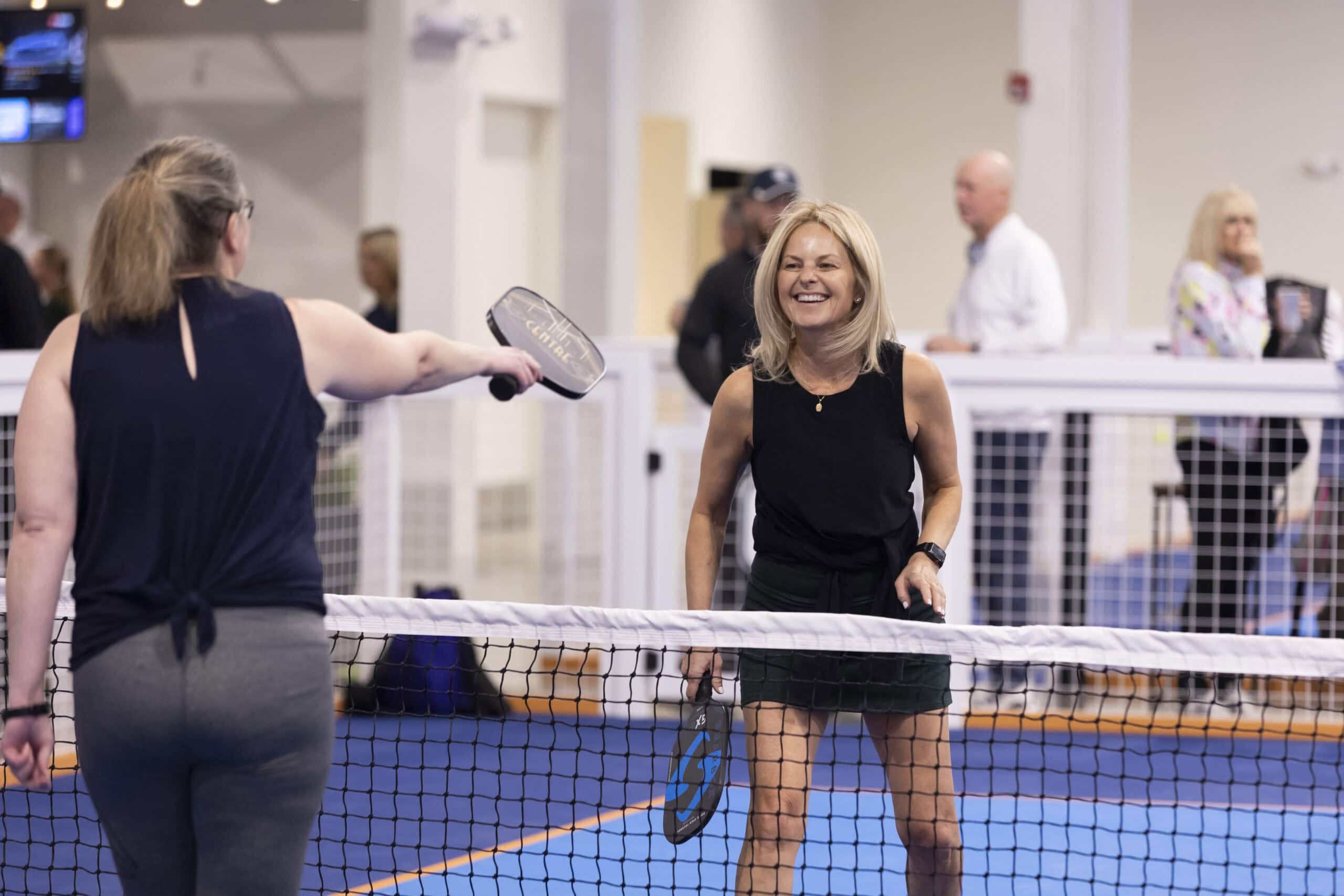
The Algonquin venue as described in January 2024.
The return came with more people to listen to
On May 2, 2024, Daxko named VanDixhorn its third chief executive. His return followed his time on the board and the development of Pickle Haüs. The company he now led included Club Automation alongside brands serving different kinds of membership businesses. His original product was one part of a broader responsibility.
Glen Gunderson, the YMCA of the North chief executive and a Daxko board member, described his leadership in terms of humility and service. The endorsement helps explain the appointment’s emphasis on customers. VanDixhorn had operated facilities himself; he now had to maintain that attention across organizations whose needs extended beyond his own experience.
The YMCA relationship supplied a specific test. In July 2024, Daxko and Y-USA announced an alliance covering member management, data collaboration and service improvements. Y-USA would participate in Daxko’s YMCA Customer Advisory Board. The agreement included fundraising reporting and integrations, as well as membership screening and verification data services.
Those are administrative subjects, with consequences for the people using them. A membership business depends on reliable records and systems that its staff can understand. The alliance gave customer representatives a defined role in discussions about the product. Listening had a place in the organization chart.
The advisory board’s subsequent work produced a more detailed agenda: dashboards, reporting, fundraising integrations and staff pain points. This is where a chief executive’s stated interest in customers becomes assessable. A general promise to care is pleasant. A decision about which reporting problem gets attention is something a customer can recognize.
“Our customers run their entire operations on Daxko”Jeff VanDixhorn · September 2026
The next booking, the next answer
By December 2025, Daxko had declared an AI-first strategy. Its proposed direction moved toward systems that could carry out requests expressed by staff and members, with automation connected to operational data. For VanDixhorn, the argument returned to the work inside a facility: answers, bookings, communication and the time required to handle them.
The ambition brings an obvious practical test. A club employee needs the request completed accurately, and a member needs the booking to exist when they arrive. New interfaces still answer to old obligations. VanDixhorn’s career makes that test especially pertinent: his software business began with the everyday operations that ambitious technology must eventually serve.
In June 2026, Daxko acquired FitnessForce, adding a platform aimed at international, franchise and multi-location operators. Its capabilities included local payments, regional compliance and communications suited to different markets. The company’s expansion had moved a long way from the needs of one Midwestern club. It was now addressing the complications of operating across brands and borders.
September brought another leadership decision. Rasheed Behrooznia joined as president and chief operating officer, with responsibility across product, technology, payments, implementation and customer teams. VanDixhorn explained the standard in plain terms: “Our customers run their entire operations on Daxko”. The sentence places the company’s importance in proportion to its customers’ dependence on it.
On October 22, 2026, Daxko announced plans for a new headquarters in downtown Birmingham, scheduled to open in April 2027. The proposed space would host customer visits, roundtables and advisory board meetings alongside the company’s employees. Even in a software business, there was another physical place to consider: somewhere people could meet and work through what came next.
His own advice has sometimes been smaller and more personal. A boss during a college service job told him to “kill them with kindness.” He has carried the phrase into his account of leadership. It is an unfashionably useful instruction for businesses full of people, each bringing a different request, deadline or frustration.
Follow the career from Wheaton’s courts to College Park, Club Automation, Pickle Haüs and Daxko, and the settings change more dramatically than the underlying concern. People need a place worth returning to, and employees need the means to run it. VanDixhorn has spent three decades working on both sides of that arrangement. The next visit remains the test.