A private club can make leisure look effortless. Someone books a round, someone orders lunch, someone settles a bill. Behind that pleasant afternoon sits a small republic of departments, accounts, reservations and preferences. Prasad Suryadevara has spent much of his working life attending to this less picturesque side of belonging. The golf may be optional. The accounting tends to insist.
As Northstar's founder and chief executive, Suryadevara has made a career of software for membership businesses. He is based in Alpharetta, Georgia, and the company now serves more than 1,500 clubs worldwide. Its territory includes the tasks that rarely make the club brochure: membership records, food and beverage operations, bookings and financial reporting. These are ordinary transactions with a considerable capacity to spoil an otherwise agreeable day.
The interesting part of his story is how long he has stayed with that problem. In 2026, he marked a quarter century in the industry. He also acknowledged something less ceremonial: customers had sometimes needed to tell the company, firmly, that it had made mistakes. An anniversary usually invites a polished retrospective. His included the people who had asked for corrections.
A computer scientist walks into the clubhouse
Suryadevara's background includes an MS in computer science from Florida Institute of Technology and a technical lead role at AT&T Universal Card between 1999 and 2001. Before the club software business became his enduring occupation, he had worked on technology in another setting where accounts and transactions matter. Those career facts establish his technical grounding; the choice of clubs gave that grounding a particular audience.
In his own account, the Northstar venture began in 2001. Older company announcements describe a 2003 founding, while the Georgia corporation was registered on March 8, 2004. The milestones describe different stages of the business. What remains consistent across them is the field he chose: clubs whose routines called for software designed around their operations.
It is an unusually specific audience to keep in view for decades. A private club combines services that other businesses might sell separately. Dining, golf, events and membership administration belong to the same institution, even when different employees manage them. For a software founder, that creates a demanding brief. The product must respect each department's work while allowing the whole business to make sense.
The booking is only the beginning
Northstar's longstanding proposition has been a common database for club operations. The promise is easy to express and harder to deliver: information entered in one part of a club should be useful elsewhere. Membership, reservations and accounting are related activities. A member experiences the club as one place and has little reason to care how many applications its employees must consult.
Consider the administrative comedy of a perfectly good reservation becoming a mystery to everyone except the person who made it. That is an illustration of the coordination problem, rather than an account of a Northstar customer. Each department can have a functioning system and still leave the institution with extra work. Connections between systems become part of the service itself.
By building for that shared operation, Suryadevara put Northstar in the business of handling handoffs. A dining transaction and a membership account may appear far apart on an organization chart. Inside the club, their relationship can be quite immediate. The technical question of where information lives becomes a practical question of how many times an employee has to find it.
Buying the next piece of the puzzle
The company expanded through acquisitions as well as product development. In October 2018, Northstar acquired Chelsea Information Systems, a specialist in reservations for golf, tennis, pickleball and parking. Chelsea had been founded in 1987. The purchase brought an established reservations business into Suryadevara's wider club software operation.
At the time, Northstar described a customer base of more than 600 clubs. Suryadevara presented the acquisition as a way to extend its reservation services. There is something nicely concrete about that ambition. A parking reservation is unlikely to receive a standing ovation at a technology conference. It can still matter a great deal to the person arriving with a car.
Abacus 21 followed in 2020. Its experience extended across clubs, resorts, homeowner associations and recreation-vehicle parks. Northstar committed to continuing support for the Abacus product while giving customers access to more integrated services. That detail matters: an acquisition brings existing obligations along with new capabilities. Customers already have work underway.
In January 2021, Northstar announced the acquisition of TAI Club Management Systems, based in Bingham Farms, Michigan. TAI served private clubs and public golf courses. Suryadevara's stated ambition was to combine the strengths of the two technology platforms. The growing business was accumulating specialist teams, established products and relationships that had begun well before the acquisition announcement.
A wider map, with familiar work
The acquisition of MiClub in 2021 extended the story into Australia and Southeast Asia. This was a relationship with some history: Suryadevara said the companies had already worked together through a strategic channel partnership for almost a decade. The transaction developed an existing connection rather than introducing two complete strangers over a purchase agreement.
MiClub's golf software also put Northstar closer to a familiar change in member expectations. Online tee times and digital services were becoming part of how golfers organized their visits. The company's October 2021 discussion of the acquisition focused on those expectations. A convenient experience at one club can become the standard against which another is judged.
In December 2024, SENPOS joined the group, adding point-of-sale expertise serving clubs and hospitality in Australia and New Zealand. The announcement emphasized continuity for customers and collaboration with MiClub, already a SENPOS partner. For Suryadevara, expansion again involved relationships between businesses that knew the same operational territory. The map grew; the work remained recognizably close to the clubhouse.
The member gets a say
Reservations and payments show what people do. They leave another question open: how did the experience feel? In May 2023, Northstar acquired Happometer, a member feedback platform. Its purpose brought a different kind of information into the business, giving clubs tools to gather responses about the experience they were providing.
Suryadevara described the integration as a way for operators to monitor satisfaction and make changes. It was a practical extension of the company's remit. A completed transaction establishes that something happened. Feedback can help a manager decide whether the way it happened deserves another look. Hospitality has always involved listening; software adds another route for the conversation.
The following month, Northstar named Hugo Welch its client relationship director. Welch brought experience from private clubs, including a career beginning at Boodles in London and decades working in Atlanta. The role was intended to connect client engagement with sales, product development and support. Suryadevara was investing in an organizational connection alongside the technical ones.
The people behind the product
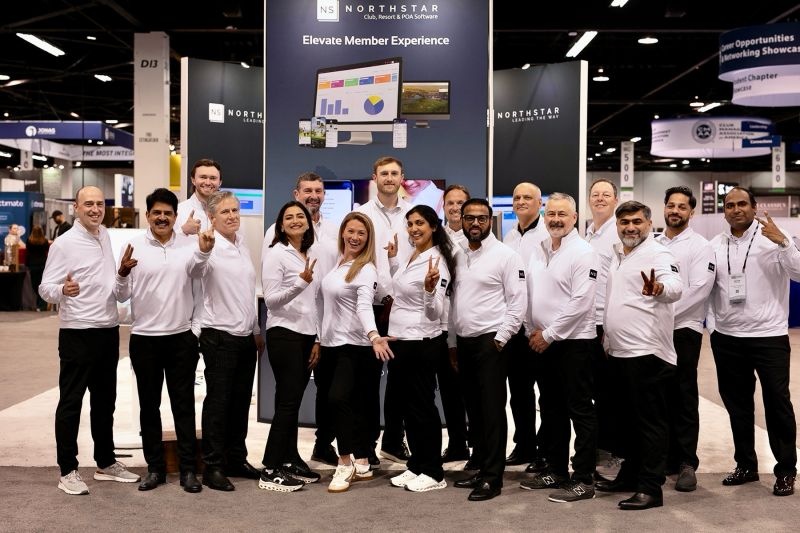
At the 2026 CMAA World Conference and Club Business Expo, Suryadevara publicly celebrated his Northstar colleagues. In a separate post about the event, he emphasized the team’s contribution to both the software and the customer experience. The sentence directs attention toward the employees who build, explain and support the system after a buyer has signed.
“Our people power the product, and the experience behind it.”Prasad Suryadevara, 2026
That emphasis fits the work involved. Club software has to be implemented, learned and maintained. Northstar's team includes implementation, support and customer advocacy functions alongside sales and product staff. For the operator using the system, the company is encountered through those people as much as through the interface. A product demonstration begins a relationship that daily use will test.
The human scale remains visible even as the company operates internationally. A club manager with a question needs a useful answer. A staff member learning a process needs the process to make sense. These are ordinary expectations, but they give a software chief executive a fairly exacting audience. There is limited consolation in a handsome roadmap when today's task is still waiting.
Twenty-five years, and another day's work
By September 2026, Northstar's public product direction included a greater emphasis on data, automation and AI, described as connected intelligence. Member-facing tools such as ClubNow and employee tools such as Nexus extended its approach beyond administrative records. The ambition was to make connected information more useful across the club, including the decisions people make with it.
For Suryadevara, the next chapter still belongs to the field he entered years earlier. The company's acquisitions show how many specialist activities can sit inside that field. Its newer tools show how the ways of serving it continue to change. Clubs retain their identities while the technology surrounding a booking, a meal or an account keeps moving.
There is a pleasing lack of glamour in the central task. Help the staff do the work. Help the member enjoy the visit. Keep the information together well enough that neither has to spend the afternoon thinking about the software. Suryadevara has built a long career around that proposition. Somewhere between the tee sheet and the monthly accounts, an apparently narrow business has supplied him with plenty to do.