The most famous thing Jeff Pink ever made was designed to disappear. A clean white arc at the end of a natural-looking nail: elegant, neutral, and obedient to every costume in the wardrobe department. The French manicure eventually became so familiar that it seemed to have no inventor, like the paper clip or the awkward pause before a toast. Yet its origin was gloriously practical. Hollywood needed to stop wasting time. Pink gave it a look that could survive the costume change.
There is a tidy myth available here: one bright idea, one global trend, one founder forever framed by a white tip. Pink's actual career is more useful. It begins with an immigrant paying for the privilege of being a beginner. It proceeds through beauty shops, salon conversations, chemistry, packaging, family decisions, misfires, jokes, and a stubborn refusal to treat curiosity as a youthful phase. The manicure is the hook. The habit behind it is the story.
Tuition at the beauty counter
Pink was born in Tel Aviv to parents who had emigrated from Poland. He moved to the United States in 1974 and landed in Los Angeles, where the beauty business did not initially look like destiny. He made an unusual arrangement with Jack Sperling, the owner of a large beauty-supply store in Van Nuys: Pink would work without wages and pay Sperling $2,500 to teach him the trade for 90 days.
One month in, Pink wanted his money back. Lipsticks, brushes, polishes, counter work: he had sampled the business and decided it was not for him. Sperling asked him to complete the bargain. If Pink still hated it after 90 days, his mentor would return the payment. Pink stayed. By the end, he loved the business enough to open his own shop.
“I’m glad I didn’t give up. If I had, I wouldn’t be here now.”Jeff Pink, reflecting on his first months in beauty
The shop was modest, about 800 square feet, wedged between a See's Candy store and a manicurist in the Los Angeles Valley. Pink sold to professionals and to Hollywood studios. More important, he went out to salons from Studio City to Woodland Hills. Nail technicians told him where the category failed them. Large cosmetics companies made color, but salon professionals felt overlooked. Weak nails and uneven ridges were not glamorous problems. They were daily ones.
A complaint with a product inside
Pink began with treatments. He developed a base coat reinforced with nylon fibers and called it Romeo, a knowing answer to an existing strengthening system named Juliet. He mailed 1,500 bottles to beauty-supply stores. The response came quickly. Ridgefiller, a treatment for uneven nail surfaces, followed and remained in the ORLY line decades later.
This was Pink's recurring move: stand close to the work, hear the irritation, then give the laboratory a clear target. Years later, the same logic would produce the Gripper Cap. Nail technicians wanted bottles that were easier to open and control. ORLY spent three years developing a rubberized, ridged cap in Italy before introducing the patented design in 2002. It is a little industrial-design story hiding on a dressing table. Hands covered in lotion and remover should not have to wrestle smooth plastic.
Find the ordinary friction that professionals have learned to tolerate. Their shrug may be your product brief.
Hollywood wanted its minutes back
On film and television sets, actresses changed wardrobes repeatedly. Nail polish often changed with them, and drying time made continuity expensive. A director asked Pink for one look that could accompany every outfit. Pink borrowed the visual logic of the white pencil used beneath nails, brought the white to the top edge in polish, and covered the nail with a sheer pink, beige, or rose tone. It looked polished without insisting on a color story of its own.
At first, the kit carried the earnest name Natural Look Nail. It found enthusiasm in movie-minded California and fashion-minded New York, but the language lacked voltage. Pink then took the style to Paris fashion shows. Models wore it. The look worked. On his return, he gave the American invention a continental name: French manicure.
The name was better theatre. Celebrity appearances by Barbra Streisand and Cher helped the look enter popular culture, but Pink remembered the adoption as gradual. He has said it took roughly five or six years to go mainstream, a useful correction to every overnight-success montage. A style can be instantly legible and still need years to become inevitable.
Made in L.A., named for home
ORLY is personal before the bottle is opened. Pink named the company for his wife; Orly means “my light” in Hebrew. He built the business in Los Angeles and kept production there. Local manufacturing was part identity, part operating system. When a color or texture began to move, ORLY could respond without sending the idea through a distant chain of permission and production.
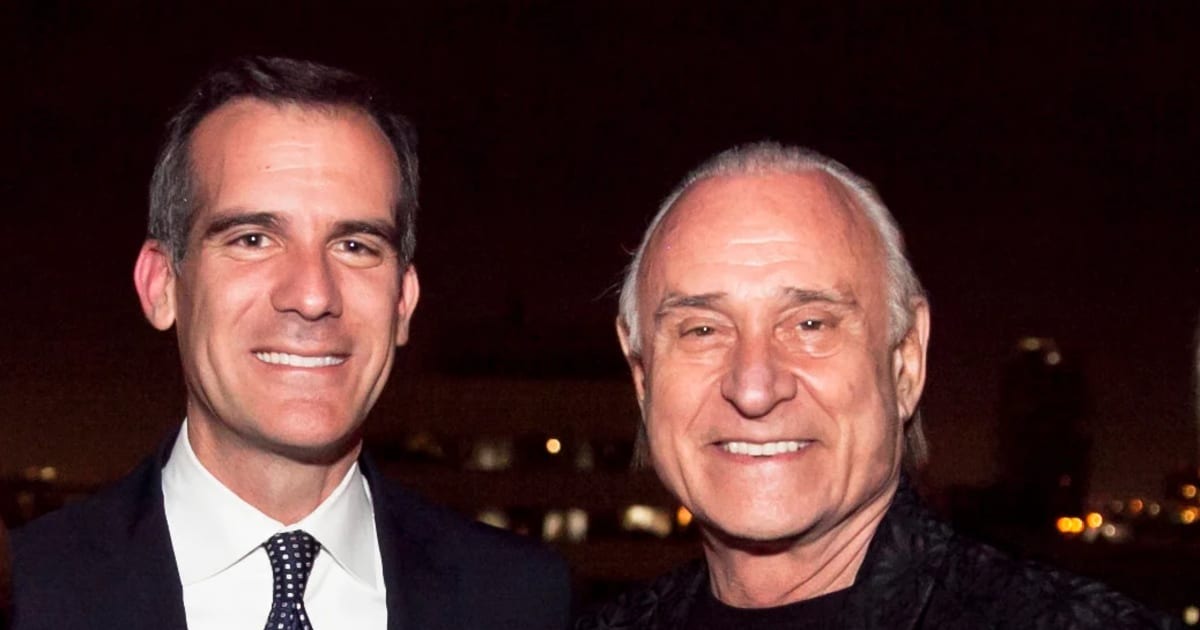
Pink liked Los Angeles for its energy, its cultural mix, its art, its weather, and the useful proximity of style to entertainment. At ORLY's 40th-anniversary dinner in downtown Los Angeles, the founder appeared beside guests from several international markets and the city's mayor. A few of Pink's own nails were painted black, blue, and red. The gesture was playful and exact: a founder wearing the inventory without pretending to be the customer.
The company developed collections from the city around it, but Pink's sense of humor traveled too. A successful Wedding Collection was eventually answered with a Divorcee collection. Shades carried names such as One Night Stand and Take Him To The Cleaners. In a business devoted to finish, the joke had bite.
The founder stayed near the lab
Pink has been candid about what held his attention. Finance and sales were never the main attraction. He wanted to create products, colors, and looks. At ORLY he worked with chemists, including longtime laboratory lead Dan Werner, beginning with a target and then confronting the stubborn question of how to reach it.
GELFX Builder In A Bottle followed that route. The aim was to make nail extensions more approachable through a self-leveling, brush-on product. Development and testing took time. The ORLY Color Labs concept turned the relationship around: customers used a tablet to select a custom shade, named it, and watched the team mix it. A nail-polish company briefly became a tiny personal factory.
“When I learn to trust someone, I learn to trust them all the way!”Jeff Pink on handing collection decisions to his team
That trust became essential as his children took larger roles. Daughter Shanee Pink led work on shades and collections. Son Tal Pink, an ORLY vice president, has articulated the product rule his father carried through the company: keep solutions simple and grounded in real problems for nail technicians. The founder's instinct survived translation because it was concrete enough to teach.
The independence decision
Pink said larger companies approached him about buying ORLY more than once. He declined. “It’s my baby,” he explained, tying ownership to manufacturing, tradition, and family legacy. Such language can sound sentimental until one counts the difficult years included in fifty. Independence is not a mood board. It is a repeated choice to absorb risk, preserve judgment, and keep the consequences close.
The company reached its fiftieth anniversary in 2025 still independent and family-run. The French manicure, meanwhile, continued its strange life as both default and provocation. It has been declared dated, revived, miniaturized, colored, inverted, jeweled, and placed on toes. A style built to avoid clashing became a platform for deliberate clashes.
Pink chronicled the larger journey in his 2021 memoir, It All Started With Pink. The title nods to a surname, a shade, and the useful vanity of a founder who knows he has a good line. Yet his later public reflections make room for the unpretty material: failed launches, hard decisions, setbacks, and moments when the company nearly disappeared. Longevity edited none of that out. It only gave the chapters an ending.
What survives the white tip
Pink once imagined a career as a CPA and later joked that it would have been too boring. He delivered pizzas in his first job. He liked dance music, the beach, cycling, and “Nights in White Satin.” Asked who might play him in an ORLY movie, he proposed Harrison Ford, someone strong and family-minded. This is a charmingly founder-like casting note: even the fantasy comes with a competency matrix.
His more serious wish for the industry concerned professional education. Better products were not enough. Technicians needed technique, hygiene standards, and the confidence to advise clients. ORLY supported educators and ambassadors, treating knowledge as part of the product rather than a pamphlet tucked beside it.
The lesson in Jeff Pink's career is not that every operational annoyance can become a global beauty signature. Most cannot, mercifully. It is that useful invention often arrives in work clothes. The director complains about time. The technician struggles with a cap. The customer wants a color no shelf carries. Curiosity notices; craft answers; a good name helps.
The French manicure made fingers look finished while appearing almost untouched. Pink's fifty-year company bears the opposite mark. You can see the work everywhere: in the fibers, the ridges, the rubber cap, the Los Angeles factory, the children at the table, and the founder who still described walking into the office as if it were his first day. The white tip was small. His attention span was not.