Jeff Nugent had a plane to catch. It was June 13, 2012, and a parliamentary committee in Ottawa was running into the sort of scheduling trouble that makes witnesses inspect their watches. Asked whether he could wait, the founder of Contingent Workforce Solutions agreed, provided he could make his seven o’clock flight. Another witness then announced that it was his birthday. There was applause. Parliament had briefly become a rather formal birthday party.
He had come to talk about work: how companies found people, how people acquired useful skills, and how the arrangements between them were changing. His business was four years old. Its product involved the unglamorous machinery around contract workers. Even the birthday guest was there to discuss administration.
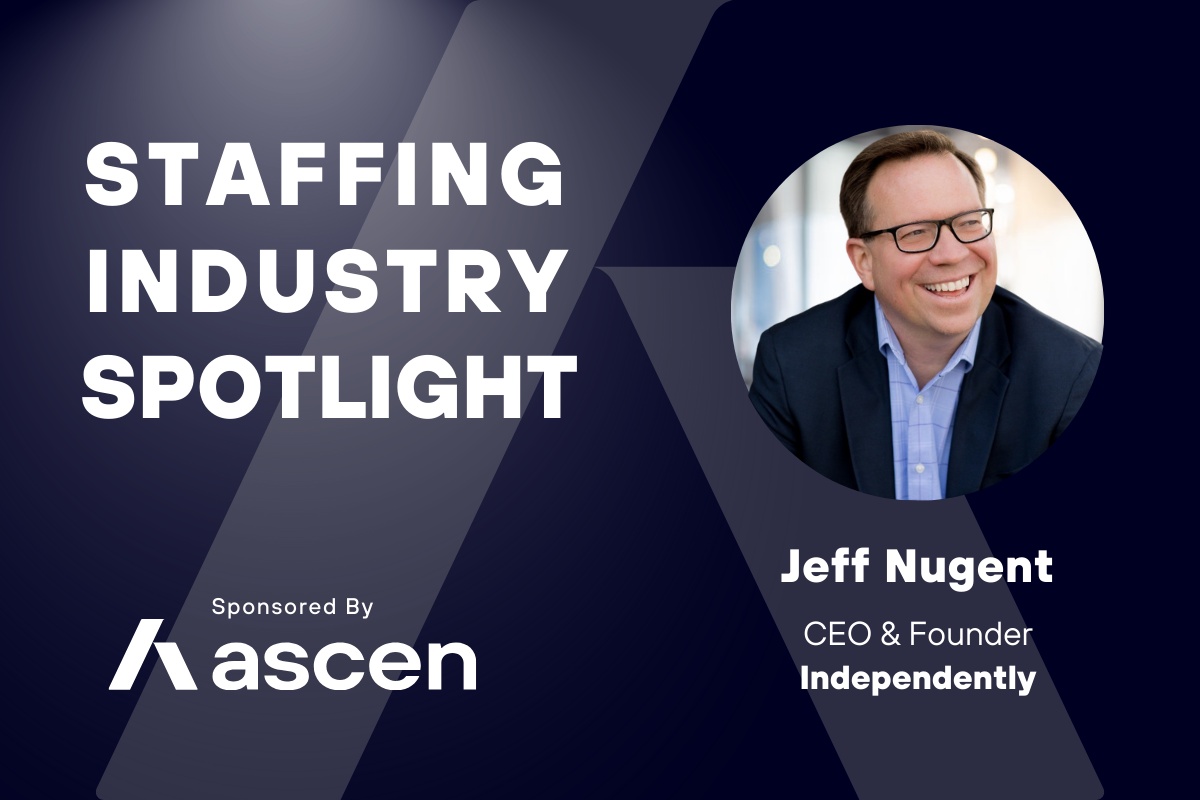
Today, as co-founder and CEO of Independently, Nugent is still occupied with what happens around a working relationship. He has spent much of his career building businesses that make those relationships easier to organize. The people change, the software improves, and the questions keep returning.
The house before the hiring desk
Before there were contractors to onboard, there were students who needed somewhere to live. At university, Nugent and a friend bought a house and rented it to fellow students. They had noticed a shortage of decent student accommodation. The venture grew to ten houses.
It is an unusually concrete opening for a career that would later require a small dictionary of abbreviations. Housing has doors and keys. Workforce management has VMS, MSP, EOR and IC. Both, however, begin with someone needing something and another person figuring out how to supply it.
Nugent graduated from Wilfrid Laurier University with a business administration degree in 1995. His next move was less carefully plotted than the housing venture. Interested in technology, he applied to what he thought was a conventional IT consulting company. It turned out to be an IT recruiting firm. A misunderstanding had supplied a profession.
He became one of its leading account managers, building relationships with clients. The encounter also put him close to a market in which a specialist’s skills could be needed urgently, for a particular project, without requiring a permanent place on the payroll.
When a timesheet becomes a business
Nugent’s early recruiting years coincided with the preparations for Y2K. Companies needed particular technical skills against a definite deadline. In his later recollections, that rush helped explain how large organizations became accustomed to bringing in outside specialists. Recruiting the person was only the beginning of the arrangement.
After the millennium deadline passed, the work of managing contractors remained. Who had been engaged? Through which supplier? For how long? Who was keeping track? These are modest questions until a company has to answer them for an entire workforce. Then the modest questions require a system.
Nugent spent about fifteen years at Procom, where he founded Flextrack. Its development carried him from staffing into the technology and services used to manage external workers. His career was acquiring a second subject: the organization that surrounds the placement.
That distinction matters in understanding his later businesses. A recruiter can make an introduction. A large employer must also coordinate suppliers, approvals, records and payments. Nugent kept moving toward that administrative territory, where a successful introduction creates a fresh collection of practical obligations.
A company built around the paperwork
In 2008, he founded Contingent Workforce Solutions. Its business addressed the processes companies needed to manage and pay contract and freelance workers. Laurier’s alumni magazine later reported that CWS had received Profit Guide Magazine’s Small Business of the Year award. An Ontario business forum report also recorded its first-place finish in the 2011 PROFIT HOT 50 ranking.
The work itself resisted glamour. Business registrations had to be verified. Time and expenses had to be tracked. Invoices had to become payments. Each step was easy enough to describe; delivering the sequence reliably was the business. There is a particular entrepreneurial imagination in looking at paperwork and seeing a company.
By July 2018, CWS was joining People 2.0. The transaction announcement placed Nugent in the role of chief strategy and global business development officer. Steve Schaus would become senior vice president of corporate development, and both would join the executive committee.
For Nugent, the change enlarged the setting in which he was working. A Toronto business became part of an international operation. His responsibilities now included helping shape the combined company’s direction and expansion. The questions around engaging people had crossed borders along with the business.
The expansion - and the return
People 2.0 grew through acquisitions. Nugent’s 2024 conference biography describes private equity backing in 2019 and an expansion across more than fifty countries. He subsequently exited the business. It was a substantial change of scale from the student housing venture, although the underlying occupation remained recognizable: arranging the systems through which other people worked.
The next chapter brought him back to a narrower problem. Independently assesses independent contractor relationships. Its intended users include enterprises, staffing firms and employer of record providers. The company presents itself as a neutral third party, a position that fits between organizations already participating in an engagement.
That positioning says something about Nugent’s view of his industry. He has described talent as a business that depends on trust. His advice to entrepreneurs entering it emphasizes working with established participants and understanding their responsibilities. An employer making decisions about people needs confidence that a supplier will still be there after the demonstration is over.
“The talent industry runs on trust.”Jeff Nugent
In that account, a clever product still has to earn its place inside a working relationship. The buying organization has existing procedures, partners and people answerable for the result. Knowing whom a product serves, and how it fits their work, becomes part of building it.
One person, two sides of the engagement
Independently’s published workflow begins with information from both the worker and the company. It proceeds through risk analysis to onboarding and continued monitoring, with a record of the engagement. The company describes coverage across more than fifty jurisdictions and includes education for people entering self-employment.
It is a revealing choice of emphasis. The person supplying the skill is participating in a business arrangement, too. Clear information at the beginning has value on both sides. The same onboarding process that creates a file for an enterprise also asks the contractor to understand the relationship they are entering.
- CollectInformation from company and contractor
- AssessEngagement details and local requirements
- Keep trackOnboarding, monitoring and a defense file
A process diagram of Independently’s published approach, rather than a measure of performance.
In discussing the product, Nugent has also drawn a boundary around artificial intelligence. He describes using it to extract information and spot anomalies, while reserving judgment calls from AI. That is a specific allocation of work for a company with an .ai address. The domain name does not settle every design decision.
His explanation returns to a familiar operational concern: a workflow must produce something dependable. Parsing a document and deciding what a relationship means are different tasks. For someone whose businesses have lived among records and obligations, the distinction has practical consequences.
The pleasure of finishing sooner
Nugent’s view of independent work extends beyond onboarding. In an April 2026 conversation, he questioned the habit of judging a specialist by the time a task consumes. An expert brings accumulated knowledge, methods and tools. If those allow the work to be finished sooner, the buyer still receives the result.
It is an awkward proposition for organizations accustomed to comparing hours. Speed can look suspiciously like doing less, even when it delivers exactly what was requested. Nugent’s argument asks the client to specify the outcome clearly and recognize the expertise that makes efficient delivery possible.
That also changes the working relationship. A contractor needs context and a defined assignment; the company needs a result it can evaluate. His discussion places responsibility with both participants. Independence works better when the arrangement is understood before everyone gets busy.
A network with a practical purpose
Nugent also co-founded the Contingent Workforce Institute with Michelle Cox. The institute brings together consultants and industry practitioners. His published biography there identifies a role connecting enterprise and vendor clients with the institute’s independent members, alongside his involvement in education and accreditation at ACSESS.
Those activities put him in rooms with the people who design workforce programs and the people who supply them. They also extend the educational side of his work. An unfamiliar working arrangement needs explanation as well as software. Someone has to make the vocabulary intelligible.
In a July 2026 webinar discussion, he returned to verification and the need to automate it. His concern included the gap between a written agreement and what actually happens during an engagement. A process has to keep sight of the work after the signatures are collected.
January 2026 brought another practical connection: Independently and DISA Global Solutions announced a partnership combining contractor classification with screening capabilities. The arrangement follows the collaborative approach Nugent advocates, putting a specialized service beside another established part of hiring.
His career has moved through houses, recruiting desks, workforce software, an international business and a new company. What gives it continuity is his attention to the arrangements that let people proceed with confidence. Somebody needs a place to live. Somebody needs a specialist. Somebody needs the record completed. Nugent keeps finding a business in what happens next.
Continue the conversation
- Independently
- Jeff on LinkedIn
- Contingent Workforce Institute
- Human Cloud conversation · video on Spotify
- The Independent Workforce · episode & transcript
- The Independent Workforce · YouTube channel
- Ascen · Staffing Industry Spotlight
- Ivy Podcast · The Future of Work is NOW
- AllWork · Trust, But Verify
- 2012 parliamentary appearance
- Laurier · alumni update
- 2018 · CWS joins People 2.0
- 2024 · ACSESS speaker biography
- 2026 · World Employment Conference biography
- 2026 · DISA partnership announcement
- 2013 · Ontario business forum report