The first order was small enough to count without a calculator: 24 pairs of jeans. Jeff Lubell had persuaded Fred Segal to give his new label a chance. Then came a problem familiar to anyone who has ever made something they liked more than the market did. The jeans were in a shop. Customers still needed a reason to take them home.
Lubell gave pairs to the sales staff. They could wear them while working, turning the shop floor into a demonstration of the product. Soon the order sold through. There is something wonderfully practical about this beginning. Before the store network, before the financial statements, before the brand name became familiar, there were people walking around in trousers.
True Religion, which Lubell co-founded with Kym Gold in 2002, offered an argument you could try on. The fit and the visible details were supposed to justify spending more on an everyday garment. A folded pair on a shelf could describe that proposition only so well. Someone wearing it could do the rest.
FIRST BOUTIQUE ORDER
on people.GIFTED JEANS BECAME
A SHOP-FLOOR DEMONSTRATION
The first challenge: let customers see the fit.
He extended the giveaway beyond the boutique. On Los Angeles streets, Lubell handed out his business card and invited people to send their size for a free pair. It was an unusually personal form of distribution. A stranger had to accept his card, remember the offer and reply. Each stage asked for a little faith in a label that was still earning its name.
There was a cost to that conviction. Lubell has described committing $300,000 to an initial production of 16,000 pairs before selling a unit. An inventory pile is an unforgiving audience: it does not applaud a designer’s intentions. His answer was to get the clothes moving. The giveaway put his belief in the product where other people could test it.
02 / THE DENIM FILEA fabric education, with the volume turned up
Long before he needed anyone to buy his jeans, Lubell wanted to know how clothing worked. His parents were in the business. When he asked his father for a job, the advice was to learn textiles first. He entered the swimwear trade; having captained his high-school swim team, he at least knew the customer’s end of the pool.
His working life acquired substance well before True Religion. From 1978 to 1998 he ran Jeffrey Lubell Textiles, the Los Angeles design and distribution business he founded. He then held creative roles at Jefri Jeans and Bella Dahl, followed by Hippie Jeans. These were years spent learning what fabric could do and what happened when an idea had to become a garment.
The formal career history has its own quieter lesson. Twenty years in textiles makes a different kind of preparation from a sudden flash of inspiration. A designer may imagine a silhouette in an instant. Getting the cloth, construction and fit to agree with one another requires a longer conversation.
- Jeffrey Lubell Textiles begins.
- Creative work at Jefri Jeans and Bella Dahl.
- Men’s creative leadership at Hippie Jeans.
- True Religion, co-founded with Kym Gold.
The patience in that apprenticeship is easy to overlook once a label becomes recognizable. Cloth has to survive being cut, sewn, washed and worn. A pleasing sketch is only the beginning of those negotiations. Lubell’s earlier jobs put him close to the practical questions that remain after the excitement of an idea: how to produce it, how it fits, and whether someone will want to put it on again.
His taste had been announcing itself since his teens in New York. He bleached bell-bottoms, applied patches and embellished jackets with album-cover drawings and embroidery. Wearing something out was an invitation to work on it. Denim offered the useful possibility that damage could become decoration, and that decoration could make an ordinary pair feel personal.
The music stayed with him. Backstage at a swimwear presentation in 2009, Lubell pointed to the seventies and the Grateful Dead as his inspiration. The reference makes his clothes easier to understand: generous flares, visible handiwork, a fondness for texture. His aesthetic has a soundtrack, and it has shown little interest in changing stations.
03 / THE DENIM FILEWhen a pocket becomes a calling card
True Religion’s conspicuous construction gave that taste a repeatable form. The horseshoe pocket stitching, Western details and amplified seams helped the jeans announce themselves at a distance. For clothing that was meant to circulate through shops, parties and photographs, being recognizable mattered. The customer carried the design into the next room.
There were other people at the sewing table. Gold was a co-founder, and company filings identified her as the design director for women’s products while Lubell led the company. Keeping both names in the picture gives the beginning its proper shape. The familiar founder anecdote describes a sales tactic; it cannot, by itself, describe all the work of building a collection.
Lubell could make his own job description entertaining. In 2011, after listing the executive and creative responsibilities he carried, he added “Head Pain in the Ass.” The joke fits the persistence in the early sales story. It also suggests how closely he identified himself with the product, from its construction to the question of who would put it on.
The business eventually occupied a very different scale from that first boutique order. At March 31, 2013, True Religion operated 124 stores in the United States and 31 internationally. Its products reached department stores and boutiques in 50 countries on six continents. A brand introduced through a small number of bodies now required a substantial retail organization.
That same year brought a separation. Lubell stepped down as chief executive in March, taking the titles of chairman emeritus and creative consultant. The announced TowerBrook acquisition valued the company transaction at about $835 million; the completed deal in July was reported at approximately $824 million. These are company transaction figures. The distinction matters when a business story becomes a story about one person’s fortune.
04 / THE DENIM FILESeven years without a collection
After leaving True Religion, Lubell spent seven years away from fashion. He traveled, skied and raised children with his wife, Carrie Stroup. A career that had made him responsible for designs, merchandise and a growing business made room for a different daily arrangement. Retirement, for a while, appears to have suited him.
Then he and Carrie began Coût De La Liberté. They introduced the label in 2020, showing it in New York and Paris, and financed it themselves. The name translates as the cost of freedom. Carrie was its co-founder and co-designer, giving this new chapter a partnership at its center as well as a familiar denim vocabulary.
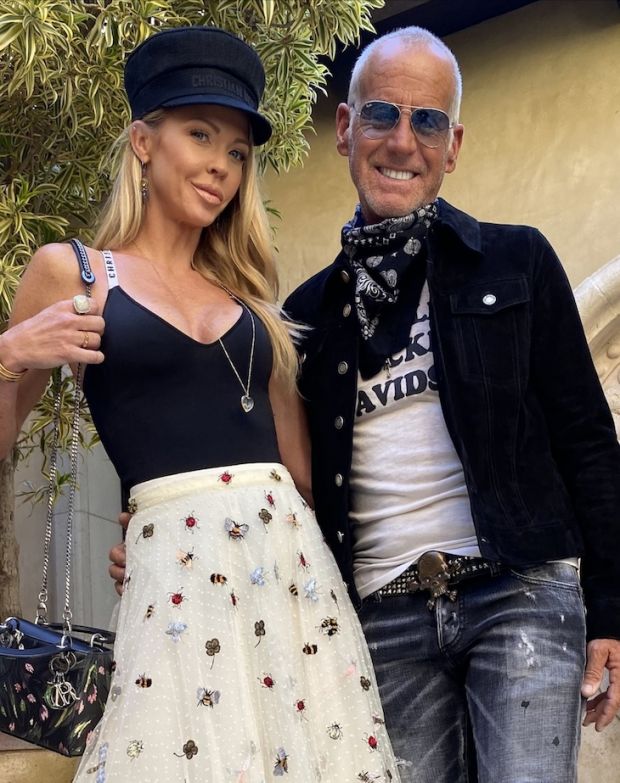
The assortment reached beyond jeans: cashmere, silk, velvet, suede, outerwear and sportswear gave them more surfaces to work with. The clothes were made in Los Angeles. For someone who had spent decades thinking about cloth, a broader wardrobe offered a very literal expansion of the possibilities. There were more materials to handle and more ways to build an outfit.
His explanation in 2020 began with fabrics and moved on to fit. It is a compact account of his method. The starting point is something tangible: how a material looks, how it moves, what kind of shape it will permit. The title on the office door comes considerably later.
“Everything for me starts with fabrics then the fit.”
JEFFREY LUBELL / 2020
The return also changed what a customer could ask of him. A jeans label might supply a favorite pair. A collection with shirts, jackets and knitwear proposes combinations. That is a different kind of invitation, asking someone to follow a designer’s taste across several parts of the wardrobe and decide which pieces belong in their own life.
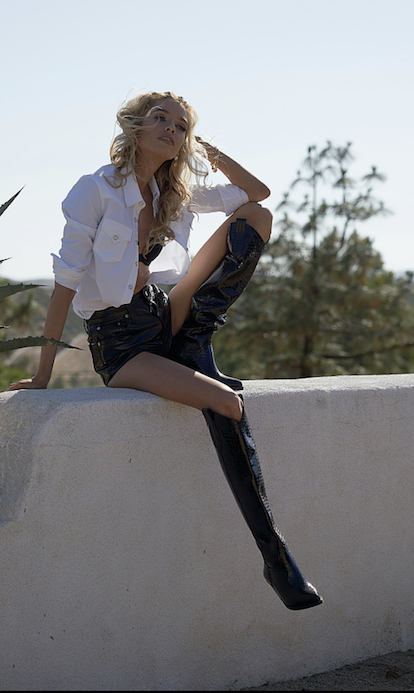
A look from Coût De La Liberté’s autumn/winter 2020-21 collection, with the seventies still on the dial.PHOTO: COÛT DE LA LIBERTÉ / THE SPIN OFF
The finished clothes could be exuberant. The 2021 collection included studded motorcycle jackets, oversized worker shirts and trousers in corduroy and velvet, with cuts ranging from slim to flared. Nostalgia supplied ideas, but the task was to make clothes someone could wear now. Remembering a great concert is pleasant; getting dressed entirely as its souvenir is a more demanding commitment.
05 / THE DENIM FILEThe wardrobe keeps talking
Lubell’s original brand continued to have a life of its own. In 2023, designer Zihaad Wells described returning to True Religion’s distinctive construction and Western roots. He also recalled how clothes in the archive prompted people to remember wearing the label at school, or wanting it before they could afford it. An old pair could bring an entire age back into view.
Meanwhile, the newer label found listeners. The musician GASHI singled out Coût De La Liberté when discussing his Brooklyn Cowboy aesthetic, describing buying 20 pairs of flared jeans. That is a useful connection for understanding Lubell’s appeal. The silhouettes belong comfortably in a musician’s wardrobe, where clothing helps give a performance its outline before the first note.
By 2025, Lubell was describing his own style in three words: “colorful, vintage, detailed.” Based in Bel-Air with Carrie, their triplets and rescue animals, he still favored seventies references. His prized wardrobe piece was a Gucci embroidered, seventies-inspired sherpa coat. The designer who sells self-expression also enjoys a good specimen of someone else’s.
His choices have room for variety. He named destroyed denim shorts and a ringer tee as a casual look, and Dior for a formal one. The combination makes a small but revealing point. A person can have a recognizable taste without turning every occasion into the same outfit. Even a commitment to flares can leave space in the wardrobe.
Coût De La Liberté’s current home remains a downtown Los Angeles atelier, with Jeffrey and Carrie credited as its designers. The enterprise brings him back to the work that preceded the public company: fabrics, patterns, cutting, fitting. It also lets him pursue the broader luxury collection that a denim-centered label could only partly contain.
The first 24 pairs remain a good place to leave him. They capture a designer facing the least glamorous part of a glamorous business: persuading someone to wear the thing. Lubell’s solution required other people to complete it. Once the jeans left the shelf, the wearer supplied the movement, the occasion and the life. A whole wardrobe offers him more chances to begin that exchange again.
Follow the thread
- Coût De La Liberté / the current collection
- Jeffrey Lubell / LinkedIn
- Coût De La Liberté / brand Instagram
- Free Style / the early giveaway story
- The 2011 conversation / Alister & Paine
- The return to fashion / The SPIN OFF
- His 2025 wardrobe / Angeleno
- The True Religion archive / Zihaad Wells
- The completed acquisition / July 2013
- Watch / True Religion’s spring 2013 campaign