An acquisition announcement has room for many things: strategic intent, contractual precision, a small forest of job titles. Jeff Harvey used his moment to talk about colleagues. In December 2021, as Deloitte agreed to acquire substantially all of BIAS Corporation’s assets, the co-founder and CEO put client innovation alongside the success of the people doing the work. For a business founded in 2000, that was a fitting way to mark the next chapter. Twenty-one years of building had produced something that could travel together.
The deal closed on March 7, 2022. Harvey joined Deloitte Consulting with fellow co-founder John Ezzell and chief technology officer Krishnan Balasubramanian. BIAS professionals in the United States and India moved into a larger organization, with the group continuing together in Deloitte’s cloud engineering practice. The company name on the door was changing. Much of the expertise, and the company it kept, was coming along.
A working knowledge of Oracle
Harvey’s route into company building ran through enterprise software consulting. At Oracle, he held a senior director role leading sales and consulting operations in the Southeast and Mid-Atlantic. His remit included architecture, integration, business intelligence and data warehousing. These are disciplines with little patience for decorative ambition. A beautifully expressed plan remains a plan until the systems cooperate.
His work included managing strategic accounts such as UPS, Michelin and Bacardi. It was an education in serving organizations whose technology requirements stretched across departments and business processes. Harvey also earned an undergraduate degree at Auburn University and an MBA at Georgia State University. The combination of consulting management and business education belongs near the beginning of his story: BIAS would have to sell expertise, organize it and deliver it.
Ezzell brought his own Oracle consulting background, including custom development, architecture and business intelligence. Their experience met in a firm with a particular focus. BIAS built around Oracle technologies, joining the Oracle PartnerNetwork in 2005. Its work covered the journey from planning and implementation to ongoing support. The relationship with the software maker would remain central as the technology changed.
In 2011, employees got a vote
One early milestone came from inside the business. In September 2011, BIAS announced its second selection among the Atlanta Business Chronicle’s Best Places to Work. The recognition depended on employee feedback about the working environment, colleagues and management. To qualify, at least 85 percent of the organization had to complete the survey.
That detail gives the award some texture. An executive can commission an elegant account of office life; persuading the people who experience it every day to endorse it is a different undertaking. Harvey welcomed the program because it gave Atlanta companies a way to distinguish themselves through their employees’ voices. His response put attention on the mechanism behind the recognition.
BIAS was then an Oracle Platinum Partner working across applications, databases, middleware, business intelligence and hardware. The outside business was technical and exacting. The inside business still involved people deciding whether management deserved a favorable answer. Both belonged to Harvey’s responsibilities as president. Even a company devoted to systems must occasionally submit to the judgment of human beings.
Let the customer try the machinery
By March 2015, BIAS had added an Oracle Exadata Database Machine X5-2 to its Technology Center of Excellence. Harvey described the purpose in practical terms: customers could see the technology firsthand and explore consolidating workloads. For a consulting firm, a demonstration environment is a useful answer to the suspicion that a presentation has been doing rather too much of the work.
He pointed to demand among banking, retail, utilities and insurance clients, alongside public-sector adoption. The center put an actual environment behind those conversations. It offered somewhere to examine what a change might mean before committing to it. In a business full of consequential migrations, the opportunity to look closely was part of the proposition.
This fitted BIAS’s pursuit of Oracle specializations. In 2011, the firm had announced specializations in Exadata and GoldenGate. Harvey treated the partner program as a way for customers to identify experienced providers. Certifications and demonstrations addressed the same commercial question from different directions: why should a client trust this team with an important system?
45,000 square feet of next steps
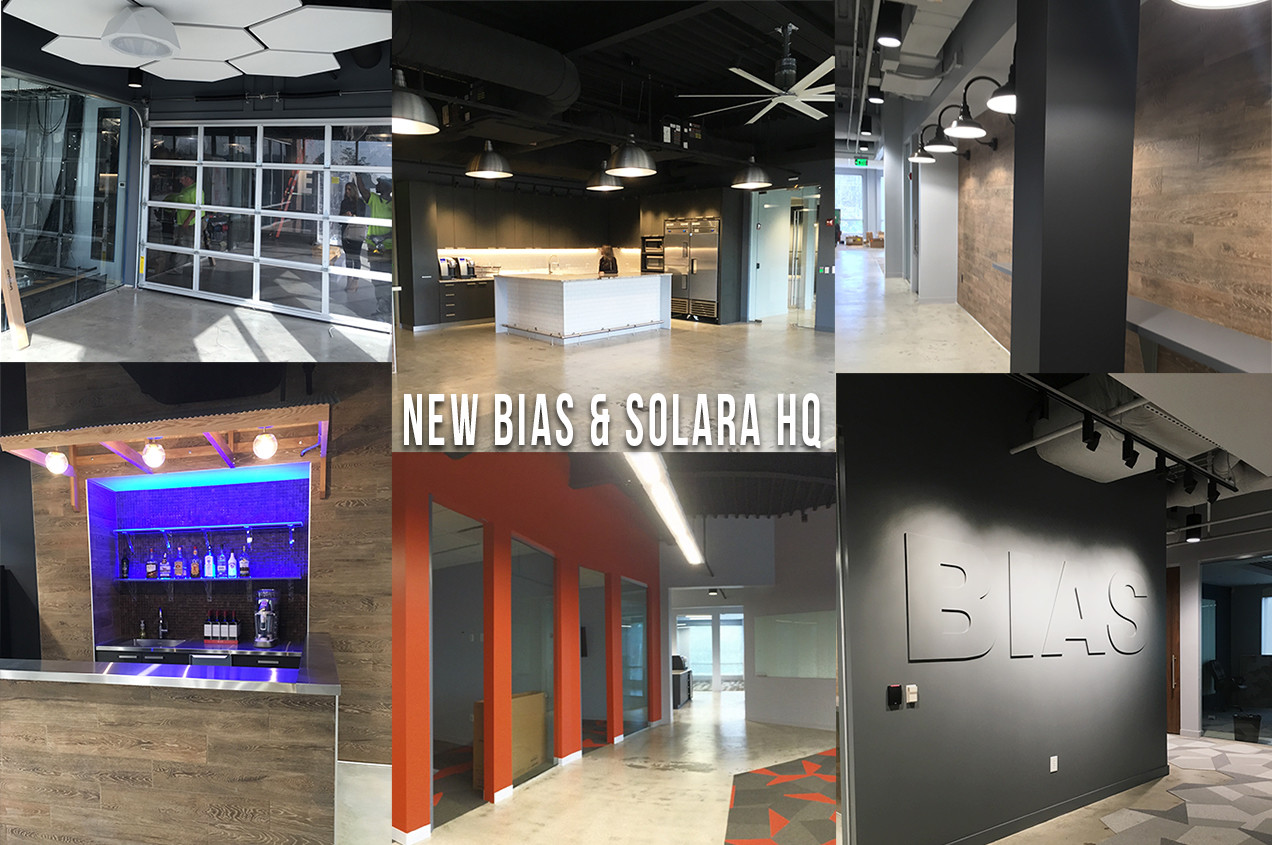
On March 1, 2017, Harvey had a more tangible announcement. BIAS Corporation and Solara Services were moving into their respective US headquarters offices in a 45,000-square-foot Roswell, Georgia facility. His list of features included capacity for consulting expansion, training facilities, demonstrations, a social lounge and the Technology Center of Excellence.
It is an unusually revealing inventory. There was space to teach, space to show customers what the technology could do and space to spend time together. The announcement put these uses beside one another, giving the building a purpose beyond accommodating more desks. Growth needed somewhere to happen, and some of that somewhere could have a lounge.
That year, BIAS appeared at No. 3,289 on the Inc. 5000, following appearances at No. 3,513 in 2015 and No. 3,412 in 2016. The sequence records repeat recognition across three years. Put beside the headquarters move, it gives this period a concrete shape: a consulting business making room for expansion while returning to a national growth list.
The founder makes room for a CFO
In 2018, BIAS announced Dan Alf as chief financial officer. He had taken responsibility in January for accounting, finance, human resources, legal and facilities. His background included two decades at Fiserv. Harvey’s welcome emphasized experience bringing products to market and the contribution Alf had already made to the organization and its sales efforts.
Those responsibilities describe a sizeable part of the machinery behind a services business. Consulting expertise needs contracts, financial management, recruiting and somewhere to work. The appointment added an experienced executive across those functions. It also supplied a useful view of Harvey as a builder of a management team, with another leader taking responsibility for several essential operations.
Alf, in turn, spoke about client focus and delivery quality when describing the business he had joined. Neither subject sounds especially theatrical. Both are rather difficult to dispense with. A consulting firm can acquire many attractive nouns, but clients eventually require the agreed work to arrive.
A government contract gets a wider door
In May 2020, BIAS expanded its GSA IT Schedule offerings to include Oracle cloud infrastructure, cloud applications, construction and engineering cloud services, engineered systems and hardware. The change gave eligible government buyers a streamlined route to a broader set of Oracle products and services. Harvey connected it to the company’s existing ten-year GSA contract.
Public-sector work had been part of BIAS’s business alongside commercial consulting. Here, the practical achievement concerned access: making more of the portfolio available through a purchasing vehicle agencies could use. It was another expression of the founder’s long-standing Oracle focus, extending the relationship into how customers acquired the technology.
The distinction matters to the story. Technology companies often describe progress through what has been invented. BIAS also progressed through what it could implement, support and make available to buyers. A database has no opinion about procurement. The organization trying to purchase one certainly does.
The business problem behind the software
In July 2021, BIAS partnered with Blacksmith Applications on trade promotion technology for consumer goods companies. Blacksmith’s software addressed trade management; BIAS contributed Oracle ERP Cloud, financial reporting, analytics and performance management expertise. The aim was to connect sales activity with finance so that executives could see the cost and revenue effects of promotions.
The example helps explain the company Harvey had been building. Its work sat between specialized software and the broader business that needed to use it. A promotion might begin with sales, but its consequences reached accounting and planning. Connecting those functions was the assignment. The advertised technology mattered because of the operating question behind it.
By the time Deloitte announced the acquisition agreement that December, BIAS had also received Oracle partner recognition for cloud infrastructure and SaaS applications for small and midsize businesses. The company’s focus had followed Oracle into cloud services while retaining the consulting and implementation work around them.
A larger firm, familiar colleagues
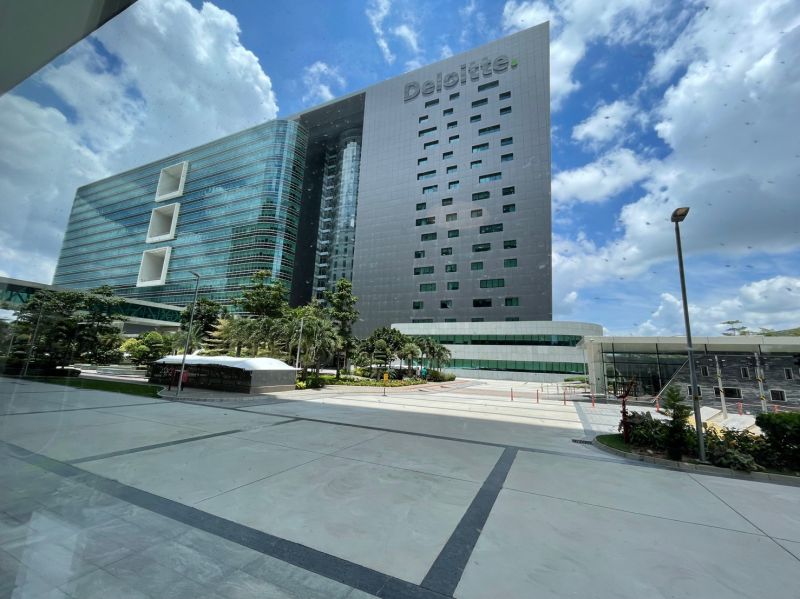
The December agreement became a completed acquisition in March 2022. Deloitte brought in BIAS professionals across infrastructure, applications, sales and marketing, as well as methods including TruNorth for planning cloud transformation. The transaction joined an existing team and its ways of working to Deloitte’s broader Oracle business.
“At the heart of this agreement is a shared focus on client innovation and the success of our people.”
Jeff Harvey, December 2021
Harvey subsequently announced his new position as managing director in cloud engineering at Deloitte Consulting. His choice to continue with his colleagues gave the acquisition a personal throughline. After years as a founder and company leader, he was taking another role within the field in which he had built his career.
In July 2022, he described returning from two weeks in India with US and India leaders. The visit included reviewing accomplishments, awards, dinners and social events, as well as discussion of delivery challenges and opportunities. It is a useful closing image for this chapter of his working life: the founder, after the deal, still occupied with the teams and their next assignments. There were successes to recognize, problems to discuss and more work ahead. Even a cloud business occasionally benefits from everyone being in the same room.