An executive coach once asked Jeff Harmening whether he wanted to be chief executive. Harmening said no. The coach was apparently unprepared for this answer. In the familiar corporate fairy tale, this is the point at which an ambitious manager is supposed to look meaningfully toward the corner office. Harmening’s account is more interesting: reaching the office, by itself, held little appeal. Doing something worthwhile once inside it did.
He eventually accepted the job. On June 1, 2017, after 23 years at General Mills, Harmening succeeded Ken Powell as CEO. He had already run its U.S. retail business and its international cereal joint venture. There was no shortage of preparation. The question was what all that preparation should be used for.
Now there is a date for the next turn. On September 30, 2026, General Mills announced that Dana McNabb would become CEO on January 1, 2027, with Harmening moving to executive chair. For someone whose career has been spent choosing among brands, markets and competing demands, the handover offers a useful moment to look at how he chooses.
Before the cereal aisle
Harmening graduated from DePauw University in 1989 with a bachelor’s degree in economics. His first employer was Eli Lilly in Indianapolis, where he worked as a financial analyst from 1989 to 1992. Harvard Business School followed; he earned his MBA in 1994. That year he joined General Mills. It is a tidy sequence on a résumé, though a résumé has the unfair advantage of knowing the ending.
He has given DePauw substantial credit for the foundation underneath his business career. He points to classroom work, campus leadership and the practical experience of its Management Fellows program. The emphasis is revealing. His account of preparation includes opportunities to try things with other people, rather than simply collecting the appropriate credentials.
At General Mills, he moved through marketing assignments in Betty Crocker, Yoplait and Big G cereals. He became a marketing director in 2000. For someone learning how consumers choose, these were varied classrooms: baking, yogurt, breakfast. The products occupied different places in a household’s day. His education in business continued after business school, with rather more packaging.
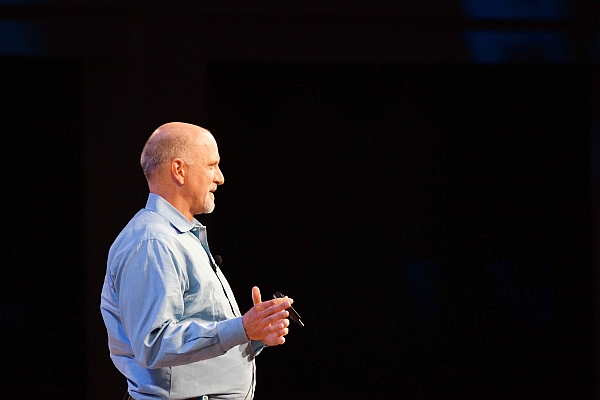
A cereal education, in more than one language
The next classroom was international. From 2003 to 2007, Harmening served as vice president of marketing for Cereal Partners Worldwide, the General Mills and Nestlé joint venture. Later he became its chief executive. Based in Switzerland, the venture marketed cereal in 130 countries. A familiar product was suddenly a lesson in unfamiliar markets.
A brand manager can become very attached to an answer that worked at home. An international assignment complicates that confidence. The appeal of this part of Harmening’s career is the change in scale: understanding a product and understanding a business that sells it across borders are different assignments. His route gave him both.
He also spent five years leading Big G, where the division gained cereal market share for five consecutive years and achieved record profitability. Those results were part of the record he brought to the CEO selection. He had worked with individual brands, managed a division and operated within a joint venture. Each job widened the frame.
His current responsibilities outside General Mills include board service at Toro, DePauw, the Minnesota Business Partnership and the Consumer Brands Association. These connections place him among manufacturers, educators and business groups. They also suit a career that has remained rooted in one employer while extending well beyond a single product category.
The job gets bigger. The list gets shorter.
When the board selected him in May 2017, it stressed team building, international experience and a willingness to challenge established practice. Harmening was president and chief operating officer, a position he had held since July 2016. His appointment was an internal succession, but the board’s language left room for change. Knowing a company well need not mean leaving every arrangement intact.
The chairmanship followed on January 1, 2018. In the preceding November, General Mills described a restructuring that brought four business segments under one global leadership team reporting directly to the CEO. Changes to reporting lines are rarely the most entertaining part of a corporate story. Still, they determine whose problem reaches whose desk, and how quickly.
Harmening’s instinct for fewer priorities appears elsewhere. He has described reducing the company’s impact commitments from 70 to 10. The arithmetic is striking because corporate institutions are very good at adding commitments. Subtraction requires someone to accept the awkward possibility that an attractive idea may deserve less attention than another attractive idea.
Impact commitments, before and after his decision to narrow the focus.
The argument is recognizably his: finite attention should be spent deliberately. A shorter list does not prove that the remaining work succeeds. It does make responsibility easier to see. With 70 priorities, almost anything can claim to be on strategy. With 10, the choices are more exposed, and so are the people making them.
An $8 billion change of menu
The most visible change to the business came with a different kind of household bowl. In April 2018, General Mills completed its acquisition of Blue Buffalo Pet Products in an all-cash transaction with an enterprise value of approximately $8 billion. The cereal company was making a substantial commitment to dogs and cats. Breakfast would have to share the conversation.
The purchase created a new pet operating segment. It also showed that Harmening’s approach to an established company included changing what it owned. General Mills presented the transaction as a way to reshape its portfolio and add a growth platform. Blue Buffalo brought a brand and a business in a category outside the familiar human grocery basket.
The financing made the scale concrete: $6 billion in long-term debt, $1 billion in equity and cash on hand. The company issued 22.7 million common shares in March 2018 as part of that financing. A strategic choice this large comes with obligations that persist long after the announcement photograph. The ambition came with a balance sheet.
There is a useful distinction between selling a familiar product differently and buying a different business. Harmening had spent years learning the former. As CEO, he took responsibility for the latter. Blue Buffalo made his tenure easier to describe, but it also gave investors something substantial to judge. Portfolio strategy eventually has to survive contact with operating results.
The shopper gets a vote
His background in marketing matters here. General Mills makes products people can choose again or leave on a shelf. A company can revise its structure and acquire another business; it still needs someone to buy the next box. That recurring decision gives a consumer business its particular discipline. Yesterday’s familiarity is useful, but it does not settle tomorrow’s purchase.
By March 2026, Harmening was talking about investments intended to strengthen the competitiveness of the company’s brands. General Mills reported that organic net sales were down 3 percent for the first nine months of fiscal 2026. The company described price investment and product improvements as part of its effort to restore growth. These were plans being tested, rather than a victory lap.
The September 23 results offered a mixed picture. For the first quarter of fiscal 2027, reported net sales were $4.4 billion, down 3 percent because of the U.S. yogurt divestiture, while organic net sales were flat. Adjusted operating profit fell 11 percent in constant currency. General Mills reaffirmed its full-year outlook. A return to growth remained work in progress.
That combination is worth keeping intact. A change in the portfolio affects reported sales; organic sales give another view of the underlying business. Neither number excuses the other. Read together, they describe the conditions of the handover more honestly than a simple tale of transformation. The company has changed, and the commercial pressure has continued.
Quarter ended August 30, 2026. Reported sales declined 3%; the company attributed the decline to the U.S. yogurt divestiture.
A lesson brought home to Terre Haute
In May 2026, Harmening returned to Terre Haute to address Rose-Hulman’s graduating class. His father, Lou, had been the institute’s registrar and taught English literature and writing. His grandfather, John Bloxsome, spent nearly 50 years there, serving as a librarian and later chairing the Humanities Department. An uncle was a graduate. The invitation came with considerable family history.
Harmening had studied economics and business rather than engineering. Yet the family connection gave him a particular lesson to offer the engineers in front of him: keep a sense of identity beyond your occupation. He traced that lesson to his father. It is an interesting piece of advice from someone whose name has become closely associated with one company.
“Never confuse what you do with who you are.”
The lesson Harmening recalled from his father at Rose-Hulman’s 2026 commencement
His address also treated uncertainty as a place where graduates could contribute. When circumstances are unfamiliar, experience alone cannot supply every answer. That argument gives younger people permission to act, and it asks experienced leaders to admit that their maps have limits. From a visiting CEO, it was a more useful gift than a promise that the road would be straightforward.
January is another kind of decision
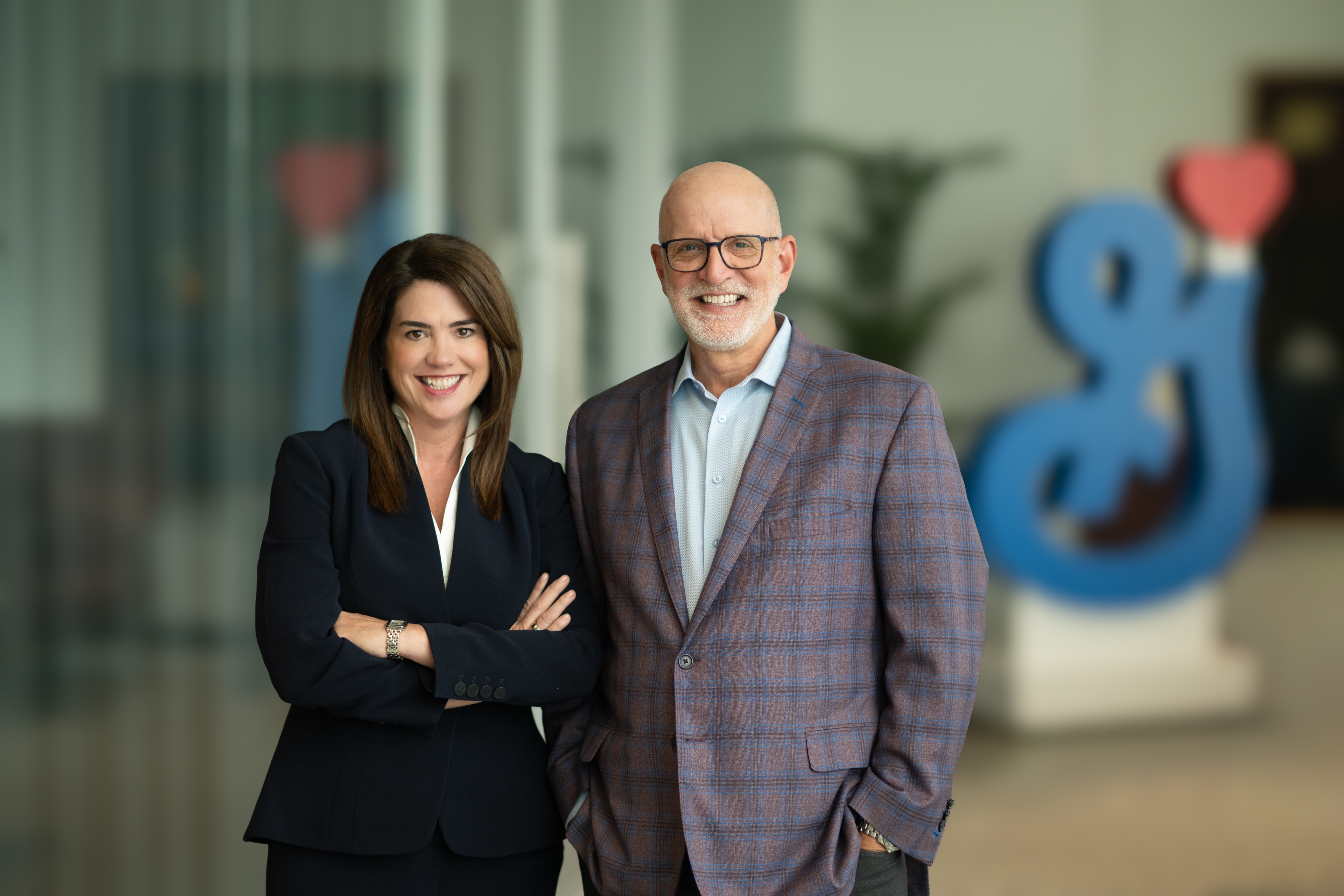
McNabb’s succession brings the story back to preparation. She joined General Mills in Canada in 1999 and has worked across marketing, strategy and international management. Like Harmening, she has experience in U.S. cereal and Cereal Partners Worldwide. The board described a multiyear succession process. The next chief executive arrives with her own long apprenticeship inside the business.
Harmening will remain as executive chair, supporting the transition. His earlier answer to the executive coach makes this ending especially apt. A job can be desirable for what it allows you to accomplish, and then change shape when someone else takes responsibility. On January 1, the CEO title will move. The work of choosing what matters will remain.