Jeannie Yuen noticed something odd about an insurance commercial. An agent arrived, wishes were granted, and the cheerful machinery of advertising went to work. Yet the Chinese-language version had misplaced the reason for the agent’s appearance. In the original campaign, a damaged car or home created a problem. In the adaptation, the problem had vanished. The helpful representative had become a sort of freelance genie.
She described the commercial in July 2011. Her objection was wonderfully practical. A brand could preserve the mood of an advertisement while losing the logic that made it worth watching. The language could be correct and the selling idea could still wander off. Yuen wanted clients to examine their Asian American work with the same care they applied to their other campaigns.
That small missing scene gets close to the reason she founded APartnership. There was more work to do before anyone translated a line. Who was the audience? What would it recognize? Why would it care? Her career became an argument for asking those questions while there was still time to change the advertisement.
A passport before a pitch deck
Yuen’s route into American advertising began well outside America. Singaporean by birth, she attended school in Canada and graduated from the University of Alberta. Her first job was with Saatchi & Saatchi in Hong Kong. She subsequently joined DDB Needham, with responsibility across Greater China, before moving to New York in 1994.
In New York, she worked at LLT and then Mosaica, Young & Rubicam’s Asian American operation. Clients were often buying translation from these specialist agencies. She saw room for a broader assignment: helping companies decide how to approach an audience and sustain that relationship. In 1999, she founded APartnership.
It is an instructive sequence. Her experience crossed national markets before she entered the business of explaining cultural differences within the United States. The resulting agency addressed a commercial question that an English-language master campaign could leave unresolved: what does this particular group of customers actually need to hear?
- SingaporeSingaporean by birth
- CanadaUniversity of Alberta
- Hong KongSaatchi & Saatchi, then DDB Needham
- New York · 1994LLT, Mosaica, then APartnership in 1999
Detroit buys the argument
By December 2002, the young agency had a client capable of testing that proposition at considerable scale. General Motors selected A Partnership, Inc. as its agency of record for the Asian American market after a competitive review lasting three months. A specialist shop in New York would help an American carmaker communicate with customers whose cultural reference points deserved particular attention.
The announcement described annual billings above $15 million at the time. Billings measure the business passing through an agency; they should never be mistaken for a founder’s income. Even with that distinction, the figure gives the early story some useful weight. This was already a functioning commercial enterprise, winning work through a formal selection process.
Yuen welcomed the account as evidence that a major company recognized Asian Americans’ purchasing influence. GM’s explanation emphasized the agency’s understanding of its customers and the automotive business. Cultural knowledge had earned a place alongside category knowledge. The assignment made her founding proposition concrete: an Asian American agency could help decide how a brand competed.
General Motors appoints A Partnership as its Asian American agency of record.
Three-month competitive review · announced December 9“Involve your Asian American agency partner in the creative process as early as possible.”
JEANNIE YUEN · JULY 2011
The person missing from the group photograph
Yuen could be pointed about the industry’s attempts at inclusion. In another 2011 essay, she asked readers to count television commercials containing more than one Asian face. She then described a familiar advertising tableau: a group gathered around a campfire, with one Asian person included in the cast.
Her concern was the reasoning behind the picture. A planner could count faces, compare the result with a population percentage, and consider the task complete. Yuen argued that the social setting needed scrutiny too. Casting offered only one part of the answer. Relationships, shared interests and cultural cues gave the scene its meaning.
Her account reflected her view of community life at the time, rather than a rule for every Asian American household. The enduring question is sharper than the demographic arithmetic: would the people being portrayed recognize themselves? A spreadsheet can establish that someone is present. It has rather less to say about whether anyone believes the party.
Four locks, and a founder guarding the keys
When prospective clients requested detailed presentations, Yuen encountered a familiar founder’s dilemma. Demonstrating expertise could mean handing over too much of the work before winning the account. Her answer, set out in October 2011, was to describe the problems her agency knew how to solve. She organized them as four locks.
Ethnicities
How communities interact and overlap.
Geography
Where audiences live and where they are moving.
Psychographics
The values and goals behind a purchase.
Assimilation
Different cultural experiences within one household.
The last lock was especially revealing. She challenged a simple, linear account of assimilation, pointing instead to households containing several generations with differing experiences. A single address could contain several relationships to American culture. Designing a message for that household required more care than assigning everyone the same cultural label.
Elsewhere, she turned the scrutiny onto agencies themselves. Her advice to buyers was to examine the people who would actually do the work, the history behind the client list, and the ownership of the creative examples in a presentation. Hiring one impressive senior person could make a pitch persuasive. The client still needed to know who would carry the assignment through production.
There is an appealing lack of ceremony in those questions. Ask for the résumés. Check whose work appears on the reel. Look beyond the senior team. She was inviting clients to inspect the operating substance behind the cultural promise, including the substance of agencies competing for the same business.
Follow the customer out of the meeting room
Her commercial imagination extended beyond advertising placements. Writing about visitors from Asia in 2011, she considered the whole journey: reaching people before their flight, cooperating with travel businesses, and adjusting services after arrival. Her examples ranged from Macy’s advertising in material for Chinese visa applicants to postal services aimed at Japanese tourists in Hawaii.
The useful detail was often a small convenience. A pickup service at a hotel could matter alongside the message describing it. Payment arrangements could affect a visitor’s experience as directly as promotional language. Yuen’s account gave marketing an operational dimension: the promise had to survive the customer’s attempt to use the product.
She also watched the map. In August 2012, she urged marketers to look beyond familiar coastal concentrations and pay attention to emerging Asian American populations elsewhere. Her figures belonged to that period, but the planning habit remains easy to recognize. Yesterday’s list of obvious markets can become tomorrow’s blind spot.
A June 2012 piece examined online video, social networks, creators and retail services. Its references to beauty personalities and technology reviewers show her considering the people through whom attention traveled. The customer had a media life outside the channels a brand might already know how to buy.
A carton of tea gets a supporting cast
That attention to context appears in APartnership’s work for Vita Lemon Tea. The agency partnered with the Fung Bros on an original song and an Instagram contest inviting fans to reinterpret the initials VLT. The campaign connected online entertainment with displays and promotional materials in Asian grocery stores.

The agency’s case study reports nearly 500,000 main-video views in one week and sales exceeding expectations by 24 percent. Those are campaign figures reported by the agency, rather than personal performance measures for Yuen. The example makes a useful distinction visible: cultural familiarity can influence the entertainment, the invitation to participate, and the place a customer encounters the product.
Another example is quieter. For Bank of America’s Year of the Snake events, APartnership created red envelopes, calendars and invitations in Chinese and Vietnamese. The objects were ordinary enough to be used and specific enough to belong to the occasion. A calendar could carry the relationship beyond an event’s closing hour.
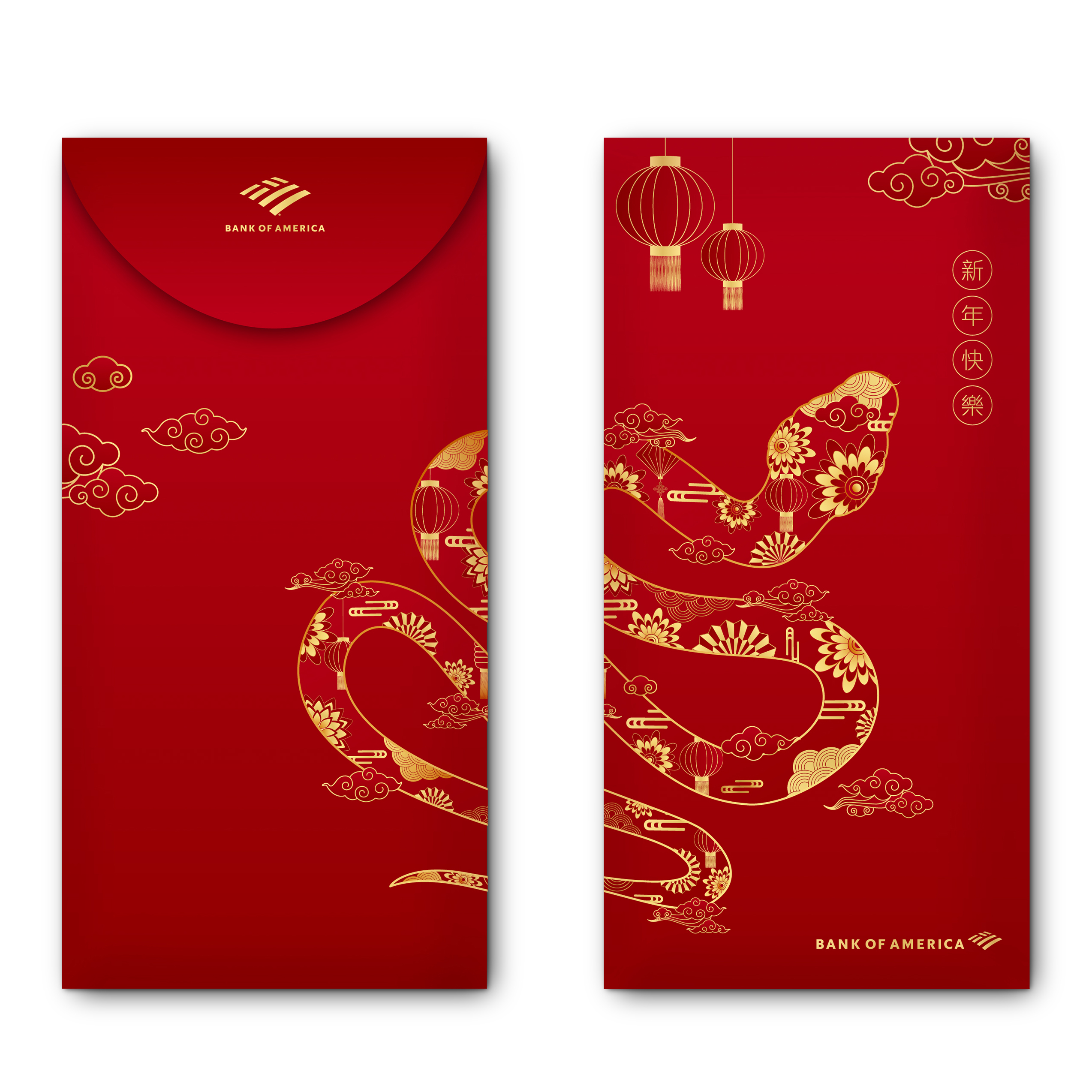
These are examples from the company Yuen founded. Their value here is in showing the range of that company’s approach, without assigning her individual authorship of later work. The business she established now has Jinnie Kim as CEO, while Yuen serves on its board.
The assignment she kept enlarging
Yuen’s writing provides glimpses of what held her attention: a broken story in an insurance ad, an implausible group scene, an agency reel deserving closer inspection. These are the observations of someone interested in the mechanics of persuasion. The grand claim about understanding a community had to survive a casting decision or a production budget.
In a 2022 conversation, she also recommended Cathy Park Hong’s Minor Feelings and pointed to Jeff Yang and the Asian American Advertising Federation as useful voices and resources. Commercial expertise, in her telling, left room for reading, listening and a wider cultural conversation.
Her original ambition was to help marketers build a sustained strategy for Asian American audiences. In her writing, she kept returning to the decisions that made such a strategy believable. Give the specialist time to understand the idea. Look closely at the people in the scene. Keep the reason for the insurance agent’s visit. Even a genie needs a brief.
Keep reading, keep looking
Explore Yuen’s writing and the work of the agency she founded.
Jeannie Yuen’s essays ↗Jeannie Yuen on X ↗The 2022 conversation ↗The General Motors announcement ↗APartnership’s work ↗Watch: Vita Lemon Tea campaign ↗APartnership on LinkedIn ↗APartnership on Instagram ↗APartnership on Facebook ↗APartnership on YouTube ↗