Bill Koenigsberg’s early advertising inventory was space at a tennis court. He was working at tennis courts on Long Island, and a nearby luncheonette had something he wanted: lunch. He offered to put up a sign for the restaurant in exchange for feeding him. The arrangement joined a business seeking customers to a young operator with an audience. The payment was edible. Procurement, mercifully, had yet to arrive.
It is a small story to place beside a career involving billions of dollars in media spending. It also explains the appeal of that career more neatly than a balance sheet. Koenigsberg liked finding a connection that other people had overlooked, then making a deal around it. Before there was Horizon Media, there was somebody hungry enough to notice an audience within reach.
The commercials were part of the show
Born on Christmas Eve in 1955, Koenigsberg grew up in Long Beach, Long Island. His father worked in the family home-heating oil business. Tennis and baseball occupied him, but television had a separate claim on his attention. He enjoyed the commercials along with the programs. For a future advertising executive, this was convenient vocational research disguised as sitting on the sofa.
He went to the University of Miami with ambitions in tennis and an interest in marketing. The second interest became his working life. After graduating with a marketing degree, he returned to New York and tried to get into advertising. Creative departments wanted a portfolio; account departments wanted an MBA. Media buying offered another way through the door.
The opening came through his sister’s boyfriend’s brother, who worked at ELA, a media-buying agency. Family introductions rarely sound elegant on an organizational chart. This one worked. His early experience of looking for work also stayed with him: people who offered advice, even when they had no job to offer, made a difference.
Before the pitch decks, a practical exchange.
Buying the business, then keeping it afloat
By 1984, Media General had recruited him to open a New York office. Five years later, when the company wanted to dispose of its media-services operation, he proposed buying it himself. There was one substantial complication: he needed the seller to provide the financing. Media General agreed. Horizon began in 1989 with a founder who had negotiated both an acquisition and the means to pay for it.
The timing made the financing considerably less charming. Recession and unpaid client bills put pressure on the young business. Working capital went toward covering debts. The independence that would later become Horizon’s calling card first required the rather unromantic achievement of having enough money to continue operating.
Koenigsberg has recalled being summoned by the lender and told to make deep staff cuts or face the loan being called. He put his keys on the table. Cutting the staff so drastically, he argued, would leave no viable company anyway. They gave him another year. It was a gamble, remembered by its winner, rather than a management technique suitable for every occasion.
As business improved in the late 1990s, Horizon picked up clients including GEICO and A&E Networks. Competitors were being acquired or disappearing. He made a case for an agency able to act quickly and give clients direct attention, while spending on executive talent and research. Independence had to come with enough capability to make the promise useful.
“Never think you’ve arrived.”
Bill Koenigsberg, in his letter to advertising interns
A chair at the industry’s table
Media buying can look like the quiet end of advertising: the work that happens after someone has written the amusing line. Koenigsberg’s career followed its growing influence. Choosing where a message appears, understanding the audience and measuring the response became central decisions for advertisers. An agency could build its business around those decisions.
In 2014, he became the first executive from a media agency elected chairman of the 4As board. The distinction mattered beyond his own résumé. A trade association long associated with the wider advertising agency business had put a media specialist in its chair. The department he had entered while looking for a break now had an unusually prominent seat.
The work involved less glamorous subjects than an awards evening suggests: measurement, transparency, regulation and digital fraud. In 2015, he described the time demands of the chairmanship as greater than anticipated. He also acknowledged how slowly consistent digital measurement was developing. Someone still had to ask whether the audience had been counted properly.
His 2019 induction into the American Advertising Federation’s Hall of Fame recognized a business built over three decades. By then, his agency had accumulated its own awards for media work and workplace culture. For Koenigsberg, however, the more revealing question remained what a company did between the occasions that required a tuxedo.
The anniversary note and the uncomfortable hire
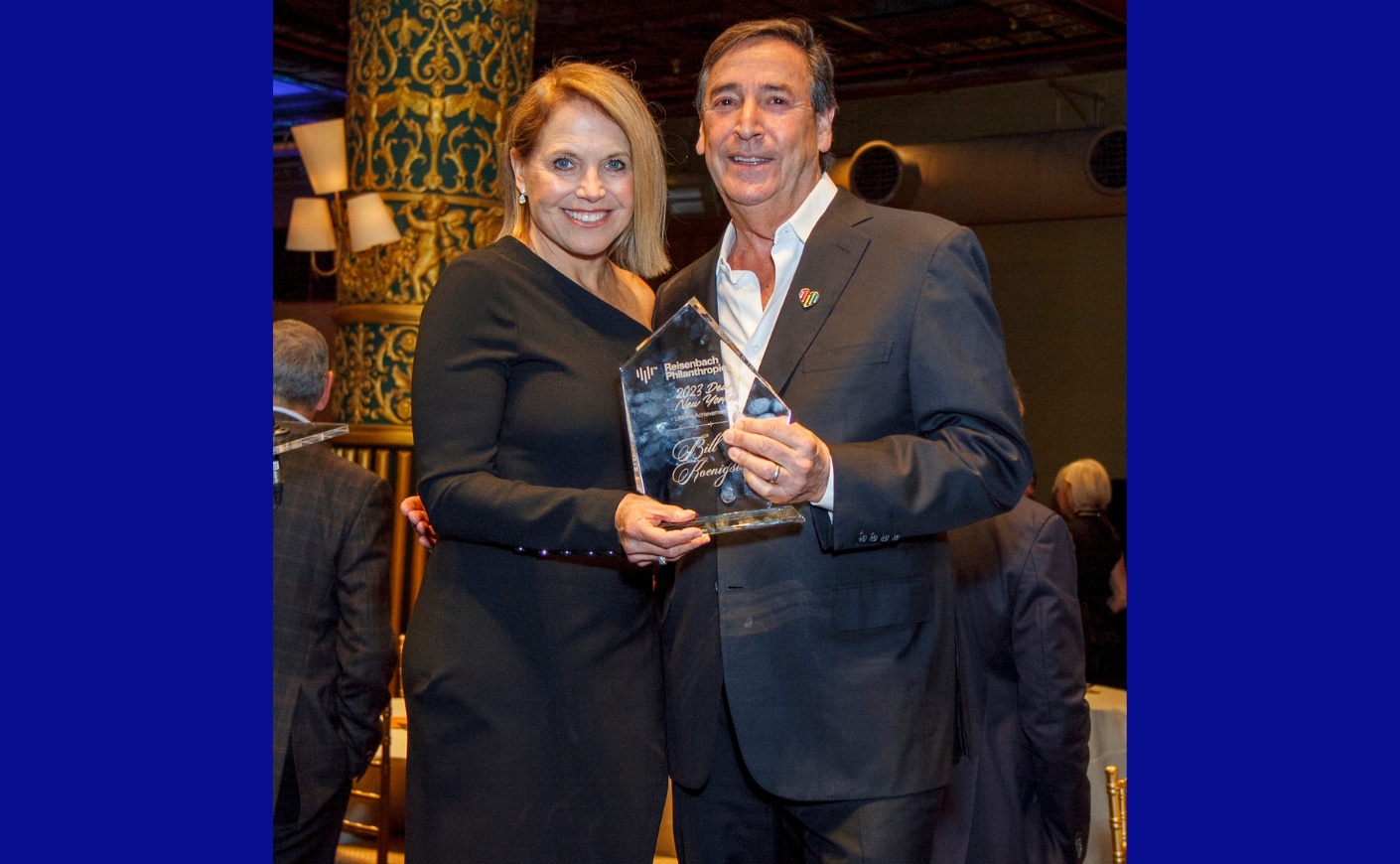
Katie Couric offered one answer while introducing him for a lifetime achievement award in 2023. She described his practice of writing notes to employees celebrating an anniversary at Horizon. The detail is pleasingly specific. A company can announce that its people matter in a hundred presentations; an employee can keep a note in a drawer.
Couric and her husband, John Molner, had also turned to him when building Katie Couric Media. Her account connects the business adviser to the friend: somebody who encouraged them and helped their venture develop. The relationships in his working life extend across agencies, broadcasters and people attempting to create a business of their own.
He has described seeking smart hires who make him uncomfortable. It is a useful admission from a founder whose name remains inseparable from his company. Employees with something to teach the boss complicate his day. They can also make the business more interesting than a room full of agreeable reflections.
In a letter to interns, he advised finding mentors without assuming they must be older or work in the same field. He wrote about learning from failure, patience and giving back. The last instruction concerned never feeling finished. Even the company’s name, he explained, points to something that keeps moving away as you approach it.
Independence gets more complicated
In December 2021, Horizon announced an agreement to sell a minority stake to Singapore-based Temasek, with LionTree also investing. Koenigsberg would remain the majority shareholder. The price was undisclosed. After years of questions about whether he would sell, he had chosen an arrangement that brought in outside capital while preserving control.
That distinction leaves plenty of work for an owner. A private company still has to win clients and finance its ambitions. In 2023, Horizon lost GEICO and other accounts, while winning business including the NFL, Sam’s Club and FanDuel. The client list was moving in both directions. Founder continuity could not keep every relationship in place.
He described account reviews becoming longer and more involved, with technology leaders and procurement joining the process. The founder who once settled an advertising exchange with a restaurant now faced a substantially larger committee. His restlessness was partly commercial and partly organizational: the business around him was changing, and Horizon needed people and services suited to it.
- 1989Acquire the operation that becomes Horizon.
- 2021Bring in minority investors; retain majority ownership.
- 2025Join Havas in a global commercial venture.
A bigger map, a faster machine
Bob Lord became Horizon Media Holdings’ first president in 2025. His arrival gave Koenigsberg an experienced technology and agency executive alongside him. By early 2026, the company was describing its developing model through HorizonOS, with its Blu technology as a foundation. The founder’s willingness to bring in another senior leader had become a concrete part of the next phase.
Another change arrived in September 2025: Horizon Media Holdings and Havas announced Horizon Global. The joint venture targeted US-centered international client opportunities. The partners described a network spanning more than 100 countries and $20 billion in combined global billings. Those figures describe their combined reach and media business, rather than the founder’s wealth or Horizon’s revenue.
The arrangement preserved the parents’ separate operations outside those opportunities. Lord was appointed interim global CEO, with Renata Spackova as global chief operating officer. Koenigsberg joined the board alongside Havas leaders including Yannick Bolloré. The structure suggests a practical answer to an old question: how to offer a client an international network while keeping a separate company.
He was also making a case for AI-assisted planning. In April 2025, he described using Blu for scenarios across 200 markets in about ten minutes, compared with work that had previously taken weeks. It was his account of the system’s capabilities. For clients, the useful test is whether a faster plan leads to a better decision.
In a 2026 video conversation, he returned to the human work that remains around those systems: discussion, judgment and innovation. He also emphasized trust. Faster tools place more weight on whether a client understands and believes the decisions being made. The teenager’s deal was easy to inspect. A modern media plan requires rather more explanation.
The promise faces a public test
Horizon’s account of its culture faces a legal challenge. In September 2025, Latraviette Smith-Wilson and Charisma Deberry brought discrimination and retaliation claims against Horizon and senior executives, including Koenigsberg. Horizon disputed the allegations. On August 18, 2026, a federal judge denied its motion to compel arbitration and allowed an amended complaint. That procedural ruling did not decide liability. The claims put the company’s stated values under scrutiny.
On September 24, 2026, Koenigsberg received the Center for Communication’s Frank N. Stanton Award. The event supported programs for students and recent graduates, returning his public story to the people trying to enter the business. From a tennis-court sign to international partnerships, he has kept finding another deal to make. The more demanding task is keeping the personal promise as the circle grows.
Keep the conversation going
- Horizon Media
- Bill Koenigsberg on LinkedIn
- Listen: Math & Magic with Bob Pittman
- Watch: Blu and media planning
- Watch: culture, AI and trust
- Read his letter to interns
- Horizon Global partnership
- 2026 Stanton Award
- Court order, August 2026
- Reporting on the lawsuit and company response
- Katie Couric’s award introduction