An unsold product has a peculiar career. Someone orders it, makes it, packages it and finds room for it. People spend money moving it around. Then, for reasons that may have little to do with its usefulness, the organisation holding it decides its next destination is disposal. Jean Pierre Azanedo built an early business at that destination. His later businesses began asking why so many things had to arrive there at all.
That question follows him from Peru to Miami, from a waste-management company to a discount store, and from food-bank records to industrial feed ingredients. Today he is the co-founder and CEO of Zero Waste Co. The name makes a large promise. The work beneath it is specific: find an organic byproduct, establish what it can become, and arrange the process that gets it there.
A return ticket to Peru
Azanedo’s route into the industry began elsewhere. He worked in real estate in the United States. When the property crisis arrived in 2007, it hit a business in which members of his family also worked. He responded by partnering with a construction company to buy repossessed properties, renovate them and sell them at low prices. Even before waste entered the picture, his account involved assets whose previous commercial story had gone wrong.
He returned to Peru with his family in 2012 and travelled around the country. A local conversation in Pucallpa brought a disposal problem to his attention. In 2013 he founded Kanay; operations began in 2015. The interval between founding and operating is a useful detail. A business handling physical material has preparations to make before it can promise a service.
By March 2019, he was receiving the young entrepreneur award in Peru’s Líderes Empresariales del Cambio programme, organised by EY, El Comercio and Asbanc. As a director of Séché Group Perú, he was also talking about opening plants outside Lima. The ambition was geographical as well as commercial: industrial services needed to reach beyond the capital. A national business could not treat the rest of the country as a footnote.
The award recognised an earlier chapter. It also catches him working on a problem that would remain familiar: the distance between having a service in principle and making it available where it is needed. Geography, plants and operating capacity were already part of his vocabulary.
The shop that became a test
In his account of the next venture, Azanedo kept returning to batches of products being destroyed. Some had another possible use. He and his partner began discussing the commercial and regulatory arrangements that sent them towards disposal. In 2019, they co-created Sugo.
Sugo’s store offered unsold products at a discount. Slow-moving stock, limited remaining shelf life and damaged packaging could leave a product without its usual retail route. The store supplied another route and another customer. A bargain had an environmental consequence, which was a pleasing additional duty for something already capable of improving a shopping basket.
There was also a measurement project running through the operation. CoreZero would quantify the effect of diverting waste and connect eligible projects to carbon credits. Selling goods and recording what their rescue achieved could therefore test two parts of the founders’ thinking at once. One addressed the inventory. The other addressed the value of preventing its disposal.
By 2022, Sugo’s growth had slowed as online commerce cooled and shopping returned to physical stores. The venture had rescued about 800 tonnes of products. Azanedo and his team chose to concentrate on CoreZero, whose technology could work with other organisations pursuing rescue and reuse. The store had served as a practical proving ground; the next business could operate alongside many more projects.
It is an unromantic decision, and consequently an interesting one. Founders are often encouraged to remain devoted to their original vehicle. Azanedo’s account describes changing the vehicle while retaining the destination. The work he wanted to encourage could happen in somebody else’s organisation, provided there was a way to measure it and add financial value.
Two ends of the same supply chain
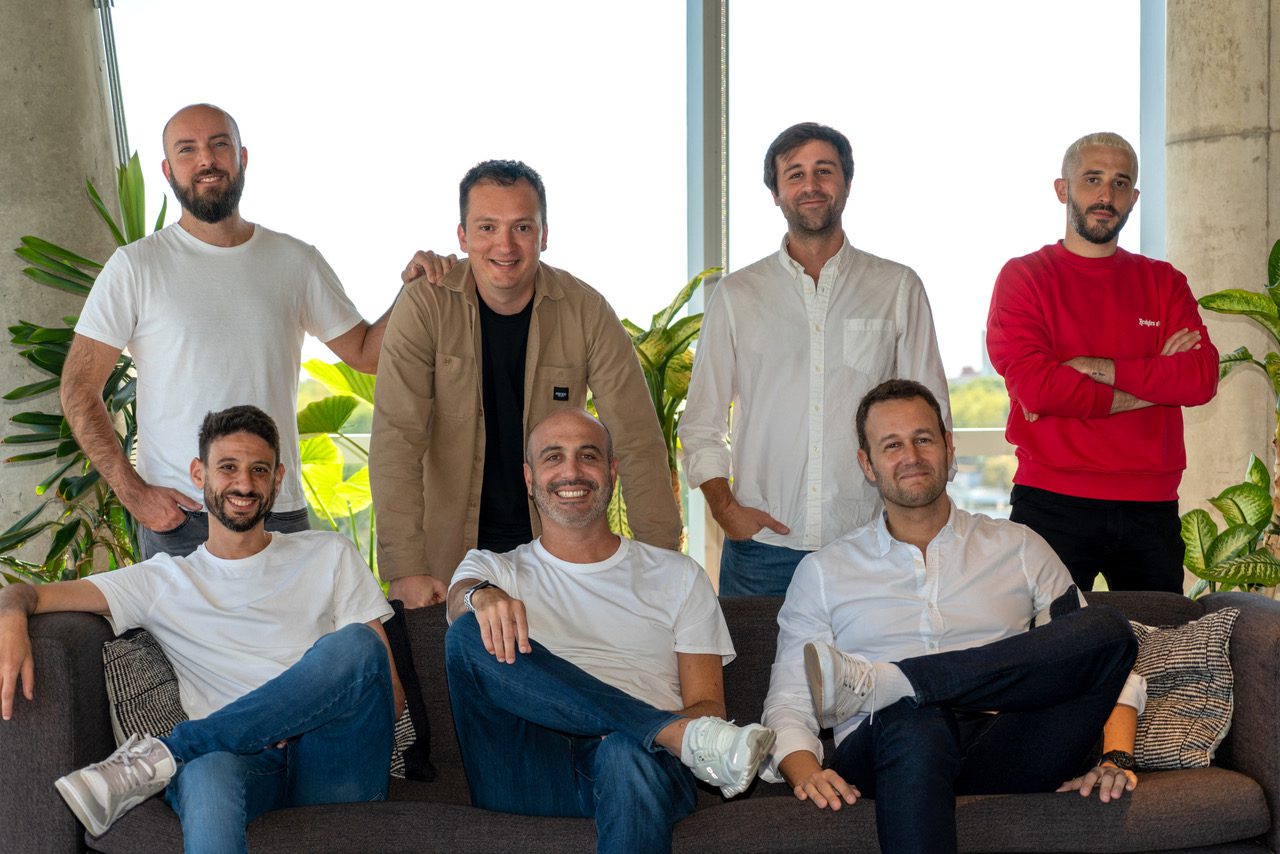
Ignacio Bordigoni is central to that progression. His experience included consumer-goods businesses such as Diageo and Unilever, while Azanedo’s earlier work dealt with what happened to materials after their owners were ready to discard them. Between them lay the route from a commercial product to a disposal decision.
Their partnership brought those perspectives together. Bordigoni understood supply chains and inventory; Azanedo knew the receiving end of the waste business. A product could look quite different from either position. Joining the views helped them examine the decisions in between.
In an early year-end letter about Sugo, Azanedo described Bordigoni as both his partner and his compadre. He thanked the corporations that had joined the project during the uncertainty of the pandemic, the customers who took products home, and the team that turned an idea into an operating business. The letter is crowded with other people. His account of starting the company gives them room.
That emphasis surfaces again in a September 2024 team exercise: employees were asked what ZERO meant to each of them. Azanedo described a chance to connect and laugh while considering the purpose behind the name. A company can print an ambition in six letters. The people doing the work still need to discuss what those letters ask of them.
Putting a number on the rescue
CoreZero’s work with Mexico’s food-bank network gave the model a concrete result. In early 2023, the partners reported an estimated 221,800 tonnes of avoided carbon dioxide-equivalent emissions from food rescue, converted into carbon credits. The number represented an environmental effect of work already taking place through the network.
For Azanedo, the business opportunity involved making that effect financially useful to the organisations doing the rescuing. CoreZero connected to food-bank systems, tracked activity, arranged third-party validation and shared proceeds from credit sales with the food banks. The model placed another potential income stream beside the original task of getting food to people.
“Nobody produces something for it to be thrown away.”
Jean Pierre Azanedo, 2022
His public writing extends the same argument along the food supply chain. In a 2023 article, he examined losses during production, storage, processing and distribution. Price conditions, handling and cosmetic expectations could all affect whether food reached its destination. Waste was the accumulated result of decisions at several stages, each requiring attention.
In another article that year, he drew attention to the resources carried invisibly inside discarded food: land, water and energy. The product in the bin was also the outcome of earlier inputs. This gives his business question a longer reach. Finding another use for material preserves something of the effort already spent producing it.
A company with three working parts
In July 2024, Azanedo announced that CoreZero and CircleTrade had combined under Zero Waste Company. The resulting structure brought together Carbon Solutions, Animal Nutrition and Zero+, the product, data and technology pillar. The names described different tasks within a more connected operation.
SolutionsMeasure environmental value
NutritionFind a productive material use
The structure makes sense of the direction his career has taken. Recovering material requires an operation. Measuring the environmental effect requires records and methods. Serving a partner requires those activities to work together. Putting them in one organisation gives the founders a way to coordinate the commercial and technical pieces.
Zero Waste Co.’s current offer includes tailored processes for turning agro-industrial byproducts into livestock feed. It describes ensiling solutions, arrangements adapted to regional conditions and revenue opportunities from carbon credits. The customer’s leftover material is the starting point; the company then has to establish a useful destination and a workable process.
Five years for a second life
In April 2025, Azanedo announced a five-year agreement with Cooperativa Pascual, the cooperative behind Mexico’s Boing drinks. The project would turn agro-industrial byproducts into higher-value inputs for animal nutrition. He thanked general manager José Luis Ruiz Cerda for the trust behind the agreement.
Five years gives the announcement a different texture from a one-off rescue. A production business keeps producing byproducts. A partner must keep receiving and processing them. The duration suggests the intended rhythm: material leaving one activity and regularly entering another, with an agreement holding the connection together.
There is modest comedy in the journey. A drink’s commercial life can continue through what remains after making it. The leftover has acquired another job. For Azanedo, however, the interesting part is the arrangement that makes the second job possible: a willing producer, a processing operation and a use that someone values.
The loading yard, January 2026
His January 3, 2026 update brought the story to a loading yard. A machine had arrived from India for operations in Mexico. Azanedo described the team’s long hours, delicate manoeuvres and coordination. He connected the arrival to planning, investor support and decisions about deploying capital.
That is an apt place to find him after the earlier chapters. A discount store required products and customers. Carbon finance required measurement and partners. Industrial valorisation requires installed equipment and people who can make it run. Each iteration has added another practical obligation to the idea of keeping material useful.
The ambition still travels across borders, but its daily expression is local and physical. Someone receives the machine. Someone handles the material. Someone buys what comes out. Azanedo’s career has moved steadily towards connecting those decisions, so that a product’s first commercial ending leaves room for another beginning.
Follow the work
- Zero Waste Co. website
- Jean Pierre Azanedo on LinkedIn
- The return to Peru and the founding of Kanay
- The 2019 young entrepreneur award
- Sugo, CoreZero and the decision to concentrate
- CoreZero’s Miami chapter
- His essay on the food supply chain
- His essay on recovering food resources
- The Cooperativa Pascual agreement
- The January 2026 machinery update