Mariano Suarez-Battan had a problem that would sound familiar to anyone who has ever sent unfinished work to somebody important. At Three Melons, his game studio, ideas developed in a room full of sketches and discussion. Put those ideas into slides for distant colleagues at Playdom, and something went missing. The people receiving the presentation saw the rough edges. They had missed the thinking that made those edges interesting.
“The medium changed how these ideas were evaluated,” he recalled. A brainstorm had become an exhibit. Instead of joining a creative process, the people on the other end were inspecting its remains. Anyone who has watched a promising sketch expire in a conference room can appreciate the distinction.
This is the useful starting point for Suarez-Battan’s story. Before Mural became a software business valued above $2 billion, before the funding announcements and the arguments about offices, there was an Argentine game maker trying to let other people into an idea while it was still taking shape. He wanted a shared working surface. A slide deck kept handing him a finished-looking object.
“The medium changed how these ideas were evaluated.”
Mariano Suarez-Battan, on presenting early game ideas
First, get people to play
His route into games began with advertising. In 2005, after founding a software business called Sincromatic, Suarez-Battan encountered advergames at a digital marketing conference in the United States. These were games built around brands: advertising that asked people to participate. He saw a business possibility, though he initially doubted whether Argentina had the developers or the market to support it.
Finding money required another adjustment. Early conversations with venture investors did not produce the backing he wanted. Three Melons began with $150,000 from friends and family. Patricio Jutard handled recruiting; Suarez-Battan concentrated on commercial work and finance. Even a company devoted to play needs somebody willing to deal with the accounts.
The name came from a brainstorming session. Orange and Apple were already occupied, Jutard later joked, leaving Three Melons as an agreeable alternative. It was a name comfortable with its own silliness, which suited a company making games. The studio’s work included branded entertainment for companies such as LEGO, Disney, Mattel and Warner Bros.
There were substantial audiences behind the fruit. Its LEGO Indiana Jones web game attracted more than 10 million users worldwide. Bola, the studio’s football game, reached more than 20 million players globally in 2010. These were experiences designed in Argentina and played elsewhere, proof that the distance between a local studio and an international audience could be crossed.
Playdom acquired Three Melons in March 2010. Disney subsequently acquired Playdom that July. Suarez-Battan became a creative director, working across the Buenos Aires and Mountain View teams. The acquisition widened the geography of his work and exposed the communication problem that would become his next company’s reason to exist.
An unfinished thought needs somewhere to live
Mural was founded in 2011. Suarez-Battan worked with Agustin Soler and Patricio Jutard to build a place for visual collaboration. The original need was concrete: an interdisciplinary team trying to design a game from different locations. Eventually, the team shifted its attention from making the game to making the software that would help people design together.
The virtual sticky note was a useful unit of thought. An idea could be moved, grouped with another idea, reconsidered and rearranged. People could see the same material and contribute to it. The attraction lay partly in keeping work malleable. A thought did not have to dress for the board meeting before anyone else could encounter it.
In March 2012, Suarez-Battan introduced himself on the company blog as CEO of Tactivos and one of Mural’s creators. The product was approaching its first beta users. His invitation was modest and specific: people interested in visual thinking or remote design might like what the team was building. Reading it now, the scale of the later company makes that small beginning especially pleasing.
By the end of 2013, he had moved to San Francisco while development remained in Buenos Aires. The product, then called Mural.ly, had 250,000 users, and half its paying customers were American. Geography mattered commercially even as the software tried to make geography less troublesome creatively. Building a tool for distributed work meant living some of its complications.
IDEO opened the door. IBM walked through it.
In 2014, Mural entered IDEO’s Startup in Residence program. For Suarez-Battan, this offered something more useful than a fashionable association: proximity to people doing the work his software was supposed to support. The team observed design practice, refined the product and adopted a stronger commitment to simplicity.
IDEO also made introductions to enterprise customers. By July 2016, Mural was announcing $1.35 million in seed funding and a deal with IBM. A product that started with the needs of game designers was becoming useful inside much larger organizations. The opportunity expanded because the underlying problem travelled well: people needed to develop an understanding together, often across offices and time zones.
A smaller transaction reveals another side of his approach. When California College of the Arts asked about licensing Mural for its MBA in Design Strategy students, Suarez-Battan offered it free in exchange for feedback about how they used it. In 2015, the college began using the software in the program. The students got a working tool; the company got a chance to learn from real work.
That bargain captures a practical curiosity. It also helps explain why his career cannot be reduced to fundraising. He repeatedly put the product near people whose work could teach the team something. Designers, students and enterprise teams supplied different tests of the same proposition: shared visual space could help a group think.
The nine years before the big numbers
In January 2020, Mural announced a $23 million Series A led by Radian Capital. The company was already serving more than 3,700 customers worldwide, including 40 percent of the Fortune 100. Those figures belong before the later surge in attention. A substantial customer base had accumulated through years of selling and refining the product.
That August brought a $118 million Series B led by Insight Partners. In his announcement, Suarez-Battan reminded readers that the company was nine years old. The team had reached its annual goals by June. He wrote about IBM’s adoption, about facilitators and about making room for imagination. Capital was the news; the work people could do with the software remained his subject.
By July 2021, another $50 million round valued Mural above $2 billion. Its annual recurring revenue had more than tripled year over year. More than 100 customers were contributing over $100,000 annually, and seven were contributing more than $1 million. The company reported over 600 employees across 30 countries. The game maker was now responsible for a distributed organization of considerable size.
He could sound faintly bemused by the congratulations. In a conversation with Insight Partners, he redirected attention from the funding to the work customers were doing every day. He also described the education and services surrounding the software: preparing people for workshops, offering methods and helping them facilitate. The canvas needed people who knew how to use their time together.
A little silence. A little celebration.
The more distinctive parts of Suarez-Battan’s thinking often concern the supposedly minor details of a meeting. In a 2020 conversation about facilitation, he discussed purposeful silence, making time for children and coffee, and recognizing achievements remotely. His advice included learning to celebrate together even when people were apart.
His online handle, batmelon, carries an appropriately unserious history. He explained that it combines Batman with Three Melons. The same person who could talk about enterprise collaboration kept a little souvenir of the game studio in his public name. Corporate software leaves room for a joke, provided someone remembers to put one there.
The seriousness behind these details became more explicit in 2022, when Mural acquired LUMA Institute. Pete Maher, who had spoken with Suarez-Battan about collaboration since 2015, remembered a founder interested in changing how people worked together. Joining software with training in design methods gave that ambition a more concrete form. A tool could offer space; people also needed a way to organize their participation.
In December 2022, Suarez-Battan handed the CEO role to David Baga and became executive chairman of the board. The announced responsibilities included board operations, guidance and support for the company’s vision. After eleven years, his relationship to Mural changed. He remained connected to the business without continuing to run its daily operations.
The following April, he and Mural’s chief evangelist Jim Kalbach published Collaborative Intelligence. The book addresses the design of collaboration through methods, spaces, relationships and modes of engagement. Its argument fits the career that preceded it: teams can deliberately arrange how they work, rather than treating a meeting invitation as sufficient preparation. An invitation is exceptionally good at filling a calendar. Its other talents are less dependable.
From Mural’s founding to the handover of its CEO role.
Now consider the dinner party
In March 2025, speaking from Miami, Suarez-Battan questioned the enthusiasm for returning everyone to an office. Physical proximity could leave colleagues disconnected, he argued. Teams still needed to think about their roles and methods. His criticism was aimed at the habit of returning to familiar arrangements without doing the harder work of changing how people collaborated.
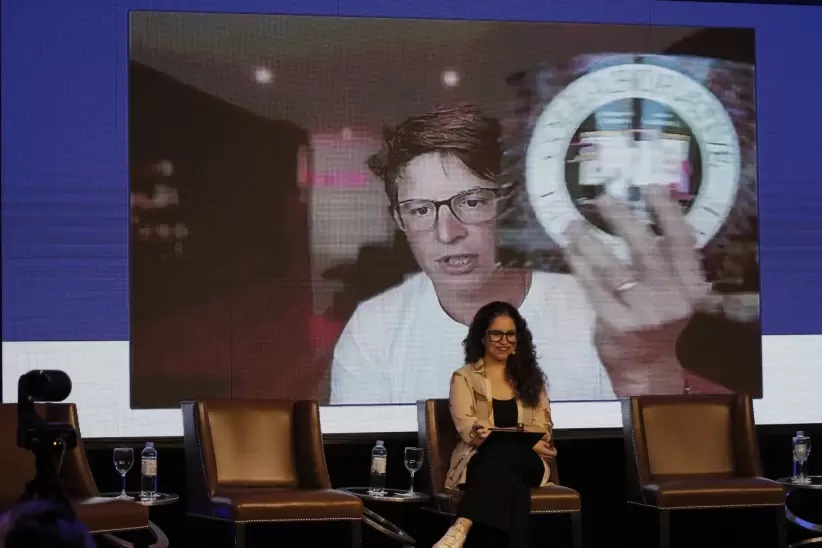
He had also begun working on a startup concerned with connections at events. In a public account of a dinner in Miami, he described spending two hours talking to the people beside him while potentially useful connections elsewhere in the room went unmade. His proposed approach involved preparation before arrival, deeper conversations during the gathering and continued relationships afterward. The old concern had acquired a dinner table.
His current public work includes Bocho, which describes itself as a collaboratory for new technology products. He is also an angel investor and mentor through Endeavor. In April 2026, he was named among the angel backers of Shorta, a startup making vertical-format series. The former game entrepreneur remains close to both new software ventures and entertainment.
There is a pleasing continuity here. Games require rules, shared attention and reasons to participate. Workshops require some of the same things. So do events where strangers hope to meet someone useful or interesting. Across these settings, Suarez-Battan keeps returning to a question that sounds obvious until you watch people struggle with it: what would help the people present actually do something together?
The room can be physical. The room can be digital. Somebody still has to give the encounter a little thought. Having spent years helping people work across a distance, he is now looking at the opportunities missed when they sit three chairs apart. It is an excellent problem for a game maker: everyone has arrived, and the rules still need work.