He built Peru's biggest waste company, sold it to the French, and moved to Coconut Grove with one stubborn idea: garbage should pay for itself.
Who he is now
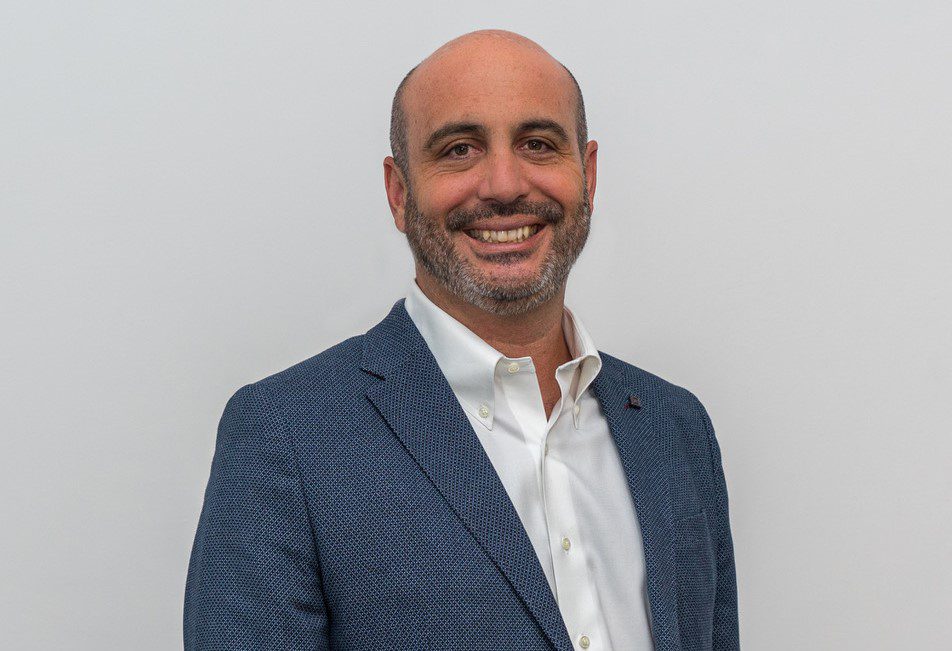
Jean Pierre Azañedo runs Zero Waste Co. from Miami, and his whole business rests on a sentence most people would nod past: nobody makes something just to throw it away. He means it as an accusation and an opportunity at once.
The company he leads, ZWC, is a climate-tech venture with three engines. The best known of them, CoreZero, does something that sounds like sleight of hand and turns out to be accounting: it takes food that would have rotted in a landfill, proves the rot never happened, and sells that avoided methane as a carbon credit. In 2023 it became the first company in the world to serialize credits from food-waste diversion. The pilot partner was the Mexican food-banking network. The tally was 221,800 credits.
That is the pitch in miniature. Rescue the food, count the emissions that never left the ground, split the money with the people who did the rescuing. Azañedo did not invent food banks or carbon markets. He welded them together and got the weld certified.
What makes the trick repeatable is speed. Carbon credits from waste projects used to take about three years to generate. CoreZero pulled that down to roughly five months using blockchain traceability - a claim that would be marketing noise from most founders and reads closer to operations from someone who spent a decade moving hazardous cargo across Peru.
The co-founder beside him is Ignacio Bordigoni, and the two started CoreZero in March 2020 - a strange month to start anything. The pitch to investors was not a slogan about saving the planet. It was a market observation: the world produces about 1.3 billion tons of food waste a year, that waste emits a mountain of methane, and nobody was being paid to stop it. Where others saw a moral failing, Azañedo saw an asset class waiting for someone to write the ledger.
By the numbers
The first act
In 2013 Azañedo started Kanay SAC, a hazardous-waste management company in Peru. Hazardous waste is the least romantic corner of the economy - trucks, manifests, permits, the stuff nobody photographs for a pitch deck. He grew it to more than $30 million in sales in three years, and to roughly 1,300 employees over five. It became the country's leading waste-management firm.
Then France's Séché Group bought it, rebranded it Séché Group Perú, and Azañedo walked away in 2019 - the same year EY named him Young Entrepreneur of the Year. Most founders would have taken the win and rested. He treated the exit as tuition.
The lesson stuck: value hides in the parts of the economy people would rather not look at. Hazardous waste taught him the plumbing. Carbon credits let him charge for the water.
The machine
Zero Waste Co. is not one company wearing a coat. It is three connected businesses, each taking a different bite of the same problem: material heading for a landfill that still has value left in it.
The traceability and quantification layer. It measures avoided emissions from food rescue, upcycling, composting and waste-to-energy, then turns them into verified, sellable carbon credits on the voluntary market.
The food-and-resource arm - taking organic streams that would be discarded and routing them back toward use rather than the dump.
The commercial layer that moves recovered value through markets, closing the loop between what was thrown away and what gets paid for.
How the credit is born
CoreZero's method reads like three verbs. Integrate: assess a project's potential and pin down which emissions factors apply. Quantify: measure the impact and convert it into carbon-reduction units, tracked on a blockchain so the number can be trusted by a buyer who was not in the room. Monetize: turn those units into tradable credits on the Voluntary Carbon Market.
The reason any of this matters sits in one statistic. Methane from decomposing food is roughly 80 times more potent than CO2 over two decades. Stop the food from rotting and you have prevented a greenhouse punch far heavier than the carbon most markets obsess over. Azañedo's business is built on making that prevention countable - and therefore payable.
The first proof
The idea needed a first customer willing to be counted. It arrived in the form of the Mexican food-banking network - an organization already doing the hard, unglamorous work of rescuing food before it spoiled. CoreZero measured the emissions that rescue prevented, ran the numbers through its methodology, and produced 221,800 carbon credits. They were, as far as the record shows, the first carbon credits in the world serialized from food-waste diversion.
The structure matters as much as the milestone. CoreZero does not simply pocket the proceeds. It splits the money with the food banks that did the physical rescuing, which turns a cost center - hauling and storing rescued food - into a revenue line. A food bank that used to beg for donations now has a second income built from the emissions it quietly prevents. That is the part Azañedo seems proudest of, because it makes the mission self-funding rather than charitable.
It also reframes what a carbon credit can be. Most credits on the voluntary market come from trees, cookstoves, or renewable energy. Food rescue was a blank page. By writing the methodology and getting the first credits certified, CoreZero did not just close a sale. It opened a category.
The pattern
Read Azañedo's résumé and one thing repeats: he keeps building the same company in different currencies. Kanay was waste-as-service. CoreZero is waste-as-credit. Round Foods is waste-as-food. CircleTrade is waste-as-trade. The through-line is more than a decade of integrated waste management and valorization, and a refusal to accept that anything is truly worthless.
He brought academic scaffolding to the instinct, too, studying Business Sustainability Management at the University of Cambridge. That combination - operator who has run the trucks, plus a formal grounding in sustainability economics - is rarer than either alone. It is also why investors from Nazca Ventures to FEMSA to Rumbo Ventures were willing to write into a category that barely existed. They were not betting on a first-timer's optimism. They were betting on a builder who had already done the hard version once, in a harder country, and come out with a French acquisition and a national award.
The second-time founder tends to compress time. Azañedo skipped the years most people spend learning that waste is regulated, physical, and stubborn. He already knew. What he did not know - what nobody knew - was whether a market could be taught to pay for prevention. That is the experiment now running out of Miami.
The arc
Quirks & footnotes
Where it points
Azañedo's ambition is not modest, and he does not pretend it is. He wants to change how society prices and perceives waste - to make avoidance and valorization a scalable, profitable engine against climate change rather than a cost center or a guilt tax.
The near-term proof points are concrete: a first-of-its-kind credit already serialized, a projection of 4.4 million credits over a decade, a growing roster of backers who write checks for exactly this thesis. The long-term proof is philosophical, and he states it plainly: "I hope this turning point contributes to a change of perspective towards waste and its value."
A second-time founder tends to move differently than a first. The Kanay exit gave him the plumbing, the capital, and the confidence to skip the parts everyone else spends years learning. What is left is the harder question - whether a market can be taught to pay for what it was about to throw away. He is betting his second act that it can.