At seventeen, Jean-François Bouchard had a camera, a book and a fairly complete fantasy of his future. The camera was his father’s Nikon FE. The book, a gift from his mother, contained photographs by Henri Cartier-Bresson. The fantasy involved travelling, a Leica and the appropriate French cigarettes. His father offered a smaller menu: law or business, with business or law available as alternatives. Bouchard chose law.
Decades later, after co-founding Sid Lee and creating C2 Montréal, he returned to the occupation he had imagined before acquiring an executive title. There is a pleasing complication in that trajectory. The apparent detour produced the collaborators, habits and financial room that would help him become an artist. It also gave him a reputation he would have to persuade people to look beyond.
A law degree, then a different kind of brief
Born in Montreal in 1968, Bouchard studied law at the University of Ottawa. His early working life included articling at Lavery and work at Quebec’s revenue ministry. Those are respectable beginnings for a legal career. His next consequential partnership, however, was with art director Philippe Meunier. In 1993, they founded the agency Diesel.
The name became Sid Lee in 2006, rearranging the letters of Diesel and avoiding confusion with the clothing brand. The business grew beyond advertising into a mixture of design, architecture, technology and film. Clients included Adidas, Dell and Cirque du Soleil. By 2010 and 2011, Marketing magazine was naming the company Canada’s agency of the year. A Montreal business had found customers well beyond Montreal.
Consider the practical difference between that model and a narrowly defined agency. A client could arrive with a communication problem and encounter people who thought in buildings, moving images or digital experiences. The boundaries between those trades were precisely where Sid Lee wanted to work. In 2012, Bouchard described the importance of bringing creative people from different backgrounds together, with advertising becoming one tool among several.
- 1993Diesel, the future Sid Lee
- 2003Visual art practice underway
- 2012C2 Montréal launches
- 2024The New Cubans published
- 2026Film and a new PHI exhibition
The conference that banned PowerPoint
For someone selling the value of creative encounters, a conventional business conference presented an awkward prospect. Rows of chairs and a succession of slide decks could make even an original thought look as though it had been approved by procurement. Bouchard and his colleagues gave C2 Montréal a different physical vocabulary.
The first edition, in May 2012, drew roughly 1,300 participants from more than 40 countries. Francis Ford Coppola, Michael Eisner and Daniel Lamarre were among the speakers. Cirque du Soleil was a founding partner. People came to talk business, but the setting gave them plenty to talk about before anyone reached a microphone.
Outside New City Gas, visitors found an Innovation Village, Adirondack chairs, Lego sculptures and artists making giant scarves. Entry involved an audiovisual reset tunnel. Motorized robots responded to movement below them. PowerPoint presentations and sponsorship signage were forbidden. It was a business gathering prepared to give the lanyard something unusual to witness.
Bouchard’s account of success was more intimate than a head count. After that first edition, a young tattooed designer and a corporate chief executive each stopped him, separately, to say how stimulating they had found it. Two people who might have been assigned to different rooms elsewhere had enjoyed the same event. That was the kind of meeting C2 was built to make possible.
“Status quo sucks”
Jean-François Bouchard, describing his motto in 2013
Starting again, with fewer people answering
Bouchard’s visual art practice dates to 2003. His exhibition history includes the Sherbrooke Museum of Fine Arts, Art Souterrain and galleries in Montreal and Toronto. Photography occupied years of his working life alongside the agency. A second career was already taking shape while the first one supplied the more familiar introduction.
The two pursuits overlapped long enough to defeat a tidy conversion story. Transpose, his portraits of transgender men, appeared at Arsenal in Montreal and Toronto. The series received second prize in the Gender category of the 2015 Pride Photo Award. These were public projects with exhibitions and audiences, made while he was still known primarily for running a creative company.
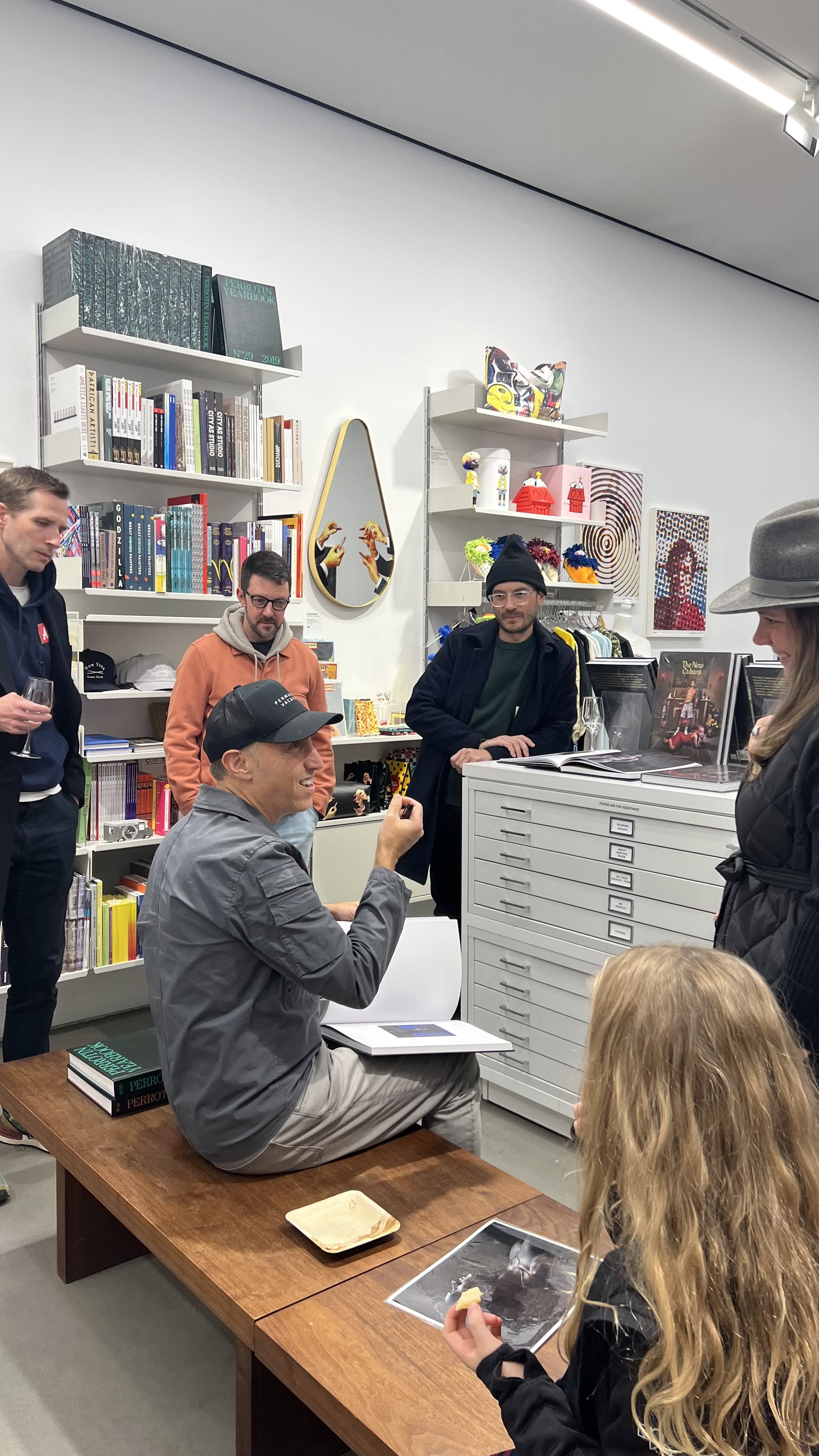
Becoming a full-time artist nevertheless changed the daily experience of being Jean-François Bouchard. In 2024, he described the shock of going from an organization of 800 employees to working on his own. The machinery that had supported an executive disappeared. A recognizable business name did not automatically provide standing in a gallery.
He also acknowledged the freedom his business career afforded him: he could explore without depending on art sales for a living. That admission matters. Starting over sounds different when it includes both a loss of professional status and the resources to withstand it. His new studio, a few blocks from Sid Lee’s original loft, gave the return an almost suspiciously neat geography.
Getting invited takes longer than taking a picture
For In Guns We Trust, Bouchard entered the world of Arizona’s Big Sandy shooting events. Acceptance required repeated visits. His first approach left him unsure how to photograph the place; an invitation came only after a slower process of getting to know it. A camera grants its owner no special right to another person’s trust.
The resulting pictures included gun owners and the strange afterlife of their targets: perforated vehicles, damaged metal and a desert changed by recreational destruction. He was drawn to the eerie beauty of the scene at night. For the Montreal exhibition, he brought back actual target objects, including a shipping container riddled with holes. The encounter extended beyond a framed photograph into something a visitor could physically approach.
Douglas Coupland curated the exhibition and contributed to the accompanying book, published by the Magenta Foundation. Bouchard explained his aim as an invitation to think about the culture rather than simply applaud or condemn its participants. In a subject that encourages immediate declarations of allegiance, allowing a picture to remain uncomfortable is a deliberate choice.
His next American project, Exile from Babylon, went to Slab City, a settlement on a former military base in California’s Sonoran Desert. People established homes in makeshift structures and recreational vehicles, beyond ordinary local services. Bouchard photographed trees caught with discarded objects and windblown debris. The community’s surroundings carried the story.
Alongside those still lifes, a three-channel video brought residents into the exhibition. The project reached Arsenal Contemporary in New York in early 2023 and Toronto later that year. Here, freedom came with material costs: shelter, water and the everyday work of staying put. The trees made an indirect portrait of the people living among them.
Havana, beyond the borrowed postcard
The New Cubans turned to a younger generation whose lives were poorly served by the usual visual shorthand for Cuba. Old cars and cigars had enjoyed a lengthy engagement as foreign visitors’ preferred subjects. Bouchard followed people making art, shaping identities and participating in a connected youth culture.
Internet access helped him find that world and helped its members find one another. He observed young Cubans using Instagram to encounter fashions and ways of living from abroad while developing expressions of their own. Sometimes an introduction began with a handle. A phone screen could open a social door that a visitor walking around with familiar expectations would miss.
Published in 2024 by powerHouse Books, with a French co-edition from André Frère Éditions, the book contains more than 150 photographs. Its contributors include photographer Matthew Leifheit and Cuban art critic Jorge Peré. Devon Ruiz, Bouchard’s collaborator and connection to Havana’s underground art scene, also contributes text. The people helping make the work are present within its pages.
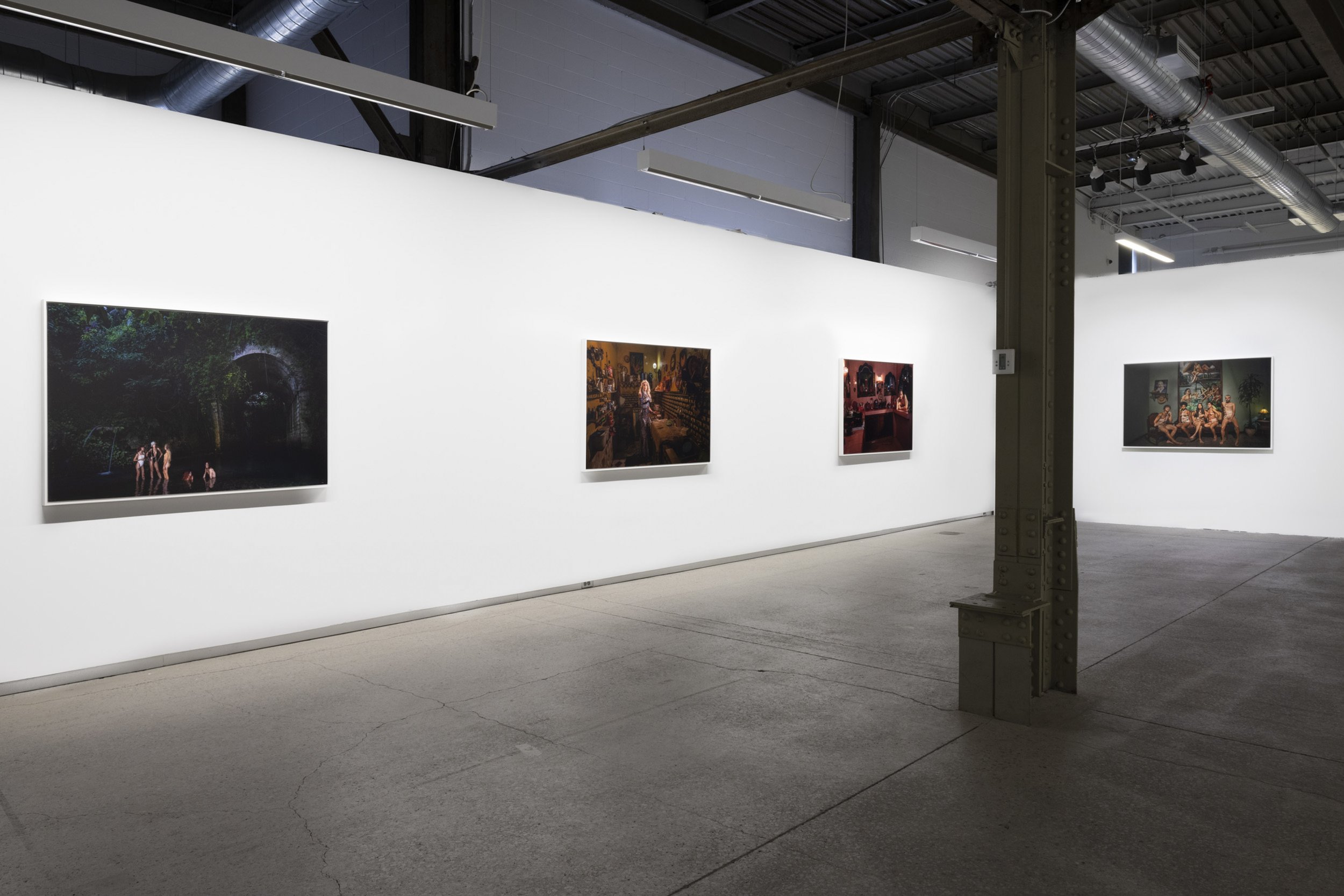
As the photography developed, departures changed its meaning. Friends and collaborators were leaving Cuba. Some of the social circles captured in the pictures were dispersing. A project about contemporary expression acquired the additional weight of recording people together at a time when remaining together could no longer be assumed.
With filmmaker Olivier Côté, Bouchard followed that thread into La Retaguardia, also titled The Ones Who Stay. The short documentary follows four young artists who remain in Havana. Its attention rests on the people continuing to make a life while others leave. The film premiered at the Festival du nouveau cinéma in 2025 and entered the New York Times Op-Docs series in 2026.
The next gathering is around belief
On October 28, 2026, PHI is scheduled to open Turn or Burn, titled Foi ou feu in French. Curated by Daniel Fiset, the exhibition draws on Bouchard’s encounters with evangelical street preachers. Photography, video and installation examine how belief becomes a public performance, and how an individual with a placard relates to larger systems of persuasion.
The subject offers an intriguing continuation of his working life. Someone who spent years helping organizations communicate now studies people seeking to persuade strangers in public. The museum setting gives visitors time to consider the image, the speaker and their own response. The exhibition is scheduled to run through March 14, 2027.
Bouchard still participates in business as an investor and adviser, including at soNomad. His artistic method also retains a practical streak. He advocates external deadlines, finishing work and taking small steps each day. He seeks criticism from other people, even when a project carries only his own name. There is little romance in a calendar, but calendars do have the advantage of producing exhibitions.
At seventeen, he pictured the photographer’s life through somebody else’s photographs. He has since built a company, built a gathering and learned to enter communities where his previous achievements provide no introduction. The camera has survived every change of job title. What fills its frame keeps changing.