There is a small act of rebellion at the center of Jaybird Studios: you cannot watch yourself work out. In the mat room, the mirrors are gone. Phones stay in lockers. The lights fall to candle level, infrared heat comes up, and a teacher asks clients to follow what a movement feels like instead of checking what it looks like. For a business born in the age of the gym selfie, the absence is the feature.
Jaybird calls itself a contemporary movement studio. In practical terms, it sells 45- to 60-minute mat and Reformer classes that borrow from Pilates, yoga, strength training, breathwork and meditation. In product terms, it sells a controlled change of state: arrive preoccupied, leave more present. That distinction explains almost every choice the company makes, from the surround sound to the strict no-late-entry rule.
Barbie Bent and Ariel Swan opened the first location in Vancouver's Yaletown in July 2019. Bent had already built Lagree West and knew the machinery of boutique fitness. Swan, a former professional dancer and one of Lagree West's original teachers, had spent roughly two decades in movement. A back injury led her to Pilates, which she has said extended her dance career by about five years. Bent brought the operator's brain. Swan brought the class product, musical instinct and physical vocabulary.
The Product Is Attention
The founders saw a gap between exercise and mindfulness. Pilates studios were often visually exacting. Yoga could feel culturally or stylistically inaccessible to some customers. Jaybird's answer was not a new piece of equipment. It was a stack of environmental decisions that makes ordinary distraction inconvenient.
Darkness reduces the invitation to compare. Sensation-oriented cues make students listen rather than copy. Loud, carefully sequenced music gives movement a shared pulse. Heat raises the physical intensity without requiring a more complicated choreography. A moment of rest opens and closes many formats, putting a frame around the hour. None of those ingredients is proprietary. Their coordination is the method.
“It’s not about how you look - it’s about how you feel.”Ariel Swan, co-founder and Head of Product
The menu is deliberately broad. The Burn and The Booty are higher-intensity strength formats. The Build adds more dynamic flow. The Balance moves toward stretching, self-massage and recovery. The Bowls centers a sound bath. The Breath uses rhythmic breathing, meditation and extended rest. The Being is Jaybird's more classical yoga offering. The Bird mixes the house vocabulary - flow, burn, meditation, breath and stretching - and includes a brief dance-party release.
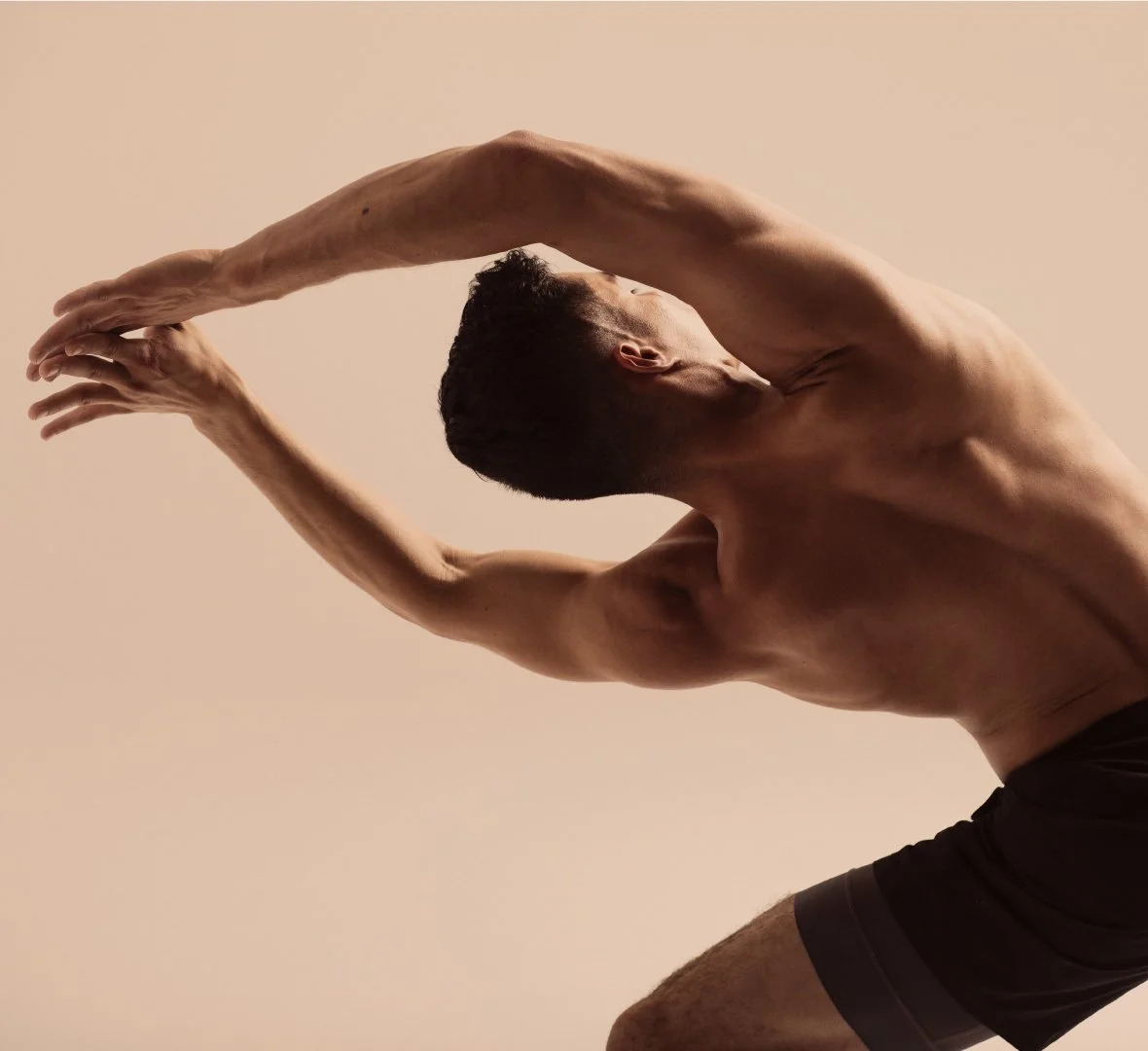
That range expands the audience beyond the fashionable Reformer regular. The company has described its core clientele as roughly 22 to 50, while noting that restorative formats bring in guests in their sixties and seventies. Reformer may attract a younger customer; stretching or sound can serve someone who does not want a punishing workout. The common thread is not intensity. It is inward focus.
A Beautiful Room With a Difficult P&L
Jaybird's first major expense is visible before class starts. The founders hired Vancouver design firm Ste Marie for Yaletown, choosing a hospitality-grade interior instead of a familiar white-box studio. Recycled cork, curved paths, odd art and warm brown material made the 227-square-meter space feel more like an urban hideaway. Later locations, designed with Futurestudio, received individual colour stories: green for Queen West, maroon for Yorkville and deep blue for Kingsway.
The exact fit-out cost is not public. That omission matters because the atmosphere is both Jaybird's advantage and its burden. Loud sound requires isolation. Infrared classes need mechanical planning and airflow. A room meant to transport customers cannot look temporary. The company spent years searching for its second Vancouver site. When a suitable Art Deco building on Kingsway appeared, the founders moved because the combination of space, neighbourhood density and limited adjacent neighbours was unusual.
Customers fund the model one reservation at a time. Jaybird sells prepaid credits, packs and recurring memberships at four, eight, twelve or up to one class per day. Its current public new-customer offer is CAD $99 for two weeks, with one visit per day. A loyalty program, Birdie Bucks, rewards attendance, referrals, memberships and merchandise purchases with perks ranging from drinks to classes and private groups. Twelve-hour cancellation windows and a CAD $20 late-cancel fee on the unlimited tier protect scarce class capacity.
Revenue, outside capital and valuation are not public. That makes Jaybird look less like a venture-funded wellness app and more like a private, site-by-site operating company. Growth depends on room utilization, retention, teacher quality and disciplined real estate choices. Brand collaborations, private groups and merchandise add revenue or acquisition, but the recurring class relationship is the engine.
What Failed First
Timing delivered the first brutal test. Jaybird opened in 2019, months before the pandemic made its defining product - people moving together in a warm, enclosed room - temporarily impossible. Jaybird now has a digital class library, but a screen cannot reproduce cork underfoot, infrared heat or room-scale sound. Its first lesson was plain: the experience had loyalty, but it was stubbornly physical.
The next test changed the founders' view of scale. Queen West opened in Toronto in 2022, shortly after pandemic restrictions, and Swan has called it the company's biggest risk. It proved that demand was not merely a Vancouver-founder following. Yorkville followed in December 2023 with a roughly 6,000-square-foot dual concept: mat in one room, 20 Reformers in another. Kingsway brought that combination back to Vancouver in 2025.
Yaletown. One brown, mirror-free room establishes the method.
Pandemic. The physical experience meets the limits of digital substitution.
Queen West. Toronto tests whether the brand travels.
Yorkville. Mat and Reformer share a larger format.
Kingsway. Vancouver gets the dual-concept model.
Montauk, Midtown, Nomad. A summer program is active; Toronto and New York are listed as coming soon.
Expansion also corrected an operational assumption. One studio in Vancouver and one in Toronto were harder to manage than denser clusters, Swan told Retail Insider. More locations in one city let managers and teachers move across the network and give employees a clearer ladder. That is the reasoning behind a planned Midtown Toronto site and the ambition to build several Manhattan locations rather than a lonely American flagship.
What Changed Their Minds
Jaybird began with two personal shifts. Swan's injury turned Pilates from training into a way to remain a dancer. Bent has described moving from an appearance-driven relationship with fitness in her twenties toward meditation and consciousness in her thirties. Their question changed from “How do I get stronger?” to “How can a workout hold a deeper experience?”
Operating the studios changed the playbook again. The team learned that lighting tasks is better than exposing people, that prop storage and water stations affect flow, and that soundproofing and ventilation are part of the product. They also learned not to clone the interior. Each location keeps the ritual but changes the scenery. The consistent system lives in teacher training, sequencing, sound and rules, not in a single shade of paint.
Five things another operator can copy
- Write one emotional job for the product, then make every environmental choice support it.
- Remove a category convention that creates the customer problem. For Jaybird, that was the mirror.
- Separate the repeatable method from the local expression. Training repeats; colour stories do not.
- Offer intensity across a spectrum so one promise can serve more use cases and ages.
- Cluster locations where staff, managers and loyal customers can move between them.
Where the Spell Breaks
The Jaybird model is specific enough to reject some customers, and that is healthy. Darkness can frustrate beginners who rely on visual demonstration. Loud music and heat can be unpleasant or inappropriate. People managing injuries, chronic pain, pregnancy or medical conditions may need professional advice and a non-heated alternative. Reformer rooms restore mirrors because safe alignment on equipment can require visual feedback. The company itself says the format is not for everyone.
It also does not travel cheaply. A small operator can copy a phone-free policy and improve verbal cues. Copying the full sensory package requires design capital, suitable mechanical systems, acoustic isolation, instructors who can lead without constant visual demonstration, and enough affluent urban demand to keep classes full. In a low-density market, or where customers prize convenience over ritual, the economics can fail before the candles are lit.
Competitors range from yoga and Reformer studios to Barry's, Club Pilates, Equinox, Othership and meditation apps. Jaybird sits between them: more restorative than a boot camp, more athletic than a sound bath, more theatrical than a conventional Pilates room. Its edge is coherence. The risk is that the theatre becomes the headline while instruction, consistency or hospitality slips.
New York will expose that tension. The company lists a Nomad location as coming soon and is running a Montauk summer program, while Midtown Toronto is also in the pipeline. Manhattan has density, customers accustomed to premium wellness and no shortage of sensory concepts. It also has punitive rents and infinite substitutes. Jaybird's test is not whether people like Pilates by candlelight. It is whether a carefully protected hour can remain personal when the flock gets much larger.