The traffic jam came before the yoga app. In 2007, Derik Mills was running late to class in Los Angeles and wondering why getting to something restorative had to be so irritating. His eventual answer was wonderfully literal: bring the teacher home. In November 2008, he and his brother Ryan put three classes online under the name YogaGlo. All three were taught by Jo Tastula.
That origin still explains Glo better than the usual wellness vocabulary. The company sells access to instruction without the journey, the parking or the obligation to make a particular studio timetable. Yoga, Pilates, meditation and fitness arrive through a subscription. The larger ambition is to make a teaching relationship portable. The commercial question is whether that relationship remains worth paying for in a market overflowing with video.
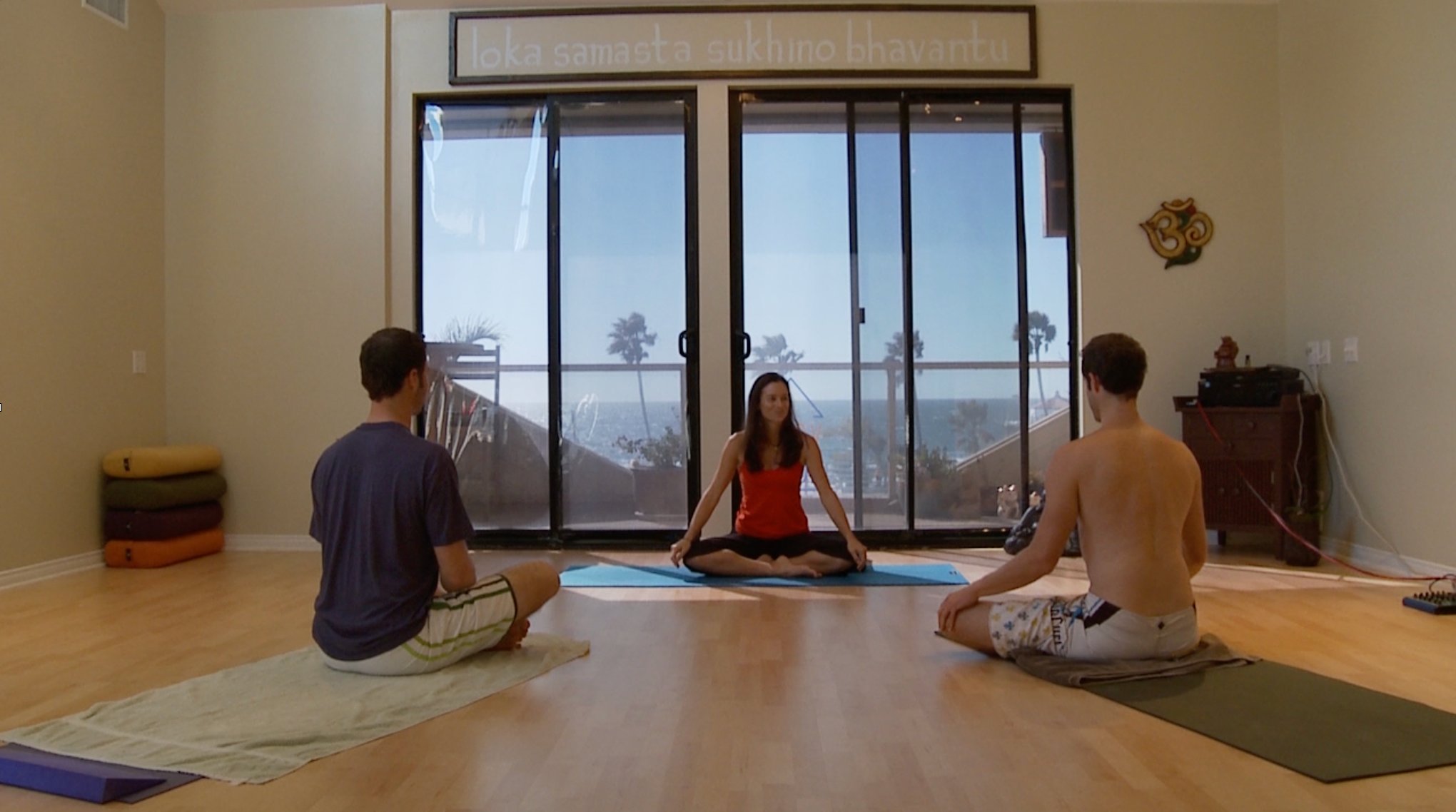
Three classes. One familiar voice.
Mills approached Tastula after class in Manhattan Beach in early 2008. They walked toward the pier as he explained his idea. By May 2026, when Glo celebrated her thousandth class, that early conversation had become part of the company’s institutional memory. The photograph from the first shoot shows a modest room and a teacher facing two students. It looks like an experiment because it was one.
The founders financed the beginning with their own resources. In his tenth-anniversary letter, Mills wrote, “We scraped together our own resources and launched YogaGlo in 2008.” He also said personal recommendations still accounted for most new registrations at that point. Those are historical claims, but together they describe a business built around people recommending a practice they already valued.
Glo’s publicly described workplace follows the same vocabulary: a teacher community, a dog-friendly office and breaks for yoga or meditation. Employer descriptions deserve to be read as employer descriptions. Still, the intended alignment is clear. The people selling a regular practice were meant to have room for one themselves.
A library with a human address book
Today Glo’s homepage advertises more than 12,000 on-demand classes and more than 1.4 billion cumulative minutes practiced. These are company figures, not a count of current subscribers. The useful distinction is between the breadth of the catalogue and the much smaller group of teachers any individual might actually follow.
Glo’s advertised cumulative figures, September 2026.
Glo serves beginners who need an entry point, experienced students who recognize instructors by name and people whose available time changes from day to day. A separate company landing page says more than two million people have used the service since 2008. That is reach across its history, not evidence that two million people are paying today.
The product accommodates different kinds of effort. Its fitness offering includes strength, cardio and HIIT alongside Pilates. Some workouts require no props; others use weights. A member can pursue a demanding session one day and choose a quieter practice the next. This breadth gives Glo a place between a specialist yoga school and a general exercise subscription.
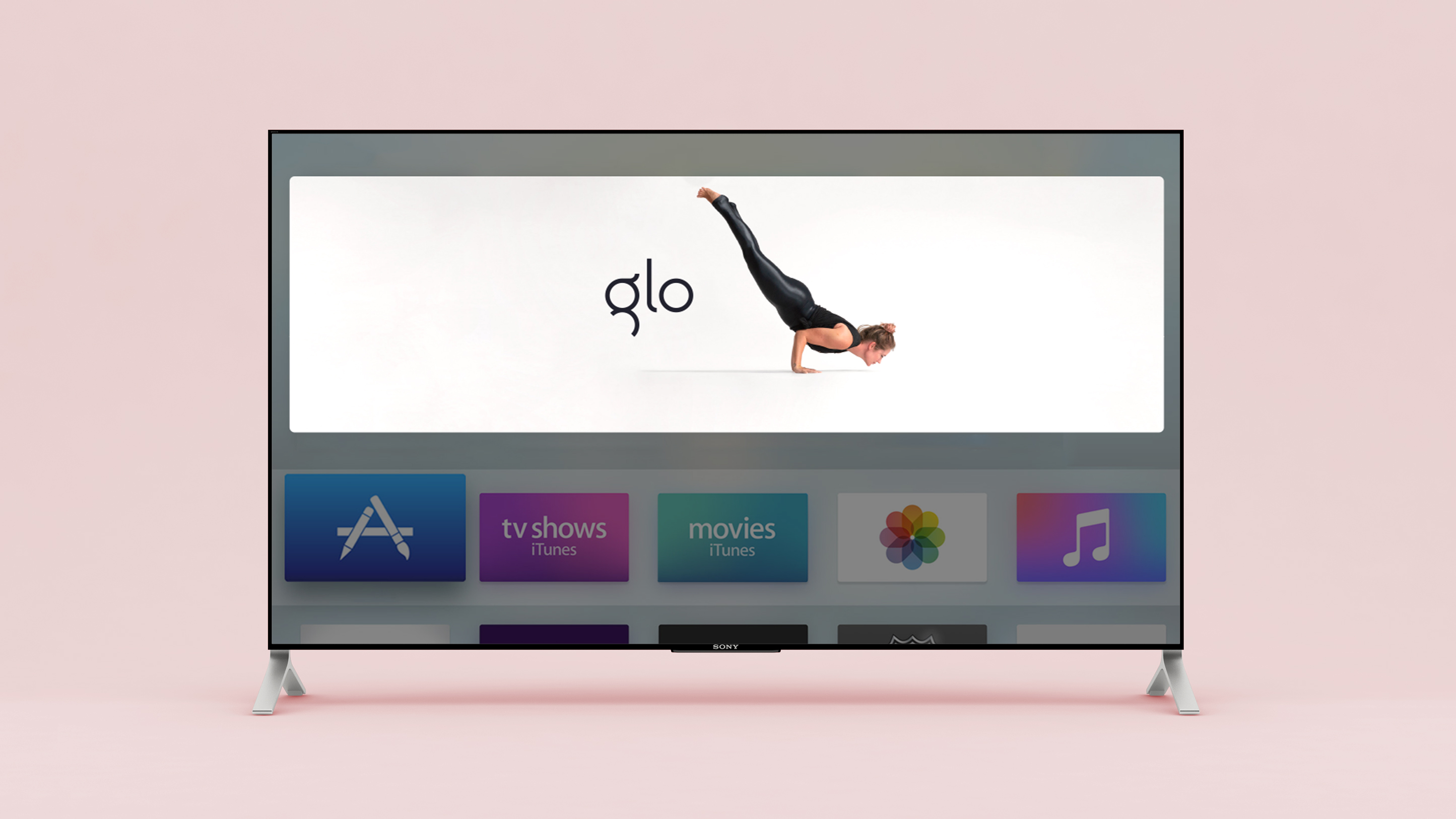
Distribution is deliberately ordinary. There are apps for Android, iPhone, iPad and Apple TV, plus the website. Mobile downloads allow offline practice, useful when the hotel Wi-Fi has other plans. The value lies in removing small excuses: the class is already selected, the teacher is familiar, and the journey ends at the mat.
The camera angle that became a problem
Glo’s effort to preserve the feeling of a class also produced its most awkward public episode. Its early filming setup used a stationary camera looking past students toward the teacher. In a 2013 explanation, YogaGlo said advisers had questioned showing students’ backs and recommended more elaborate production. The company believed its simpler perspective better reproduced being in the room.
Then it tried to protect that approach. YogaGlo received a patent covering a method of yoga-class imaging and streaming in late 2013. The company defended the protection as specific to its format. The dispute turned an aesthetic choice into a question about who could film yoga and how.
By October 2014, the position had changed. Mills acknowledged concern about how broad the patent appeared and whether it might restrict filming generally. YogaGlo announced that it would forfeit the issued patent and said it had never enforced it. A follow-up clarified that it was not seeking another patent.
“We have heard those concerns and carefully considered them.”Derik Mills, announcing the patent reversal, October 2014
The episode offers a useful business lesson. A distinctive presentation can be worth defending, but the method of defense affects how a community sees the company. Here, the attempt to protect the class experience generated anxiety around access to the practice itself. Glo’s reversal addressed the concern while retaining its belief that its visual identity mattered.
The price of pressing play
Glo currently lists a direct monthly subscription at $30 and an annual subscription at $245. The annual option works out to about $20.42 a month, paid upfront, and saves $115 against twelve monthly payments. The site offers a seven-day trial and advertises exclusive programs and live workshops for annual members. App-store pricing and applicable taxes can differ.
Usage changes the arithmetic more than the plan name. At the annual price, four classes a month work out to about $5.10 each. Twelve a month bring that figure to about $1.70. These are illustrative calculations, assuming a full year of use, not promises about anyone’s routine. The subscription becomes more economical when it becomes ordinary.
For a prospective member, a useful trial is therefore small and specific: choose two teachers, take a few classes that fit an actual week, and see whether returning feels natural. Sampling dozens of videos can test the library while telling you very little about whether you will use it on a tired Wednesday.
When the alternative costs nothing
Glo does not own the idea of good instruction online. Yoga International offers streamed and downloadable classes, filters by length and level, and an extensive educational proposition. ALO Wellness Club currently advertises free access to thousands of classes across movement and wellness. YouTube adds another enormous pool of free instruction.
Against those alternatives, Glo’s strongest argument is continuity: a recognizable teaching voice, substantial depth and programs that reduce the work of deciding what comes next. That is an editorial reading of its product, not proof of superior outcomes. A class count can get someone through the door. A teacher’s explanations have to persuade them to stay.
The limits are equally practical. Someone who enjoys a free channel and uses it consistently may have little reason to add a bill. A person seeking hands-on correction or the social pull of an in-person studio may find a screen insufficient. Removing the commute helps only if the home environment leaves enough space and attention to practice.
Glo is making room for the full hour
The company’s broadening ambition became explicit in 2018, when YogaGlo became Glo. Design agency Athletics developed the identity, language, interface toolkit and homepage narrative for a wider wellness offering. Its team read a translation of the Bhagavad-Gita while studying the product. That is a more unusual design brief than choosing a calming shade of green.
The expansion has continued through teaching formats. Featured by Glo, announced in June 2026, brings monthly guest instructors, structured programs and new on-demand classes to members. July brought Elena Brower’s Practice You journaling program: five modules combining teaching, movement, sitting and writing. The subscription is reaching into what students do around the physical practice.
August’s Studio Style announcement is especially revealing. Glo’s content adviser Sara Ivanhoe described years of adapting to shorter classes and busier schedules, followed by members asking for longer sessions. The response was a collection of 60-minute classes designed to include the preparation, progression and rest associated with a fuller studio experience.
This is a concrete example of listening without assuming every request points in the same direction. Short sessions solve a scheduling problem. Longer ones give a teacher more room to develop a practice. A substantial library can accommodate both, provided its organisation helps members find the right experience instead of simply confronting them with more choices.
The next class should remember the last
On September 5, 2026, Glo announced Jason Crandell’s Teacher’s Forum, a quarterly live gathering about the craft of instruction. The first session, scheduled for September 16, focuses on sequencing beyond a single class. Teachers, aspiring teachers and curious practitioners are invited; the format combines a presentation with discussion and questions.
Crandell’s premise goes to the heart of the subscription. When students drop between teachers, an instructor may know little about what came before or what follows. Planning across weeks creates an opportunity for development that isolated sessions struggle to offer. It also gives students a reason to return with a sense of direction.
That is the part other businesses can copy: start with a specific obstacle, preserve the human expertise customers came for, and give them a manageable next step. Glo’s original obstacle was traffic. Its continuing challenge is earning attention once the journey is gone. The camera can deliver a teacher to the living room. The next class has to make the student want to stay.
Explore the practice
Browse Glo’s classes and membership, check supported devices, or visit the Glo blog.
Follow Glo on LinkedIn, Instagram, X and Facebook. Watch teaching videos on Glo’s YouTube channel.
Read the latest on Studio Style and The Teacher’s Forum, or revisit the first test shoot.