General Partner at BOND Capital - $2B growth-stage fund Former President of Atlassian (2011-2020) Grew Atlassian from $20M to $2B+ ARR Atlassian IPO - Nasdaq 2015 at ~$5.8B valuation Board: HubSpot · Zapier · BrowserStack · Kobold Metals · Baseten Pioneer of product-led growth in enterprise SaaS Backed: ClickHouse · Baseten · Decagon · Zip · Vast Data Started career at Plumtree Software in 2000 BA Political Science & Environmental Science - University of Washington BOND Capital co-founded by Mary Meeker General Partner at BOND Capital - $2B growth-stage fund Former President of Atlassian (2011-2020) Grew Atlassian from $20M to $2B+ ARR Atlassian IPO - Nasdaq 2015 at ~$5.8B valuation Board: HubSpot · Zapier · BrowserStack · Kobold Metals · Baseten Pioneer of product-led growth in enterprise SaaS Backed: ClickHouse · Baseten · Decagon · Zip · Vast Data Started career at Plumtree Software in 2000 BA Political Science & Environmental Science - University of Washington BOND Capital co-founded by Mary Meeker
General Partner & Investor Profile

Jay Simons

General Partner @ BOND  |  Former President, Atlassian

He helped build a software company that charged $10 a year for teams of ten - and turned it into a $40 billion juggernaut. Now Jay Simons writes checks for the next wave from BOND Capital's perch in San Francisco.

$2B
BOND Fund Size
12
Years at Atlassian
$20M→$2B
Atlassian ARR Growth
38+
Investments at BOND
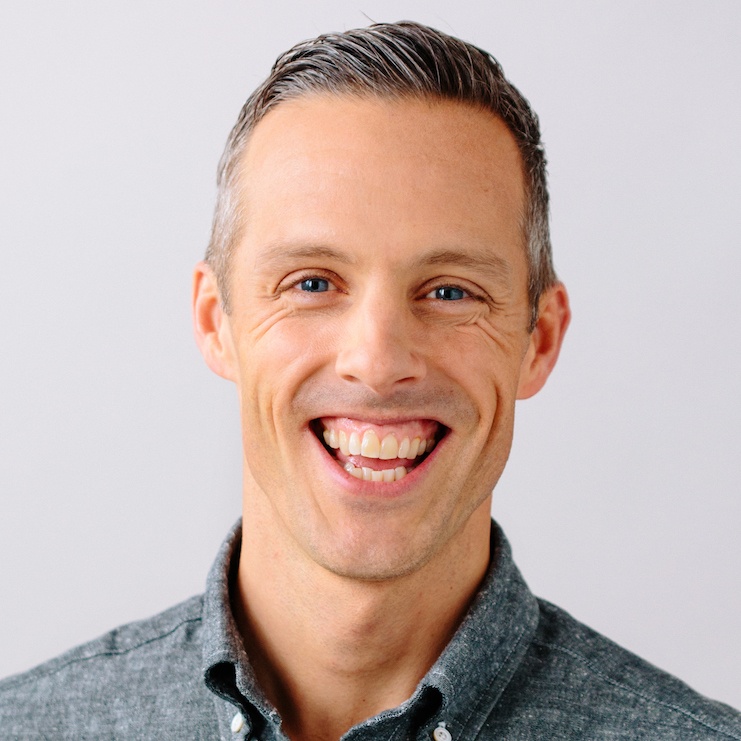
Jay Simons, General Partner at BOND Capital
Jay Simons / BOND Capital

From Aberdeen to the Atlassian Era

Aberdeen, Washington is a logging town on the coast of Grays Harbor County - an unlikely launchpad for a career in enterprise software. It's also where Jay Simons grew up, sketching out plans to become an environmental lawyer. He studied political science and environmental science at the University of Washington, worked at a law firm on the side, and arrived at graduation with a career path that had nothing to do with SaaS.

Then, around 2000, he took an entry-level sales job at Plumtree Software. Not a calculated pivot - just an opening. By the time Plumtree was acquired by BEA Systems in 2005, Simons had climbed to VP of Product Marketing and Strategy, leading the company's expansion across Europe and Asia Pacific. When Oracle swallowed BEA in 2008, he walked out with a title upgrade and a clear ceiling. He needed a different kind of company.

Atlassian was not famous in 2008. The Sydney-based software maker, led by co-CEOs Mike Cannon-Brookes and Scott Farquhar, was selling developer tools with a radically lean commercial model - no traditional salesforce, no lengthy deal negotiations. Simons joined as VP of Sales and Marketing, drawn to the experiment. Three years later, he was President. He would hold that title for nine years, presiding over a journey from $20M to over $2B in ARR.

"The business model ends up becoming the business. It's equally important as the market you're going after and the product that you build."
- Jay Simons, on the Atlassian philosophy
$5.8B
Atlassian
IPO Valuation (2015)
9
Years as
Atlassian President
400+
Global Channel
Partners Built
5+
Public & Private
Board Seats

The Operator Behind the Flywheel

The Atlassian Playbook

Most enterprise software companies of the mid-2000s sold the same way: a quota-carrying rep, a multi-stage trial, a discounted deal, a long implementation. Atlassian ignored all of it. Their pricing was public. Their trial was instant. Their support cost was treated as a product bug to fix - not a revenue center. When a customer called asking for a custom arrangement, the answer was no. Simons didn't inherit this model; he institutionalized it at scale.

The result was a distribution machine running on compounding product adoption. JIRA landed with one team; Confluence spread to three; Trello got an invite in the all-hands meeting. Simons described the dynamic plainly: "Once you get it going, it's going to kind of move at pace - it's not going to stop suddenly." That wasn't a boast. It was the mechanics of a self-reinforcing loop, explained by someone who had spent years tightening it.

At the center of the flywheel was a pricing principle that still sounds strange: charge less than you could. Atlassian famously offered a $10/year license for teams of up to ten users - a deliberate entry point, not a limitation. The logic was captured in a single quote from Simons: "We're not targeting the Fortune 500. We're targeting the Fortune 500,000." A low price gets in the door. Once inside, the product does the selling.

No Shortcuts, No Discounts

Discipline was the other half of the model. Atlassian's no-discount, no-negotiation policy was enforced even when it cost deals. They had no tiered packaging that would create confusion - "if you had four different versions, customers would just ask somebody to explain it," Simons noted. The company also ran internal quarterly earnings calls for two years before their 2015 Nasdaq IPO, treating financial hygiene as a competitive preparation practice. It was methodical to the point of being boring. Which was exactly the point.

R&D investment tells a similar story. Atlassian consistently spent twice as much on engineering as on sales and marketing. That ratio was not accidental - it was a deliberate signal about what the company believed built lasting value. It also made the no-salesforce model sustainable: the product had to be good enough to sell itself, so it had to be funded accordingly.

After Atlassian

In July 2020, after twelve years and a company that had crossed a $40 billion market cap, Simons stepped down as President. The move to venture capital was not a reinvention - it was a translation. He joined BOND Capital in November 2020 as General Partner, partnering with Mary Meeker and a team built for growth-stage companies navigating exactly the kind of scaling challenges he had just spent a decade solving firsthand.

BOND's debut fund in 2019 had already raised $1.25 billion. By the time Simons arrived, the firm was scaling toward its current $2 billion vehicle. His focus: emerging enterprise software companies with strong product distribution fundamentals. Not coincidentally, those tend to look a lot like early Atlassian - product-first, channel-aware, and structured for compounding rather than quick wins. His portfolio includes Baseten, ClickHouse, Decagon, Zip, Vast Data, AlphaSense, Postman, and Retool.

The Kobold Metals Thread

The board seat at Kobold Metals is worth noting. Kobold uses AI to identify deposits of nickel and copper - materials critical to the clean energy transition. It's a long way from SaaS metrics, but not from the person who studied environmental science at the University of Washington with dreams of environmental law. Simons doesn't wear that history as a brand, but it surfaces in the choices: when you sit on the board of a mining company trying to accelerate decarbonization, it's not a random bet.

The Investor Thesis

Simons invests across enterprise, fintech, AI, consumer, and SaaS, at stages from seed to Series B and beyond. His sweet spot on check size is around $8 million, ranging from $1 million to $25 million. He co-invests frequently alongside Lightspeed, Sequoia, and Benchmark - firms that operate at the intersection of growth-stage capital and founder-first culture.

What he brings to portfolio companies is less about pattern matching and more about the specific mechanics of scaling software: how to build a channel without breaking it, how to price for future expansion rather than upfront capture, how to grow a company across three products when the first one hasn't even plateaued. These are not theoretical frameworks. They are lessons from running an organization that turned $20M in ARR into $2B while keeping the founding playbook mostly intact.
🎓
University of Washington
B.A. Political Science & Environmental Science
Worked at a law firm during studies; had plans for environmental law before tech intercepted.

26 Years in Enterprise Software

1998
Joined Plumtree Software - an entry-level sales role that became a seven-year apprenticeship in enterprise software. Oversaw expansion into Europe and Asia Pacific; reached VP of Product Marketing & Strategy before the BEA acquisition.
2005
Plumtree acquired by BEA Systems. Joined as VP of Marketing - running enterprise marketing for one of the era's leading middleware vendors. BEA was itself absorbed by Oracle three years later.
2008
Left Oracle (via BEA) and joined Atlassian as VP of Sales and Marketing - a pre-IPO, founder-led Australian software company with an unconventional distribution model and an unusually low-friction pricing structure.
2011
Promoted to President of Atlassian Corporation Plc. Took ownership of all revenue-generating operations: marketing, sales, channels, and customer success. The product suite was growing; the channel network was expanding; the machine needed an operator.
2015
Atlassian IPO on Nasdaq at approximately $5.8B valuation. The company had rehearsed public quarterly reporting for two years in advance. Simons called the IPO "just a mile marker" - the company's long-term durability was the real goal.
2017
Joined the HubSpot Board of Directors - his first board seat at a public company. Now chairs HubSpot's Compensation Committee.
2020
Stepped down as Atlassian President after 12 years and joined BOND Capital as General Partner. BOND, co-founded by Mary Meeker, manages $2B and focuses on growth-stage technology investments.
2021-Present
Active investing at BOND, with 38+ confirmed investments. Key portfolio companies include Baseten, ClickHouse, Decagon, Zip, Vast Data, AlphaSense, Postman, and Retool. Board seats at HubSpot, Zapier, BrowserStack, Kobold Metals, and Baseten.

The Three-Legged Stool
That Built Atlassian

Simons describes Atlassian's commercial model as three reinforcing pillars. Remove any one and the stool tips. Together they created a growth machine that could scale globally without a traditional quota-carrying salesforce.

01
High-Velocity Self-Service
Customers land themselves. Public pricing, instant trials, frictionless onboarding. No gatekeeping, no negotiation. "We believe that for the most part, people really want to help themselves."
02
Global Channel Network
400+ partners worldwide who extend reach without cannibalizing it. Atlassian built symbiotic relationships - partners who sell, implement, and support in markets where direct presence isn't efficient.
03
Strategic Enterprise Layer
The enterprise motion arrives late, after product adoption is already deep. By the time a large company's procurement team gets involved, dozens of teams are already paying customers. Leverage, not cold starts.

Jay Simons on Building Software Companies

"Build a product that compels people to remark about it, which is sort of the definition of word of mouth."

"We're not targeting the Fortune 500. We're targeting the Fortune 500,000."

"We spend twice on R&D that we do in sales and marketing."

"We want Atlassian to be an indelible, 50-year company."

"The goal in a true product-led growth model is to remove as much friction as possible."

"We took our time. We probably could have gone public two or three or four years earlier. The IPO is just a mile marker."

Where He Sits at the Table

HubSpot
Board Member · Since Jan 2017 · Chair, Compensation Committee
Zapier
Board Member
BrowserStack
Board Member
Kobold Metals
Board Member · AI-driven mining for clean energy
Baseten
Board Member · Series D · $150M (Sep 2025)

Companies He Backs at BOND

Baseten
AI Infrastructure
Model deployment and inference infrastructure. Series D - $150M (Sep 2025). Board seat.
ClickHouse
Database
OLAP database for real-time analytics. Series C - $350M (May 2025).
Decagon
AI / Enterprise
AI customer support agents. Series C - $130M (Jun 2025).
Zip
Procurement SaaS
Procurement orchestration platform. Series D - $190M (Oct 2024).
Vast Data
Data Infrastructure
Universal storage platform for AI workloads at scale.
AlphaSense
AI / Fintech
Market intelligence platform using AI to surface financial insights.
Postman
Developer Tools
API development platform used by millions of developers worldwide.
Retool
Developer Tools
Low-code internal tool builder for engineering teams.
Checkr
HR Tech
Background check platform modernizing employment screening at scale.

The Specifics That Tell the Story

🌲
Jay grew up in Aberdeen, Washington - the same small logging town that produced Kurt Cobain. His path out was environmental law school, not rock music. Tech intervened either way.
⚖️
He worked at a law firm while studying political science and environmental science at the University of Washington. The career that never happened still shows up in his board seat at Kobold Metals - AI-powered sustainable mining.
💲
Atlassian charged $10/year for teams of up to ten. Not as a loss leader - as a deliberate strategy to land wide and expand deep. Simons called it maximizing future value over upfront capture.
📊
Atlassian ran internal quarterly earnings calls for two years before their 2015 IPO. Preparation as competitive advantage, not bureaucracy. A two-year rehearsal for a public debut that hit $5.8B on day one.
📖
His reported favorite book is "The River Why" - a 1983 novel about fly fishing and self-discovery set in the Pacific Northwest. A quiet nod to where he came from, readable between the lines of a career built in San Francisco.
🤝
At BOND, he partners alongside Mary Meeker, one of the most influential internet analysts turned investors of the past 30 years. The firm's founder-friendly reputation tracks closely with Simons' operator-first perspective.