The useful introduction came in December 2005. Jared Shusterman was trying to persuade jewelry retailers to buy direct-mail marketing when a manufacturer presented a more interesting arrangement. Help its retailers advertise the products they had already bought, and the manufacturer would contribute up to half the cost. A young business acquired something more valuable than another prospect: a reason for the next person to take the call.
The manufacturer had an interest in what happened after delivery. Unsold merchandise could come back. Retailers wanted customers but had limited time and advertising expertise. Shusterman’s service could sit between the two, making a shared commercial interest easier to act on. The middle, usually treated as an inconvenience, began to look like a place to build.
A bank job, a trade show, a spare room
He had grown up in Miami, in a middle-class family that put considerable weight on education. At the University of Virginia, he studied finance and marketing. San Francisco followed, along with an investment-banking job at Thomas Weisel Partners in its internet and online advertising practice. It was a close view of technology businesses from the financial side of the table.
At Thomas Weisel Partners, his work as lead analyst on corporate-finance and acquisition transactions included News Corporation’s purchase of Intermix Media, the owner of Myspace. He would later earn an MBA from Northwestern’s Kellogg School of Management. But the move into entrepreneurship began with a much smaller proposition than a media acquisition: helping a jeweler send a customer something at the right moment.
The original venture was called TargetMailers. Its early offer involved small direct-mail programs tied to birthdays, anniversaries and other occasions. At the JCK jewelry trade show in Las Vegas, Shusterman tested whether retailers wanted that help. He was in his early twenties, without a mortgage or a family of his own. He considered that a sensible moment to risk a venture.
Back in South Florida, he moved in with his parents and hired a developer to make a prototype. A retailer could upload a customer list, or purchase one, and order a mailing online. There were interested prospects to call. There was also software capable of breaking halfway through a demonstration, which gives the phrase live demo rather more suspense than a salesperson usually intends.
“I was the customer service agent. I was the sales person.”
Jared Shusterman, recalling the early business in 2017
The customer who brought other customers
Interest at a trade show did not make follow-up easy. Retailers were busy, and the prototype exposed needs he had not anticipated. Then came the manufacturer’s introduction. Calling on behalf of a business the retailer already knew gave the conversation credibility. Offering a subsidy gave it a practical inducement. Shusterman could reach a network through an existing relationship.
This discovery changed whom he sought as a customer. Rather than persuade one small business after another to join a generic marketing program, he could work with manufacturers that wanted their retailers to sell more. Each manufacturer brought a reason to cooperate and a way into the channel. For a business financing itself, that mattered: distribution did not have to begin with an enormous advertising budget of its own.
The product had to change with the idea. In January 2006, he brought his developer into the company as its first employee. The original code was discarded. The replacement let a manufacturer manage marketing programs and retailers log in to see the advertising available to them. It launched in June 2006. The company’s future lay in serving both sides of the relationship.
A relationship became a route to market. Conceptual diagram of the early pivot.
Follow the money to the local counter
Jewelry turned out to be one setting for a wider problem. Brands selling through independent businesses needed a way to help those businesses advertise locally while preserving the brand’s requirements. Different industries called for different tactics. SproutLoud expanded beyond direct mail into a broader collection of marketing services, connected through software.
The independent part was consequential. A local seller has its own customers, priorities and judgment about spending. Headquarters cannot assume that sending an approved advertisement will cause somebody to use it. By 2017, Shusterman described a business serving more than 60 brands and roughly 60,000 to 70,000 channel partners. He also described the deliberate move toward larger enterprise customers, which had meant losing some smaller accounts along the way.
Funding became central to his thinking. In a reimbursement arrangement, the partner pays, submits a claim and may discover that the campaign failed to meet the rules. A relationship intended to encourage cooperation can produce a disagreement over a bill. Putting both parties on a shared platform made the money and the marketing easier to follow together. Accounting controls belonged in the product alongside the creative work.
The emphasis showed up in the interface. SproutLoud added guidance for launching campaigns and made available funding visible in its navigation. Marketing assistance had to be findable and usable. A subsidy buried somewhere in a portal has a distinguished resemblance to a gift whose wrapping requires professional equipment.
SproutLoud sales in 2016, as reported by Shusterman in 2017. The figure describes sales, rather than a disclosed valuation or acquisition price.
Growth brought outside recognition. In 2011, SproutLoud ranked number 27 on Deloitte’s North American Technology Fast 500. The company attributed its performance to responding to customer needs through development and account management. By the 2017 interview, Shusterman put its workforce at about 180 people. A business started with personal money had become an organization with many more relationships to maintain.
The company needed a conversation, too
Some of those relationships needed repair. By the time its workplace practices were described in 2018, SproutLoud had confronted a cycle of turnover and declining morale. Shusterman and the other senior leaders took responsibility and sat down with employees. The response included more regular conversations between managers and staff about progress, obstacles and possible solutions.
The routine mattered. Managers were meeting employees at least twice a month. The company also examined compensation against market data. Listening became part of how the place was run, with employees encouraged to help propose answers. The account was candid about remaining difficulties, which makes it more useful than a photograph of smiling people accompanied by the word culture.
There was a team around the founder. Gary Ritkes, Anjan Upadhya, Dave Kinsella and David Spinola were among the leaders involved in that period. By 2022, Spinola had moved from CFO to president and Ritkes, a founding partner, had become chief revenue officer. Holly Dennis, who had joined as a marketing assistant in 2013, was vice president of client services. The company was making room for people to take on different responsibilities.
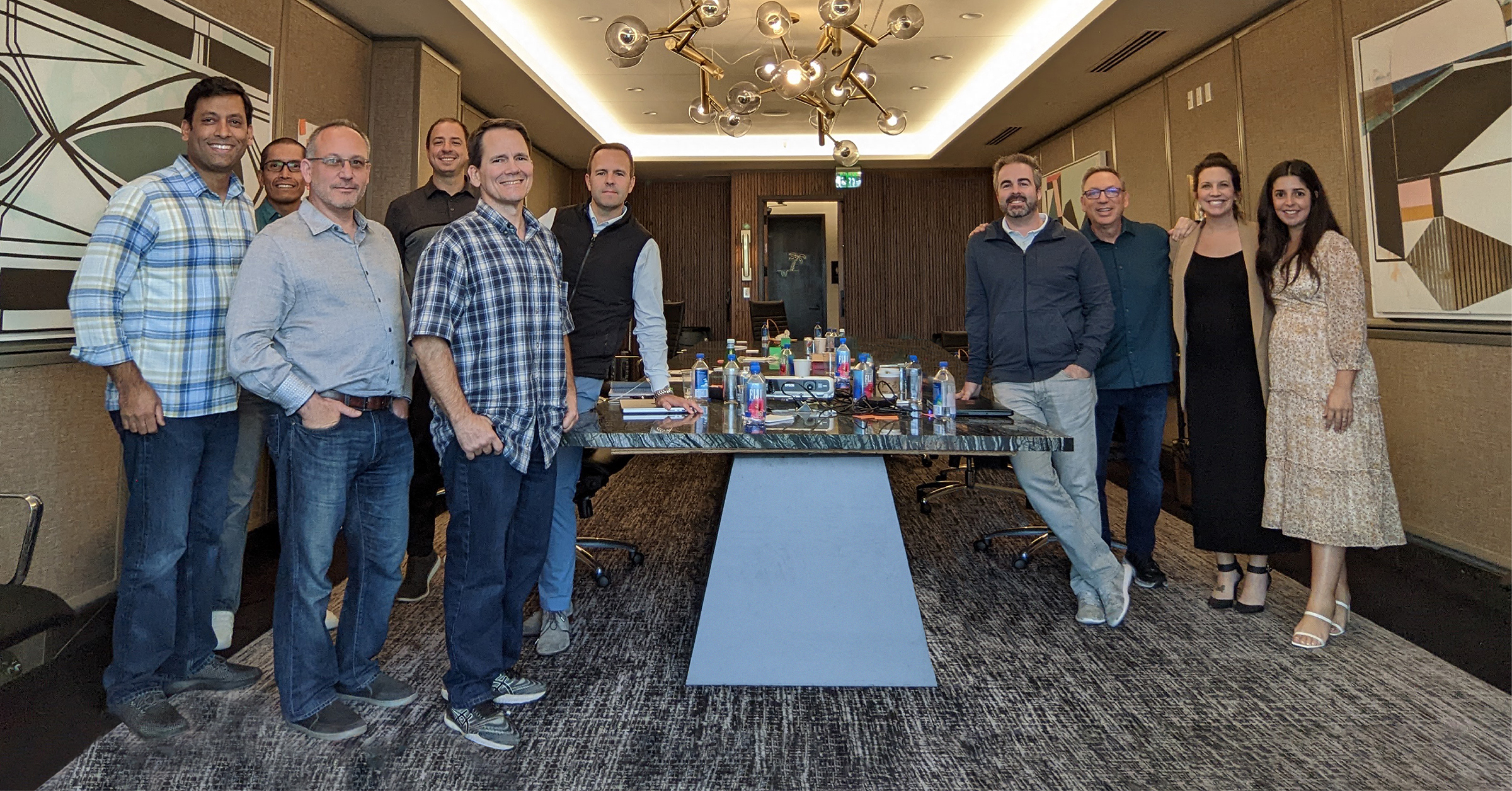
An exit, and the trouble with having no plans
On July 2, 2024, Ansira announced that it had acquired both SproutLoud and BrandMuscle. The combination brought together companies working with distributed networks of brands and partners. Financial terms were not disclosed. Shusterman was still identified as SproutLoud’s founder and CEO in the announcement.
He subsequently became president of Ansira, with a remit covering strategic planning, corporate development, product strategy and technology investment priorities. It was another change in scale: the founder of the direct-mail experiment was helping decide how a combined business would develop. The job also included the integration work that follows a transaction after the announcement has stopped being news.
When he announced his departure in 2025, he thanked colleagues and described his contribution to the integration. He also offered an unusually appealing itinerary: no plans. His wife, he added, expected the arrangement to be brief. The joke supplied a human measure of the transition. Nearly two decades of building a company had ended with an open calendar and someone at home declining to take it too seriously.
A different kind of participation
By 2026, Shusterman was the founder of SureVoter. The subject had changed to civic life: helping people understand their ballots, contact representatives and stay informed. The organization describes its planned civic AI, Surely, as nonpartisan and free for citizens. At the time of this profile, its homepage offered a waitlist and described the service as coming soon.
He is also writing Flagged, a newsletter about the structures shaping representation. Its essays examine political frustration and the distance between citizens’ views and the institutions meant to serve them. These are his arguments and ambitions, with the new project still having to earn the trust its mission requires. Building a tool for civic participation sets a different test from building one for advertising.
There is a continuity worth considering, even across that distance. His early business grew when he understood the relationship around the person he was trying to reach. His workplace required listening when routines were failing employees. His new venture asks how institutions can hear individuals more clearly. The recurring question is practical: what has to happen between offering participation and making it possible?
Shusterman’s career keeps returning to that intervening space. A manufacturer’s introduction helped him see it in 2005. A new venture has given him another reason to look.