Jane Melia’s first demonstration home had a considerable advantage over a showroom: she had to live in it. Before there was a neat box called the Harvest Pod, there were components spread across a wall, wires going where wires needed to go, and a family participating in an unusually ambitious furnace replacement. Plumbing rarely gets an origin story. This plumbing earned one.
The problem began in her old Bay Area house. Its gas heating needed replacing. Melia, a civil engineer with a doctorate in fluid mechanics, wanted an electric alternative that would cut emissions without punishing the household budget. Her husband, energy specialist Pierre Delforge, shared the brief. They were willing to change their equipment. They also wanted to change when it worked.
That last requirement became the interesting part. A house gets cold on a human timetable. Renewable electricity arrives on a different one. Put a tank between the two, and the mismatch becomes something an engineer can work with. In 2019, the household experiment became Harvest Thermal.
The trouble with the clock
A heat pump moves heat rather than making it by burning fuel. Pair it with an insulated water tank and it can put warmth aside for later. Harvest’s controls coordinate the heat pump, storage and delivery, allowing electricity consumption and household comfort to follow different schedules. The water holds the energy; the software minds the clock.
In her 2024 conversation with David Roberts, Melia emphasized the value of using an off-the-shelf tank. Familiar equipment helps keep the system practical. A typical installation she described used a 119-gallon tank. The novelty lay in how the components worked together, including using stored hot water to heat air for the house.
The distinction matters to her story. Melia was looking beyond the machine outside her home to the electricity system around it. Solar generation can be abundant when people need relatively little heat. A family’s evening demand can arrive after that opportunity has passed. Thermal storage gives the household a way to carry useful energy across the gap.
An engineer with more than one toolkit
Melia studied civil engineering at Imperial College London and earned her PhD at Cambridge. Her early work included analyzing wind-farm performance. Later came corporate strategy and business roles. She has lived in the San Francisco Bay Area since 2004, carrying experience across engineering, technology and the commercial decisions that determine whether either reaches a customer.
Her working life includes HP, solar company SolFocus, energy-storage business EnerVault and quantum-security company QuintessenceLabs. It is an itinerary with a few unexpected connections. The person explaining a water tank today previously worked on persuading organizations to take quantum-era security seriously.
At QuintessenceLabs, she was vice president of strategic business development and co-chaired the Cloud Security Alliance’s Quantum Safe Security working group. A 2018 survey found a familiar gap between awareness and action: respondents understood that a problem existed more readily than they understood what to do about it. Melia’s work included helping explain the available responses.
Heating brings that communication problem into the home. A homeowner can agree with electrification in principle and still need to understand the equipment, the installation and the bill. Her career has repeatedly occupied that space between an unfamiliar technology and somebody deciding whether to use it.
Making the mess disappear
The first home system offered little disguise for its complexity. Melia described a wall of separate components that gradually became a controller and then an integrated Pod. Factory assembly could improve consistency, reduce work in the field and make the result rather easier to look at. Nobody should need affection for exposed wiring to enjoy a warm room.
The household also provided a place to ask inconvenient questions. How should the tank be calibrated? What happened when stored heat ran out? How did temperature layers behave inside it? Melia recalled that “our home was also the first laboratory.” Domestic life supplied the conditions that a diagram could politely leave out.
“Everything, all the mess is inside it.”
Jane Melia, on the integrated Harvest Pod
She has credited colleagues including Pierre, Evan Green and Mattias Bottner for the engineering. The finished product came from a team’s work. Her home’s contribution was to keep presenting the experiment with an elementary test: could the people living there comfortably carry on with their day?
The investors, the factory and the plumber
A home-heating purchase carries an awkward burden for an inventor. The buyer is usually trying to solve a problem and get on with life. Every extra explanation, unfamiliar component or complicated installation competes with that wish. The product has to make its advantages legible while leaving its owner free to have other interests.
Turning that experiment into a company introduced another kind of resistance. Melia has described investors who were uneasy about funding a physical product, even when its value depended heavily on software and controls. Climate infrastructure, inconveniently for a pitch deck, tends to require things that occupy space.
Her relationship with investor VertueLab began after Ken Vaugh heard her pitch to E8 Angels. That connection brought more than capital. Working through diligence helped Harvest develop ways to demonstrate impact, including a carbon calculator that could be used with other partners and investors. Measuring the benefit became part of making the case.
Distribution demanded similarly practical work. In June 2023, Harvest announced a partnership with Small Planet Supply to reach Washington, Oregon and British Columbia. Expansion depended on people able to supply and install the equipment. A good concept still needed a route into a garage or tank closet.
- 2019
Harvest is founded.
- 2023
Pacific Northwest distribution partnership announced.
- 2024
$1.65 million California manufacturing grant announced.
In July 2024, Melia announced a $1.65 million grant from the California Energy Commission’s Realizing Accelerated Manufacturing and Production program. The application had been submitted more than two years earlier. Nine startups out of fifty received funding. Behind that announcement sat supply-chain planning, manufacturing resources and the effort to get equipment to contractors reliably.
That September, Harvest announced selection for a $2 million US Department of Energy grant for further development. The company described work extending the system’s heating capacity and compatibility with different ways of distributing heat. Each extension addressed another variation on the house where the idea began. The market consisted of actual buildings, with their own stubborn arrangements.
A tank goes to London
By summer 2024, the story had traveled considerably farther than the utility room. Melia attended Earthshot Innovation Camp during London Climate Action Week, invited by the Earthshot Prize and Bloomberg Philanthropies. Her account of the trip had room for the environmental mission and for the catering.
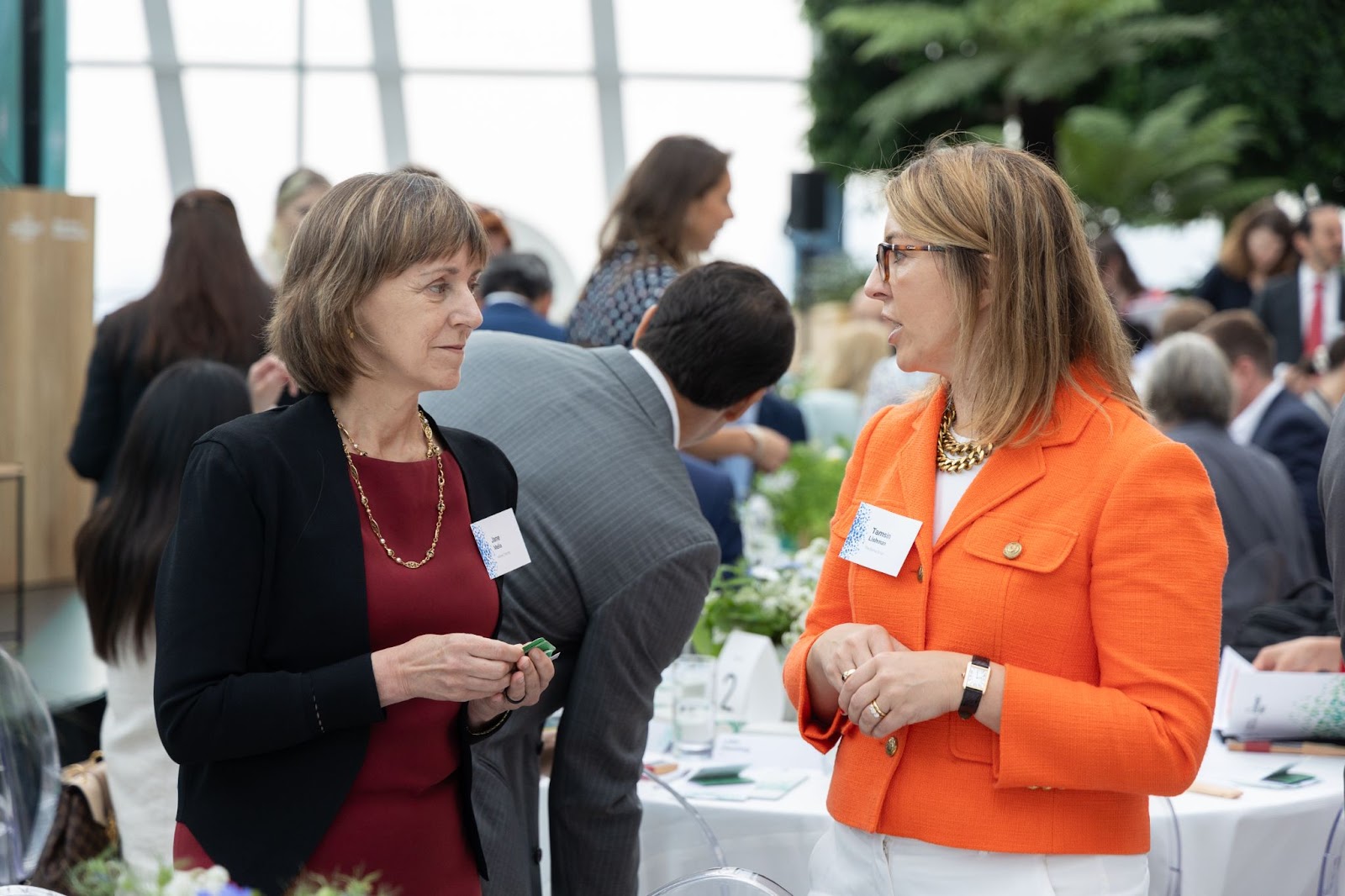
She discussed Harvest with Michael Bloomberg and reported, with a salesperson’s sense of proportion, that he declined to buy a system on the spot. She met fellow heating entrepreneur Tamsin Lishman of Kensa, encountered businesses working on mushroom leather and watershed restoration, and joined a networking session with the Breakthrough Energy community.
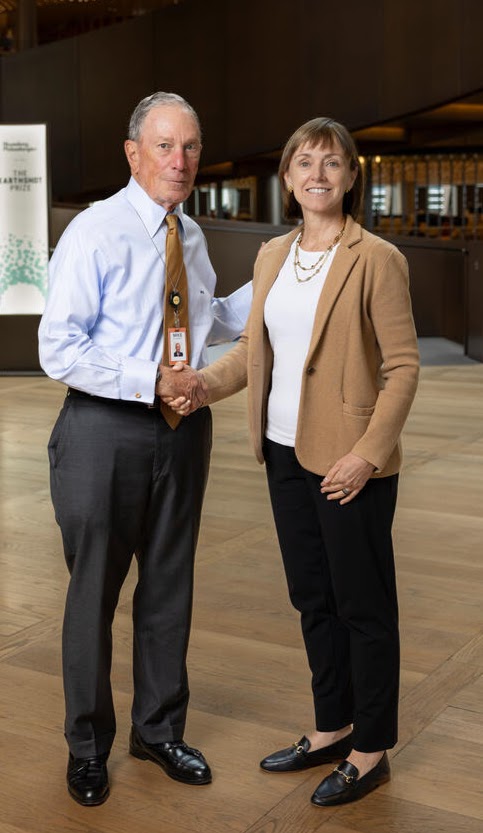
It was participation in a community, rather than an Earthshot win. Melia’s report made that distinction clear while retaining the pleasure of being there. Her enthusiasm extended to the vegan food. An engineer can care about planetary systems and lunch in the same dispatch. Readers are entitled to be grateful for both.
A different chair at the same table
Recognition accumulated at home, too. In March 2025, Harvest announced Melia’s inclusion in Inc.’s Female Founders list. But the more consequential development for her working day arrived with a change in leadership. In July, Harvest announced Ken Munson as CEO and Melia’s transition to Chief Revenue Officer.
The company had reached hundreds of installations in the United States and Canada. Melia would concentrate on commercial strategy, market expansion and revenue, while Munson brought experience in energy systems and grid-edge businesses. She described the move as a chance to devote her attention to expanding Harvest’s commercial footprint.
The allocation makes sense beside her earlier career. A founder who can discuss fluid mechanics also has years of experience in product marketing and business development. At this stage, more of her time could go toward customers and partners. A change of chair left her close to the work that determines how widely the invention travels.
By February 2026, she was discussing the transition alongside a larger point about climate technology: the financial case has to work. Her conversation with Chris Jones on The Plucky Bamboo Podcast covered investor rejection and the difficulty of changing behavior. Engineering a working system was one challenge. Getting people to adopt it required sustained commercial effort.
The luxury of forgetting about it
For all the technology in her career, Melia remains fond of work with a tangible result. In June 2026, she said that she builds patios and dry stone walls in her spare time. The engineer is still there, interested in buildings and in how separate pieces can be made to function together.
She has also called herself an introvert and described preparation as useful in investor conversations. Her ambition for Harvest is to move from hundreds of deployed systems to thousands and tens of thousands. The scale changes; someone still has to understand the proposition, approve an installation and turn on a tap.
The original test remains a useful one. Her family wanted a comfortable home with different energy economics. Future customers will bring their own houses, expectations and questions. Melia’s job is now to help a system born from her particular problem become a sensible choice for theirs. Success can be pleasantly uneventful: warm rooms, hot water, and no reason to think about the wires.