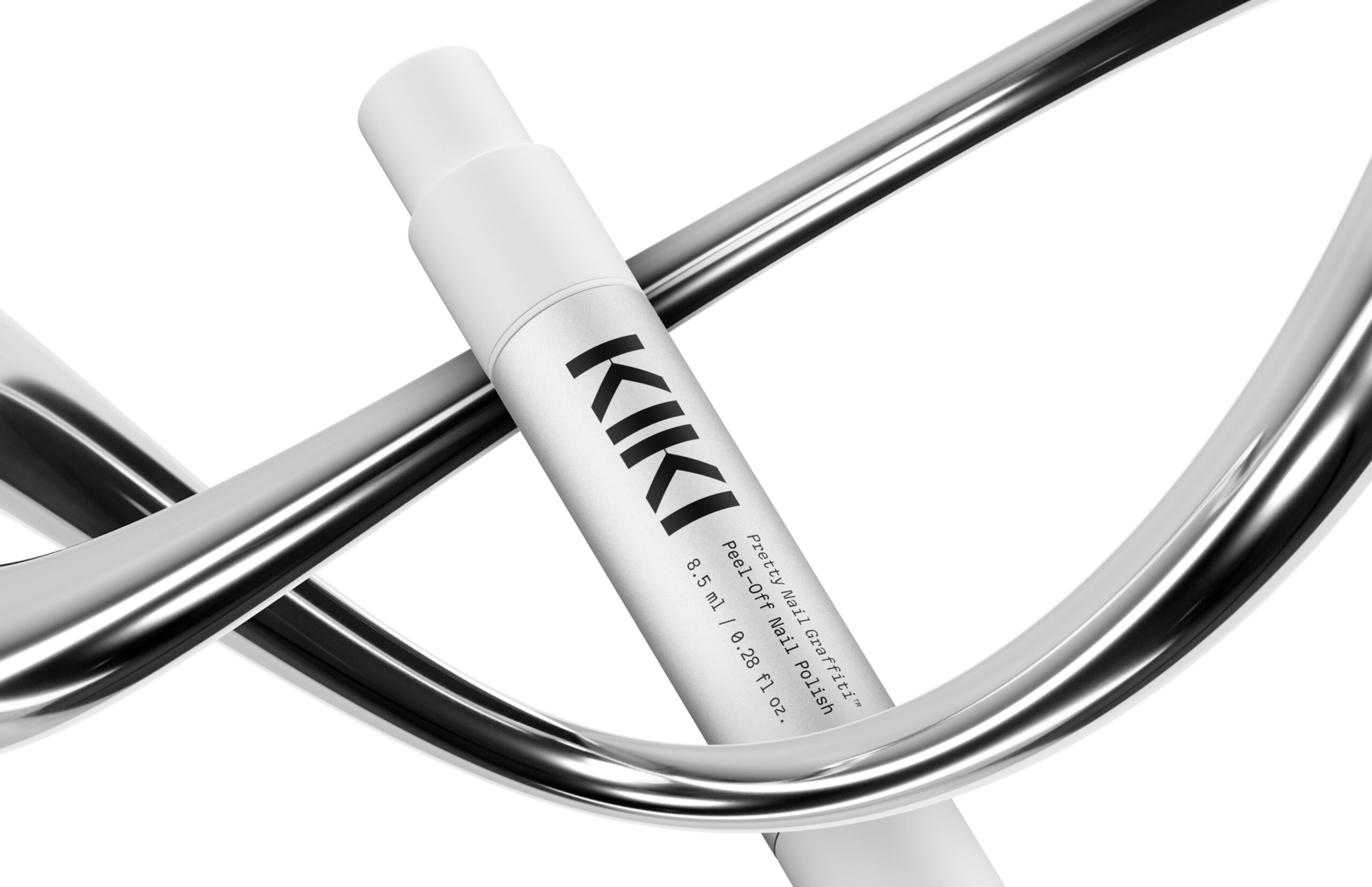
Pearl is a modest name for a change in the pecking order. In July 2023, KIKI World announced an iridescent nail-polish shade selected by its customers. The product came in a clickable pen. It could be painted on and peeled off. Before anyone wore it, however, people had done something less familiar in a beauty launch: they had helped decide that it should exist.
Jana Bobosikova, one of KIKI’s three co-founders, had spent years working on the other side of such decisions. Her career included brand leadership, marketing and sales. She understood the distance between an idea that looks lovely in a presentation and an object that somebody actually buys. With KIKI, she began moving the customer closer to the beginning of that journey.
The Pearl announcement makes a useful starting point because it is so wonderfully specific. Nobody needs a lecture about the future of commerce to understand choosing a colour. You look at the possibilities. You have a favourite. You would like someone to listen. KIKI gave that small preference a route into product development.
Behind the pen sits a question that runs through Bobosikova’s work at KIKI and the research and design platform 12:01: how much of a brand’s direction should belong to the people who use it? Her answer has required both software and the unglamorous skills of making things. The ballot may be digital. The brush still has to work.
Before the ballot, the business
Bobosikova was born in Prague. By the time she spoke on the Coffee & A Good Vibe podcast in 2019, she was working as managing partner of Epic Brands, with a career involving consumer markets across several countries. Her earlier roles included senior North American brand leadership at Vita Liberata and global marketing and sales at Marque of Brands.
Those jobs put her near the machinery of consumer demand: positioning a product, getting it into a market and persuading people to make room for it. The experience gives her later interest in customer participation a practical context. She had worked on the business of reaching the buyer before she began changing when the buyer could enter the conversation.
There was also a period of learning the American industry from the outside. In a public recollection, she described arriving in the United States, reading WWD and sending LinkedIn messages to strangers to find her way into the business. Years later, seeing her own name described in WWD as a technology innovator in beauty carried a particular satisfaction. The publication she had studied had begun studying her.
It is a more human career marker than a job title. An industry can look like a closed dinner party when you first arrive. Her recollection supplies a concrete action: she read, then contacted people. There is no need to invent a cinematic first day. A stranger’s inbox can be a perfectly serviceable door.
Three people, one awkward gap
The introduction behind KIKI came in 2021. Jasmina Aganovic, CEO of Arcaea, brought Bobosikova together with Ricky Chan and Brendon Garner. The three had different areas of expertise. Chan contributed creative experience; Garner brought digital product knowledge; Bobosikova worked on product development and the supply chain. Their collaboration became a business in which those responsibilities had to meet.
The problem they discussed was the gap between online self-expression and physical products. Digital spaces let people play with identities, appearances and ideas quickly. A physical brand must commit to objects. Turning a conversation into something that can be held requires decisions about materials, packaging and production. KIKI would invite people into some of those decisions.
Bobosikova’s earlier work already crossed disciplines. In 2022 she was named as a co-founder of fragrance venture Aeir alongside Rodrigo Caula and Enrico Pietra. The venture combined fragrance, refillable packaging and a digital membership proposition. Her contribution was described in terms of marketing and branding, grounded in her previous operating roles.
Aeir and KIKI are different businesses, but the connection is legible: an ordinary consumer object becomes the meeting point for several kinds of expertise. A bottle or a polish pen has to satisfy the person holding it. The technology and the business model have to accommodate that encounter, however interesting they might look on their own.
The internet learns to hold a brush
KIKI’s public launch arrived in May 2023. Pretty Nail Graffiti made the proposal tangible: a polish pen with an easy-to-change colour, and member voting to help determine what came next. The physical product gave the digital interaction a destination. Having an opinion online could lead to a shade in the catalogue.
The early lineup included white, black and Crackle. Pearl joined through customer voting. A colour ballot is approachable in a way that an explanation of blockchain infrastructure rarely is. It starts with taste. The technology supports the record of participation and the rewards around it, while the user can concentrate on the decision in front of them.
“Design is the language of adoption,” Bobosikova said. The sentence has the compactness of a working rule. It suggests that a product earns its audience through the experience it offers. A complicated mechanism can sit behind a simple action, but the action must remain appealing enough for someone to bother.
“Every good technology is invisible.”
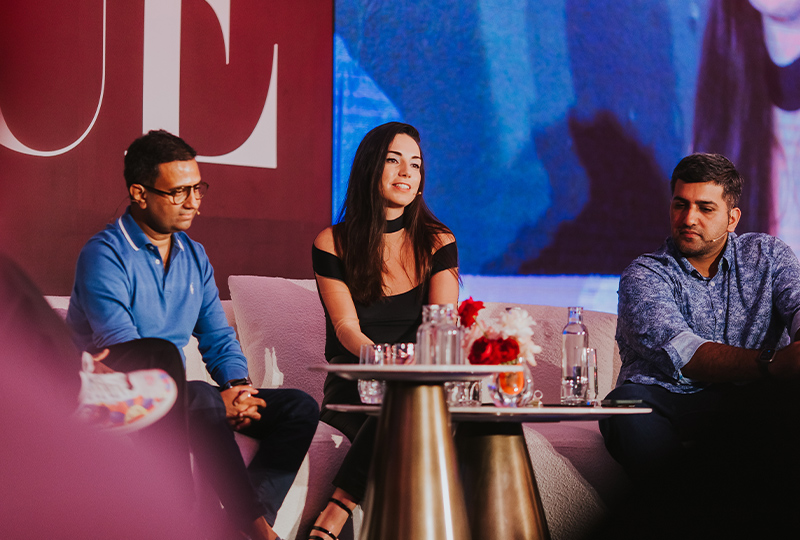
Jana Bobosikova, Next in Vogue Conversations
At a public conversation in Singapore, she offered that second, shorter formulation. Her discussion of KIKI’s digital collectibles focused on people connecting with one another. The emphasis was on what membership let someone do. The machinery could stay backstage. Most shoppers have never demanded to inspect the wiring before liking a colour.
A customer is more than a checkout
By October 2023, KIKI had more than 5,000 community members and had received over 12,000 votes across three launched products. More than half of product sales came from shoppers who had voted in at least one co-creation campaign. Those figures described an early business, with a limited operating history. They nevertheless showed that voting and buying were meeting in the same customer journey.
The distinction matters. A vote is a preference, rather than a purchase order. A membership total is different from revenue. The October 2023 snapshot is interesting because it connects participation to actual sales without making the two interchangeable. The numbers offer a glimpse of behaviour. They do not settle every question about the model.
For a product operator, asking earlier can also change the information available before manufacturing. A brand can learn which option attracts interest while it still has choices to make. It must then decide how to act on that interest. Popularity, cost and production feasibility still have to share a table. The winning colour cannot vote its way past a factory constraint.
- 01Members chooseVote on a product attribute
- 02The team makesDevelop the physical product
- 03Participation countsEarn rewards and use the product
A conceptual sequence, not a promise of timing or a production guarantee.
Seven million dollars, two kinds of expertise
In April 2024, KIKI announced $7 million in funding. The company had initially targeted $5 million. Bobosikova described a selective fundraising process involving fewer than 20 investors and about 90 days to close the oversubscribed round. The desired mix included expertise from the consumer industry and from technology.
The investors included a16z crypto and The Estée Lauder Companies’ New Incubation Ventures. That pairing fit a company making both a physical consumer brand and the software around participation. The money belonged to KIKI. Its significance in Bobosikova’s story is the support for a business operating across those two kinds of work.
The proposition was also widening. KIKI announced a suite of tools and applications for community commerce, including interfaces supporting communication, engagement campaigns and community management. The system built around one brand could become useful to other brands and creators. Bobosikova’s work was moving from inviting customers into KIKI to giving others a way to issue similar invitations.
That expansion raises a practical test. A tool used by another brand has to work beyond the habits of the team that invented it. Participation needs a clear purpose. Rewards need to be understandable. Someone still has to honour the outcome. The software travels more easily than a bottle or a brush; responsibility travels with it.
The next room she wants to open
In September 2024, Bobosikova appeared on the Vogue Business 100 Innovators tech list. In March 2025, she placed third in the entrepreneur category of the TOP Women of the Czech Republic 2024 awards. The recognition followed a career that had taken her from consumer-brand operations into building ventures and systems for participation.
At 12:01, she leads a research and design platform whose public description connects frontier research with consumer products and experiences. Its portfolio presents KIKI as community commerce and Charlie’s Friends as a venture combining creativity, product expertise and marketing. The studio’s scope puts product development and brand building inside a broader conversation about commercialising ideas.
Her stated ambition for KIKI is to involve the people who want to use products in their creation and to extend that approach beyond the original brand. It is an expansive ambition with a very small unit of work. Someone chooses an attribute. A team turns that choice into an object. The person who participated gets to see what happened.
Pearl remains a useful way to picture it. An iridescent shade, selected before it was offered for sale, gives a customer’s opinion a place in the manufacturing story. Bobosikova’s career has brought her to that moment before the shelf, before the campaign, before the checkout. It is a crowded moment. She wants to make room for another chair.
- Visit 12:01
- Jana on LinkedIn
- Jana on Instagram
- KIKI World
- The KIKI founding conversation
- Pearl: the first customer-voted product
- Inside the $7 million funding round
- Next in Vogue Conversations
- Listen: Beauty Meets Blockchain
- Watch: CoinDesk’s Gen C video series
- Vogue Business 2024 tech innovators
- TOP Women of the Czech Republic awards