At 18, James Schmachtenberger put $1,500 on his first credit card to buy time. He had agreed to purchase Body Mind College in San Diego. He did not yet have the money to purchase Body Mind College in San Diego. These two facts coexisted for several nervous days while he made a list of everyone he had ever met who seemed to possess more capital than immediate uses for it. Then he started calling.
The pitch was admirably free of ornament: I am buying a college; I need a loan. Plenty of people declined. Four or five days later, enough had said yes. A retired CPA supplied roughly half the financing and, more importantly, became the teenage proprietor's mentor in bookkeeping and finance. The young idealist got his institution. The institution promptly handed him a ledger.
It is the kind of anecdote that can be flattened into a poster about audacity. Schmachtenberger's version is more useful. Passion unlocked the first meeting. Direct asks produced the money. A patient elder taught him the mechanics. He operated the school for nine years, exiting in 2010. The leap occupies a week in the story. The work occupies a decade.
An education built from exits
Schmachtenberger grew up around Fairfield, Iowa, in a family that treated curiosity as curriculum. He moved between conventional school and homeschooling, then left school after seventh grade. A tutor was recruited to steer him toward high-school completion. He left that arrangement too. After what his official biography cheerfully describes as a year spent watching television, he managed a book company for half of each year and attended community college for the other half.
There was a partial year at Maharishi University of Management and enrollment at Body Mind College at 17. He did not collect a conventional set of credentials. He kept getting close enough to an institution to see how it worked, then becoming more interested in the system than the syllabus.
His childhood had supplied another kind of classroom. He went door to door raising money for Greenpeace and human-rights campaigns. He expected care for the environment to be universal and discovered, doorstep by doorstep, that apparently obvious ideas look very different outside one's own circle. The exercise taught him to translate between frames. It also made rejection boring. If most doors close, another door becomes a mathematical requirement, not a verdict.
“Any time I think something is just a given, I’m likely alienating some large percentage of the population.”James Schmachtenberger
This may be the cleanest explanation for a career that looks zigzagged on paper. Schmachtenberger is less attached to a sector than to a type of problem: fragmented knowledge, misaligned incentives, absent standards, promising work trapped behind specialist walls. He changes rooms when he thinks a different room offers more leverage.
His recurring build loop
The institution is the argument
After leaving the college, Schmachtenberger moved into California's emerging cannabis industry. He opened a dispensary, started a film-production company and served as executive producer of Medicinal Cannabis and Its Impact on Human Health. He later developed The Science of Weed. The films turned a specialist debate into a public artifact. Advocacy work took the same impulse into policy.
At Citizens for Patients Rights, he served as treasurer and spokesman and helped raise more than $250,000 for San Diego campaigns. As president of the Patient Care Association of California in 2012, he established a code of ethics along with accreditation and certification programs. He later served as chairman and co-founded Mankind Cooperative, a licensed San Diego dispensary.
The details matter because they show him working at several layers at once: story, law, professional norms and a place that had to open on time. He was not merely arguing that an industry should mature. He was producing some of the furniture of maturity.
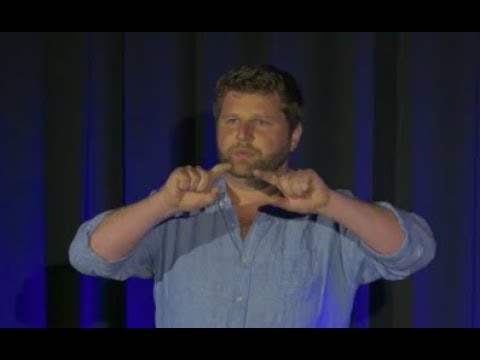
His 2017 TEDx talk, “Empathy: The Catalyst for Global Change,” supplied the philosophy beneath that furniture. Large problems, he argued, cannot be repaired by technical tools alone if the value systems choosing and directing those tools remain unchanged. Empathy was not presented as decorative kindness. It was a way to widen the boundary of what a decision-maker counts.
The brothers and the builder
By 2014, Schmachtenberger had begun working on the idea that became Neurohacker Collective, now Qualia Life Sciences. He co-founded the company in 2015 with his brother Daniel Schmachtenberger and Jordan Greenhall. Public company records from 2019 list all three as directors. James served as CEO; Daniel as chief strategy officer; Greenhall as executive chairman.
The partnership with Daniel offers a small master class in useful asymmetry. James describes his brother as a complex modeler and researcher of unusual range. His own skill, he says, lives more in human dynamics and in making things happen in tangible reality. One develops the conceptual machinery. The other recruits, organizes and brings it into contact with customers. Each brother's account of the partnership leaves room for the other to be necessary.
“I love people. I love human dynamics.”James Schmachtenberger
Founding teams often spend too much time trying to look complete as individuals. The Schmachtenberger arrangement suggests a better ambition: be legible about your incompleteness. Name the ability you do not possess. Give it status. Build an interface between it and the thing you do unusually well.
Daniel’s described lane
Complex cognitive modeling, research and the scientific framework behind the company.
James’s described lane
Human dynamics, institution building and making specialized work publicly accessible.
Qualia began in the nutritional-products field and grew into a wider consumer brand. The more revealing corporate fact is duration. Founded in 2015, it appeared on the Inc. 5000 in 2020, 2021 and again in 2025. The latest listing ranked Qualia No. 3,238 after 124 percent growth over three years. A decade is long enough for a mission statement to encounter inventory, payroll, advertising costs and Thursday afternoon.
The company's name carries a clue to its founders' intent. Qualia is a philosophy term for the subjective texture of experience: the particular feel of a sunset, heartbreak or falling in love. Schmachtenberger has explained that his business partner proposed it. The name is often mistaken for an abbreviation of “quality.” Its actual meaning is stranger, more personal and considerably harder to fit on a shipping label.
Impact before the personal brand
Schmachtenberger's founder advice is suspicious of cleverness. He has said that market gaps and marketing tricks matter less than building something you can be deeply proud of, something that combines your lessons and native propensities. Money alone, in his telling, provides thin fuel for the difficult stretches. Service gives the work somewhere to point.
He is equally wary of making the founder's personality the product. A personal story earns its place when it advances the outcome. Otherwise, attention can be allocated elsewhere. This is a wonderfully inconvenient position for a profile subject. It is also consistent with his online behavior. In early 2026 he said he was not especially active on social media, though Instagram was the platform he used most.
There is humor in the restraint. During a 2018 interview about Instagram vanity, the host joked about influencers posting glamorous photographs. Schmachtenberger replied, “Have you been looking at my Instagram again?” The operator can distrust the attention economy without declining a good line.
Book-company manager, community-college student and persistent institutional escape artist.
Owner and operator of Body Mind College.
Documentary producer, policy advocate, association president and dispensary co-founder.
Co-founder and CEO of Qualia Life Sciences.
A slower burn
His long-term view is not abstract. Schmachtenberger says he has tried to ensure colleagues feel supported, honored and properly compensated. The result he values is that people from earlier ventures have wanted to continue working with him on later ones. Loyalty becomes stored organizational energy. The next project begins with shared memory instead of a blank org chart.
He has also tested the opposite rhythm. For nearly two years, he says, he worked about five hours a week, ran Spartan races every month and enjoyed himself. Eventually the desire to contribute on a larger scale returned. He calls the period a reset. Leisure gave him contrast, not a permanent address.
Asked in a rapid-fire interview for his greatest weakness, he answered “Organization.” His greatest strength: “Deeply caring about the world around me.” The pairing is almost too tidy. The person who admits the first has spent his career building organizations. The person who claims the second keeps choosing complicated arenas where care must survive contact with incentives.
That is the portable lesson in Schmachtenberger's story. Curiosity is pleasant. Empathy is admirable. Neither changes much while it remains a private sensation. His recurring move is to give an idea an address, a budget, a team, a set of standards and a door the public can open. Rebellion gets the anecdote. Institution building gets the decade.